
Residential and commercial HVAC systems differ significantly in size, complexity, and purpose. Residential systems are tailored for smaller spaces like homes, offering simplicity and single-zone control. Commercial systems, however, are designed for larger buildings, handling multiple zones, high occupancy, and stringent code requirements. These distinctions impact installation, maintenance, energy efficiency, and operating costs.
Key Points:
- Capacity: Residential systems range from 1–5 tons, while commercial units start at 20 tons and can exceed 2,000 tons.
- Power: Residential systems use single-phase power (120V/240V), while commercial systems operate on three-phase power (460V).
- Installation Costs: Residential systems cost $5,000–$15,000, while commercial setups range from $15,000 to over $100,000.
- Maintenance: Residential systems need annual tune-ups, while commercial units require monthly or quarterly checks.
- Controls: Residential systems use simple thermostats; commercial setups rely on Building Automation Systems (BAS) for advanced control.
Quick Comparison:
| Feature | Residential HVAC | Commercial HVAC |
|---|---|---|
| Capacity | 1–5 tons | 20–2,000+ tons |
| Power Supply | Single-phase (120V/240V) | Three-phase (460V) |
| Installation Cost | $5,000–$15,000 | $15,000–$100,000+ |
| Maintenance | Annual tune-up | Monthly/quarterly checks |
| Control System | Simple thermostat | Building Automation (BAS) |
Understanding these differences ensures you choose the right system for your needs and avoid costly mistakes. Whether you’re managing a home or a large building, proper system design and installation and maintenance are essential for comfort and efficiency.
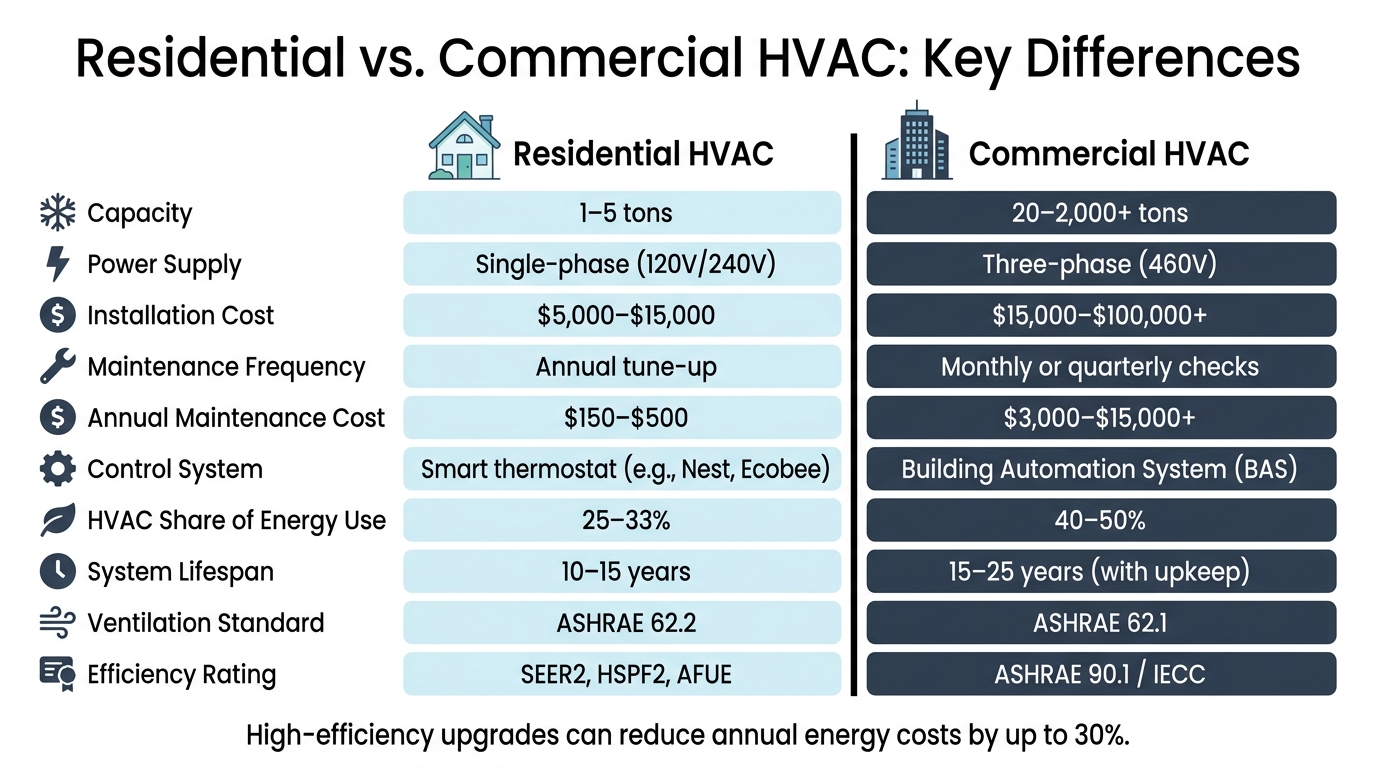
Residential vs Commercial HVAC: Side-by-Side Comparison
Design and Capacity Differences
Residential HVAC System Features
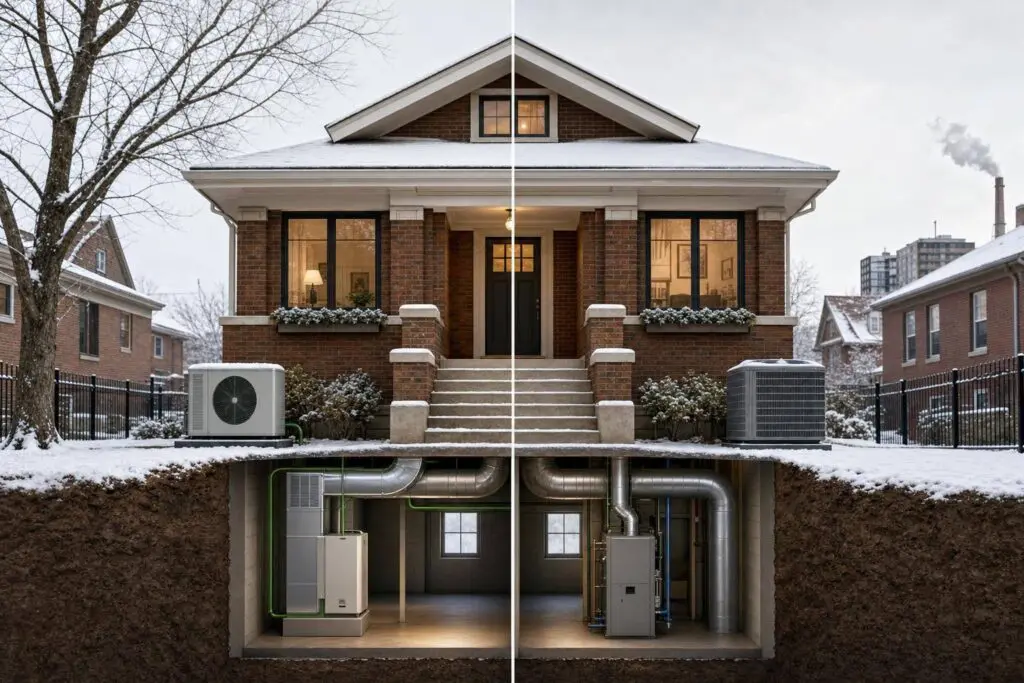
In most homes, you’ll find split systems as the go-to choice. For older houses without ductwork, ductless mini-splits and heat pumps are common alternatives. These systems are designed for straightforward installation, often placed in backyards, attics, or basements.
Residential HVAC systems typically provide between 1 and 5 tons of cooling capacity. For example, a 2,000-square-foot home in the Chicago suburbs generally requires about 3 to 4 tons. These systems operate on single-phase power (120V/240V) and usually serve a single thermal zone controlled by one thermostat.
On the other hand, commercial HVAC systems are built to handle much larger spaces and more complex demands.
Commercial HVAC System Features
Commercial systems are in a different league altogether. While residential units max out at 5 tons, commercial rooftop units (RTUs) start at around 20 tons, with large central plant systems reaching 2,000 tons or more. These systems aren’t just bigger – they’re designed with entirely different operational principles.
"Commercial HVAC systems… Capacity in this category typically ranges from 20 tons for small commercial rooftop units to 2,000 tons or more for central plant systems in large facilities." – HVAC Service Authority
Beyond RTUs, commercial buildings often rely on Variable Refrigerant Flow (VRF) systems and chiller-based central plants. VRF systems can simultaneously heat one area while cooling another. These systems run on three-phase power (often 460V) to efficiently power their heavy-duty motors. The cost of installation reflects their complexity, ranging from $15,000 for a small packaged unit to over $100,000 for a full VRF or chiller setup.
How Building Use Shapes HVAC Requirements
The purpose of a building plays a massive role in determining its HVAC needs. Homes generally have steady occupancy, minimal heat-producing appliances, and consistent conditions throughout the day. Commercial buildings, however, are a whole different ballgame.
Take a mid-sized office building as an example: it might have a server room that must stay at 65°F year-round, a lobby that heats up in the afternoon due to sunlight, and a kitchen generating extra heat during lunch hours – all within the same structure. Addressing these diverse needs requires advanced systems like multi-zone controls, VAV boxes, and a Building Automation System (BAS).
Commercial HVAC designs must also meet ASHRAE Standard 62.1, which specifies the amount of outdoor air required per occupant – a regulation that doesn’t apply to most residential systems. This ventilation standard alone adds layers of complexity and cost to commercial setups.
| Feature | Residential HVAC | Commercial HVAC |
|---|---|---|
| Typical Capacity | 1–5 tons | 20–2,000+ tons |
| Configuration | Split systems, furnaces, mini-splits | RTUs, VRF systems, chillers |
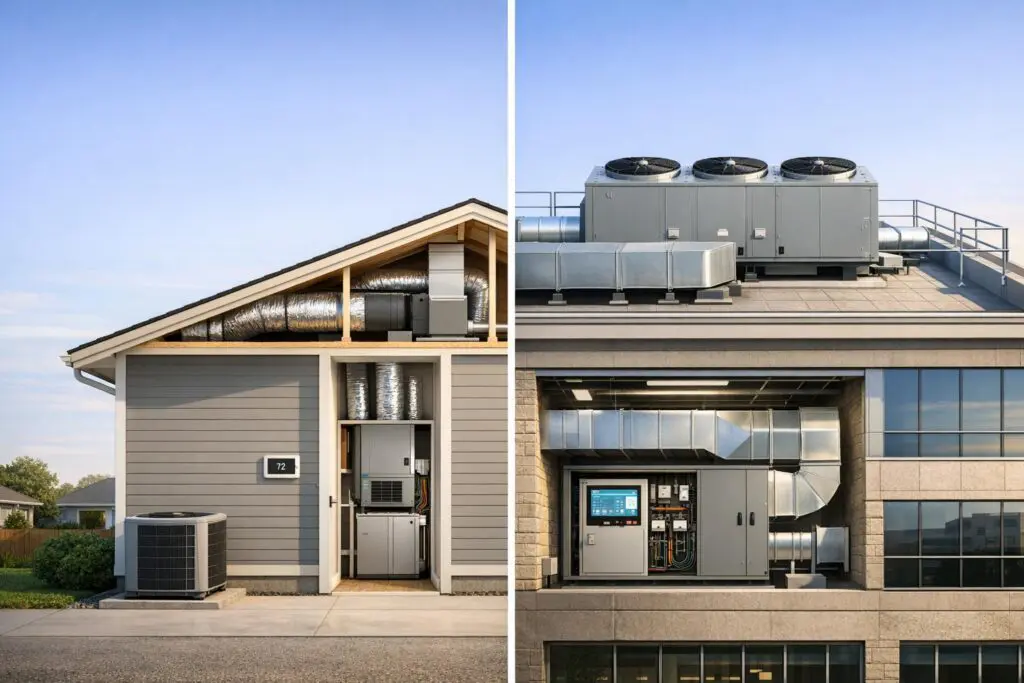
| Placement | Ground level, attic, or basement | Rooftop or dedicated mechanical rooms |
| Power Supply | Single-phase (120V/240V) | Three-phase (often 460V) |
| Zoning | Single zone or basic multi-zone | Complex multi-zone with VAV and BAS |
| Ventilation Standard | ASHRAE 62.2 (simple) | ASHRAE 62.1 (mandated CFM per occupant) |
sbb-itb-b5c10b1
Installation and Control System Differences
Residential Installation and Controls
Setting up a residential HVAC system is relatively simple. A licensed contractor handles everything – from designing the layout to securing permits and installing the equipment in accessible spots like the backyard, attic, basement, or utility closet. Most homes use a split system, which includes one outdoor unit paired with an indoor air handler. These systems typically operate on single-phase power (120V/240V). Drainage is uncomplicated, relying on gravity-fed PVC pipes. The overall cost for installation usually falls between $5,000 and $15,000.
Managing a residential system is just as straightforward. A single thermostat – often a smart Wi-Fi model like Ecobee or Nest – controls the entire home. For homes with multiple zones, basic dampers in the ductwork ensure efficient temperature regulation. When the temperature dips, the system automatically activates to maintain comfort.
Commercial Installation and Controls
Commercial HVAC installations are a much more involved process. Most systems are modular rooftop units (RTUs), which can weigh between 400 and 1,500 lbs. These units require heavy machinery, such as cranes or lull lifts, to position them correctly. For larger buildings, dedicated mechanical rooms house central plant systems. Installation costs can range from $15,000 to over $100,000, with some large-scale projects exceeding this range.
Control systems in commercial buildings are far more advanced. Instead of a single thermostat, they rely on a Building Automation System (BAS) or Building Management System (BMS). These systems allow for remote monitoring and control of temperature, humidity, and ventilation across multiple zones. Many modern setups now include AI-driven sensors that adjust settings based on occupancy. A unique feature in commercial systems is the economizer – a device that monitors outdoor air temperature and humidity (enthalpy) to bring in "free" outdoor air for cooling when conditions are right. This reduces energy consumption by minimizing compressor use.
"Commercial HVAC systems are a different beast compared to their residential counterparts. While home systems typically involve a single unit, commercial setups involve multiple packaged units working together." – ServiceTitan
These sophisticated systems and installation processes require specialized expertise.
Technical Complexity and Expertise Required
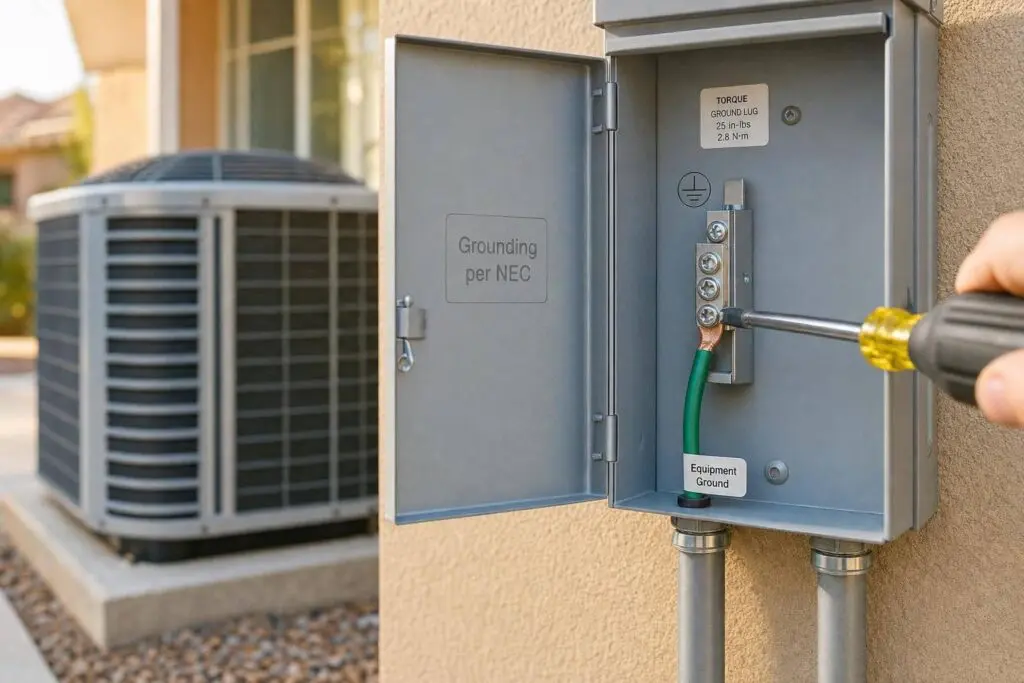
The differences in installation highlight the technical demands of commercial systems. Residential technicians typically deal with standardized equipment and straightforward diagnostics. On the other hand, commercial technicians must handle three-phase electrical systems at 460V, interpret complex control schematics, work with economizer logic boards, and calculate precise P-traps to prevent water backflow caused by negative static pressure.
Permitting is another area where the two systems diverge. While residential projects rely on contractor-designed plans, commercial installations require engineered mechanical drawings stamped by a Licensed Professional Engineer (PE). These projects must also meet stricter codes, like ASHRAE 62.1 and ASHRAE 90.1. Furthermore, manufacturers often void warranties if commercial equipment is serviced by technicians without the necessary certifications.
Maintenance and Operating Cost Differences
Routine Maintenance for Residential Systems
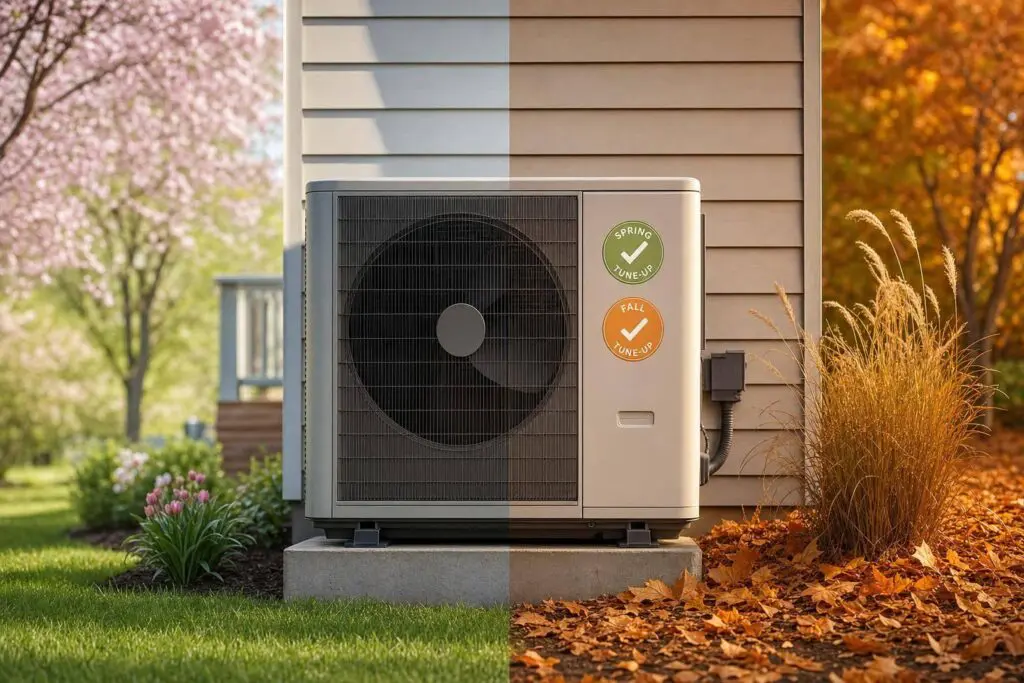
Taking care of residential HVAC systems is relatively simple. One of the most important tasks is replacing air filters every 1–3 months. This prevents dust from clogging the system and ensures smooth airflow. Homeowners should also keep the outdoor condenser unit clear of debris and schedule a professional tune-up once a year. These annual check-ups typically cost between $150 and $500. With regular maintenance, residential systems like furnaces or heat pumps usually last 10–15 years.
Preventive Maintenance for Commercial Systems
Commercial HVAC systems are a different story. Because they often run constantly, they demand more frequent attention – ranging from monthly to quarterly maintenance. Technicians handle tasks like calibrating Building Automation System (BAS) sensors, inspecting belt drives, cleaning coils, checking refrigerant levels, and ensuring condensate pumps manage moisture effectively.
The costs for commercial systems are significantly higher. For instance, repairing a single compressor on a large rooftop unit can run between $5,000 and $15,000. As one industry professional noted:
"In commercial, maintenance contracts are the profit engine. Commercial clients must maintain their systems to comply with lease agreements, safety codes, or warranties." – Shambhav, ServiceAgent.ai
Skipping routine upkeep on these systems can lead to more than just mechanical failures – it could result in lease violations or falling short of safety and code requirements. These factors underline the importance of regular maintenance when balancing operational costs and energy efficiency.
Energy Costs and Efficiency Ratings
HVAC systems are major energy consumers. In homes, they account for 25–33% of total energy use, while in commercial buildings, this figure jumps to 40–50%. Cooling alone represents about 14% of all electricity used in commercial spaces.
Efficiency ratings vary depending on the system type. Residential systems are measured using SEER2 (for cooling), HSPF2 (for heat pump heating), and AFUE (for furnaces). Starting January 1, 2023, the U.S. Department of Energy set the minimum standard for central air conditioners in northern states at 14.3 SEER2. On the other hand, commercial systems must meet the requirements of ASHRAE Standard 90.1 and the IECC, which consider factors like building type, occupancy, and ventilation needs.
Investing in high-efficiency HVAC systems can cut annual energy costs by up to 30%, with most upgrades paying for themselves in about three to five years.
| Feature | Residential HVAC | Commercial HVAC |
|---|---|---|
| Maintenance Frequency | Annual tune-up | Monthly or quarterly checks |
| Annual Maintenance Cost | $150–$500 | $3,000–$15,000+ |
| Primary Efficiency Rating | SEER2, HSPF2, AFUE | ASHRAE 90.1 / IECC |
| HVAC Share of Energy Use | 25–33% | ~40–50% |
| Expected System Lifespan | 10–15 years | 15–25 years (with upkeep) |
Indoor Air Quality, Code Compliance, and System Lifespan
Residential IAQ and System Lifespan
Many homeowners don’t think about indoor air quality (IAQ) until they’re dealing with problems like musty smells, dry skin, or worsening allergies. The EPA reports that indoor air can be 2 to 5 times more polluted than outdoor air, which is concerning when you consider that Americans spend about 90% of their time indoors. This makes a properly designed HVAC system a must-have.
For residential homes, ASHRAE Standard 62.2 sets the ventilation benchmark at 7.5 CFM per person plus 3 CFM per 100 square feet of living space. To improve IAQ, homeowners often add features like whole-home humidifiers (which help maintain humidity levels between 30–60%), air cleaners, duct cleaning, or Energy Recovery Ventilators (ERVs). These upgrades typically cost between $1,500 and $4,500 when installed. Standard HVAC filters usually fall within the MERV 8 to MERV 11 range, but upgrading to MERV 13 is increasingly recommended for better protection against airborne particles.
When it comes to system longevity, Chicago’s cold winters – averaging 6,300–6,498 heating degree days annually – can be rough on equipment. Gas furnaces generally last 15–20 years, central air conditioning units 12–17 years, and heat pumps 10–15 years, with sub-zero temperatures adding extra strain on heat pump compressors. Regular maintenance is key to extending these lifespans and ensuring optimal IAQ.
Commercial IAQ and Code Compliance
Commercial buildings operate under stricter rules than residential ones. Instead of ASHRAE 62.2, they follow ASHRAE Standard 62.1, which specifies outdoor air delivery rates based on how the space is used and its occupancy. For specialized facilities, the requirements are even more demanding – operating rooms, for instance, need 6 air changes per hour (ACH), and MERV 13 or higher filtration is now standard.
"Indoor air quality in Chicago buildings is directly shaped by HVAC system design, equipment condition, and the city’s distinct seasonal climate." – Chicago HVAC Authority
Compliance with these codes is mandatory. In Illinois, any commercial system exceeding 480,000 BTU/hour must have formal commissioning documentation. Additionally, replacing a mechanical system in Chicago automatically triggers permit and inspection requirements through the Department of Buildings. Failing to meet these codes can result in losing a certificate of occupancy, voided warranties, or even lender and insurer issues. Chicago’s "home-rule" status allows its building code to differ from state standards, particularly in areas like energy efficiency and high-rise mechanical systems. This makes it essential to work with a knowledgeable HVAC partner to navigate these complexities.
How Eco Temp HVAC Supports Maintenance and Upgrades
With these strict IAQ and code requirements, Eco Temp HVAC offers professional services to handle everything from advanced filtration systems and ERV installations to full code-compliant replacements across Chicagoland. They serve areas like Chicago, Downers Grove, Bartlett, Lemont, St. Charles, and Palatine.
For homeowners, Eco Temp ensures systems are properly sized using Manual J load calculations to avoid issues like short-cycling. They also provide solutions like humidifiers and upgraded filters. On the commercial side, they assist with Chicago Energy Transformation and Illinois Mechanical Codes, including required commissioning documentation. With 24/7 service and certifications like the American Standard Customer Care Dealer, Eco Temp ensures both residential and commercial systems stay efficient, clean, and compliant.
Conclusion: Residential vs. Commercial HVAC Systems
Key Takeaways
Residential HVAC systems are designed for smaller spaces, offering simplicity and efficiency for single-family homes. In contrast, commercial systems are built to handle the demands of larger spaces with multiple zones, higher occupancy, and longer operating hours. These differences extend to controls and maintenance: residential systems typically use a single smart thermostat and require annual tune-ups, while commercial setups rely on centralized building automation systems (BAS) and scheduled preventive maintenance to ensure efficiency and compliance with regulations. Especially in Chicagoland’s challenging climate, proper system design and regular maintenance are critical for reliable year-round performance.
| Aspect | Residential | Commercial |
|---|---|---|
| System size | Home-scale units | Large, often modular systems |
| Controls | Smart thermostat | Building automation system (BAS) |
| Maintenance | Annual tune-ups | Scheduled contracts with formal documentation |
| Energy focus | Lower utility bills | Total cost of ownership over 10–20 years |
| Code compliance | ASHRAE 62.2 and local permits | ASHRAE 62.1, Illinois Mechanical Code, commissioning docs |
For more detailed insights on these distinctions, refer to the earlier sections. A simple guideline: if you’re dealing with a single-family home, condo, or small apartment, a residential HVAC specialist is your go-to. On the other hand, managing spaces like retail stores, offices, restaurants, warehouses, or multi-tenant buildings calls for a commercial contractor who understands zoning, load calculations, and local permitting. Mixed-use properties, such as a storefront with apartments above, often require expertise in both residential and commercial systems. Choosing the right type of HVAC expertise ensures your building’s needs are met efficiently and effectively.
How Eco Temp HVAC Can Help
Eco Temp HVAC serves Chicagoland’s diverse range of properties, offering tailored solutions for both residential and commercial HVAC needs. From Chicago to Downers Grove, Bartlett, Lemont, St. Charles, and Palatine, their certified technicians provide design, installation, and maintenance services that align with each building’s specific requirements.
Eco Temp HVAC’s credentials highlight their qualifications. As a Mitsubishi Diamond Elite Contractor, they offer up to a 12-year warranty on Mitsubishi products, making them an excellent choice for those considering ductless or VRF systems. These ductless mini-split options provide flexible climate control for specific zones. Additionally, their certifications as a Navien Service Specialist and an American Standard Customer Care Dealer ensure high-quality service that meets manufacturer standards. With 24/7 availability and upfront, job-based pricing, Eco Temp HVAC is well-equipped to keep both homes and businesses comfortable and running efficiently.
"As a Mitsubishi Diamond Contractor, Mitsubishi allows us to give our customers a 12-year warranty on new Mitsubishi units." – Eco Temp HVAC
How Commercial HVAC is Different from Residential
FAQs
How do I know if I need a residential or commercial HVAC system?
Choosing the right HVAC system – residential or commercial – comes down to your building’s size, purpose, and specific mechanical demands. Residential systems are typically ideal for single-family homes or smaller spaces, while commercial setups handle the needs of larger, multi-story buildings with higher capacity requirements. At Eco Temp HVAC, certified technicians can evaluate your property to recommend the perfect system, ensuring it’s installed to meet local codes and deliver optimal performance.
What makes commercial HVAC controls more complex than a thermostat?
Commercial HVAC systems handle a much broader range of demands compared to residential ones. They’re designed to manage multiple thermal zones, accommodate varying occupancy levels, and address specific requirements like humidity control. While a residential system typically operates with a single thermostat, commercial setups use advanced building automation systems (BAS) to coordinate various components such as dampers, variable air volume (VAV) boxes, and economizers. These systems depend on real-time data and precise adjustments to maintain efficiency in larger, more complex environments.
When should I upgrade filtration to MERV 13 or add an ERV?
If you’re looking to filter out finer particles – like bacteria, smoke, or viral droplets – consider upgrading to a MERV 13 filter. This is particularly helpful if someone in your household has asthma or severe allergies. Just be sure your HVAC system can handle the extra airflow resistance. For better efficiency, you might want to use a thicker filter, such as a 4-inch or 5-inch model.
In humid climates, installing an ERV (Energy Recovery Ventilator) can help manage indoor humidity levels while ensuring balanced ventilation throughout your home.