
Installing an HVAC system in Chicago typically costs between $7,000 and $15,000. For a standard 2,000-square-foot home, the average expense is about $8,283. Costs depend on factors like system type, efficiency, labor, and ductwork. Here’s what you need to know:
- System Type: Central AC ranges from $3,000–$11,877, gas furnaces $1,900–$10,000, and heat pumps $4,200–$20,000+. Geothermal systems are the most expensive, starting at $20,000.
- Labor Costs: Account for 40%–60% of the total bill, with rates of $75–$150 per hour.
- Ductwork: Reusing ducts costs $5,000–$11,000, while new ductwork adds $800–$5,000+.
- Efficiency Upgrades: High-efficiency systems cost $1,000–$3,000 more but can cut energy bills by up to 20%.
- Permits and Taxes: Permits range from $100–$600, and Chicago’s 10.25% sales tax applies to materials.
Pro Tip: Schedule installation in spring or fall to save 10%–15% on labor. Investing in energy-efficient systems may qualify for federal tax credits and lower long-term utility costs. Hiring a certified contractor ensures proper sizing, compliance with local codes, and optimal performance.
HVAC Load Budget Guide Chicago Rooftop Gas Heat
Average HVAC Installation Costs in Chicago
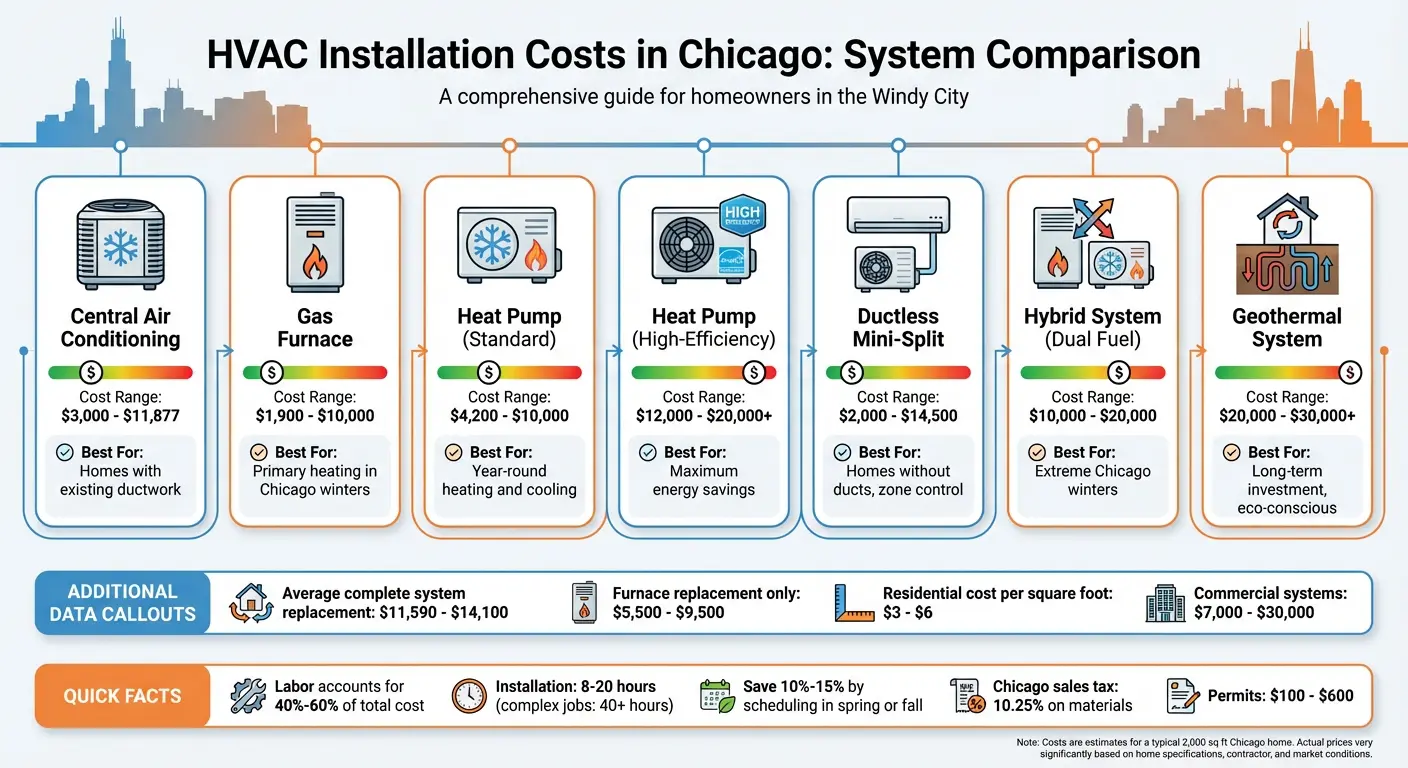
HVAC System Installation Costs in Chicago Comparison Chart
Cost Breakdown by System Type
The type of HVAC system you choose plays a big role in determining installation costs. For example, central air conditioning systems typically cost between $3,000 and $11,877 to install. If you’re considering a gas furnace, expect to pay anywhere from $1,900 to $10,000, depending on the model and complexity of the installation.
For those interested in heat pumps, standard models usually fall between $4,200 and $10,000, while high-efficiency versions can range from $12,000 to $20,000 or more. If you’re exploring ductless mini-split systems, costs can vary widely – from $2,000 to $14,500 – depending on how many zones you need to cover.
Looking at dual-fuel options? Hybrid systems, which combine a heat pump with a gas backup, generally cost between $10,000 and $20,000. The priciest option on the market is a geothermal system, which starts at $20,000 and can exceed $30,000.
For a complete system replacement in Chicago, most homeowners spend between $11,590 and $14,100. If you’re only replacing a furnace, the average cost ranges from $5,500 to $9,500. These costs reflect Chicago’s unique climate challenges and the complexities of installation, which vary by property type and system requirements.
Residential vs. Commercial Installation Costs
The size and type of property also play a big role in HVAC installation pricing. For residential properties, installation costs generally range from $3 to $6 per square foot for both equipment and labor. For instance, a typical 1,500-square-foot home might cost $6,000 to $9,000, while a larger 3,000-square-foot home could run $9,000 to $18,000 or more. Residential systems are usually measured in "tons", with most homes needing 1.5 to 5 tons of cooling capacity.
Commercial installations, on the other hand, come with much higher price tags. These systems are designed for larger spaces and often require specialized equipment like rooftop units. As a result, commercial HVAC systems typically range from $7,000 to $30,000, depending on the building’s needs and the complexity of the setup.
Factors That Affect HVAC Installation Costs
Understanding what drives HVAC installation costs can help you budget more effectively for your Chicago project. Several factors determine whether your expenses fall on the lower or higher end of the spectrum.
Equipment Size, Efficiency, and Brand
The size of the HVAC system plays a big role in cost. For every additional 1,000 square feet, you can expect to pay an extra $2,000–$3,000. Efficiency ratings also matter – each additional SEER (Seasonal Energy Efficiency Ratio) point adds about $300–$500 to the unit’s cost. High-efficiency ENERGY STAR systems often cost $1,000 to $3,000 more upfront than standard models, but they can lower your energy bills by up to 20%.
Brand choice is another key factor. Budget-friendly brands like Amana and Goodman typically range from $1,500 to $4,000 for equipment alone. On the other hand, premium brands such as Carrier range from $2,500 to $6,000, and Trane units can cost anywhere from $2,000 to $10,000. Additionally, new federal standards are expected to push equipment prices higher. Beyond the equipment itself, ductwork and installation complexity also significantly impact costs.
Ductwork and Installation Complexity
The condition of your home’s ductwork can greatly influence the total expense. If you’re only replacing equipment and reusing existing ducts, costs usually range between $5,000 and $11,000. However, a full system installation with new ductwork can set you back $7,000 to $16,000. Installing new ductwork alone adds anywhere from $800 to over $5,000, depending on your home’s size and layout. It’s worth noting that poorly designed or aging ducts can waste up to 30% of your system’s energy.
Installation complexity also drives up costs. Challenges like cramped crawlspaces, roof-mounted units, or modifications in older buildings can increase labor time and expense. Adding zoning systems, which involve dampers and specialized thermostats, can tack on an extra $2,000 to $3,000. Be prepared for unexpected issues – setting aside $200 to $1,500 for unforeseen ductwork or wiring problems is a smart move. Labor and permitting costs in Chicago also add to the overall expense.
Labor and Permitting Costs in Chicago
Labor costs in Chicago vary, with HVAC technicians charging $75 to $150 per hour. Most installations require 8–20 hours of labor, but more complex projects can exceed 40 hours. Urban installations often cost 10%–15% more than suburban ones due to higher labor rates and access challenges.
Permits are a must for HVAC work in Chicago and must be obtained by your contractor before starting the job. Permit and code compliance costs average around $600 but can climb as high as $2,400. Additionally, Chicago’s 10.25% combined sales tax applies to all equipment and materials. If you’re looking to save, consider scheduling your installation during the spring or fall, when demand is lower, to potentially cut costs by 10%–15%.
Comparing HVAC System Options for Your Budget
Choosing the right HVAC system for your home in Chicago depends on several factors, including your budget, whether you have existing ductwork, and your specific performance requirements. The two most common options – central air systems and ductless mini-splits – each have their own strengths, making them better suited for different situations.
Central Air vs. Ductless Mini-Splits
If your home already has ductwork in good condition, central air conditioning is often the more economical option upfront. Installation costs typically range between $6,465 and $11,877. However, it’s worth noting that central AC systems can lose 20%–30% of cooled air through duct leaks, which can significantly impact your energy bills over time.
On the other hand, ductless mini-splits can be a smart choice for older Chicago homes without existing ductwork – like historic bungalows – or for new room additions. These systems eliminate the need for ducts entirely, avoiding the $800 to $4,000+ expense of installing new ductwork. Plus, ductless systems often feature SEER2 ratings between 18 and 24, far surpassing older central systems, which may only achieve ratings of 10 or 12. In fact, upgrading to a high-efficiency ductless mini-split can lower your monthly cooling costs by up to 40%.
| System Type | Estimated Chicago Installation Cost | Best For |
|---|---|---|
| Central AC | $6,465–$11,877 | Homes with existing ducts |
| Ductless Mini-Split (Multi-Zone) | $5,000–$10,500+ | Homes without ducts, additions, or zone control |
| Standard Heat Pump | $8,000–$15,000 | Energy-efficient heating and cooling in one |
| Hybrid (Dual Fuel) | $10,000–$20,000 | Extreme winters (Heat pump + Gas backup) |
One standout feature of ductless mini-splits is their ability to create multi-zone systems, allowing you to control the temperature in individual rooms. This means you can heat or cool only the spaces you’re using, which helps reduce energy costs. In contrast, central AC systems rely on extensive ductwork, which can be challenging to install in older Chicago homes. Mini-splits, by comparison, require only a small hole for refrigerant lines, making the installation process much less invasive. While mini-splits do involve wall-mounted or ceiling-mounted indoor units in each zone, central AC systems remain more discreet, with only vents visible.
Now, let’s take a closer look at heating options that pair well with these cooling systems.
Heat Pumps and Other Alternatives
For homeowners looking for energy-efficient heating solutions, heat pumps and hybrid systems offer excellent year-round functionality and potential long-term savings. Heat pumps handle both heating and cooling in a single system, with installation costs ranging from $8,000 to $15,000. For a typical 2,000-square-foot home, installing a 3-ton heat pump costs between $2,860 and $5,340. While heat pumps perform well in moderate climates, Chicago’s harsh winters often require an additional heating source.
Hybrid systems provide a practical solution by combining an electric heat pump with a gas furnace. These systems use the heat pump during milder weather and switch to gas when temperatures drop below 32°F. Installation costs range from $10,000 to $20,000, but these systems are designed to optimize efficiency throughout the year while ensuring reliable heating during Chicago’s freezing winters.
If you’re considering a gas furnace on its own, installation costs range from $1,900 to $9,500, and these systems generally offer lower operating costs compared to electric heating during the city’s cold months. For those interested in high-efficiency upgrades, expect to pay an additional $1,000 to $3,000 upfront. However, these upgrades typically pay for themselves within three to five years through reduced utility bills.
Energy Efficiency and Long-Term Savings
When considering HVAC installation costs in Chicago, it’s not just about the upfront expenses. The real value lies in the system’s efficiency over its lifespan, which typically spans 15–20 years for a high-quality unit. While high-efficiency systems may come with a steeper initial price tag, they deliver better heating and cooling performance, leading to noticeably lower monthly utility bills. This long-term perspective underscores why efficiency-focused investments are worth considering alongside installation costs.
Chicago’s Energy Efficiency Standards
Chicago has specific energy efficiency standards that guide new HVAC installations. According to the 2022 Chicago Energy Transformation Code, air conditioners must have a minimum rating of 14 SEER (or 13.4 SEER2), and furnaces need at least 80% AFUE. These requirements are tailored to meet the demands of Chicago’s challenging climate.
To break it down, AFUE (Annual Fuel Utilization Efficiency) measures how well a furnace converts fuel into heat. For instance, an 80% AFUE furnace loses 20% of its fuel as waste, while high-efficiency models with 95% to 98% AFUE minimize waste significantly. These standards ensure that homeowners get the most out of their heating and cooling systems, aligning performance with energy needs.
Upgrading to higher efficiency ratings does come at a cost. Each additional SEER point adds roughly $300 to $500, meaning a jump to a SEER2 rating of 16 or higher could increase costs by $1,000 to $3,000. However, systems certified by ENERGY STAR can cut heating and cooling expenses by as much as 20%. For older systems, upgrading to a modern high-efficiency model could slash energy use by 50% to 70%.
Cost Savings Over a System’s Lifespan
Investing in high-efficiency HVAC equipment often pays off within 3 to 5 years in Chicago. After that, the savings start to pile up. Over a 15-year lifespan, these cost reductions become even more significant, especially during Chicago’s freezing winters and humid summers when HVAC systems are pushed to their limits. While gas furnaces typically cost more upfront compared to electric options, they offer much lower operating costs during Chicago’s cold months, making them a popular choice for homeowners.
Beyond monthly savings, high-efficiency HVAC systems can boost your home’s value by an estimated 5% to 7%. In Chicago’s real estate market, where reliable heating and cooling are essential, buyers often prioritize systems with high SEER ratings and AFUE percentages. On top of that, federal tax credits can help offset costs – covering up to 30% of qualifying high-efficiency system expenses. For example, in 2025, heat pumps may qualify for a credit of up to $2,000, while ENERGY STAR-certified central air conditioners and furnaces could receive up to $1,200.
One often overlooked factor is ductwork efficiency. Leaky ducts can reduce system performance by as much as 30%. Before installing a new high-efficiency unit, it’s wise to schedule an energy audit to assess your ductwork. Sealing and inspections, which typically cost $300 to $500, can ensure you fully benefit from your system’s efficiency gains.
Why Choose Eco Temp HVAC for Your Installation
When it comes to HVAC system installations, having a professional team makes all the difference. With high installation costs and the need for energy-efficient systems, Eco Temp HVAC stands out as a trusted choice for Chicago homeowners. Since starting operations in December 2016, the company has earned a solid reputation, backed by respected certifications and strong service guarantees. Let’s explore how their qualifications and comprehensive services make them a reliable and cost-effective option.
Certified Professionals and Comprehensive Warranties
Eco Temp HVAC holds three top-tier manufacturer certifications: Mitsubishi Diamond Elite Contractor, Navien Service Specialist, and American Standard Customer Care Dealer. These certifications speak volumes about their rigorous training and commitment to high standards. Plus, they allow the company to offer extended warranties that go beyond the industry norm. For instance, as a Mitsubishi Diamond Elite Contractor, they provide a 12-year warranty on Mitsubishi ductless mini-split systems – two years longer than the standard 10-year coverage.
Every technician at Eco Temp HVAC is NATE-certified and undergoes thorough background checks before stepping into your home. Their 100+ step installation process ensures your system runs at peak performance. To give you peace of mind, they offer a transparent two-year, 100% money-back guarantee with no hidden terms. On top of that, their Lifetime Repair Guarantee covers their products and services for the long haul. These quality commitments are reflected in their A+ Better Business Bureau rating and over 1,000 five-star customer reviews.
Comprehensive HVAC Services
Eco Temp HVAC doesn’t stop at installations – they offer a full suite of services, including furnace repair, heat pump installation, air duct cleaning, and indoor air quality improvements. They work with leading HVAC brands like Carrier, Trane, Lennox, and Goodman, catering to both residential and commercial clients. Whether it’s a single-family home or a commercial rooftop unit, they’ve got you covered.
One of their standout features is 24/7 availability. If your furnace breaks down on a freezing Chicago night, you can count on their live operators to connect you with a technician for same-day or next-day service. Their technicians arrive in fully stocked vehicles, often completing repairs during the first visit.
Eco Temp HVAC also helps homeowners save money by guiding them through ComEd rebates and federal tax credit programs. With service locations across Chicagoland – including Chicago, St. Charles, Bartlett, Lemont, Downers Grove, and Palatine – they ensure quick response times no matter where you are in the metro area.
Conclusion
Installing a new HVAC system in Chicago usually costs between $7,000 and $15,000. Key factors like equipment efficiency, home size, necessary ductwork changes, and Chicago’s strict permitting rules play a big role in shaping your budget. Opting for high-efficiency equipment can increase upfront costs by $1,000 to $3,000, but it often cuts annual heating and cooling bills by 20% and pays for itself in just three to five years. Scheduling installation during off-peak seasons like spring or fall can also save you 10%–15% on labor costs.
Long-term savings hinge on choosing the right system and ensuring professional installation. The expertise of a certified contractor is just as important as selecting quality equipment. As Dave Musial, CEO of Four Seasons Heating, Air Conditioning, Plumbing, Electric, explains:
"Our data shows that 23% of furnace replacements in Chicago involve correcting previous undersizing or oversizing issues, emphasizing the importance of professional load calculations rather than simply matching existing equipment capacity".
Professional installation not only safeguards your warranty but also ensures compliance with local codes and optimizes your system’s efficiency and lifespan.
FAQs
What are the advantages of installing a high-efficiency HVAC system in Chicago?
Installing a high-efficiency HVAC system in Chicago offers some standout advantages. For starters, these systems are designed to use less electricity or gas, which means lower energy bills for you. Considering Chicago’s sweltering summers and icy winters, the savings can really add up over time.
Another big plus? These systems are kinder to the environment. By producing fewer emissions, they help shrink your carbon footprint while still keeping your home cozy. Many of the latest models also include smart features, like programmable thermostats, giving you more control over energy use and adding a layer of convenience.
Upgrading to a high-efficiency HVAC system means enjoying a more comfortable home, cutting down on utility costs, and doing your part for a cleaner, greener planet.
When is the best time to schedule HVAC installation in Chicago to save money?
Scheduling your HVAC installation during less busy times can lead to substantial savings. In Chicago, the ideal windows for this are late winter – think February to early March – and early fall, from September to mid-October. These months see lower demand, and many HVAC companies offer discounts or special promotions during this time. Plus, scheduling tends to be more flexible.
By planning ahead and steering clear of peak seasons, you not only cut costs but also benefit from quicker service and avoid the stress of emergency replacements. Timing your installation wisely can make upgrading your heating and cooling system both more affordable and hassle-free.
What should I consider when choosing an HVAC system for my home?
When selecting an HVAC system for your home, there are several key factors to weigh. Start by considering your home’s size, layout, and specific energy needs. Whether you opt for central air, ductless mini-splits, or heat pumps, the system you choose should align with your space and desired level of comfort. Don’t overlook energy efficiency ratings – while higher-rated systems may come with a steeper initial cost, they often lead to lower energy bills in the long run.
Other important considerations include the system’s capacity, how much noise it generates, and how easy it is to maintain. Given Chicago’s unpredictable and often extreme weather, it’s especially important to work with experienced professionals who understand local building codes and permitting requirements. A reliable installer can ensure your HVAC system is properly sized and installed, helping to maximize its performance and dependability for years ahead.