
If I want the short answer: most Chicago smart thermostat installs cost $200–$650, and broader smart HVAC upgrades often run $500–$3,000 before bigger equipment changes. Full replacements can go much higher once I add ductwork, wiring, permits, or heat pump equipment.
If I’m pricing this for a Chicago home, I’d focus on four things first: my current system, my ductwork, my wiring, and my home’s age. In this market, labor is high, permits can add $50–$600, and older homes often need extra work like a C-wire, duct sealing, sensors, or zoning controls.
Here’s the article in plain English:
- Smart thermostat only: usually $200–$650 installed
- C-wire add-on: about $75
- Smart add-ons like zoning or sensors: about $500–$3,000
- High-end zoned or dual-fuel smart setup: can reach about $3,231
- Illinois labor rates: about $87/hour for HVAC techs and $106/hour for electricians
- Utility bill savings: often 15%–25%, or about $200–$600 per year
- Payback: often 2–4 years
- Chicago factor: long heating seasons mean smart controls can save more here than in milder places
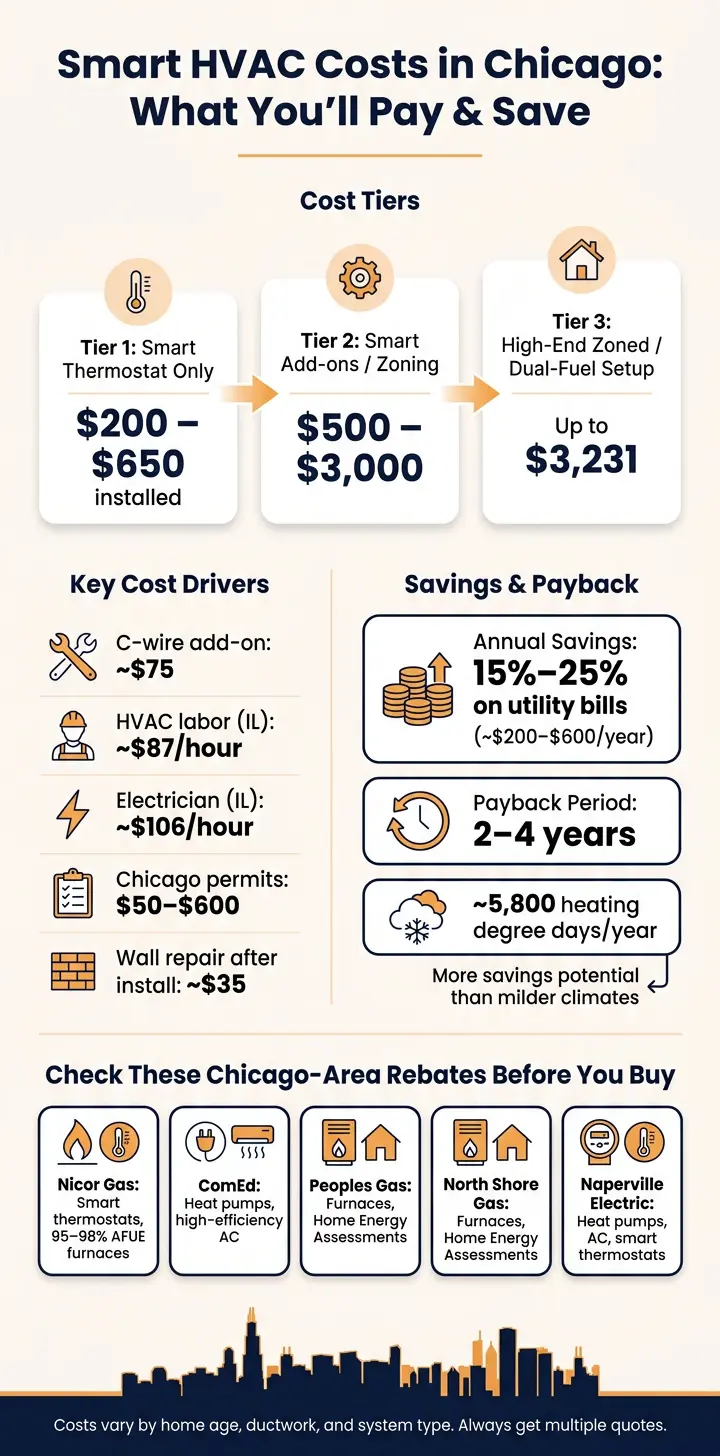
Smart HVAC Costs in Chicago: What You’ll Pay & Save
Quick Comparison
| Option | Typical Cost | Best For | Main Cost Drivers | Savings Potential |
|---|---|---|---|---|
| Smart thermostat only | $200–$650 | Homes with a solid current HVAC system | Wiring, C-wire, labor | Low to moderate |
| Smart add-ons / zoning | $500–$3,000 | Multi-story homes, hot/cold spots | Dampers, sensors, setup time | Moderate |
| Full smart HVAC setup | Higher, based on equipment and retrofit work | Older homes or major system replacements | Equipment, electrical work, ductwork, permits | Moderate to high |
My takeaway: If my HVAC system in Chicago still works well, a thermostat or zoning upgrade may be the lower-cost move. If my house has uneven temps, old ducts, or I’m already replacing equipment, a broader smart setup may make more sense.
Typical smart HVAC costs in Chicago
Installed prices in Chicago tend to be higher. Labor costs more, permits can add friction, and retrofit work gets tougher in older homes.
There’s also a simple reason these upgrades matter more here: Chicago has long heating seasons. When your system runs for months, better control can pay off more than it would in a milder place.
The main price buckets are thermostat-only upgrades, smart add-ons, and full system replacements.
Smart thermostat device and installation costs
A smart thermostat device usually costs $100 to $400, depending on the brand and feature set. Professional installation adds about $75 to $400, which puts the total installed price for most homes at roughly $200 to $650. In Chicago, higher labor rates often push that total toward the top end.
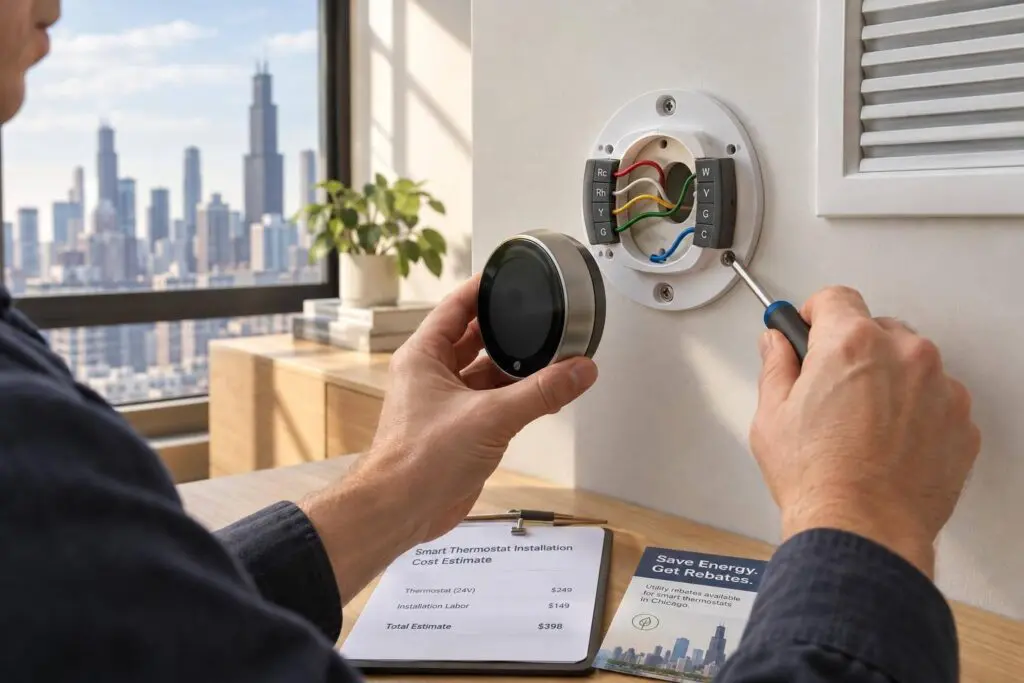
Older Chicago homes can add another wrinkle. If the furnace or boiler doesn’t have a C-wire, the installer may need to add a relay or run new wiring. A C-wire addition alone costs around $75.
If you go with a premium setup that includes multiple sensors or zoning, installed costs can climb to $1,077 per unit.
That lower-cost route makes the most sense when the current HVAC system is still in decent shape.
Smart add-ons versus full HVAC replacements
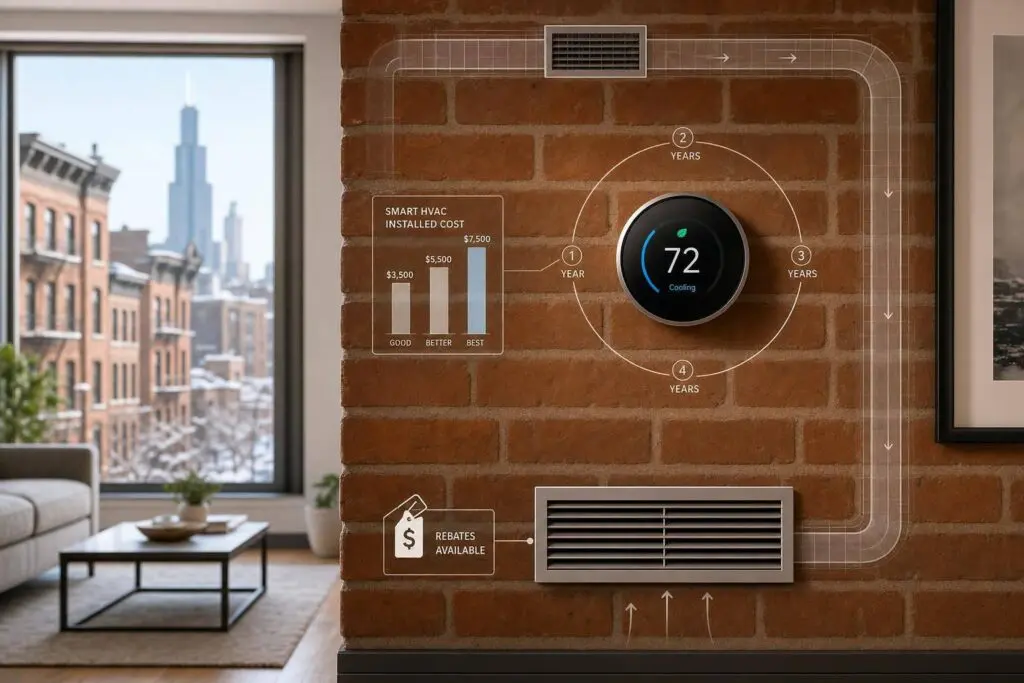
Smart add-ons like thermostats, motorized zoning dampers, and Wi-Fi sensors usually land in the $500 to $3,000 range and work with the system you already have. That’s often the easier path if you want more control without swapping out major equipment.
Full HVAC replacements cost more and may call for electrical upgrades or ductwork changes. Rebates can help, but they usually apply to high-efficiency equipment, which may shorten payback.
Installed cost ranges by system type
The table below sums up typical installed ranges for common Chicago upgrade scenarios:
| System Type | Estimated Installed Cost | Key Chicago Factors |
|---|---|---|
| Smart thermostat only | $200 – $650 | C-wire or relay may be needed in older homes |
| Smart add-ons / zoning controls | $500 – $3,000 | Motorized dampers; useful for multi-story homes |
| Ductless mini-split | Varies by equipment | Installation can be labor-intensive in finished spaces |
What drives smart HVAC costs up or down in Chicago
Older homes, insulation gaps, and ductwork limitations
Chicago installs often land near the high end of the price ranges for a simple reason: older homes make the job harder.
A lot of homes in Chicago have insulation gaps, drafty windows, and leaky ductwork. When those issues are left alone, the HVAC system has to run longer and work harder, which can cut into the savings a smart setup is supposed to bring. In many cases, duct sealing is the first job that needs to happen before a smart upgrade makes sense, and that adds another charge to the invoice.
Multi-story homes can push costs up too. They often need zoning and extra sensors so the system can handle different floors better. That means more parts, more setup, and more labor.
Homes without ductwork or without the right wiring run into a different kind of problem. Installing new refrigerant lines or low-voltage wiring through finished walls takes time, and it usually means patching drywall afterward. Budget about $35 for wall repair and finish work after thermostat replacement.
Labor rates, permits, and retrofit complexity
Labor is a big part of the price in Chicago, and it’s not cheap.
In Illinois, HVAC mechanics cost about 25.8% above the national mean, at roughly $87 per hour, while electricians run about $106 per hour. That alone can move a quote up fast, especially when the job calls for both trades.
There’s also the paperwork side. Local inspections, HOA rules, and historic-district requirements can add admin time before the actual install is even done. And the system itself matters. A multi-stage furnace, heat pump, or dual-fuel setup takes more work to configure than a basic single-stage replacement, so the final quote usually comes in higher.
Chicago’s heating and cooling demands
Chicago gets about 5,800 heating degree days each year, which tells you a lot right away: furnaces put in long hours here.
In a place with heavy heating demand, even small inefficiencies can snowball over time. That’s why smart scheduling tends to deliver more in Chicago than it might in a milder area. Summer adds its own pressure, with cooling demand stacking onto those long heating seasons.
Features like geofencing, weather-data integration, and remote monitoring make more sense in Chicago than they might elsewhere because they help systems adjust to sharp seasonal shifts. When you’re looking at higher install costs, that’s the part to keep in view: what those controls can save once the system is up and running.
Next, weigh those higher upfront costs against the control and operating savings smart systems can produce.
Smart HVAC vs. standard HVAC: cost, control, and savings
Upfront price and installation differences
In Chicago, the price gap is pretty small if you’re only adding a smart thermostat. It gets much bigger when you move into zoning or dual-fuel controls.
That’s where costs start to climb. Zoning systems with motorized dampers, multi-sensor arrays, and C-wire or power work can add $500–$3,000 above the base equipment price. In the Chicago market, a high-end zoned or dual-fuel smart setup can reach $3,231.
That’s not just a pricier version of the same thing. It’s a different setup altogether. Instead of treating the whole house like one big box, it manages temperature room by room. In older Chicago homes, that can make a big difference, especially when one bedroom feels like a freezer and the upstairs runs too warm.
Operating savings and payback in a heating-heavy climate
In a city where heating does a lot of the heavy lifting, the big issue is payback. How long does it take for those extra controls to earn their keep?
That matters even more in homes with older ductwork, drafty rooms, or uneven floors, where basic control tends to fall short. Smart controls can cut annual utility bills by 15–25%, which works out to about $200–$600 in Chicago.
Those savings come from reducing furnace runtime in winter and trimming wasted cooling in summer. Payback often falls in the 2-to-4-year range. On top of that, smart monitoring can help reduce wear and spot problems sooner.
Comparison table: smart HVAC vs. standard HVAC
The table below shows where the higher upfront cost starts to make sense.
| System Type | Typical Upfront Cost | Installation Complexity | Control Features | Comfort Benefits | Typical Savings | Best Fit |
|---|---|---|---|---|---|---|
| Standard HVAC | Lower | Low; standard wiring | Manual or basic programmable | Single-zone; prone to hot/cold spots | Baseline | Budget-conscious owners of smaller, single-zone homes |
| Smart HVAC | Higher (+$500–$3,000) | Moderate to high; may need C-wire, sensors | Remote control, scheduling, geofencing, usage reports | Multi-zone; steady room-by-room temps | 15–25% annual reduction | Older brick/frame homes; multi-story houses with high heating bills |
Rebates, payback, and choosing a local installer
Chicago-area rebates and smart thermostat discounts
Rebates can help cut the gap between the sticker price and what you actually pay. In the Chicago area, a few utility providers offer equipment rebates and smart thermostat discounts that are worth checking before you buy.
| Utility Provider | Available Rebates/Services |
|---|---|
| Nicor Gas | Gas furnaces (95%–98% AFUE), smart thermostats, free energy-saving kits |
| ComEd | Air source heat pumps, high-efficiency central AC |
| Peoples Gas | Gas furnaces, Home Energy Assessments |
| North Shore Gas | Gas furnaces, Home Energy Assessments |
| Naperville Electric | Heat pumps, central AC, smart thermostats |
Federal and state programs may also cut costs for qualifying heat pumps and high-efficiency equipment. Check current eligibility before you buy.
Once rebates bring down the sticker price, the installer often becomes the next big factor in total cost.
Why professional setup matters for comfort and savings
In Chicago, labor and code compliance can shift the final price almost as much as the equipment itself.
Poor sizing, wiring, or airflow can wipe out the savings you expected. Chicago permits usually add $50 to $600, and work done without permits can void rebates or insurance coverage. That’s why a licensed contractor matters. They handle permits and make sure the job meets Chicago code.
Eco Temp HVAC serves Chicagoland with smart thermostat installation, HVAC repair, and maintenance.
Conclusion: Key cost takeaways for Chicago homes
For most Chicago homes, smart thermostat projects usually cost $200 to $650 installed, while broader smart HVAC upgrades often land in the $500 to $3,000 range. The two biggest ways to keep total cost down are simple: use available rebates and make sure the installation is done right.
FAQs
Do I need a C-wire?
Yes, probably. About 90% of smart thermostats need a C-wire to supply steady power for Wi‑Fi and screen features.
The easiest way to check is to snap a photo of your current thermostat wiring terminals, then run it through the compatibility tools from Nest or Ecobee. If your setup doesn’t have a C-wire, Eco Temp HVAC can help with professional installation, which usually runs $50 to $150.
Is zoning worth it for my home?
Zoning can help if you want to cut down on hot and cold spots by setting different temperatures in different rooms.
It works with motorized dampers and special thermostats that direct heating or cooling to the areas that need it most. In the Chicago area, adding a zoning system usually costs $2,000 to $3,000.
Which rebates can lower my cost?
In Chicago, HVAC costs can come down with utility rebates from ComEd and Nicor Gas when you install qualifying energy-efficient equipment. That can include high-efficiency furnaces, air conditioners, heat pumps, and smart thermostats.
You may also qualify for federal tax credits that cover up to 30% of eligible installation costs. On top of that, HEAR rebates may be available for income-qualified homeowners. Eco Temp HVAC can help you figure out which rebates and tax credits apply to your project.