
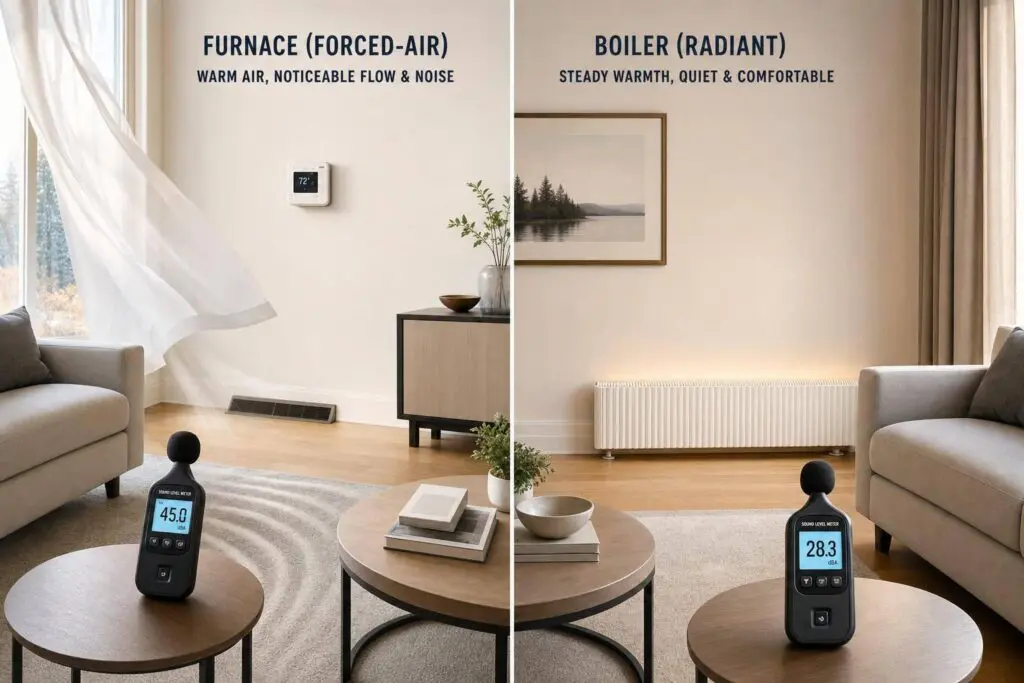
If I want heat fast, I’d pick one of the new furnaces available today. If I want quieter, more even heat, I’d lean toward a boiler. That’s the short answer.
Here’s the plain-English version:
- Furnaces heat air and blow it through ducts.
- Boilers heat water or steam and send it through radiators, baseboards, or floor tubing.
- A furnace usually gives me warm air within minutes, but I may notice more airflow, more dust movement, and more sound.
- A boiler usually feels steadier and quieter, but it can take longer to warm the house after I change the thermostat.
- In most homes, the best choice depends on what system is already there: ducts usually point to a furnace, while radiators or radiant floors usually point to a boiler. Professional HVAC services can help determine which system is best for your specific layout.
If I’m comparing day-to-day comfort, I’d look at four things first: response time, temperature swings, airflow, and noise. Most homes feel best around 68–72°F, and indoor humidity often feels best in the 25% to 50% range during winter.
Quick Comparison
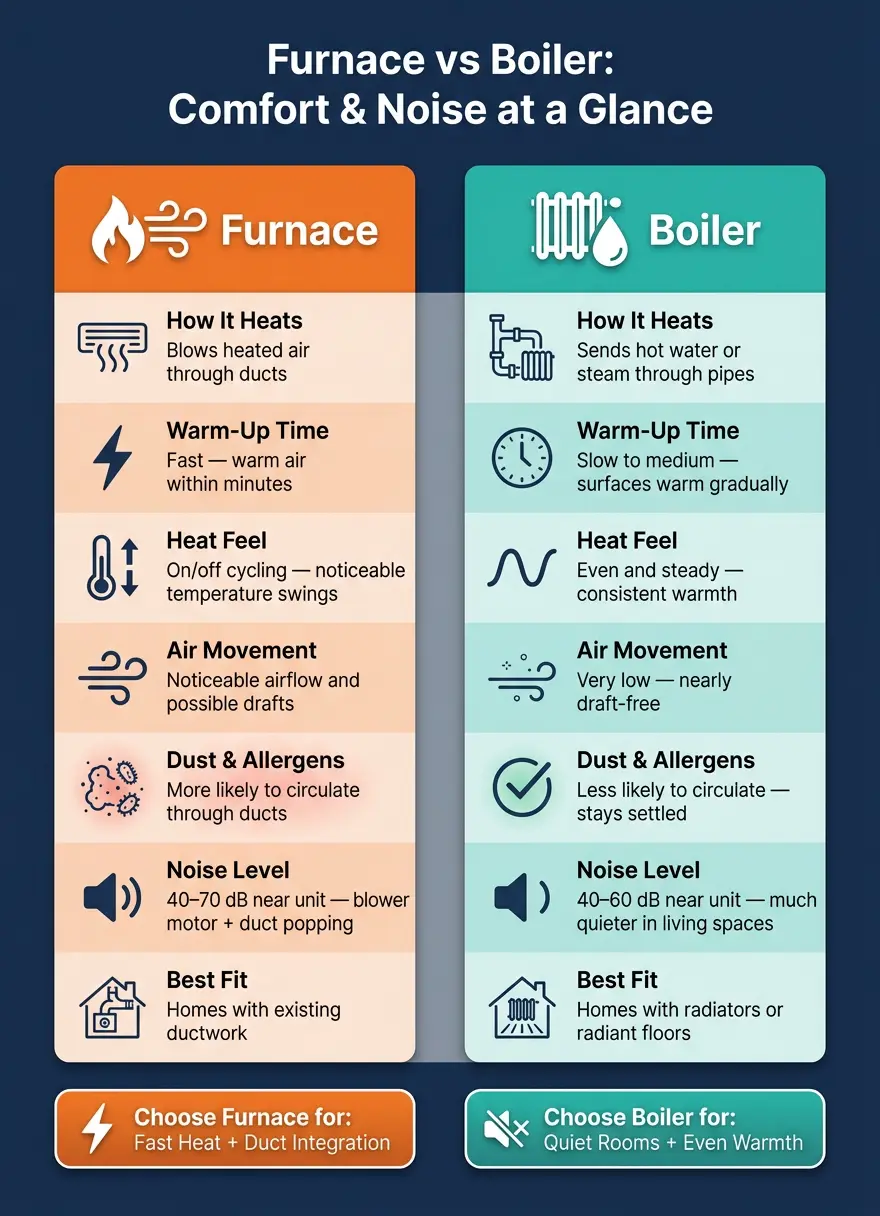
| Factor | Furnace | Boiler |
|---|---|---|
| How it heats | Blows heated air through ducts | Sends hot water or steam through pipes |
| Warm-up time | Fast | Slow to medium |
| Heat feel | More on/off cycling | More even and steady |
| Air movement | More noticeable | Very low |
| Dust/allergen movement | More likely to circulate | Less likely to circulate |
| Noise | Blower and vent noise | Pump hum and light pipe sounds |
| Sound near unit | About 40–70 dB | About 40–60 dB |
| Best fit | Homes with ducts | Homes with radiators or radiant heat |
So if I care most about fast heat, a furnace stands out. If I care most about quiet rooms and steady warmth, a boiler often feels better.
Furnace vs Boiler: Comfort & Noise Comparison
Comfort Comparison: Fast Warm Air vs. Steady Radiant Heat
Furnace Comfort: Fast Heat With More Air Movement
A furnace shines when you want heat fast. If you bump the thermostat up by 2–3°F after a cold Chicago commute, warm air can start coming through the vents within minutes. That quick reaction is a big plus during the worst Chicagoland cold snaps, when temperatures can sink well below zero.
The downside is how that heat feels over time. Furnaces turn on, warm the space, then shut off, so you can get a burst of heat followed by a mild cool-down before the next cycle. Rooms close to supply vents often feel warmer than rooms at the far end of the ductwork, sometimes by several degrees. In older Chicago homes, bad duct sizing or poor balancing can make those hot and cold spots much more noticeable.
Boiler Comfort: Even Heat With Fewer Drafts
Boiler heat feels different from the start. Instead of blowing hot air into the room, radiators, baseboards, or in-floor radiant tubing warm the surfaces around you – the floors, walls, and even nearby furniture. That tends to create a steadier kind of warmth that feels more even from one side of the room to the other, and from floor to ceiling.
Radiant heat also often feels comfortable at a slightly lower thermostat setting because the surfaces in the room are warmer. During a Chicagoland winter, that can make a big difference in how the space feels. The catch is response time. Radiant floors in particular can take hours to catch up after you change the thermostat. Smart or programmable thermostats that learn or follow your schedule can help a lot here.
Air Quality, Humidity, and Zoning Differences
Comfort isn’t just about temperature. Air movement, humidity, and room-by-room control matter too.
Furnaces move air, so they can also move dust, pet dander, and allergens through the ductwork. A clean filter and regular duct cleaning help, and a whole-house humidifier can make winter air feel less dry. Indoor humidity around 25% to 50% is commonly recommended for comfort.
Boilers don’t blow air, which means they don’t filter air either. Dust and allergens are more likely to stay settled instead of circulating, which may help people with asthma or allergies. If you need filtration, separate air purifiers or ventilation equipment can do that job. Both systems can be zoned, but boiler setups often offer tighter room-by-room control than duct dampers.
Here’s how the day-to-day comfort tradeoffs look:
| Comfort Factor | Furnace (Forced-Air) | Boiler (Radiators / Radiant) |
|---|---|---|
| Response time | Fast; warm air at vents within minutes | Slow–medium; surfaces warm gradually |
| Temperature stability | Moderate; noticeable swings between cycles | High; even temperatures once up to temp |
| Drafts / air movement | Noticeable airflow; possible drafts near vents | Very low; generally draft-free |
| Hot/cold spots | More common with poor duct design or balance | Less common in well-designed systems |
Boiler vs. Furnace [Quick Overview]
Noise Comparison: Blower Sound vs. Pump and Burner Sound
If comfort is one big difference, noise is the other.
Furnace Noise: Fans, Airflow, and Duct Expansion
Furnaces tend to be louder because they move heated air through ducts. A blower motor pushes that air through the duct system and out through supply vents in each room. And that blower creates noise in two places: the mechanical hum from the motor and the rushing air sound you hear at the registers.
Most residential furnaces run at about 40–70 dB near the unit. That’s a pretty broad range – from library-quiet to something closer to a vacuum. Variable-speed furnaces are usually quieter because they spend most of their time running at a lower output. In a bedroom or home office at night, that can make a clear difference.
There’s also a second sound that surprises a lot of people: duct popping. When the furnace starts or stops, metal ductwork expands and contracts as the temperature shifts. That can lead to ticking or banging noises. At night, it can sound a lot louder than it is. Insulating the ductwork can help cut that down. A shrieking or squealing sound usually points to a worn blower belt or failing motor bearings, and that needs professional attention.
Boiler Noise: Burner Operation, Pump Hum, and Pipe Issues
Boilers usually have a quieter day-to-day sound profile. The two main noises are burner ignition when the system calls for heat and a low hum from the circulation pump, which moves hot water through the system. Boilers generally operate in the 40–60 dB range near the equipment and are often nearly silent in living spaces.
Because boilers use closed-loop piping, they avoid the rushing air noise that comes with furnaces. The only building-related sound you may notice is a light tick from pipes expanding.
Still, some boiler sounds are warning signs. Gurgling or bubbling often means air needs to be bled from the lines. Kettling – that whistling teakettle sound – usually points to lime scale buildup on the heat exchanger. Vibration can signal a pump problem. None of those are “wait and see” issues. They call for a professional look.
| Noise Source | Furnace | Boiler |
|---|---|---|
| Primary sound | Blower motor and air rushing through vents | Burner ignition and circulation pump hum |
| Distribution noise | Rushing air at supply and return vents | Quiet water flow through pipes |
| Structural noise | Ductwork expansion (popping, clicking) | Occasional pipe expansion (light ticking) |
| Typical volume | 40–70 dB | 40–60 dB near the equipment; much quieter in living spaces |
| Warning sounds | Whistling (dirty filter), shrieking (worn belt), banging (delayed ignition) | Gurgling (air in lines), kettling (scale buildup), vibration (pump issues) |
Once noise is out of the way, the next step is figuring out which system matches the home’s layout and day-to-day use.
Which System Fits Your Needs in Chicagoland
In Chicagoland, the best heating setup usually comes down to what your house already has. If the home has ducts, a furnace often makes the most sense. If it has radiators or radiant floor tubing, a boiler is often the better fit.
That’s why the first step is usually simple and practical: look at the equipment already in place. Comfort matters too, of course, but it usually comes after that.
When a Furnace Makes More Sense
If your home already has ductwork, a furnace is usually the most practical option. It uses the ducts that are already there, which helps you avoid the cost and mess of a full system change.
A furnace can also tie heating, central air conditioning, and air filtration into one setup. That can be a big plus if your main goal is to make the most of the duct system the house already has.
When a Boiler Makes More Sense
Older Chicagoland homes with cast iron radiators or radiant floor heating are often a natural match for a boiler. These systems are built around pipes and radiators, not ducts, so a boiler usually fits the home without major changes.
That can help keep the home’s original structure intact. Boilers also don’t move dust or pet dander around the way forced-air systems can, which may help people dealing with allergies or other breathing issues.
Why System Design Matters More Than System Type
The type of system matters, but the way it’s designed and cared for often matters more. Sizing, duct layout, pump choice, zoning, and yearly maintenance all affect comfort and noise levels.
Eco Temp HVAC serves Chicagoland homes and can check your current equipment, zoning, and maintenance needs. The aim is simple: a system that fits the house and keeps working the way it should.
Conclusion: Key Comfort and Noise Tradeoffs
The tradeoff is pretty simple: furnaces heat up fast, but they usually bring more moving air and more noise, while boilers run quieter and give off steadier warmth – but they take longer to react when you change the thermostat. That one difference has a big effect on how each system feels day to day.
Boilers give you more even heat. Furnaces get warm air into the house faster. So the better pick depends less on the system name and more on your home’s setup and the kind of comfort you want. A furnace makes sense when fast heating and existing ductwork are part of the picture. A boiler makes sense when you want even, draft-free heat and less noise.
Good system design and regular maintenance matter too. In the end, the best choice is the one that fits your home, your tolerance for noise, and the way you want your heat to feel.
FAQs
Which system feels more comfortable all winter?
Boilers usually deliver steadier, more even comfort than furnaces. They heat with water or steam instead of pushing hot air through ductwork, so you don’t get the drafts and temperature swings that often come with forced-air systems.
The heat also tends to feel softer and more gradual. And because there’s no air blowing through vents, boilers don’t move dust or allergens around the house in the same way furnaces can.
Furnaces often warm up a space faster. But when it comes to keeping a home consistently comfortable through winter, boilers have a strong reputation for that slow-and-steady kind of heat.
Is a boiler always quieter than a furnace?
Not always. Boilers are often quieter than furnaces because they use hydronic heat instead of forced air.
Here’s the simple version:
- Furnaces push warm air through ductwork, and that airflow can create noise.
- Boilers move hot water or steam through pipes, which is usually a lot quieter.
That said, some modern high-efficiency furnaces can be very quiet too, especially models with variable-speed technology. So while boilers often have the edge on noise, a newer furnace can still run with very little sound.
Can I switch from a furnace to a boiler?
Yes, but it’s usually a complex project.
A boiler can deliver more even, radiant heat, but switching from a furnace often means a complete system overhaul. In plain English, you’re not just swapping one unit for another. You’re changing how heat moves through your home.
That usually involves:
- New equipment
- New piping
- Removing the need for duct-based heat delivery
Because this kind of switch changes a big part of your home’s infrastructure, it’s often more practical to replace your system with one that fits your current setup. Eco Temp HVAC can help evaluate your options.