
Noise from HVAC systems can make your home or office feel less comfortable, even if the temperature and air quality are perfect. Here’s why: unwanted sounds – like humming, rattling, or banging – can disrupt sleep, focus, and relaxation. They can also make people perceive the air as stuffier or warmer than it actually is.
Key takeaways:
- HVAC noise comes from fans, compressors, ductwork, or vibrations.
- Noise levels above 40 dB can disturb sleep and focus.
- Sudden, intermittent sounds are more distracting than steady ones.
- Perception of air quality worsens as noise increases.
Solutions:
- Upgrade to quieter equipment like variable-speed systems or ductless mini-splits vs. central HVAC.
- Use larger ducts, acoustic liners, or sound traps to reduce duct noise.
- Install vibration isolation pads or sound blankets to address structural noise.
- Regular maintenance (like tightening parts and cleaning filters) keeps systems quieter over time.
Reducing HVAC noise not only improves comfort but also enhances your overall well-being. Simple fixes like adjusting ductwork or installing quieter systems can make a noticeable difference.
How to Quiet a Noisy Forced-Air System | This Old House

HVAC Noise and Its Effect on Comfort
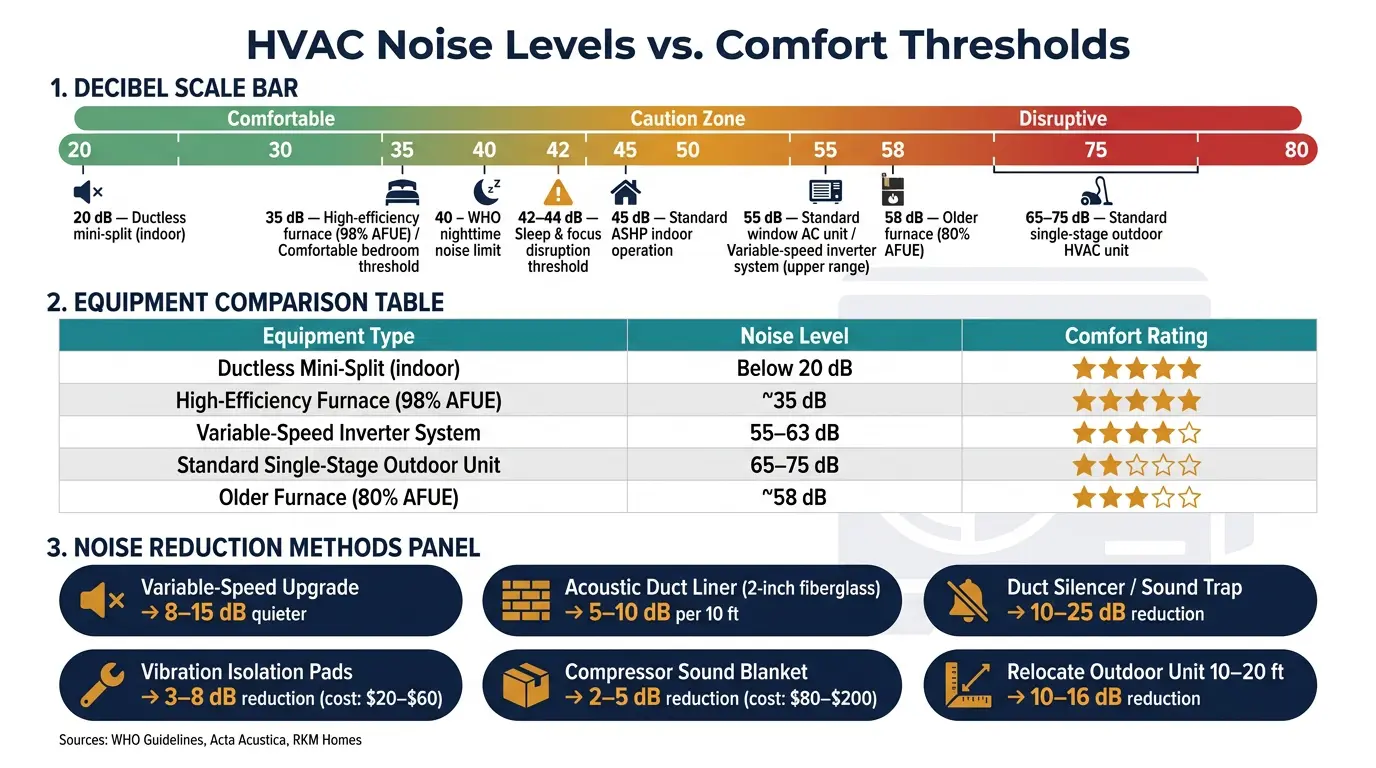
HVAC Noise Levels vs. Comfort Thresholds: What’s Too Loud?
Common Causes of HVAC Noise
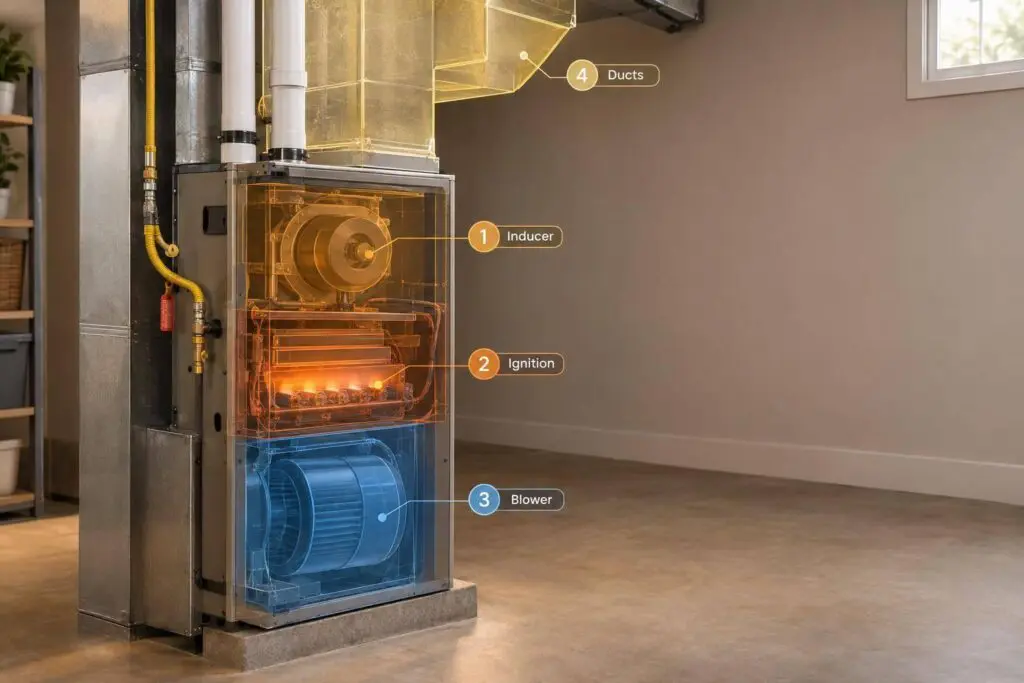
HVAC systems can generate noise from various components, and pinpointing the source is crucial for addressing the issue. For instance, fans and blowers create a steady whir as they move air through the system, while compressors often produce a hum or buzz, especially during startup. Meanwhile, ductwork can amplify and carry sounds from the blower into living spaces, with air turbulence around ducts, elbows, dampers, and registers adding to the noise.
Mechanical wear and tear can make things worse. Issues like unbalanced blades, worn bearings, or loose hardware can significantly raise noise levels. Here’s a handy guide to match specific sounds with their potential causes:
| Sound Type | Likely Cause |
|---|---|
| Rattling / Clanking | Loose hardware, debris, or clogged filters |
| Humming / Buzzing | Electrical issues, failing motors, or compressor noise |
| Squealing | Worn fan belts or motor bearing problems |
| Whistling | Airflow restrictions, undersized ducts, or dirty filters (which often necessitates professional air duct cleaning) |
| Banging | Duct expansion/contraction or broken components |
By understanding these noise sources, it becomes easier to grasp how they influence comfort and why certain decibel levels can feel more disruptive.
Decibel Levels and Comfort
The decibel (dB) scale measures sound intensity, with every 10 dB increase doubling the perceived loudness. Most single-stage outdoor HVAC units operate between 65–75 dB, comparable to the sound of a vacuum cleaner. In contrast, variable-speed inverter systems can lower that range to 55–63 dB at reduced speeds, which is closer to the volume of a casual conversation.
For indoor spaces, especially bedrooms, noise levels around 35 dB are generally comfortable. However, once low-frequency sounds exceed 42–44 dB, they can start to interfere with sleep and focus. To illustrate, a high-efficiency furnace with a 98% AFUE rating can run as quietly as 35 dB indoors, whereas older models with 80% AFUE might reach 58 dB.
"Higher A-weighted Sound Pressure Level (SPL), Loudness, Roughness, and Tonality are associated with increased Annoyance and Arousal and decreased Valence." – Volkan Acun, Salford Acoustics Innovation Institute
Context plays a big role too. For example, a unit running at 37 dB might seem overly loud in a quiet rural bedroom at night but would likely go unnoticed in a bustling urban environment.
Continuous Noise vs. Intermittent Noise
The impact of HVAC noise isn’t just about how loud it is but also about its consistency. Continuous noise, such as the steady hum of a motor or the soft airflow through vents, often blends into the background over time. This is especially true for variable-speed systems, which operate for longer periods at quieter levels.
Intermittent noise, on the other hand, is much harder to ignore. Sudden rattles, banging during startup, or irregular clicking sounds can disrupt comfort because their unpredictability keeps the brain alert.
Research supports this: transitions between operating modes – like a heat pump shifting from low to high capacity – can feel more annoying than steady sounds, even if the overall decibel level is the same. In the end, the way a noise behaves can be just as important as its volume when it comes to comfort.
How HVAC Noise Affects Daily Life
Effects on Sleep and Relaxation
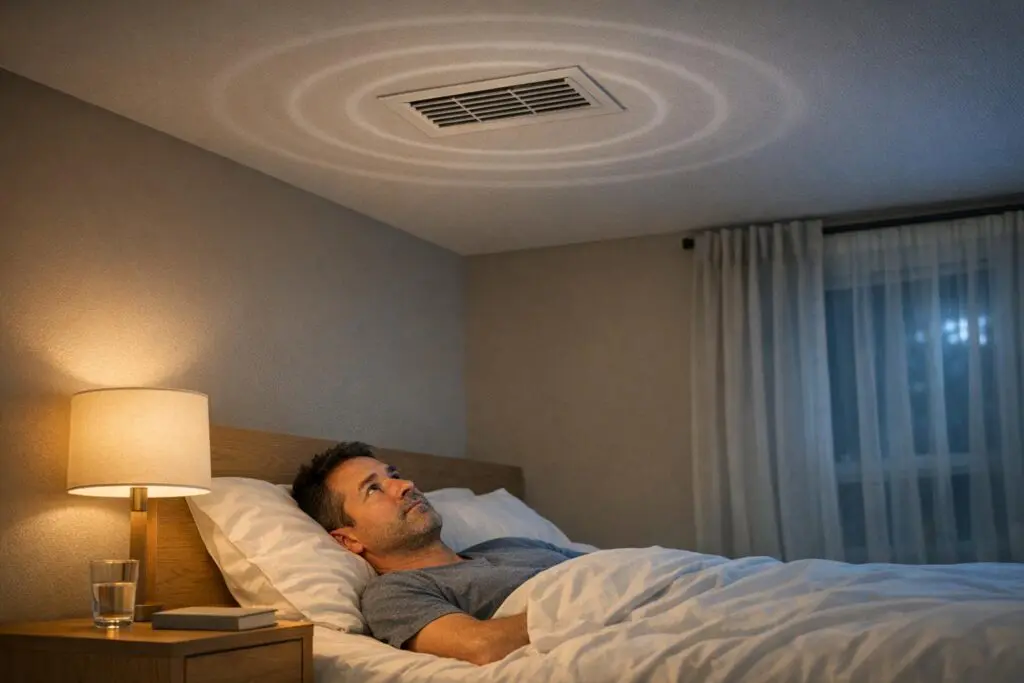
HVAC noise can seriously interfere with a good night’s sleep. According to the WHO, nighttime noise should stay under 40 dB to avoid sleep disturbances. However, indoor noise from standard air source heat pumps (ASHPs) often hovers around 40–45 dB during normal operation – right at that threshold.
But it’s not just about how loud the noise is. Studies using polysomnography (a type of sleep study) reveal that noise from heat pumps can increase sleep disruptions, especially when windows are partially open. Over time, consistent exposure to even moderate mechanical noise can elevate stress hormones and blood pressure. This makes certain groups, like children and older adults, particularly vulnerable. These ongoing interruptions can pile up, making daily life more exhausting and less comfortable.
Effects on Focus and Productivity
Trying to focus in a noisy environment? A loud HVAC system can make it much harder. Research shows that noise from ASHPs can increase irritation and make concentrating more difficult, especially when the noise has tonal or rough qualities.
"ASHP noise can adversely affect sleep and daytime functioning… [leading to] daytime increases in annoyance, concentration difficulties, and mood disturbances." – Acta Acustica
Interestingly, the type of noise often matters more than the volume. For instance, a steady hum at 45 dB might be easier to tune out than a system that starts and stops with a loud thump. Persistent sounds, like a whining compressor or an unbalanced fan, can make focusing even tougher. Background noise rising from 45 to 60 dBA has also been shown to reduce speech recognition, which is a big problem in home offices or study spaces. Beyond just productivity, HVAC noise can even influence how people feel about the air quality in their space.
How Noise Shapes the Perception of Air Quality
Interestingly, HVAC noise doesn’t just affect how you hear your environment – it can change how you feel about it. Studies suggest that as noise levels rise, people often perceive the air quality as worse, even if the temperature or air conditions haven’t changed.
"Thermal comfort decreased with increased noise level." – ScienceDirect
This phenomenon, known as a cross-modal effect, shows how a loud HVAC system can make a room feel stuffier or warmer than it actually is. People tend to feel most comfortable acoustically when the temperature is neutral. These findings underline the importance of controlling HVAC noise for both comfort and overall well-being.
Ways to Reduce HVAC Noise
Choosing Quieter HVAC Equipment
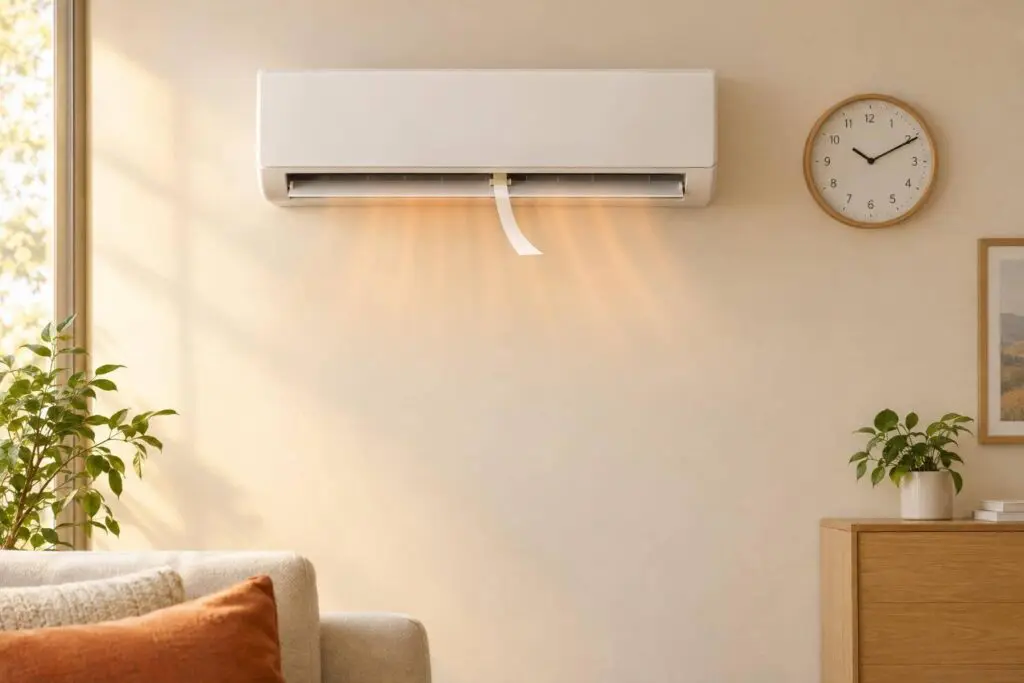
One of the most effective ways to reduce HVAC noise is by upgrading to variable-speed (inverter) technology. These compressors generally operate at 30–70% capacity, making them 8–15 dB quieter than traditional single-stage units. Another excellent option is ductless mini-split systems, which are known for their quieter operation. Some models run at noise levels below 20 dB indoors, a stark contrast to the 55 dB typical of standard window units. For residents in the Chicagoland area, Eco Temp HVAC offers Mitsubishi ductless mini-split systems, backed by a 12-year warranty as part of their Mitsubishi Diamond Elite Contractor certification.
Proper sizing of your HVAC unit also plays a crucial role in noise reduction. An oversized unit tends to short-cycle, creating frequent and disruptive noise as it repeatedly turns on and off. On the other hand, an undersized unit operates continuously at high speeds, which can also be noisy. Ensuring the unit is correctly sized for your space is essential before installation.
Beyond selecting quieter equipment, optimizing the ductwork design can further minimize noise.
Improving Ductwork and Airflow Design
A significant portion of HVAC noise originates from the ductwork. One common issue is high air velocity, which can produce noticeable rushing or whooshing sounds. In residential systems, supply duct velocity exceeding 900 ft/min is often the culprit. Using larger ducts slows the airflow, effectively reducing noise.
To address noise within the ducts, consider using acoustic duct liners or duct silencers. For example, installing a 2-inch fiberglass liner on supply ducts can reduce noise by 5–10 dB per 10 feet. Similarly, duct silencers (or sound traps) can cut noise by 10–25 dB. Focus these treatments on the first 10–15 feet of ductwork closest to the air handler, where noise levels are typically highest. Additionally, sharp 90° elbows in ductwork can create turbulence and noise. Retrofitting these elbows with turning vanes is a practical way to smooth airflow without needing to replace the ductwork.
Once airflow noise is under control, addressing structural vibrations is the next step to achieving a quieter system.
Reducing Vibrations and Structural Noise
Mechanical vibrations can significantly contribute to HVAC noise, but there are effective ways to tackle this issue. Start by placing vibration isolation pads ($20–$60) under outdoor units. For indoor air handlers, a DIY isolation platform made from plywood and cork or neoprene (costing around $50–$100) can reduce structure-borne noise by 3–8 dB and 4–7 dB, respectively.
Another useful addition is a flexible duct connector between the air handler and rigid ductwork. This prevents the ductwork from amplifying vibrations like a speaker cone, cutting vibration noise by 5–15 dB.
"A quiet system requires integrating low-noise components with thoughtful placement, control, and commissioning." – RKM Homes
If the outdoor unit is a major noise source, relocating it 10–20 feet away can reduce noise levels by 10–16 dB. When relocation isn’t an option, using a compressor sound blanket – typically made of mass-loaded vinyl and fiberglass – can reduce noise at the source by an additional 2–5 dB.
Maintenance and Professional Help for HVAC Noise
Routine Maintenance to Keep Noise Down
HVAC systems tend to get noisier as parts wear out, loosen, or accumulate debris. Routine maintenance helps catch these issues early, keeping your system quieter and preventing expensive repairs.
A typical tune-up addresses several noise-related problems: tightening screws and hardware, lubricating motors and fan bearings, and cleaning fan blades to ensure balance. Replacing air filters regularly also prevents airflow restrictions that can create whistling sounds. Additionally, keeping a minimum of 3 feet of clearance around the condenser unit reduces the risk of debris hitting the fan blades – a common cause of rattling.
Not only do well-maintained systems operate more quietly, but they can also cut energy costs by 10–15%. Regular check-ups improve performance and help identify small problems before they escalate into major issues.
Identifying and Fixing Noise Problems
Once you’ve established a maintenance routine, it becomes easier to spot and address specific noise issues. Recognizing unusual sounds early can save you from costly repairs down the line.
| Sound Type | Likely Cause | Common Fix |
|---|---|---|
| Squealing | Worn fan belts or motor bearings | Replace belt ($150–$400) or lubricate |
| Hissing | Refrigerant leak or duct gap | Repair leak, recharge system; seal ducts ($200–$600) |
| Grinding | Failing compressor or bearings | Replace component (may exceed $1,000) |
| Buzzing | Electrical issues (capacitors/relays) | Replace electrical components |
| Clicking | Ignition trouble or relays | Repair control board or relays |
In one case from 2022, a homeowner in suburban Chicago noticed a persistent hissing sound and reduced cooling efficiency. A professional inspection revealed a refrigerant leak at the compressor. The repair, which included fixing the leak and recharging the system, cost about $1,200. Addressing it early prevented a complete compressor failure, which would have been significantly more expensive.
"A quiet system usually means everything’s running smoothly. But if you start hearing banging, hissing, buzzing, or squealing, it could mean something’s not right inside." – Eddie Green HVAC
Grinding or persistent buzzing sounds should never be ignored. These often signal mechanical or electrical failures that require immediate professional attention. DIY fixes are unsafe in these situations.
Working With Certified HVAC Professionals
If routine maintenance and minor repairs don’t solve the problem, certified HVAC professionals bring the expertise and tools needed for more complex issues. Using advanced diagnostic tools like manometers for pressure testing or thermal imaging to locate duct leaks, technicians can pinpoint problems with precision.
This is especially important in areas like Chicago, where extreme temperature swings – from as low as -20°F in winter to over 100°F in summer – can stress HVAC systems. These temperature changes often cause popping and banging sounds, which are typically linked to duct expansion and contraction. Fixing these issues may involve professional sealing or adding structural support.
For homeowners in the Chicago area, Eco Temp HVAC is a reliable option. The company boasts an A+ rating from the Better Business Bureau (BBB) and over 100 five-star reviews. Their technicians hold certifications like Mitsubishi Diamond Elite Contractor, American Standard Customer Care Dealer, and Navien Service Specialist, ensuring they’re trained to handle brand-specific issues. Eco Temp also offers a maintenance membership that provides 10% off repairs, no overtime charges, and a lifetime warranty on completed repairs. With service locations across Chicago, St. Charles, Bartlett, Lemont, Downers Grove, and Palatine, they’re well-positioned to respond quickly throughout the region.
Conclusion: Better Indoor Air Comfort Starts With Noise Control
As discussed earlier, HVAC noise can disrupt sleep, hinder focus, and even affect how we perceive air quality. A 2026 study highlights that increased sound pressure levels directly correlate with higher levels of annoyance and arousal. Even the most efficient system can feel inadequate if it’s too loud.
Reducing noise doesn’t always mean a complete overhaul. Simple fixes like installing vibration isolation pads (priced between $20 and $60) or a compressor sound blanket (ranging from $80 to $200) can make a noticeable difference. For a bigger impact, optimizing ductwork or upgrading to variable-speed equipment can reduce noise levels by 10–25 dB.
"Achieving a quiet HVAC system requires an integrated approach that controls airborne and structure-borne sound… while balancing air performance, energy efficiency and maintainability." – RKM Homes
Neglecting your system can lead to what experts call "noise creep", where wear and debris add 5–10 dB over time. Regular tune-ups not only keep noise in check but also help maintain efficiency and comfort.
For homeowners in Chicagoland dealing with persistent noise problems, Eco Temp HVAC offers expert solutions. As a Mitsubishi Diamond Elite Contractor and American Standard Customer Care Dealer, their team can handle everything from ductwork adjustments to variable-speed system installations, ensuring your home remains both quiet and comfortable. Tackling HVAC noise is a crucial step toward achieving top-notch indoor comfort.
FAQs
Is my HVAC system too loud?
A faint hum is expected, but if your HVAC system starts making loud or strange noises, it might be a sign something’s wrong. For example, a whistling sound could mean there’s an issue with the ducts, while vibrations or rattling noises might stem from structural parts.
Some problems are easy to address, like tightening loose screws or cleaning the fan blades. However, if you hear grinding, banging, or buzzing noises that don’t go away, it’s time to call a professional. Eco Temp HVAC specializes in diagnosing and fixing these issues, helping Chicagoland homeowners enjoy a quieter, more efficient system.
Why does HVAC noise make a room feel stuffy?
HVAC noise can often signal restricted airflow, which might leave a room feeling stuffy and uncomfortable. This issue can stem from blocked filters, closed vents, or ductwork that’s too small to handle the system’s demands. On the flip side, an oversized HVAC system may shut off too quickly, failing to remove humidity effectively and leaving the air feeling damp and heavy. Eco Temp HVAC provides expert maintenance services to ensure proper airflow and system balance, helping your Chicagoland home stay fresh and comfortable year-round.
When should I call a pro for HVAC noises?
If noises persist or grow worse after you’ve tried basic fixes like tightening loose panels or clearing away debris, it’s time to bring in a professional. Some urgent warning signs that demand immediate attention include electrical buzzing, smoke, burning smells, loud banging, or grinding noises. Additionally, reach out to a technician if you experience a sudden spike in your energy bill, hear metal-on-metal sounds, or notice debris near critical components like the motor or electrical parts – attempting to clean these yourself could lead to further damage.