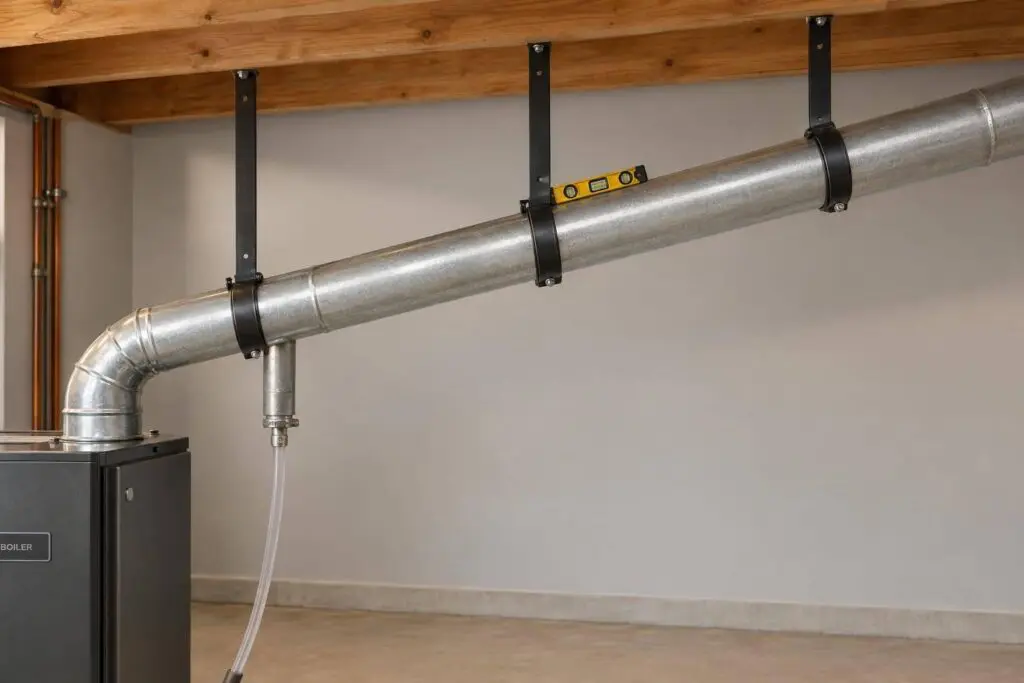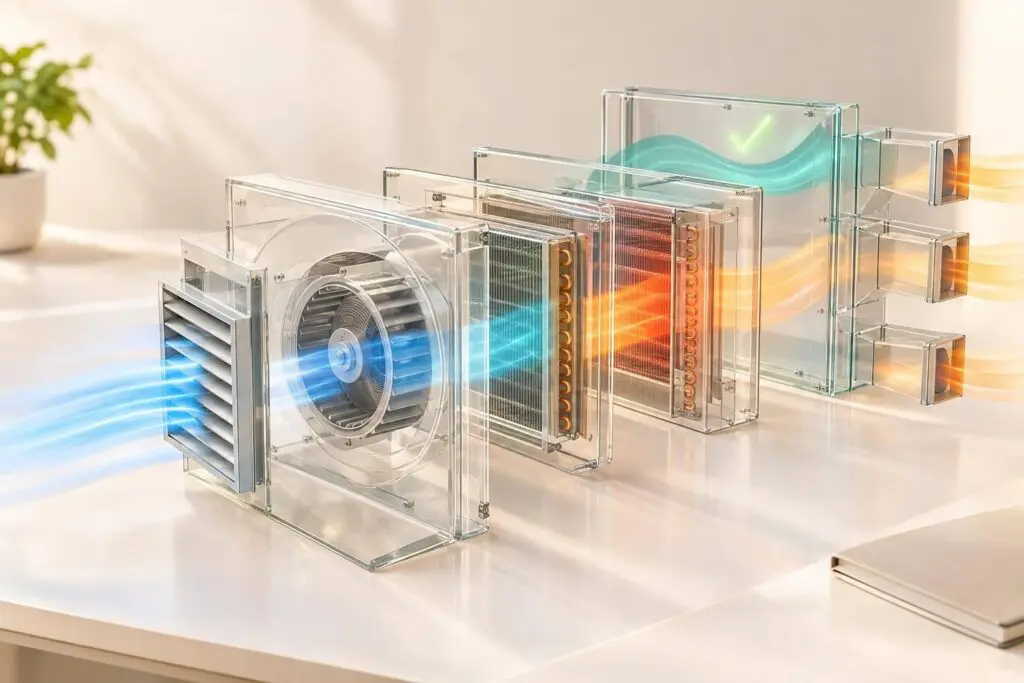

A boiler can look fine and still waste fuel or make unsafe flue gas. I’d boil this article down to one point: if you want to know whether a boiler is burning cleanly and sending heat into the building instead of up the vent, you need combustion testing.
Here’s the short version:
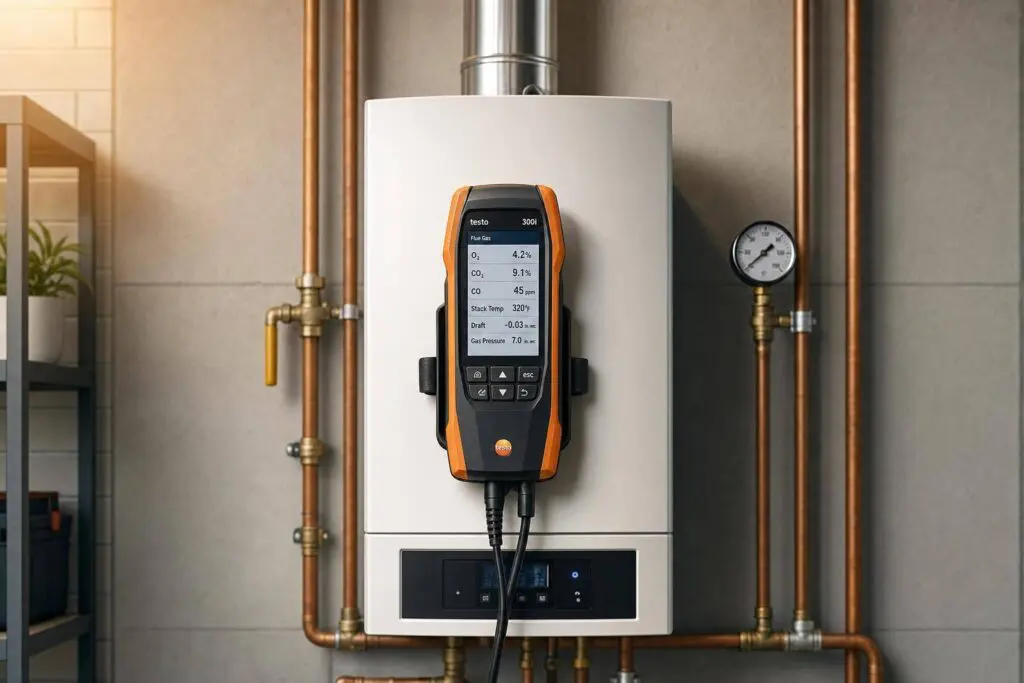
- I look at O₂, CO₂, CO, stack temperature, draft, and gas pressure
- CO under 50 ppm is a common target in the field
- Lower excess air can improve combustion results; one common rule of thumb is about 1% efficiency gain for each 1.3% drop in O₂
- Lower stack temperature can mean less heat loss; a common rule of thumb is about 1% gain for every 40°F drop
- Condensing boilers and non-condensing boilers do not use the same target readings
- The final target always comes from the manufacturer’s specs, not a generic number
If I’m checking a boiler, I don’t stop at flame color or a basic tune-up. I use a combustion analyzer, a manometer, and temperature readings after the unit reaches steady state. That tells me if the air-fuel mix is off, if the vent is pulling right, if CO is too high, or if heat-transfer surfaces may be dirty.
| Check | What it shows | Why it matters |
|---|---|---|
| O₂ / CO₂ | Air-fuel balance | Too much air sends heat up the flue |
| CO | Incomplete combustion | High CO is a safety problem |
| Stack temp | Heat leaving the boiler | Higher temp often means more loss |
| Draft | Vent movement | Poor draft can spill flue gas indoors |
| Gas pressure | Burner input | Wrong pressure can throw off all readings |
So if you want the simple answer, here it is: annual combustion analysis – often done before fall heating season – helps spot fuel waste, venting trouble, and unsafe CO levels before they turn into bigger problems.
How To: Combustion Analysis on High Efficiency Hydronic Boiler
sbb-itb-b5c10b1
Key Combustion Metrics That Affect Efficiency and Safety
These readings are what technicians use to tune a burner and check whether a boiler is running safely and using fuel well. Once the baseline is in hand, the job shifts from measuring to adjusting. Put simply, these numbers show where the boiler is wasting fuel, dumping heat up the vent, or drifting into unsafe operation.
O₂, Excess Air, and CO₂
High O₂ usually means too much excess air. And that extra air carries heat out the flue instead of keeping it in the system. EPA guidance gives a handy rule of thumb: about 1% efficiency gain for every 1.3% drop in O₂.
CO₂ moves the other way. As excess air comes down, CO₂ goes up. In most cases, higher CO₂ points to better combustion, at least until the equipment reaches its design limit. For natural gas, the theoretical maximum CO₂ is about 11.7%. In the field, well-tuned residential gas boilers often land around 8% to 10% CO₂.
That said, there isn’t one magic number for every boiler. Burner geometry, combustion chamber design, fuel type, and venting all affect what "good" looks like. That’s why technicians don’t tune to a generic target. They tune to the manufacturer’s listed combustion range.
O₂ and CO₂ make more sense when you read them together. A common field range for O₂ is about 4% to 10%, depending on boiler type, but the right window for any given unit comes from the manufacturer’s combustion chart.
Once the air-fuel mix is close, CO tells you whether the burner is still burning cleanly.
CO, Flue Temperature, and Draft
CO is the main safety reading. It’s measured in parts per million (ppm), and it points to incomplete combustion. A common field guide treats under 50 ppm as ideal, 50 to 100 ppm as acceptable, and anything above that as a problem that needs correction. But the final word always comes from the appliance manufacturer and local code requirements. If CO climbs while excess air is being reduced, that’s a red flag. Stop and fix the setup.
Net stack temperature gives a better view of heat loss than stack temperature by itself. It’s the stack temperature minus the combustion air temperature. If net stack temperature is high, more heat is leaving through the vent than it should. EPA guidance puts the gain at about 1% for every 40°F drop in stack temperature. Common causes of high stack temperature include dirty heat-transfer surfaces, too much excess air, and poor burner setup.
After checking combustion quality, draft shows whether the venting side is doing its job. Draft is flue pressure, measured in inches of water column (in. w.c.). Weak draft can let flue gas spill into the mechanical room. Too much draft can disturb the flame and throw off other combustion readings. The safe move is to verify draft with a manometer at the manufacturer’s test point before making final adjustments.
Taken together, O₂, CO₂, CO, stack temperature, and draft show whether the boiler is burning cleanly, moving heat into the system instead of up the vent, and sending flue gases out the way it should.
Tools Used for Boiler Combustion Analysis
Flame color by itself doesn’t tell you much. It can’t show excess air, CO, or efficiency. To get those numbers, you need calibrated instruments.
Portable Combustion Analyzers and Probes
A portable combustion analyzer is the main tool for this job. A probe goes into the test port and pulls a flue-gas sample, with the tip set at the manufacturer’s recommended sampling point in the flue stream. The analyzer then uses those readings to calculate CO2, excess air, stack losses, and combustion efficiency in real time.
Modern analyzers do more than just take a snapshot. They measure a broad set of flue conditions and calculate efficiency on the spot. Many models also log and store data by customer and equipment ID. That stored history makes it much easier to catch drift during annual service.
Manometers, Thermometers, and Support Tools
After the flue sample is measured, technicians check pressure and temperature with support tools. Digital manometers confirm gas supply pressure, manifold pressure, and draft in the vent, all measured in in. w.c.. This is a big deal on staged or modulating boilers, where gas pressure needs to be checked at both low and high fire.
Thermometers fill in the rest of the picture. Flue gas temperature goes straight into efficiency calculations, while ambient room temperature helps show whether enough combustion air is available. On hydronic systems, supply and return water temperatures help confirm that the boiler’s load and control strategy line up with its combustion tuning.
For condensing boilers, return water temperature matters a lot. Lower return temperatures lead to higher condensing efficiency. But there’s a catch: the vent and condensate handling need to be set up for the cooler flue gases that come with it.
Eco Temp HVAC uses calibrated combustion analyzers, manometers, and thermometers during boiler startup, service, and maintenance across Chicagoland. With the right tools in place, the next step is to check baseline readings and tune the burner.
How Technicians Test and Tune a Boiler
Preparation, Baseline Readings, and Test Conditions
Once technicians have baseline readings, they shift from measuring to tuning. But first, they do the basic safety checks. Before putting a probe into the flue, they check for gas leaks, make sure combustion-air openings are clear and sized to code, and inspect the burner, vent, and wiring for soot, corrosion, rollout, damage, or backdraft staining before testing.
After the boiler passes inspection, they let it warm up under normal load for 10–20 minutes. That step matters more than people think. A cold boiler or one that’s short-cycling can throw the numbers off. Excess air can look higher than it is, CO can bounce around, and the efficiency reading won’t show how the unit performs during normal operation.
When the boiler reaches steady state, the probe goes into the manufacturer’s test point in the flue stream. Then they wait 60–120 seconds for the readings to settle. At that point, they record:
- O₂
- CO₂
- CO
- stack temperature
- ambient temperature
- draft
- calculated efficiency
For modulating or two-stage boilers, they run the same test at both low fire and high fire. That’s because O₂ and CO can behave very differently at each firing rate.
Adjusting the Air-Fuel Ratio and Reading the Results
Those starting numbers tell the technician where to go next. The goal is pretty simple: cut excess air as much as possible while keeping CO within safe limits and keeping the flame steady. Adjustments should be small, one at a time, with a 1–3 minute pause after each change so the readings can settle. The target is the manufacturer’s range for O₂ and CO, with stable flame performance throughout.
The table below shows how common adjustments usually affect the main combustion readings. These are general patterns, not guarantees. The actual result depends on the boiler, so every change still needs to be checked against live analyzer data and the manufacturer’s specs.
| Adjustment | O₂ | CO | Stack Temp |
|---|---|---|---|
| Slightly close air shutter (lean burner) | ↓ | → or slight ↑ | ↓ or → |
| Increase gas manifold pressure (within spec) | ↓ | ↑ if pushed too far | ↑ |
| Open air shutter (rich burner, high CO) | ↑ | ↓ | ↑ or → |
When the numbers still won’t move into range after small changes, the readings start telling a story. High stack temperature paired with low efficiency often points to fouled heat exchanger surfaces. High CO with plenty of excess air can mean dirty or damaged burners. Draft that goes erratic, or CO that spikes when other exhaust appliances turn on, often signals a venting issue, like a blocked chimney, poor combustion air supply, or a shared vent problem. And if O₂ and CO₂ stay low and don’t react to air changes, that can point to a gas pressure problem, which technicians confirm with a manometer at the inlet and manifold.
Condensing boilers add another wrinkle, because return-water temperature affects both efficiency and venting behavior.
Condensing vs. Non-Condensing Boilers and Final Takeaways
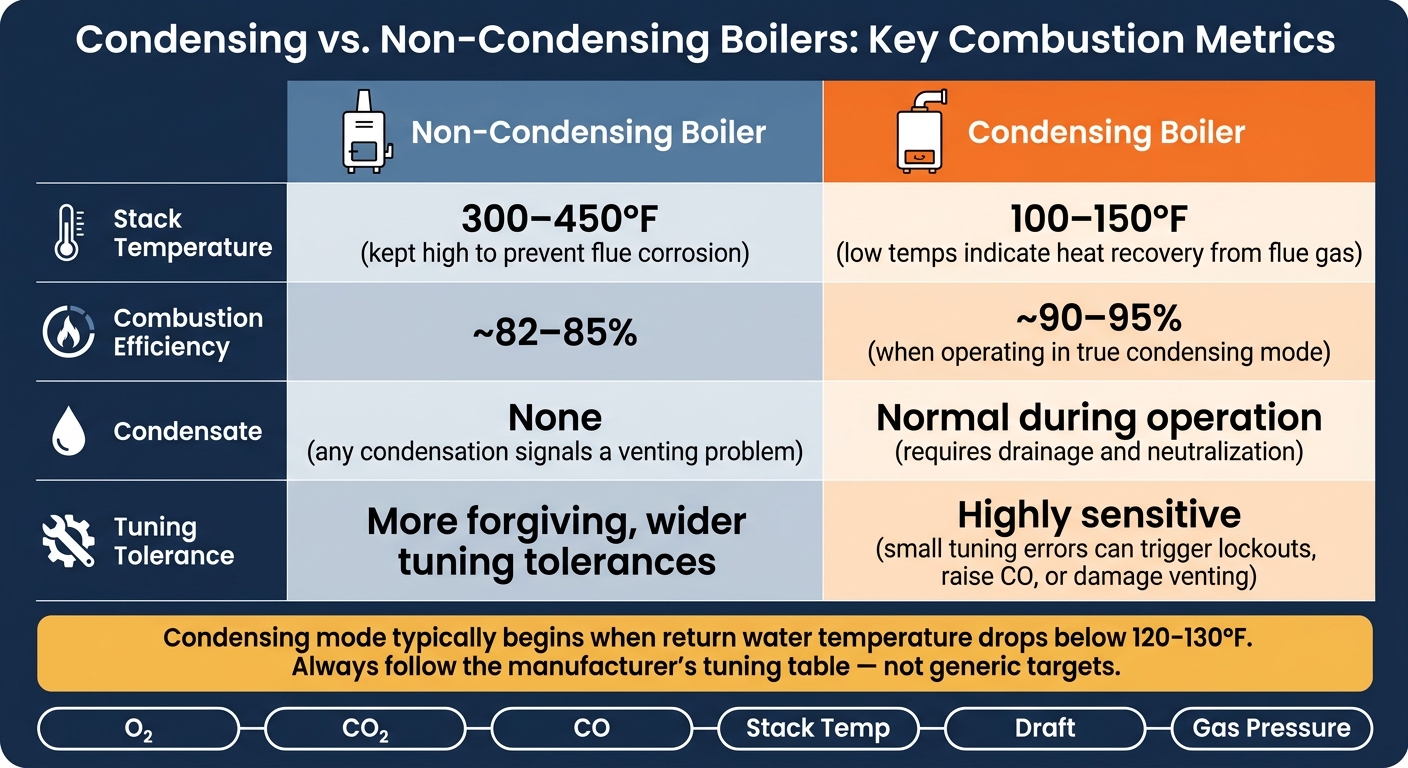
Condensing vs. Non-Condensing Boiler: Key Combustion Metrics Compared
What Changes on High-Efficiency Condensing Boilers
The same combustion readings still matter on condensing boilers, but the target numbers are different. That’s the key point. A reading that looks fine on an older boiler can mean something else entirely on a condensing unit.
| Factor | Non-Condensing | Condensing |
|---|---|---|
| Stack temperature | Typically 300–450°F; kept high to prevent flue corrosion | Typically 100–150°F; low temps show heat is being recovered from the flue gas |
| Typical combustion efficiency | About 82–85% | About 90–95% when operating in true condensing mode |
| Condensate | None; any condensation signals a venting problem | Normal during operation; requires drainage and neutralization |
| Tuning tolerance | More forgiving; wider tuning tolerances | Highly sensitive; small tuning errors can trigger lockouts, raise CO, or damage venting |
That’s why low stack temperature is a good sign on condensing units, but a warning sign on older boilers.
Condensing usually begins when return water temperature drops below about 120–130°F. During combustion testing, many modulating condensing boilers need to stay in test mode. If you skip that, the burner can change firing rates in the middle of the test, and the readings stop being dependable.
O₂ and CO targets are also tighter than they are on older non-condensing equipment. In plain terms, there’s less room for error. The manufacturer’s tuning table sets the target, and that’s the number the tech needs to follow.
Conclusion: The Core Numbers and Practices That Matter Most
Combustion analysis comes down to six measurements:
- O₂
- CO₂
- CO
- Stack temperature
- Draft
- Gas pressure
Taken together, these readings show whether the boiler is burning fuel cleanly, moving heat into the building well, and venting safely. One number by itself doesn’t tell the full story.
Annual testing before heating season helps catch drift early and preserve condensing efficiency.
FAQs
How often should a boiler get combustion testing?
Schedule professional combustion testing as part of your annual boiler maintenance. A yearly tune-up helps your boiler run well, cuts the risk of early system failure, and spots safety issues before they turn into bigger problems.
During each visit, certified technicians from Eco Temp HVAC complete a full system check. That includes burner cleaning and precise combustion analysis to help keep your boiler working at peak performance.
What causes high CO readings in a boiler?
High carbon monoxide readings usually point to incomplete combustion. In plain English, the fuel isn’t burning the way it should. That often happens when the air-fuel mix is off or the manifold gas pressure is set wrong.
Blocked flue pipes can also cause trouble by stopping exhaust gases from venting the right way. And damage to the heat exchanger – such as cracks, holes, or corrosion – can let dangerous CO leak where it shouldn’t.
That’s why regular combustion analysis and routine maintenance matter. They help spot these problems early and give you a chance to fix them before they turn into a safety risk.
Why do condensing boilers use different target readings?
Condensing boilers aim for a different temperature range because their efficiency comes from pulling extra heat out of the exhaust. That only happens when the return water stays cool enough – ideally 100°F to 120°F.
Non-condensing boilers work the other way. They need return water temperatures above 140°F to prevent acidic condensate from forming inside the unit and causing damage.
Staying within these ranges helps protect the boiler and supports high AFUE ratings.