
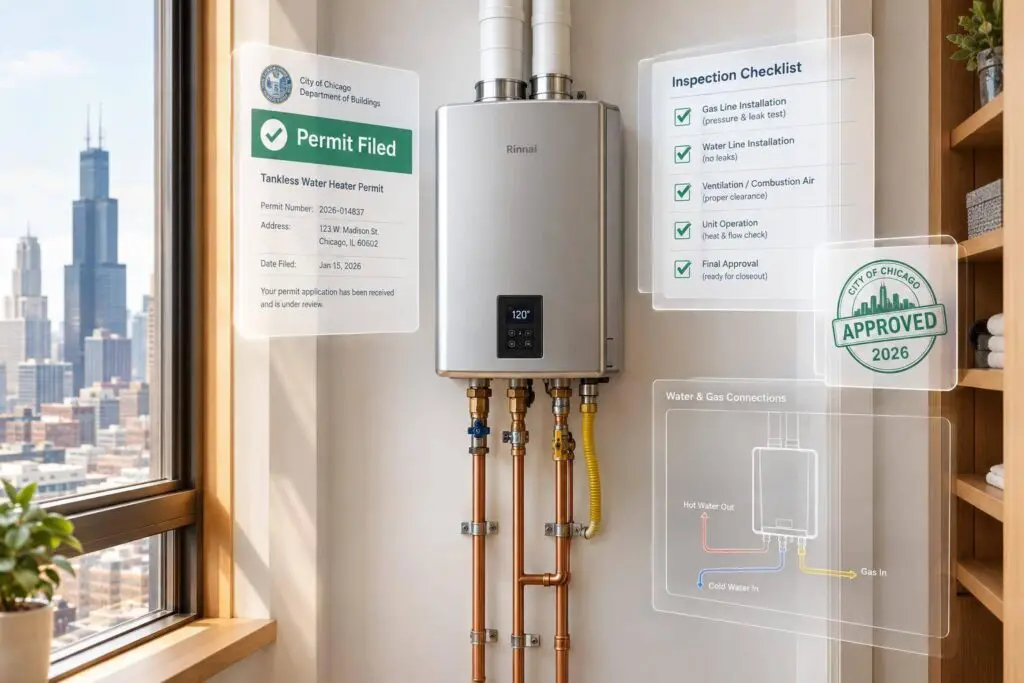
Switching from a tank to a tankless water heater in Chicago? I recommend checking permit requirements before buying equipment. Some in-kind replacements may be exempt, but don’t assume a conversion, relocation, or gas or electrical change qualifies.
I break the process into 3 steps:
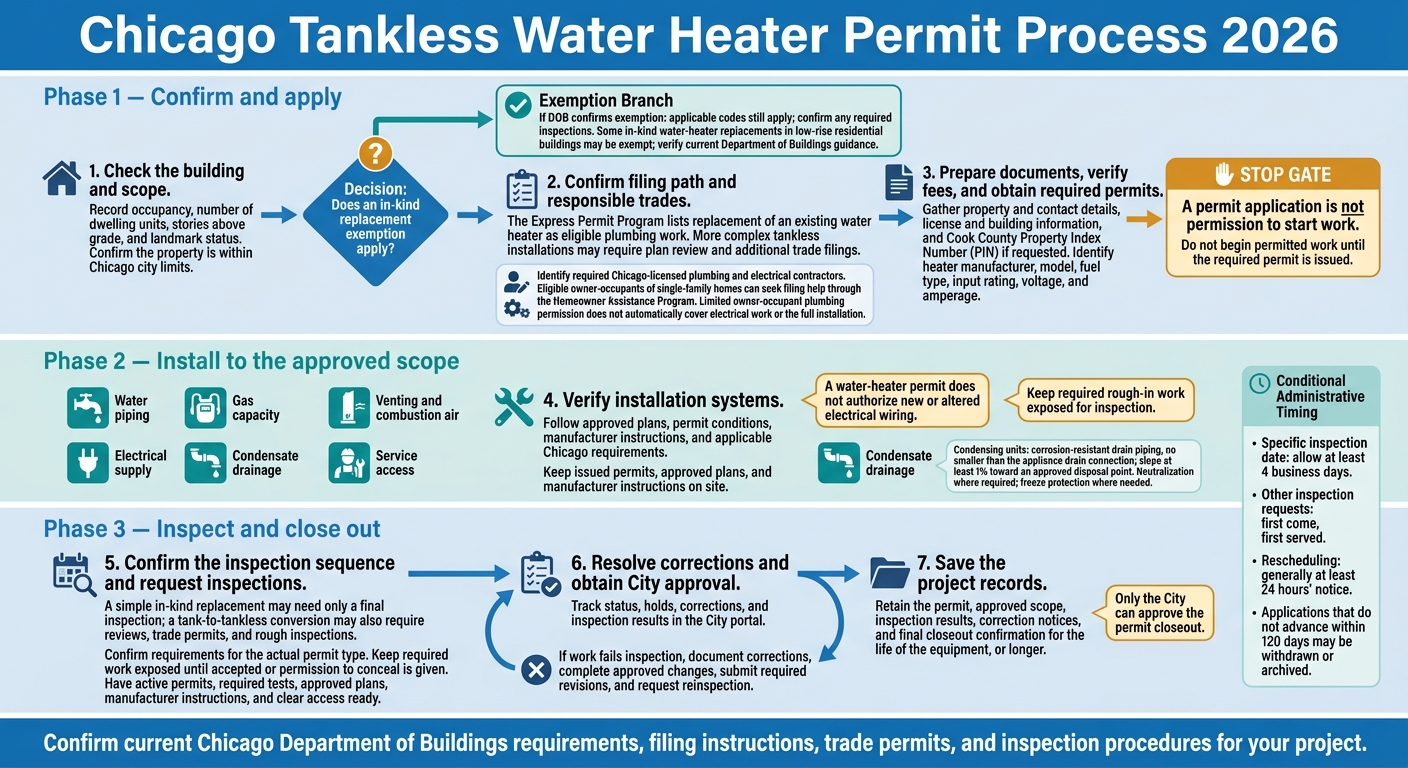
- Confirm and apply: Check Chicago city limits, verify any exemption with the Department of Buildings, and choose the filing path, contractors, documents, and fees.
- Install to the approved scope: Address water piping, gas capacity, venting, electrical supply, condensate drainage, and service access. Wait for required permits before starting.
- Inspect and close out: Keep work exposed for required inspections, fix corrections, and save the City’s final approval with your project records.
My bottom line: <u>a permit application is not permission to start work</u>, and installation is not the last step. Confirm required inspections and City approval before calling the project complete.
Chicago Tankless Water Heater Permit Process 2026
Step 1: Check Permit Requirements and Apply
Check the In-Kind Replacement Exemption
Start with the building and the scope of work. Record the occupancy, number of dwelling units, stories above grade, and landmark status.
Chicago allows some in-kind water-heater replacements in low-rise residential buildings without a permit. Check current DOB guidance before relying on that exemption. Commercial work, tankless conversions, relocations, new installations, fuel changes, and changes to plumbing, gas, venting, electrical, or condensate systems need permit review. Even exempt work must meet applicable codes.
Once you’ve classified the project, choose the filing path.
Choose a Permit Path and Confirm Who Can Apply
Follow the Chicago Department of Buildings’ current permit instructions. The Express Permit Program lists replacement of an existing water heater as eligible plumbing work. More complex tankless installations may require plan review and additional trade filings. Eligible owner-occupants of single-family homes can use the Homeowner Assistance Program for help filing.
Filing an application does not authorize every trade. Check who may file through your chosen path, and identify the Chicago-licensed plumbing and electrical contractors who will do the work.
In limited cases, an owner-occupant may take responsibility for certain plumbing work through the required certification or Form 401. That permission does not automatically cover electrical work or the full installation. Plan-based applications may also require a general contractor and other listed trade contractors.
With the filing path set, gather the documents the City requests.
Prepare Documents and Pay Permit Fees
Have the property address, unit number, owner and contractor contact information, license details, and building information ready. Include the Cook County Property Index Number (PIN) if requested.
Describe the work clearly, including the heater’s manufacturer, model, fuel type, input rating, voltage, and amperage. Depending on the permit path, the City may request photos, manufacturer specifications, gas-load or piping details, venting information, drawings, plumbing isometrics, equipment schedules, identification, or owner-as-contractor forms. Use the checklist for your filing path – not every project needs every document.
Condominium, landlord, and utility approvals do not replace City approval. Before paying through the City’s approved payment process, verify the application number, scope, valuation, and fee. Fees depend on the permit path and project scope.
Installation must follow the approved permit and code requirements.
sbb-itb-b5c10b1
Building Permit Basics for Chicago Homeowners (Webinar Recording)
Step 2: Install the Heater to Approved Requirements
Once the permit is issued, the focus shifts from paperwork to job-site compliance. Do not begin permitted work until the required permit is issued. Keep the issued permit, approved plans, permit conditions, and manufacturer’s instructions on site. Follow the code edition in effect when the application was filed. Confirm any transition rules or amended provisions with the Chicago Department of Buildings.
The heater must be listed, labeled, and installed according to the manufacturer’s instructions and applicable Chicago requirements. Check water, gas, and venting details before closing the rough-in.
Check Water Piping, Gas Supply, and Venting
Before inspection, check the hot- and cold-water connections, pipe sizes, accessible inlet shutoff, and any serviceable connections the manufacturer requires. Provide an approved temperature-and-pressure relief arrangement where applicable. Relief discharge piping should use suitable rigid material and end where it won’t create a hazard or nuisance.
Make sure the existing gas line can handle the added load. Check the total connected appliance load, gas pressure, developed pipe length, and capacity of the meter, regulator, connector, and piping. Chicago requires a fuel-gas shutoff valve upstream of the connector, sized at least to the connector’s nominal size. Materials and installation must meet applicable mechanical and fuel-gas provisions. Keep gas piping available for inspection, testing, and purging by the person doing the work. Skipping these steps can delay approval.
Check that the heater’s location is allowed and supplies the combustion air required by its listing and code. Vent materials, diameter, supports, slope, joints, and termination clearances must match the listing and manufacturer’s instructions. Chicago requires vent systems suited to the appliance and direct-vent terminals installed according to the manufacturer’s instructions. Before reusing an existing chimney or flue, verify its condition, sizing, material, and compatibility.
Once mechanical clearances are set, check power and drainage requirements.
Check Electrical Supply, Condensate Drainage, and Access
An electric tankless heater may need several high-amperage circuits and enough electrical service capacity to support them. Gas-fired models also need electrical power. Before inspection, check the nameplate load, voltage, phase, circuit protection, conductor size, grounding, connections, and disconnecting means against the manufacturer’s instructions and applicable electrical code. A water-heater permit does not authorize new or altered electrical wiring. Chicago requires breaker sizing to match the equipment label or listing plate.
For a condensing unit, install corrosion-resistant condensate piping no smaller than the appliance drain connection. Slope it at least 1% toward an approved disposal point. Add neutralization where required, and protect piping at risk of freezing. Problems with these details can delay approval.
Before closing walls or ceilings, maintain required clearances and service access to the heater, shutoffs, relief devices, vent connections, and condensate components for inspection and signoff. Keep unions, valves, test points, and service panels accessible. Photograph concealed piping, and have the installation manual and listing information ready for inspection.
Step 3: Complete Inspections and Address Delays
Schedule Inspections and Confirm Permit Closeout
After installing the heater, schedule the required inspections while the rough-in is still exposed. A simple in-kind replacement may need only a final inspection. A tank-to-tankless conversion may also require reviews, trade permits, and rough inspections. Check the inspection sequence for your permit type.
- Review: Track status, holds, corrections, and results in the City portal.
- Inspection: Inspectors compare the installed work with the approved scope from Steps 1 and 2. Keep gas piping, venting, electrical connections, condensate drainage, and required access available for inspection.
- Closeout: Resolve corrections and verify the results recorded by the City.
For certified plan corrections, identify every drawing change and upload your correction response to the designated project folder. Watch the deadlines: applications that don’t advance within 120 days may be withdrawn or archived.
Request inspections online, and check the required request method for each trade and permit type. Confirm the permit number, address, inspection type, and appointment details. To request a specific date, allow at least 4 business days; other requests are handled first come, first served. Rescheduling generally requires at least 24 hours’ notice. Keep the work exposed until it is accepted or you have permission to conceal it.
Avoid Application Errors and Inspection Delays
Most delays happen when the finished work doesn’t match the approved permit. Check the permit category, equipment model, fuel type, gas load, venting, electrical service, condensate drain, and access against the approved scope. Common problems include the wrong permit type, missing trade permits, concealed work, and substitutions that haven’t been approved.
Check site readiness before requesting an inspection. Permits must be active, required tests must be ready, and approved plans and manufacturer instructions must be available. Calling for an inspection too early can mean a failed inspection and delays while you arrange another visit.
For an occupied home, arrange for an adult representative to be present, clear access, secure pets, and tell residents about any water, gas, or electrical interruptions. For an operating business, coordinate with the facility manager, tenants, and security. Document the shutdown and restart arrangements.
If an inspection fails, record each correction, complete the water heater repair or approved changes, submit any required revisions, and request reinspection through the City’s process. Before marking the permit closed, verify that all required inspections show approval and that no corrections or holds remain open.
Once all corrections clear, keep the final approval record with the permit file.
Conclusion: Confirm Approval and Keep Project Records
Before closeout, confirm whether the work was exempt or permitted. Check that the named owner and contractors match the approved application, the completed work matches the approved scope, and every required inspection passed. Only the City can approve the permit closeout.
Once closeout is approved, keep digital and paper copies of the permit, approved scope, inspection results, correction notices, and final closeout confirmation. Save these records for the life of your Navien tankless water heater, or longer. This file provides proof of compliance if questions come up later.
FAQs
How long does Chicago permit approval take?
The sources don’t specify an exact approval timeframe. Timing depends on your project’s scope, occupancy type, and municipal workload. Contact your local permitting authority to confirm what to expect for your installation.
Eco Temp HVAC handles permitting and compliance with Chicago and Illinois building codes. During the initial consultation and assessment, the team explains which permits your project needs and the expected timeline.
What if my tankless heater needs an unplanned gas upgrade?
An unplanned gas upgrade may mean checking and upsizing the gas line, adjusting venting, and updating permits. Older Chicago systems may also need more gas capacity.
Eco Temp HVAC will assess your existing gas supply and venting and coordinate any required utility and building changes to help avoid inspection and code compliance delays. This added work may take longer than a standard replacement.
How do I legalize a tankless heater installed without permits?
Have a licensed professional check your tankless water heater installation against current Chicago building, plumbing, gas, and venting codes. The assessment should flag any venting, gas supply, or electrical circuit issues that need to be fixed.
After the system meets code, the contractor can help with required permit filings and inspections to confirm that the installation is safe and properly documented.