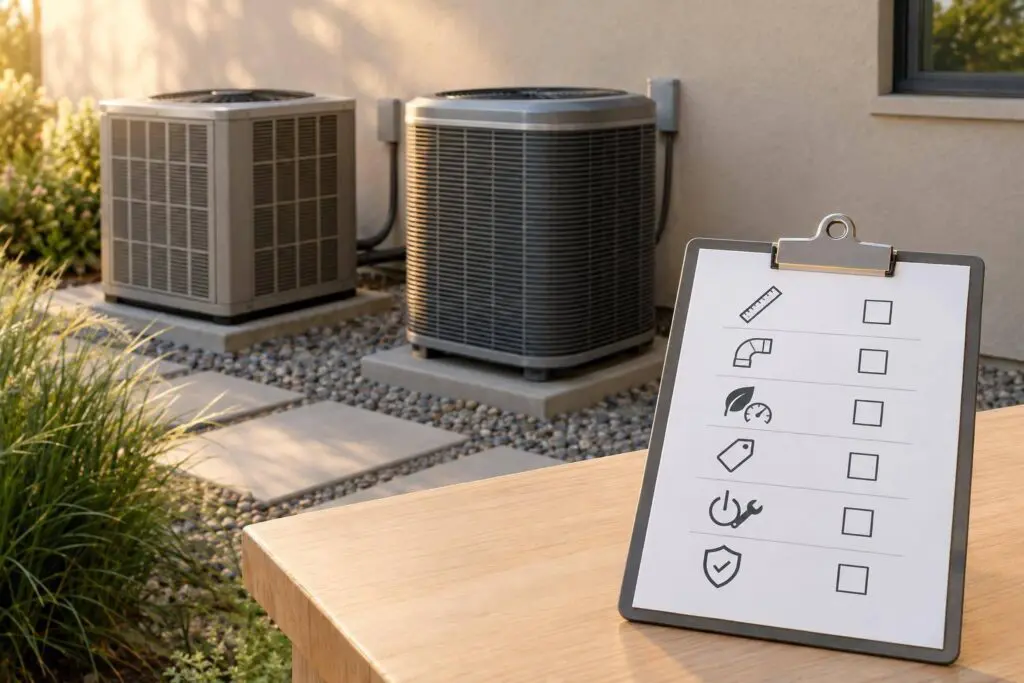

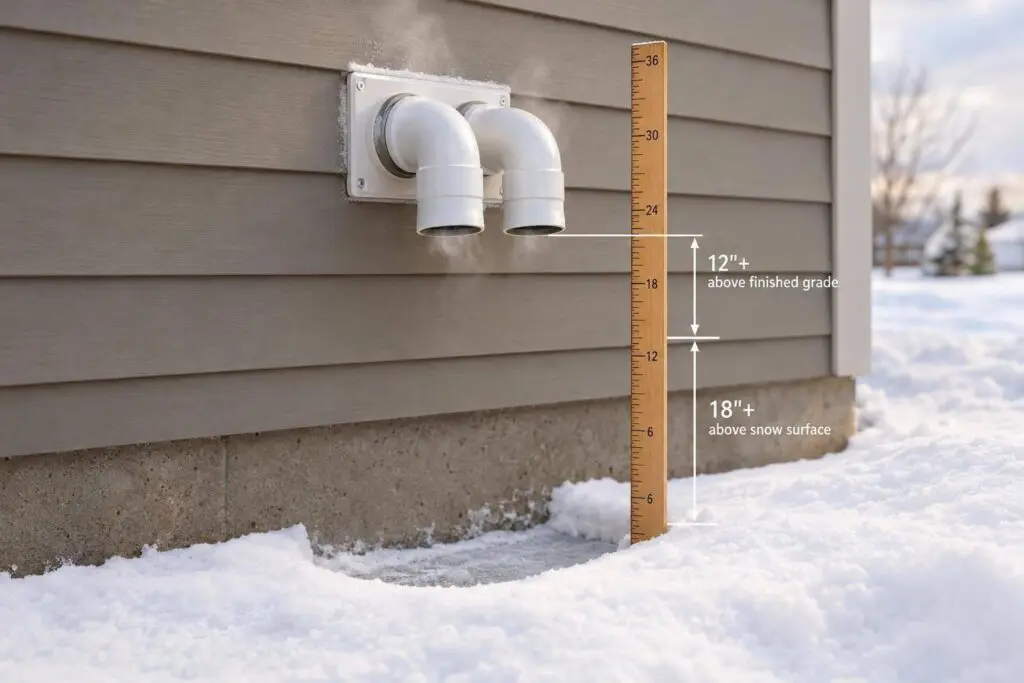
There’s no single clearance height for every furnace vent. I recommend checking your furnace manual and local code, then measuring above finished ground and expected snow levels – not just today’s snow.
In Chicagoland, drifts and plow piles can block both intake and exhaust openings. My winter checklist is simple:
- Check both openings after storms, wind shifts, and plowing.
- Clear only loose snow without pushing tools into the piping or chipping attached ice.
- Call an HVAC professional for repeated burial, stuck ice, damaged piping, or recurring shutdowns. Don’t extend or move vents yourself.
<u>If a carbon monoxide alarm sounds, leave immediately.</u> Get everyone, including pets, outside and call 911. Don’t stop to inspect the furnace or re-enter until emergency responders say it’s safe.
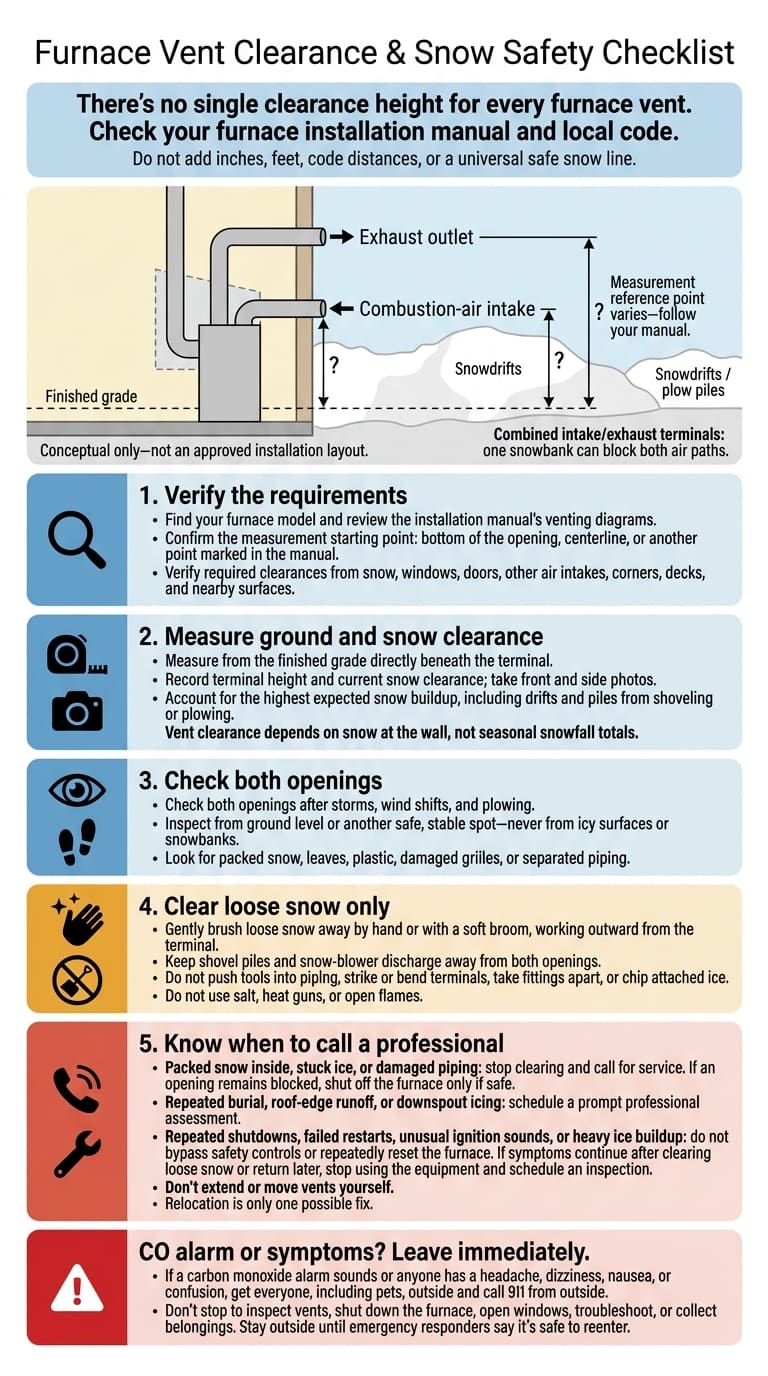
Furnace Vent Clearance: Winter Safety Checklist
Check Vent Height Above Ground and Snow
Verify Your Furnace’s Clearance Requirements
Find your Carrier furnace model and review the installation manual’s venting diagrams. Check where each measurement begins: the bottom of the opening, its centerline, or another point marked in the manual. Verify the minimum snow clearance and required distances from windows, doors, other air intakes, corners, decks, and nearby surfaces. No single height applies to every furnace. Ask your local building department which code requirements apply.
Measure from the finished grade directly beneath the terminal – not the original lower grade or buried landscaping. Record the terminal height and current snow clearance. Take front and side photos so a technician can compare the installation with the approved venting layout. Then check your measurements against the terminal type below.
Compare Intake and Exhaust Terminal Designs
Intake and exhaust measurements aren’t interchangeable. Follow the diagram for your installed setup; don’t assume measurements start at the outer cap or wall sleeve.
| Configuration | Key clearance points | Blockage risk | Manufacturer requirements to verify |
|---|---|---|---|
| Exhaust outlet | Height above grade and snow; distance from openings and intake | Drifting snow and ice around the outlet | Minimum height, orientation, separation from intake, and approved fittings |
| Combustion-air intake | Required height and separation from exhaust | Snowbanks, loose snow, leaves, and ice | Intake orientation, exhaust separation, screen or hood requirements, and allowable pipe length |
| Combined intake/exhaust terminal | Clearances for the approved combined assembly | A single snowbank or ice buildup can block both air paths | Approved terminal type, orientation, height, and location |
Account for Chicagoland Snowdrifts and Snow Piles
In Chicagoland, wind, snow sliding off roofs, shoveling, and plowing can pile snow around the terminal.
Vent clearance depends on snow at the wall, not seasonal snowfall totals. Check after a major storm and again when wind or plowing changes the piles. Record the maximum buildup, including drifts and piles left by shoveling or plowing. If snow repeatedly reaches either opening, ask a qualified HVAC professional to assess the location and whether the terminal needs to be relocated.
Keep Your Vents Clear of Snow Drifts
Clear Snow Safely and Check for Blockages
If snow buildup reduces your measured clearance, clear it before starting the furnace. When snow is near the terminals, check both intake and exhaust openings before running the system. Inspect from ground level or another safe, stable spot – never from icy surfaces or snowbanks. Look for packed snow, leaves, plastic, damaged grilles, or separated piping.
Remove Loose Snow Without Damaging Vents
Gently brush loose snow away by hand or with a soft broom, working outward from the terminal. Keep shovel piles and snow-blower discharge away from both openings. Never push tools into the piping, strike or bend a terminal, take fittings apart, or chip off attached ice. Don’t use salt, heat guns, or open flames.
Stop if snow is packed inside, ice is stuck in place, or the terminal is damaged. If the opening remains blocked, shut off the furnace only if you can do so safely, then call for furnace service. Leave any obstruction you can’t safely reach to a technician.
Watch for Shutdowns, Ice, and Ignition Problems
Repeated shutdowns, failed restarts, unusual ignition sounds, or heavy ice buildup can point to restricted airflow. Don’t bypass safety controls or repeatedly reset the furnace. If symptoms continue after you clear loose snow – or return later – stop using the equipment and schedule an inspection. Write down any visible furnace error code for the technician. If the same problems return after clearing, the vent may need to be relocated.
Leave Immediately if a Carbon Monoxide Alarm Sounds
Leave immediately if a CO alarm sounds or anyone has a headache, dizziness, nausea, or confusion. Get everyone, including pets, outside and call 911 from there. Don’t stop to inspect vents, shut down the furnace, open windows, troubleshoot, or collect belongings. Stay outside until emergency responders say it’s safe to reenter.
Know When Vents May Need Relocation
If snow keeps burying the vent after you clear it, the location – not the cleanup – needs attention.
Decide Between Snow Clearing and Professional Service
Repeated burial calls for a venting assessment, not more shoveling. Fences, decks, shrubs, or changes to driveway grading can direct drifting snow toward a terminal that used to stay clear. Chicago code requires vent terminations to sit high enough to avoid blockage from snow or ice.
| Site condition | Appropriate response | Reason |
|---|---|---|
| Occasional loose snow around a compliant, undamaged terminal | Carefully clear the snow and monitor | Routine clearing may be enough |
| Repeated drift burial, placement below expected snow levels, or a low terminal near a snow-piling area | Schedule a prompt professional assessment | The terminal may sit too low or face repeated burial from snow piles |
| Roof-edge runoff or downspout icing | Schedule a prompt professional assessment | Placement or drainage may need correction |
| Damaged, loose, sagging, or separated piping | Stop using the furnace if safe; request a full venting inspection | Damaged venting can let combustion products enter the home. |
Check Requirements Before Changing Vent Piping
A technician may need to correct the slope, supports, joints, or condensate drainage rather than move the terminal. Relocation is only one possible fix.
Extensions, guards, screens, and terminal changes must follow the furnace instructions and local requirements. The installer must check approved components, pipe diameter, equivalent vent length, elbows, supports, slope, drainage, intake/exhaust separation, termination clearances, and required permits. Improvised screens can collect ice, while added piping can exceed vent limits or trap condensate.
Schedule a Chicagoland Vent Assessment
An assessment can help determine whether the terminal needs to move or another repair will address the problem.
Eco Temp HVAC provides vent-clearance assessments in Chicago, St. Charles, Bartlett, Lemont, Downers Grove, and Palatine.
Bring dated photos of recurring drifts, icing, or burial, along with any furnace error codes. These records show conditions that may disappear before the visit and help guide repairs, drainage corrections, relocation, or a venting inspection.
Conclusion: Check Vent Clearances Throughout Winter
Winter weather can change vent clearance fast in Chicagoland. Before winter, review the furnace manual and local code. Compare each vent terminal’s height with the highest expected snow level, including drifts and plow piles.
Check both openings after storms and wind shifts. Clear only loose snow, and call a professional for HVAC installation to correct the problem if blockage or icing returns.
If a carbon monoxide alarm sounds, get everyone outside, including pets, and call 911 from outside. Do not re-enter or restart the furnace.
FAQs
How do I estimate expected snow depth around my furnace vents?
Check historical snowfall data for Chicagoland and account for snowdrifts that tend to build up near your home’s foundation during winter storms. Outdoor furnace vents should sit at least 12 inches above expected snow levels to keep snow from blocking exhaust and causing furnace problems.
If your vents sit too low, Eco Temp HVAC can assess your system and professionally relocate them to help keep your furnace running safely throughout winter.
Can my furnace vents ice up even without snowfall?
Yes. Moisture from combustion can condense and freeze on or around the vent terminal, especially in extremely cold weather. This can happen even without snowfall.
Check your furnace vents regularly for ice. A blockage can restrict ventilation and cause dangerous backdrafting. If you spot ice buildup on your outdoor vents, contact Eco Temp HVAC for a professional inspection.
When is relocating a furnace vent better than raising it?
Relocation is the better option when the current location is structurally unsuitable, gets blocked repeatedly, or lacks the required 12-inch clearance above expected snow levels. Moving it may also help if outdated retrofit venting or poor placement limits airflow and causes backdrafting.
For Chicagoland homes facing these issues, professional relocation helps meet current safety codes. Contact Eco Temp HVAC for an inspection to find out whether relocation is needed.