
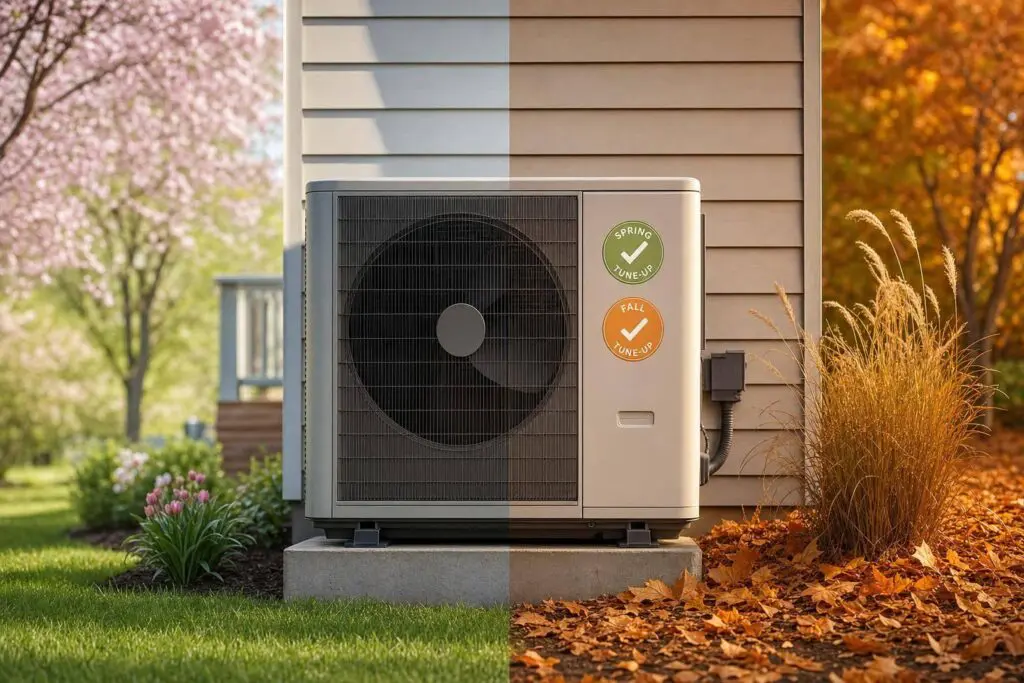
If I own a heat pump, I should plan for two tune-ups a year – one in spring and one in fall. That’s the short answer. A heat pump runs for both cooling and heating, so it racks up more wear than a system that only works half the year. And when small problems build up, energy use can climb 15%–20%, while big repairs like a compressor can run $1,500 to $3,500+.
Here’s what matters most:
- Spring tune-up: gets the system set for summer cooling
- Fall tune-up: checks heating mode before winter hits
- Main parts checked: airflow, coils, refrigerant, thermostat, electrical parts, reversing valve, defrost controls, and drain line
- What I can do between visits: change filters every 1–3 months, keep 2 feet of space around the outdoor unit, and watch for odd noise, ice, leaks, or short cycling (common signs of a failing heat pump)
- Why it matters: fewer breakdowns, lower power waste, and a better shot at reaching 10–15 years of service life
A heat pump does not get half the year off. That is why one yearly visit is often not enough. Two well-timed tune-ups help catch wear before summer heat or winter cold puts the system under stress.
Heat Pump Tune-Up & Maintenance: Top Questions Answered
sbb-itb-b5c10b1
Why Heat Pumps Wear Out Faster Than Single-Season Systems
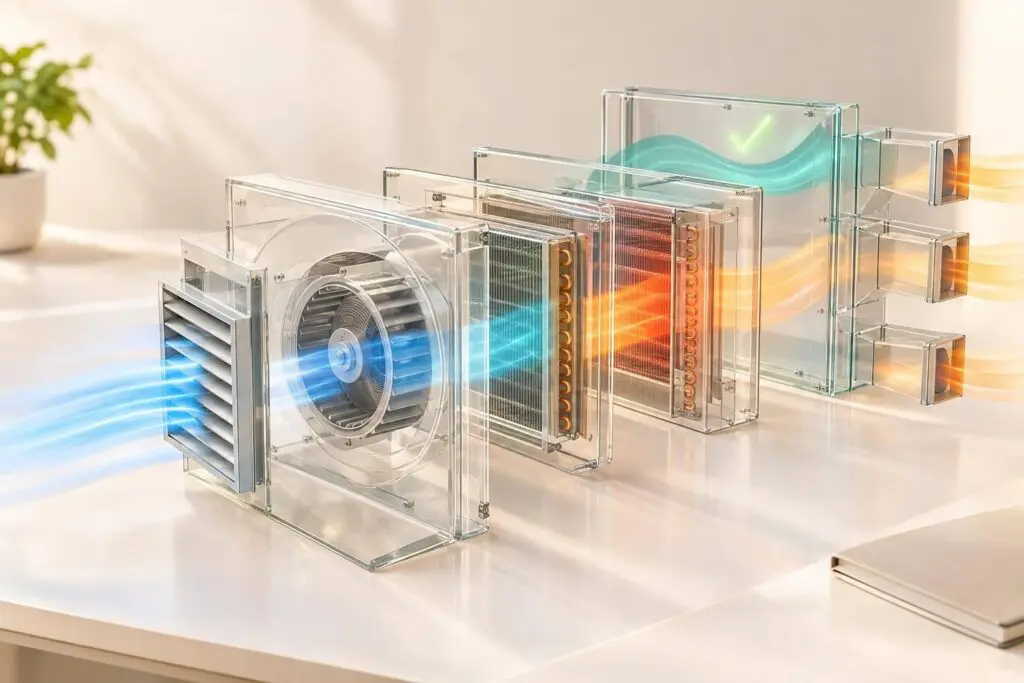
A heat pump does double duty. It cools in summer and heats in winter, so the same core parts run across the whole year instead of sitting idle for half of it.
That means more wear on the components that do the hardest work, especially the compressor, reversing valve, and defrost system.
One System Runs Year-Round Instead of Half the Year
The compressor takes the biggest beating. It handles the heaviest workload, and every start-stop cycle adds strain to electrical parts too.
Heat pumps also have a reversing valve that changes the direction of refrigerant flow when the system switches between heating and cooling. That sounds simple on paper, but in practice, each seasonal change adds wear. Over time, that makes the reversing valve a common failure point.
In a place like Chicago, the weather doesn’t exactly take it easy on HVAC equipment. Big swings between hot summers and cold winters push the system harder over the course of the year. Winter adds another layer of strain because the unit has to run defrost cycles, which put pressure on the defrost control board and sensors.
High runtime is only one piece of the story. Newer systems also have less room for error.
High-Efficiency Models Rely on Precise Settings
Modern variable-speed and inverter-driven heat pumps depend on exact refrigerant charge, airflow, and sensor calibration to work the way they’re supposed to.
So even a small issue can snowball:
- A dirty filter can choke airflow
- A minor refrigerant leak can make the system run harder
- Slight sensor drift can throw off performance
Restricted airflow is one of the top causes of strain and early failure. And with these systems, even small airflow or refrigerant problems can cut efficiency and add wear fast.
That’s the tradeoff. These units can perform very well, but they depend on tighter settings than simpler equipment. When something is even a little off, the system feels it sooner. That’s why spring and fall tune-ups matter so much – they help catch problems before each heating or cooling season starts.
Why Spring and Fall Are the Best Times to Schedule Maintenance
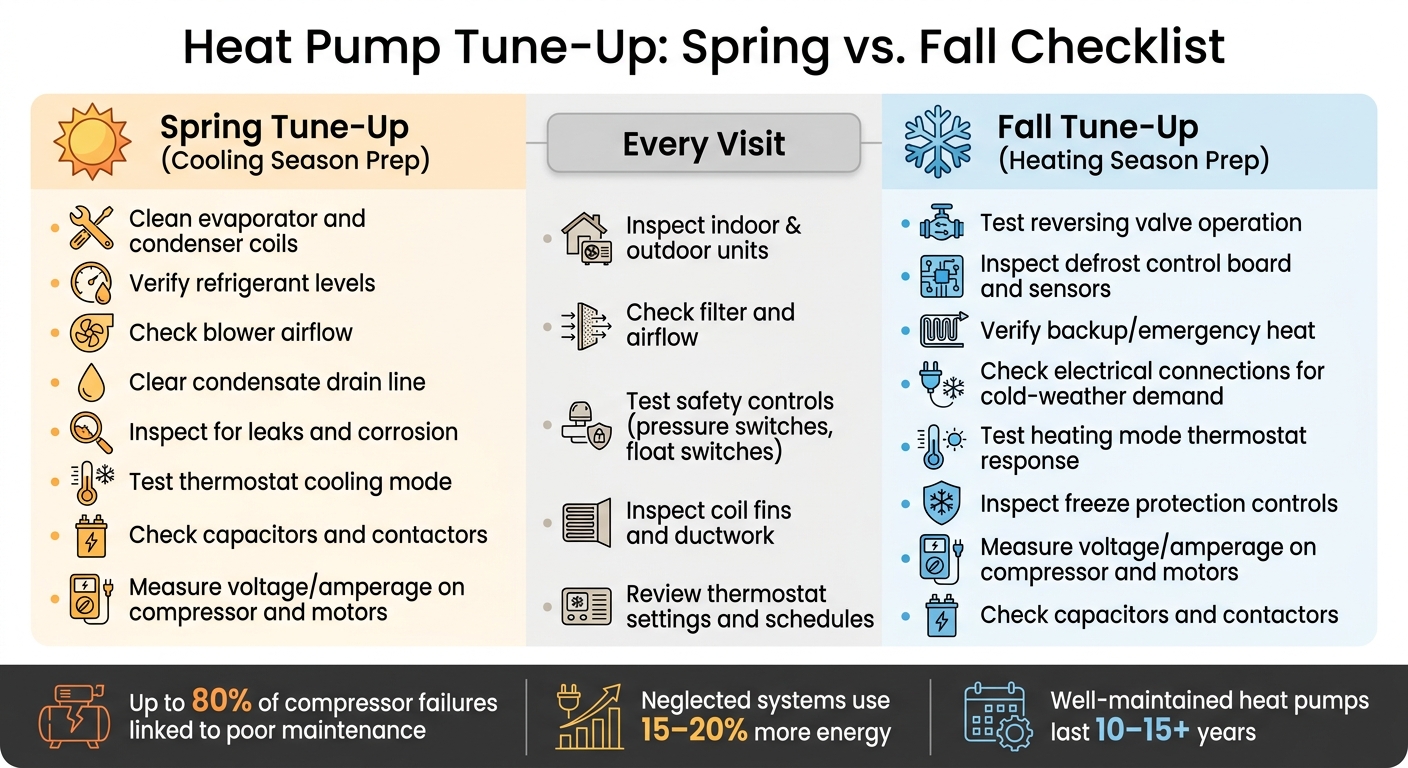
Heat Pump Maintenance: Spring vs. Fall Tune-Up Checklist
Spring and fall tune-ups give a technician a chance to test the system before it gets slammed by heavy seasonal use. With two visits a year, maintenance lines up with both ways a heat pump works: cooling in warm weather and heating in cold weather. That timing also shapes what needs attention at each visit.
Spring Service Gets the System Ready for Cooling
Spring maintenance gets the system ready for cooling before summer heat shows up. During this visit, a technician will clean the evaporator and condenser coils, verify refrigerant levels, and check blower airflow. Restricted airflow is a major cause of heat pump strain and premature failure. And with high-efficiency systems, performance can drop fast when even one part slips out of spec. Technicians also clear the condensate drain line to help prevent shutdowns and water damage.
Fall service shifts the focus from cooling output to heating dependability.
Fall Service Gets the System Ready for Heating
Fall maintenance turns to heating performance. A technician will test the reversing valve, which lets the system switch from cooling mode to heating mode. Checking it before cold weather hits can spot trouble early, before you end up with a no-heat call in the middle of winter.
Technicians also inspect the defrost control board and sensors. Frost on the outdoor unit is normal in winter, but the defrost cycle should clear it on its own. That becomes a bigger deal when freezing weather makes heating problems tougher to deal with. They also verify backup heat and electrical connections so the system is ready for cold-weather demand.
Twice-yearly service helps keep the system ready ahead of each peak season. Spring service centers on cooling parts. Fall service centers on heating controls and freeze protection. Those checks lead into the full tune-up process.
What a Technician Does During Each Heat Pump Tune-Up
Those seasonal checks are part of a larger tune-up routine. A pro tune-up follows a set checklist: inspection, cleaning, testing, and adjustment. Since a heat pump works in both summer and winter, technicians need to look at both cooling and heating parts at every visit. The point is simple: catch wear early, before heavy heating or cooling puts the system under stress. This proactive care is a key reason why many homeowners find that is a heat pump installation the right choice for their long-term comfort.
Tasks Done at Every Visit
Each tune-up covers the same main areas. A technician usually starts with an inspection of the indoor and outdoor units, looking for corrosion, loose panels, leaks, and debris around the cabinet.
Then they move through a standard set of checks:
- Filter and airflow: The technician checks the filter for proper fit and dirt buildup, measures airflow resistance, and looks at vents and ductwork for blockages.
- Blower and electrical components: The technician inspects the blower wheel and motor, then measures voltage and amperage on the compressor, blower motor, and outdoor fan to make sure the system is running within manufacturer specifications. Capacitors are tested, and contactors are checked for pitting or burning that can lead to intermittent failures.
- Thermostat calibration: The technician makes sure the thermostat is set for heat-pump operation and confirms that heating, cooling, and fan modes respond the way they should. On smart thermostats or programmable models, they also review settings and schedules.
- Coils and condensate drainage: Both the indoor and outdoor coils are checked for dirt, bent fins, frost, or mold or algae. The condensate drain line and pan are also inspected for clogs or buildup.
- Safety controls: High- and low-pressure switches, float switches, and emergency shutoffs are tested to confirm the system can shut down safely if something goes wrong.
Checks That Differ by Season
The main checklist stays the same, but the focus shifts with the season. Spring visits center on cooling performance, refrigerant charge, and drainage. Fall visits put more attention on heating output, defrost controls, and backup heat.
How Two Tune-Ups Per Year Help Prevent Breakdowns and Extra Costs
Those inspections matter for a simple reason: most expensive failures start small.
A heat pump doesn’t get a season off. It runs for cooling in summer and heating in winter, so minor issues tend to show up sooner and can lead to more downtime if no one catches them early. Tune-ups help spot those small faults before peak weather turns them into a breakdown.
Problems Technicians Often Find Before They Get Worse
A weak capacitor is a good example. It may seem fine during mild weather, then give out when the system is under heavier demand. Replacing it during routine service is much cheaper than paying for an emergency repair.
Drainage issues often follow the same pattern. A partial condensate clog can trip a safety shutoff before the homeowner even notices a leak. Routine service can also catch low refrigerant, dirty coils, and loose electrical connections before they snowball into bigger repair bills.
Up to 80% of compressor failures are tied to poor maintenance, misdiagnosed problems, or minor issues that were left alone. And a compressor replacement can cost $1,500–$3,500 or more.
How Regular Maintenance Affects Efficiency, Lifespan, and Energy Bills
Maintenance saves money in two ways: it helps you avoid repairs, and it helps the system run with less wasted energy.
If a heat pump doesn’t get regular service, its efficiency can slowly slip. That can push energy use 15%–20% higher than a maintained system. For a household spending about $1,000–$1,500 a year on HVAC electricity, that difference can add up to roughly $100–$300 in avoidable annual costs.
Routine service helps keep performance closer to the system’s rated level. It also cuts energy use, supports a longer service life, and lowers the odds of surprise repairs. Well-maintained heat pumps often last 10–15 years or more. In Chicagoland, where summers get hot and winters can drop below zero, that extra wear makes routine service a must.
Even with two professional tune-ups each year, basic monthly checks still matter. Homeowners can handle simple upkeep between visits, but anything involving refrigerant, wiring, or system performance should be left to a certified technician.
What Owners Can Do Between Visits and When to Call Eco Temp HVAC
Maintenance Tasks Homeowners and Small Business Owners Can Handle
Between spring and fall tune-ups, a few simple checks can help you spot small issues before they turn into bigger repairs.
Replace the air filter every 1–3 months. A dirty filter can choke airflow and make the system work harder than it should. It’s a small task, but it can make a big difference.
Take a look at the outdoor unit too. Keep 2 feet of clear space around it, and clear away leaves, debris, and snow. Good airflow matters here just as much as it does indoors.
Once a month, check your supply and return vents. Also keep an eye out for water around the indoor unit. That kind of moisture can point to a drain or system issue that shouldn’t be ignored.
You’ll also want to watch for warning signs like:
- Unusual noises
- Uneven temperatures
- Higher utility bills
- Short cycling
- Ice that lasts beyond a normal defrost cycle
If these basic checks don’t fix the issue, the problem is probably deeper inside the system.
When to Call a Certified Technician
Some jobs are not DIY territory. If the issue involves refrigerant, wiring, or controls, bring in a certified technician.
Call right away if you notice banging or grinding, leaks, or repeated breaker trips. Those signs usually mean the system needs service, not just a new filter.
Refrigerant checks, electrical diagnostics, and defrost cycle testing should be handled by certified technicians, especially on high-efficiency systems with inverter compressors. These systems depend on precise settings, and a small mistake can lead to bigger trouble.
Eco Temp HVAC serves the Chicagoland area, including Chicago, Lemont, Downers Grove, Palatine, St. Charles, and Bartlett, for heat pump maintenance, repair, and installation. Technicians are available 24/7.
Conclusion: Two Tune-Ups Each Year Keep Your Heat Pump Running Efficiently
Seasonal tune-ups work best when you pair them with simple monthly checks. A heat pump handles both heating and cooling, so it runs through more of the year than a system built for just one season.
Spring service helps prepare the system for cooling season. Fall service gets it ready for heating season before the weather swings hard in either direction.
Regular maintenance helps catch problems early, keeps the system running efficiently, lowers the risk of breakdowns, and supports a longer service life. Two visits each year are a simple way to keep indoor comfort steady all year.
FAQs
Is one annual tune-up enough?
Twice-yearly maintenance is the standard recommendation for heat pumps. If that doesn’t fit your schedule or budget, one annual tune-up is still far better than skipping service altogether.
Heat pumps handle both heating and cooling, so they usually take on more wear than standard HVAC systems. A spring visit and a fall visit give a technician a chance to spot small problems before they turn into bigger ones, cut the odds of a breakdown in the middle of the season, and help the system run with less wasted energy.
What parts fail most on heat pumps?
Heat pumps usually wear out in the parts that do the most work: moving parts, electrical pieces, and refrigerant systems. Common problem areas include blower motors and bearings, condensate drain lines, and loose electrical connections.
Because heat pumps run all year, they also tend to have repeat issues with reversing valves, defrost sensors, outdoor coils, low refrigerant, and worn belts or pulleys.
How do I know my heat pump needs service now?
Schedule professional service if you notice unusual noises, uneven heating or cooling, or a system shutdown. Those signs can point to problems that need fast attention, both to help avoid more damage and to reduce safety risks.
Because heat pumps run all year, experts recommend tune-ups twice a year: once in the spring for cooling and once in the fall for heating. That timing helps spot hidden issues before they turn into a mid-season breakdown.