
If I need whole-home hot water in a Chicago winter, I’d pick gas in most cases. When incoming water drops to 45°F–52°F, gas tankless units usually keep up better, while electric units often cover only one shower at a time.
Here’s the short version:
- Gas is usually the better fit for 3+ bathroom homes, heavier hot water use, and winter demand.
- Electric is often the better fit when venting is not possible, gas is not available, or demand is light.
- In cold weather, advertised flow rates can drop hard. A unit rated high on the box may deliver much less at a 68°F–75°F temperature rise.
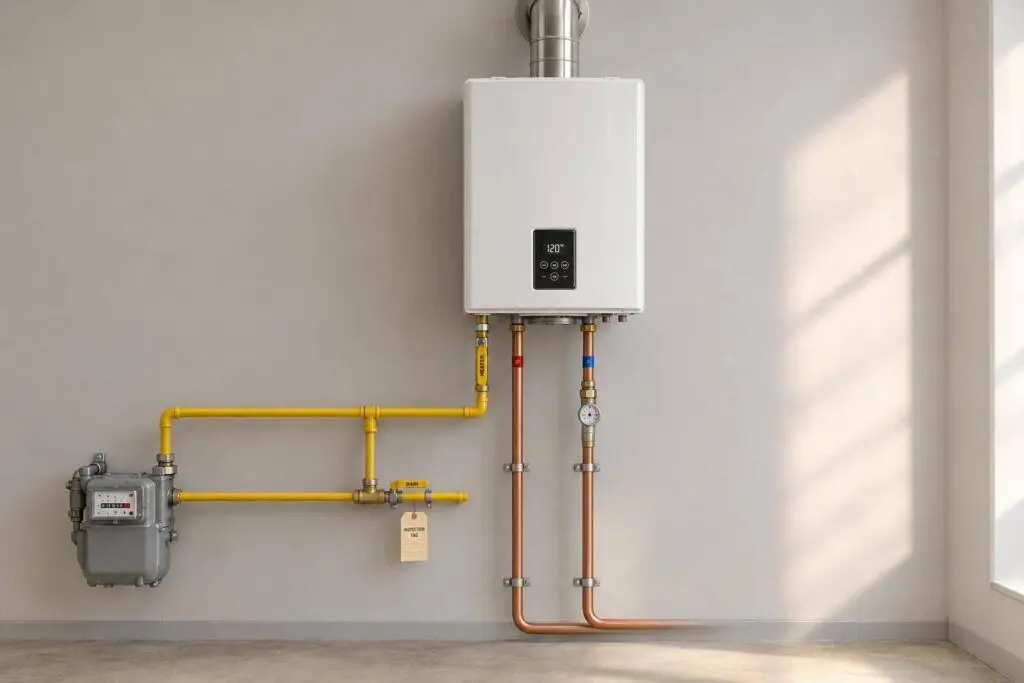
- Gas units need a gas line, venting, and a condensate drain on condensing models.
- Electric units need big power. A 27 kW model draws 112.5 amps at 240V and may force a panel upgrade.
- Upfront install costs can shift fast: Professional water heater installation ensures these variables are handled correctly.
- Gas line upgrade: $300–$800
- Electric service upgrade: $1,500–$3,000
- Extra electric wiring and breakers: $400–$1,200
- Annual running costs are often lower with gas: about $175–$300 per year vs. $300–$500 for electric.
If I were comparing these two for Chicagoland, I’d look at winter flow rate, panel or gas capacity, venting limits, install cost, and how many fixtures run at once.
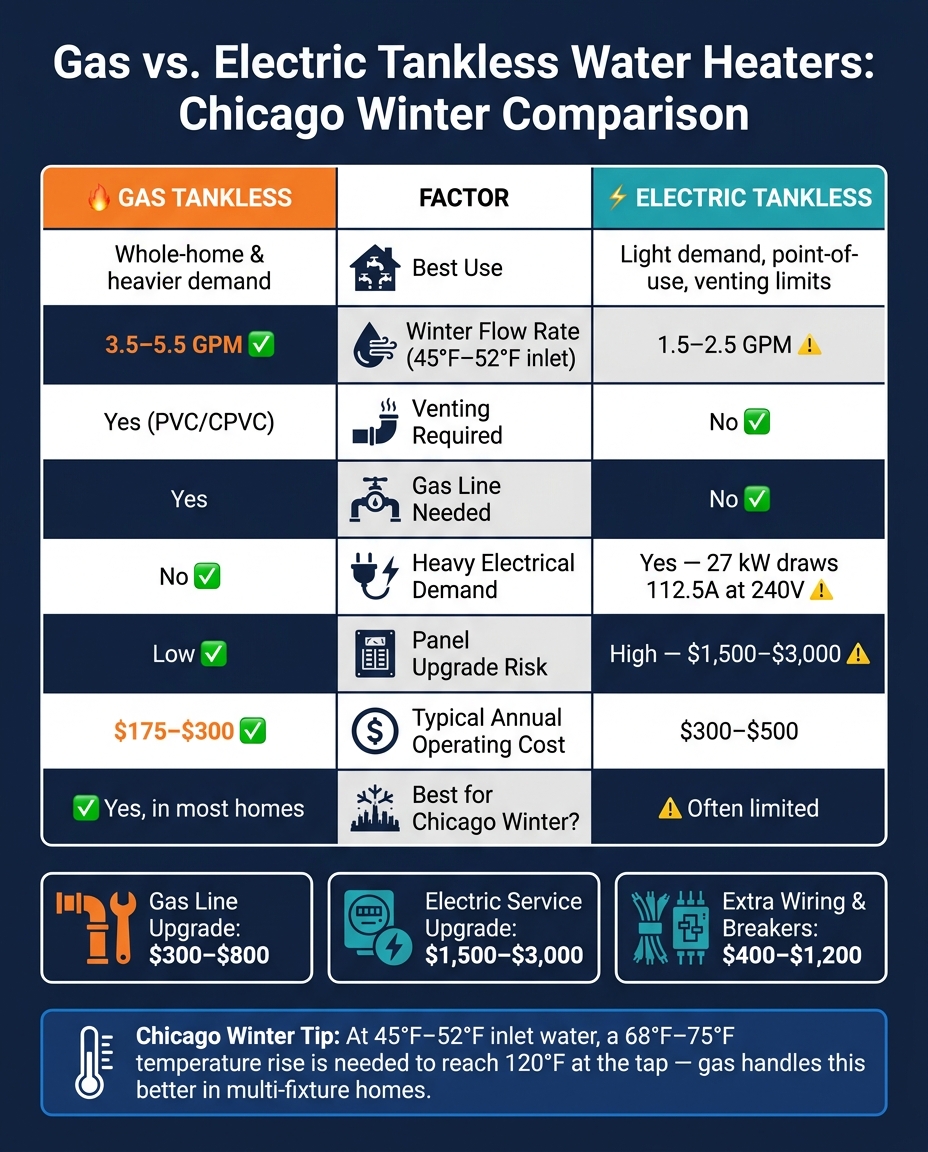
Gas vs Electric Tankless Water Heaters: Chicago Winter Comparison
Expert Plumber Compares Gas vs Electric TANKLESS Water Heaters
sbb-itb-b5c10b1
Quick Comparison
| Factor | Gas Tankless | Electric Tankless |
|---|---|---|
| Best use | Whole-home and heavier demand | Light demand, point-of-use, venting limits |
| Winter output | 3.5–5.5 GPM | 1.5–2.5 GPM |
| Venting | Yes | No |
| Gas line needed | Yes | No |
| Heavy electrical demand | No | Yes |
| Panel upgrade risk | Low | High |
| Typical annual cost | $175–$300 | $300–$500 |
| Best for Chicago winter | Yes, in many homes | Often limited |
So the choice is simple: pick gas for output, pick electric for install limits. The rest of the article breaks down the benefits of tankless water heaters and where each one fits and what can trip up the install.
Gas Tankless Water Heaters: Output, Venting, and Fuel Requirements
A high-capacity condensing gas unit rated at 199,900 BTU/h can deliver about 3.5 to 5.5 GPM in peak winter conditions, when incoming water is only 45°F to 52°F.
Hot Water Output for Homes and Small Businesses
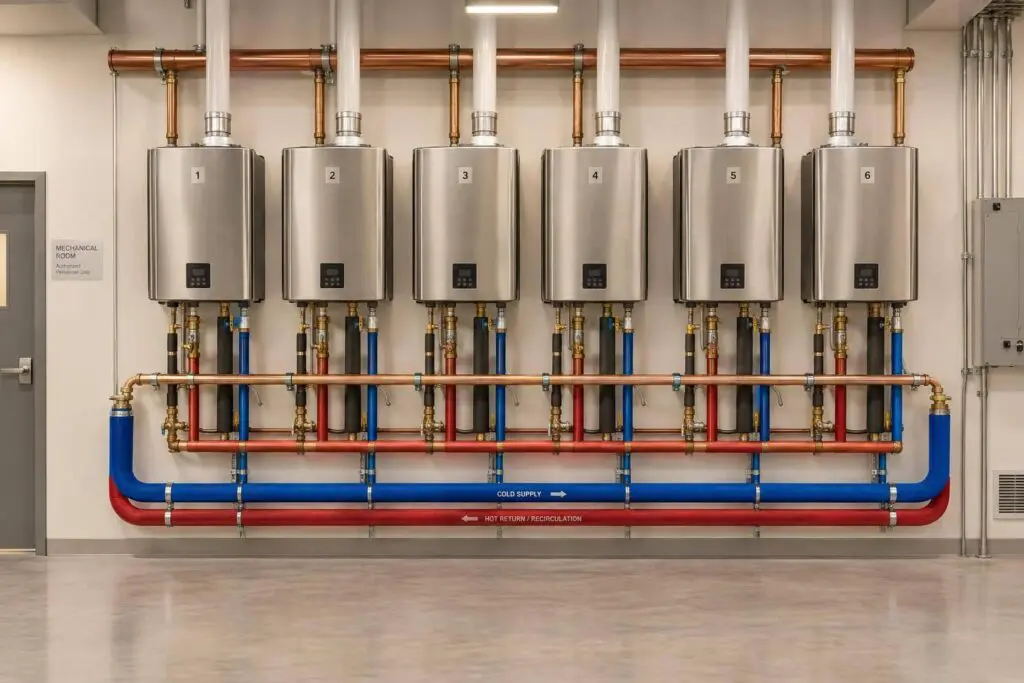
For a family of 3 to 4 people with 2 to 3 bathrooms, a unit rated at 180,000 to 199,000 BTU/h is usually a good fit. If you have a larger household of 5 or 6 people, or you’re dealing with a small business that has heavy overlap in hot water use, you may need more than 250,000 BTU/h total. In many cases, that means installing two units in parallel.
In winter, a single condensing gas unit at full output can usually handle a shower, sink, and dishwasher at the same time. That same steady output also makes sense for a small restaurant or salon where commercial sinks and backbar equipment are running during busy hours.
Don’t size the system by the number on the box alone. Published GPM ratings are almost always based on a 35°F temperature rise. In Chicago winter conditions, the number that matters is the output at a 70°F to 80°F rise. That’s the figure to check on the spec sheet.
That output comes with tighter gas supply and venting needs.
Installation: Gas Line, Venting, and Freeze Protection
Hot water output is only part of the job. Installation details matter just as much. Most high-output models need a properly sized gas supply line, and that usually means a 3/4-inch line. In older Chicago-area buildings that still have a 1/2-inch line, the upgrade often adds $300 to $800 to the total install cost.
Venting is the other big item. For most Chicagoland buildings, condensing gas units are often the better pick because they vent through standard PVC or CPVC pipe. That’s easier to route than the Category III stainless steel venting used by non-condensing models. Vent runs for condensing units usually top out at 40 to 60 feet, so the distance between the unit and an exterior wall matters during layout planning.
Condensing units also create acidic condensate with a pH of 3 to 4, and that water has to drain to a floor drain or utility sink. Some local codes call for a neutralizer in the drain line, so check that before the install starts. The condensate drain also needs to be routed so it won’t freeze during Chicago’s coldest weather. At the vent termination point, the unit needs at least 12 inches of clearance from any window or door.
Maintenance and Best Building Types for Gas Units
Gas tankless units can last 15 to 20 years with proper upkeep, which is about double the life of a standard tank heater. Yearly professional service should include descaling, burner inspection, vent checking, and condensate drain cleaning. If your water hardness is above 7 grains per gallon (GPG), descaling every 6 to 12 months helps protect the heat exchanger.
These systems are usually the best match for:
- Single-family homes with 2 or more bathrooms
- Small businesses with high or uneven peak demand
- Properties that already have natural gas service and a 3/4-inch supply line
Eco Temp HVAC, a Chicagoland Navien Service Specialist, installs and services gas tankless systems across the region, including Chicago, Downers Grove, Bartlett, and Palatine.
Gas handles the winter output problem well, but electric units take a different path. They skip venting, yet they move the pressure to panel capacity and wiring.
Electric Tankless Water Heaters: No Venting, but Higher Electrical Demand
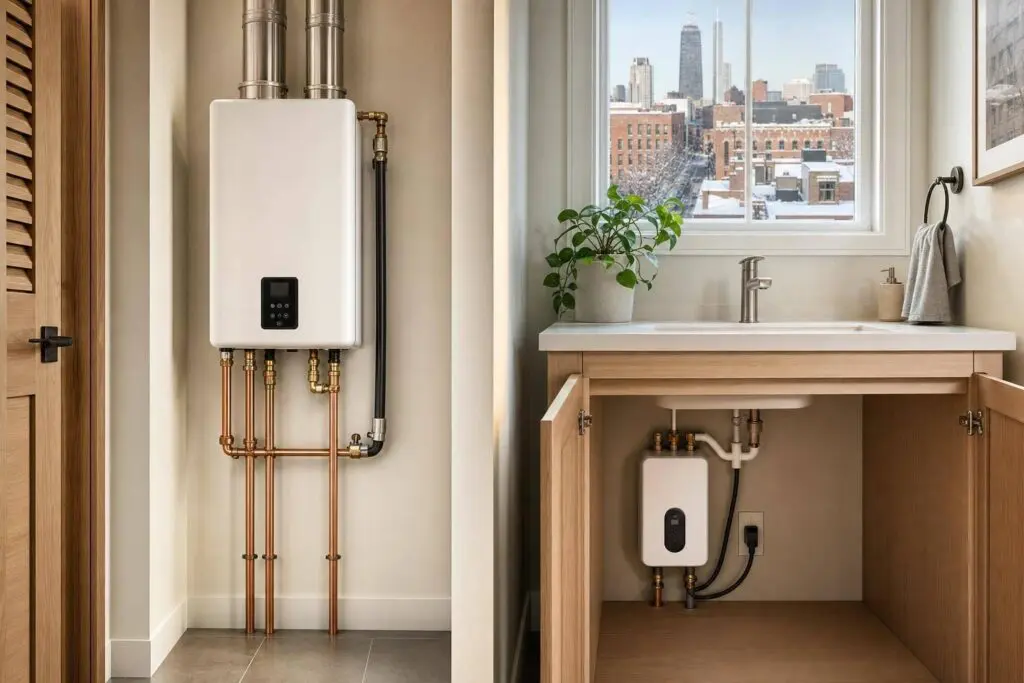
Electric units give up some of the output you get with gas, but they make installation a lot simpler. There’s no combustion, no venting, and no carbon monoxide risk from the unit itself. They’re also compact, so they can fit under a sink or inside a small utility closet. That said, in Chicagoland, colder incoming water can make whole-home use a tougher sell.
Hot Water Output in Cold-Weather Use
When inlet water is 45°F to 52°F, most whole-home electric units produce only 1.5 to 2.5 GPM. In plain terms, that usually covers one shower at a time, not several fixtures running together.
Once inlet water drops below 55°F, whole-home coverage usually means going with gas or installing multiple electric units.
That’s where the next issue shows up: electrical capacity.
Installation: Panel Capacity, Breakers, and Wiring
Electric tankless units skip venting, but the demand shifts to your electrical system. A 27 kW unit pulls 112.5A at 240V. Most whole-home models need:
- 200A service
- Two to four dedicated 240V double-pole breakers
- #6 or #8 AWG copper wiring
If the home has an older 100A panel, a service upgrade is often needed. That usually adds $1,500 to $3,000. Wiring and breaker work often adds another $400 to $1,200, and most Chicagoland jurisdictions require an electrical permit when you add high-amperage circuits.
The upside is simple: no wall or roof penetrations, and the unit takes up far less space than a gas model.
Once the electrical side is handled, maintenance is pretty straightforward.
Maintenance and Best Building Types for Electric Units
Upkeep usually comes down to annual descaling, plus checking electrical connections and controls. If your water hardness is above 7 grains per gallon (GPG), plan on descaling once a year to help avoid mineral buildup and error codes. Electric units usually last 8 to 15 years.
Electric tankless makes the most sense when gas lines aren’t available, when venting through an outside wall or roof is hard to do, or when hot water demand stays low. It’s a good match for condos, small apartments, offices, and point-of-use spots like breakroom sinks and remote bathrooms.
In short, electric tankless works best in spaces with light demand and limits around venting or gas supply.
Gas vs. Electric Tankless: Side-by-Side Comparison for Chicagoland
In Chicagoland, this choice usually comes down to three things: winter performance, utility setup, and what your building can handle. A unit might look great on a spec sheet, but Chicago winters have a way of exposing weak spots fast.
Output, Efficiency, and Operating Cost
On paper, electric units post slightly higher efficiency ratings. Their UEF runs from 0.96–0.99, compared with 0.90–0.97 for gas condensing models. But in Chicagoland, lab efficiency isn’t the whole story. Cold incoming water is the big test.
When groundwater falls to 45°F–52°F, gas condensing units can deliver 3.5–5.5 GPM at a 77°F temperature rise. Whole-home electric models, by contrast, usually max out at 1.5–2.5 GPM under those same winter conditions.
That gap matters more than it may seem. In summer, a unit may feel fine. In January, when two showers and a sink run at once, flow rate becomes the deal-breaker.
Real-World Installation Limits
Installation is where many people hit the wall.
Gas tankless systems need a properly sized gas line and venting. Most require a 3/4-inch supply line, while many older buildings still have 1/2-inch lines that need to be upgraded. In older properties, venting can also get messy fast.
Electric tankless systems skip venting, which is a big plus in some buildings. But they need serious electrical capacity. A whole-home 27 kW unit draws 112.5A at 240V, and homes with a 100A or 150A panel often need a service upgrade. That upgrade usually costs $1,500–$3,000.
For condos and high-rises, that tradeoff can swing the decision. If exterior venting is hard or not allowed, electric may be the more workable path.
Those limits usually decide which system fits a given property.
| Factor | Gas (Condensing) | Electric (Whole-Home) |
|---|---|---|
| Winter Flow Rate (77°F rise) | 3.5–5.5 GPM | 1.5–2.5 GPM |
| UEF | 0.90–0.97 | 0.96–0.99 |
| Venting | PVC/CPVC | None |
| Power Demand | Low (controls only) | 240V / 75–150A |
| Typical Annual Operating Cost | $175–$300 | $300–$500 |
| Power During Outages | Needs power for controls | Cannot run on standard backup generator |
Which Option Fits Your Building Type
- 3+ bathroom homes: Gas condensing is the better fit. One electric unit usually can’t keep pace with multiple showers during a Chicago winter.
- Condos, small offices, and venting-restricted spaces: Electric point-of-use units can work well for light, single-fixture demand.
- Restaurants and higher-demand commercial spaces: Gas handles overlapping peak use that whole-home electric models can’t match in this climate.
Conclusion: Picking the Right Tankless Water Heater for Your Property
After looking at output, venting, and power needs, the decision comes down to two things: your winter hot water demand and what your building can support. Gas condensing units are the better match for whole-home demand during Chicago winters. Electric units make more sense when venting isn’t an option, gas service isn’t available, or you only need hot water for one or two fixtures.
In Chicagoland, winter groundwater can fall to 45°F to 52°F. To get to 120°F at the tap, that means a temperature rise of 68°F to 75°F. That’s the point where the output difference between gas and electric starts to matter a lot.
If you’re still on the fence, a professional load calculation can clear things up fast. For a load check and model match, contact Eco Temp HVAC.
Before you buy, check these five items:
- Peak hot water demand
- Gas supply
- Venting
- Electrical panel capacity
- Permit needs
Miss just one, and the install can get messy.
Key Takeaways for Homeowners and Small Business Owners
Go with gas if you need higher winter output across several fixtures at the same time. Choose electric when venting is limited or when demand is only for one or two fixtures. If you go electric, make sure your panel has enough open capacity before you buy. And if venting through an exterior wall isn’t possible, electric point-of-use units are often the only viable option.
Pick the unit that fits your winter demand and your building limits – not the one with the best lab rating.
FAQs
How do I size a tankless water heater for winter?
In winter, groundwater is colder. That means your water heater has to work harder because it needs a bigger temperature jump to hit your target hot water temperature.
Start by adding up the GPM of fixtures that could run at the same time. Then subtract the coldest winter groundwater temperature from your desired hot water temperature. Use those peak winter numbers to size the unit:
BTU/h ≈ 500 × GPM × ΔT
Will my home need a panel or gas line upgrade?
It comes down to the kind of tankless system you install.
A gas model may need a 3/4-inch gas line so it can get enough fuel for on-demand heating.
An electric tankless unit may need a 200-amp electrical panel because it draws a lot of power. A pro can check your home’s current setup to make sure the sizing is right and the installation is safe.
Can one electric tankless unit run two showers?
It depends on the unit’s rated flow capacity and the combined flow rate of both showerheads. In most homes, two showers at the same time create a peak demand of 4 to 6 GPM.
That’s where many electric tankless units hit a limit. These models often deliver 2 to 5 GPM, so a single unit may not keep up with both showers at once. If the total demand goes past the unit’s capacity, the water temperature can fluctuate and feel inconsistent.