

If your Chicago home or shop feels stuffy in winter, an HRV can fix the air problem without wasting as much heat. I’d sum it up this way: it helps move stale indoor air out, brings filtered outdoor air in, cuts window condensation, and keeps more indoor heat than exhaust-only fans.
Here’s the short version of what matters most:
- Less stale air: steady ventilation can help lower indoor CO₂, odors, and that heavy indoor feel
- Cleaner incoming air: filters can cut indoor particle levels, with one study showing 72% to 92% lower indoor-to-outdoor particle ratios
- Less window fog and moisture: keeping indoor humidity near 30% to 50% can help reduce condensation
- Lower winter heat loss: many HRVs recover about 60% to 80% of heat from exhaust air
- More even comfort: balanced airflow can help reduce drafts, pressure problems, and uneven room conditions
For Chicago buildings that stay closed up through much of the heating season, that mix matters. You get cleaner air, better moisture control, and less wasted heat in one system.
Quick Comparison
| System | Air Supply | Filtration | Pressure | Heat Recovery | Moisture Control |
|---|---|---|---|---|---|
| HRV | Steady, controlled | Yes | Balanced | 60%–85% | More consistent |
| Exhaust-only ventilation | Limited, less controlled | No | Negative pressure | 0% | Less predictable |
Bottom line: if I were dealing with stale air, fogged windows, or a tightly sealed space in Chicago, I’d see an HRV as a direct fix worth looking at.
Heat Recovery Ventilator (HRV) Benefits: How It Creates Healthier Home Air
Why HRVs Matter In Chicago Properties
Chicago’s long heating season means homes and shops stay closed up for much of the year. That makes planned ventilation a must, not a nice extra. Chicagoland’s tighter codes now require mechanical ventilation in very airtight dwelling units; drafts and gaps are no longer enough.
When a building doesn’t have planned ventilation, the problems tend to show up fast. Windows fog. Air starts to feel stale. Humidity gets trapped with nowhere to go. Day to day, that often means stale air, fogged glass, and rooms that never seem to feel evenly comfortable.
Exhaust-only fans make this worse in another way: they push heated air out of the building and don’t get that heat back. In cold climates, studies show much higher heating losses than HRVs: 6.3–9.5 kBTU/ft²·yr versus 0.6–2.2 kBTU/ft²·yr. That gap helps explain why HRVs matter so much in Chicago.
That’s why the five benefits below matter so much for Chicago homes and shops.
1. Reduced Indoor Stuffiness And Stale Air
Closed-up winter air gets stale in a hurry. CO₂, odors, and indoor pollutants start to build when there isn’t much air exchange.
An HRV helps by moving air in a steady, balanced way: stale air out, fresh air in. It pulls air from damp, odor-prone rooms and sends tempered fresh air to the rooms people use most. One study found that higher outdoor airflow cut CO₂ from 1,638 ppm to below 1,000 ppm. That shows how steady ventilation can break up that heavy, stuffy feeling.
The heat exchanger tempers incoming air, so you can keep windows closed without dealing with cold drafts.
This matters most in tight homes and shops, where natural air leakage is low and stale air piles up fast.
That same steady airflow also helps limit moisture on cold windows.
2. Steady Supply Of Filtered Fresh Air
Air leaks and cracked windows don’t give you much control. On a calm day, a tight home may get too little fresh air. On a windy day, it may get too much. An HRV fixes that by bringing in fresh air and pushing out stale air at a set rate.
That filter is a big deal in Chicago’s city air. Before outdoor air gets into your living space, it moves through an intake filter that catches dust, pollen, fine particles, and other outdoor pollutants. A 2023 study found that HRV use cut indoor-to-outdoor particle ratios by 72% to 92%. That’s a lot cleaner than air slipping in through gaps around windows and doors. That same steady airflow can also help stop moisture from lingering on cold glass.
In shops, HRVs help thin out VOCs, odors, and CO₂ during the day. Most units also have boost modes, which let airflow ramp up during busy hours and dial back when the space is empty. The same airflow helps manage humidity in occupied spaces.
3. Lower Window Condensation And Moisture Buildup
An HRV helps cut window condensation by pulling humid indoor air out and bringing drier outdoor air in. In a Chicago winter, that can mean fewer fogged-up panes, less dripping, and less frost on the glass.
A winter indoor relative humidity level of about 30% to 50% helps reduce condensation and mold risk. During colder Chicago cold snaps, 30% to 40% is usually easier to maintain.
That steadier humidity does more than keep windows clearer. It also helps protect frames, sills, and interior finishes. When water sits on sills, it can lead to wood rot and paint blistering. If frames keep getting wet, mold is more likely to grow there too. In tight, energy-efficient Chicago buildings, natural air leakage is low, so indoor humidity can build up fast when ventilation isn’t managed well.
For shops with large display windows, the upside is pretty practical:
- Clearer glass
- Fewer water stains on sills
- Less need to open windows just to air the space out
Running the HRV on low speed through the heating season can help stop the humidity swings that lead to sudden fogging.
You also get that moisture control with less heat loss than exhaust-only ventilation.
4. Less Heating Loss Than Exhaust-Only Ventilation
With exhaust-only ventilation, you push warm indoor air out and pull cold outdoor air in. That means the heat in that outgoing air is simply lost. In a Chicago winter, that can add up in a hurry.
An HRV works differently. It moves heat from the outgoing air to the incoming air without mixing the two air streams. So the fresh air coming in is already tempered before it enters the space. Your furnace or boiler doesn’t have to work as hard to bring that air up to room temperature.
Many modern residential and light commercial HRVs recover about 60% to 80% of the heat in exhaust air. One cold-climate study found that a heat recovery ventilation system saved 74% of the energy that would have been lost with exhaust-only ventilation. For Chicago homes and commercial spaces with a long heating season, that gap can show up on utility bills.
There’s another upside too. A lower heating load can mean less strain on your heating system over time. That can help cut wear on the equipment, especially in tight, well-sealed buildings.
5. Better Comfort In Tight, Well-Sealed Buildings
Lower heating loss helps, but that’s only part of it. Balanced ventilation also changes how a tight building feels from one day to the next. In many tight Chicago homes and shops, stale air, odors, and uneven temperatures tend to stick around. An HRV helps fix that with balanced, filtered ventilation.
An HRV pulls stale air out of bathrooms and laundry rooms while bringing fresh, filtered air into bedrooms, living areas, and offices. So instead of stale air building up in closed-off rooms, fresh air goes where people actually spend time.
Balanced pressure also makes a big difference. Unlike exhaust-only systems, an HRV keeps supply and exhaust close to even. That helps reduce negative pressure, cold drafts, and uneven airflow. You’ll often notice that most in rooms that sit farther from the main airflow path.
The result is more even comfort across the property. That can matter a lot in finished basements, back offices, and upper-floor bedrooms. In tight or remodeled buildings, it helps the whole place feel better to live or work in.
HRV Vs. Exhaust-Only Ventilation: A Quick Comparison
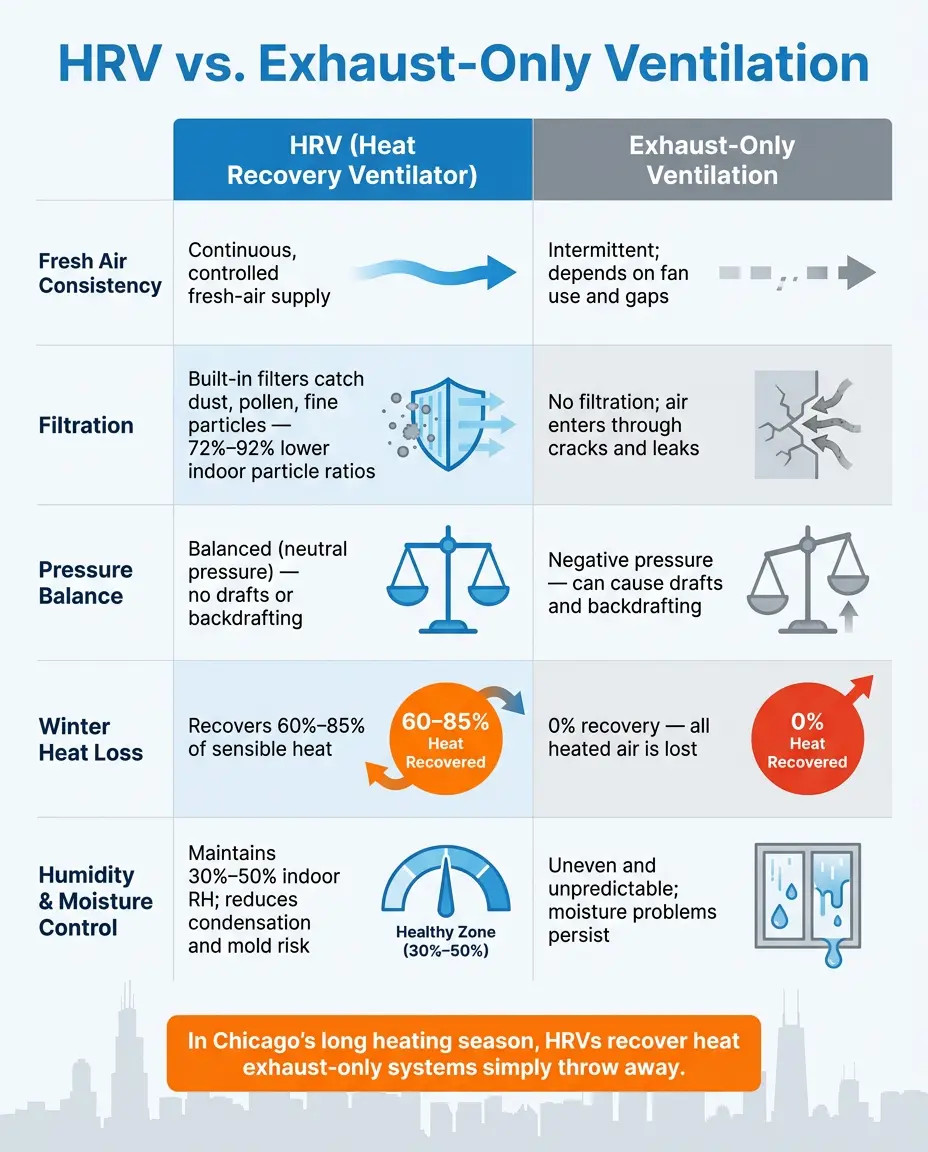
HRV vs. Exhaust-Only Ventilation: Chicago Home & Shop Comparison
Here’s a side-by-side look at how HRVs and exhaust-only ventilation stack up in Chicago homes and shops.
| Feature | HRV | Exhaust-Only |
|---|---|---|
| Fresh Air Consistency | Continuous, controlled fresh-air supply | Intermittent; depends on fan use and building gaps |
| Filtration | Incoming air passes through built-in filters | No filtration; air enters through cracks and leaks |
| Pressure Balance | Balanced (neutral pressure) | Negative pressure; can cause drafts or backdrafting |
| Humidity Management | Regular air exchange limits moisture buildup | Uneven and less predictable; can leave moisture problems unresolved |
| Winter Heat Loss | Recovers roughly 60%–85% of sensible heat | Zero recovery; all heat in exhausted air is lost |
The big gap comes down to heat recovery. An HRV brings in fresh air without throwing away all the heated indoor air you already paid for.
Exhaust-only systems are more basic. But in Chicago’s tighter homes and shops, they can pull the building into negative pressure, let outside air sneak in through leaks, and dump heated air straight outdoors.
Installation And Service Notes For Chicagoland Buildings
Once you know the upsides, the next step to improve indoor air quality is simple: installation makes or breaks HRV performance in Chicago buildings.
Start with sizing. For single-family homes, aim for about 50–150 CFM based on floor area, occupancy, and how the space is used. Pick a unit that can deliver the design airflow at medium speed and around 0.4 inches of water column. Shops often need more airflow, depending on zoning and building use.
Duct layout matters just as much as unit size. Send supply air to bedrooms and main living areas. Pull exhaust from bathrooms, laundry rooms, and other wet rooms. That setup helps keep cleaner air in the spaces people use most and removes moisture faster from damp areas.
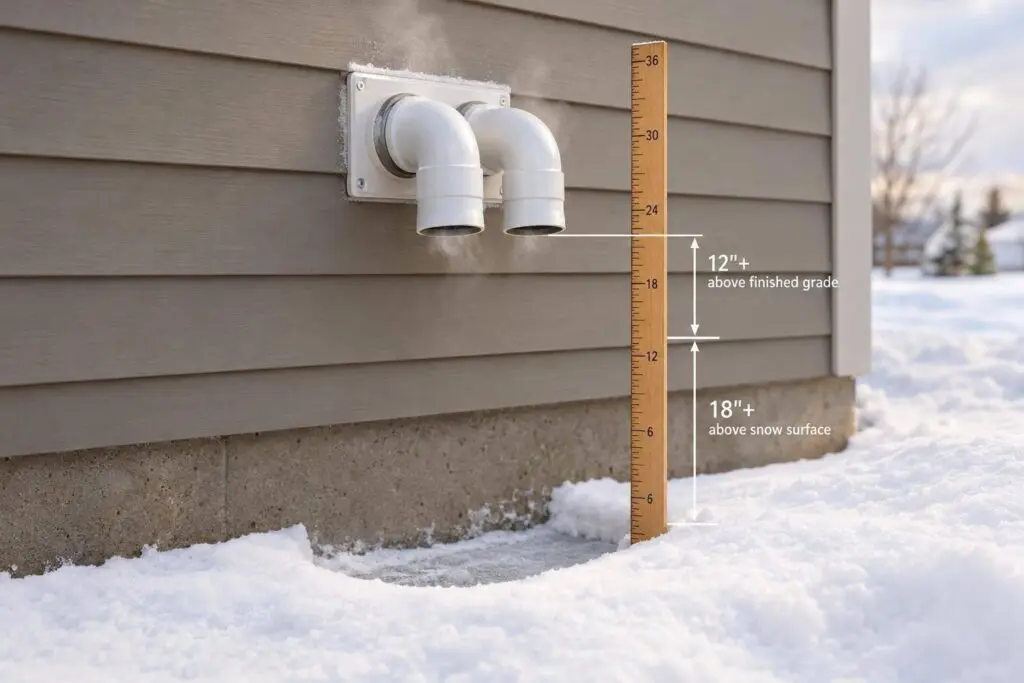
Outdoor hood placement also matters. Keep intake and exhaust hoods more than 10 feet apart. Skip rooftop terminations when possible, since snow, ice, or air recirculation can throw off airflow. It also helps to keep duct runs short and straight and cut back on sharp turns and elbows.
Chicago winters add a few extra headaches. Install the HRV in a heated, conditioned space. Make sure condensate drains are pitched the right way and protected from freezing. Set up the defrost cycle correctly so the core doesn’t ice up. If any ducts pass through unconditioned spaces, insulate and air-seal them.
Airflow balancing at startup is a big deal. Keep supply and exhaust within about 10% of each other. Use flow hoods or anemometers, then fine-tune balancing dampers at each register. If the system isn’t balanced, it can waste energy and push moisture into places it shouldn’t go.
Maintenance is pretty straightforward, but it needs to happen on schedule:
- Inspect HRV filters every 3 months
- Clean or replace filters every 3–6 months
- Clean the heat-exchange core annually
- Keep outdoor hoods clear of leaves, snow, and debris
Chicago dust and pollen can clog filters faster, so regular checks matter. Eco Temp HVAC provides HRV installation, balancing, and maintenance for Chicagoland homes and shops.
Conclusion
During Chicago’s heating season, an HRV brings in fresh air without throwing away the heat you already paid for.
That matters more than it might seem at first. These five benefits work together to cut stuffiness, manage moisture, reduce heat loss, and make tight buildings feel better to live or work in. If that sounds like your home or shop, an HRV is a practical next step.
Here’s the basic tradeoff: exhaust-only ventilation pushes heated air out and pulls cold air in. An HRV does something smarter. It recovers much of that heat before the stale air leaves.
So if your place feels stale in winter, you keep seeing condensation on the windows, or you’ve recently added insulation or new windows, an HRV deserves a serious look. It’s a well-established system, and when it’s installed and balanced the right way, it usually needs routine maintenance to keep working well. For sizing, installation, or maintenance in Chicagoland, Eco Temp HVAC can help.
FAQs
Do I need an HRV in an older Chicago home?
An HRV can work well in an older Chicago home, especially if you’re seeing signs of poor ventilation. That can mean odors that stick around, indoor humidity above 60%, or visible moisture issues.
It tends to help most when your home has a low air exchange rate, which often matters more during Chicago’s cold, dry winters. Eco Temp HVAC offers free ventilation assessments across the Chicagoland area to help you figure out whether an HRV or ERV makes more sense.
How do I know what size HRV my space needs?
Size an HRV by working out the needed airflow in cubic feet per minute (CFM).
Here’s the basic estimate:
Total square footage × ceiling height × 0.35 ÷ 60
That gives you a starting point for the airflow your home may need.
Why does this matter? If the unit is too small, it may not move enough air. If it’s too large, you can end up with comfort issues and wasted energy. Proper sizing affects both comfort and efficiency.
That’s why it’s smart to talk with a certified HVAC professional. Eco Temp HVAC can review your building’s layout, air needs, and performance goals to help you choose the right setup.
How often does an HRV need maintenance?
Clean or replace HRV filters every 3 to 6 months, based on your indoor air conditions. If the air in your home carries more dust, pet hair, or other particles, you may need to do it more often.
Inspect and clean the heat exchange core once a year. This helps stop dust and debris from building up and dragging down performance.
For the best results, schedule a professional inspection once a year so small problems can be found early.