
Thermostat Compatibility Checker
Buying a new thermostat sounds simple until you look behind the wall plate and see a cluster of terminals that may or may not match the model you want. A thermostat compatibility checker helps sort that out by comparing your HVAC system type, fuel source, heating and cooling stages, and connected wires to common support rules used by modern thermostats.
What the tool looks at
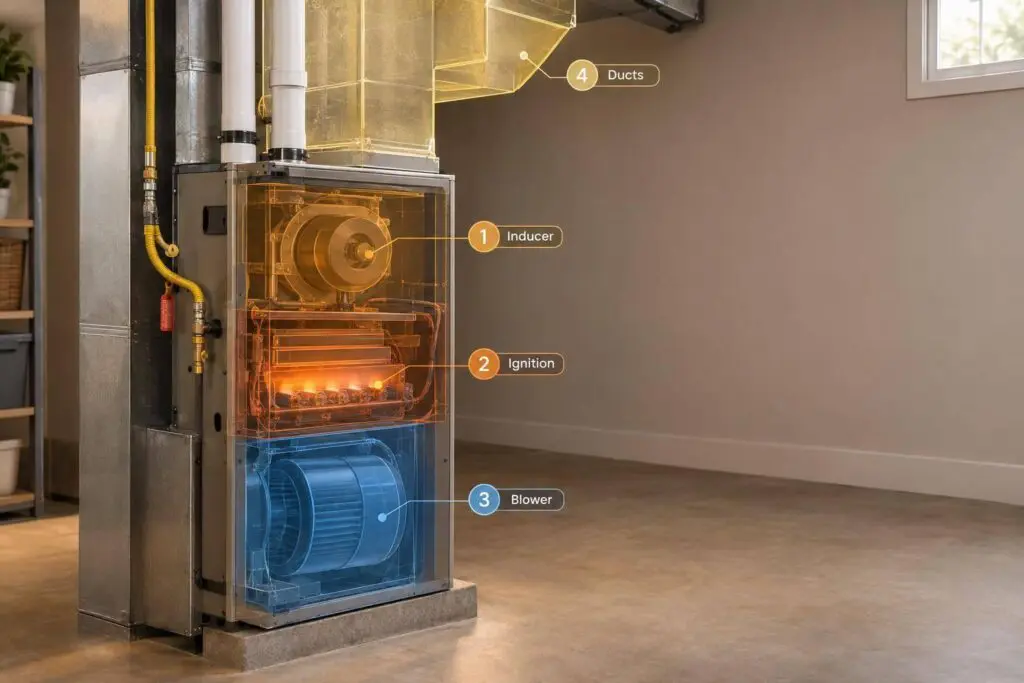
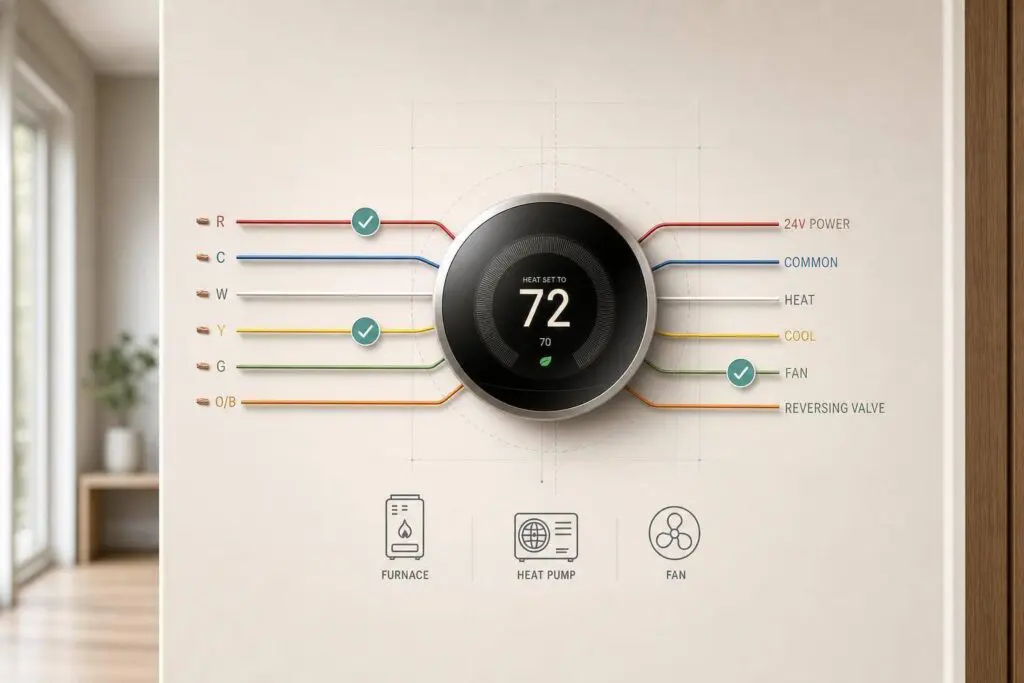
This checker is built for real-world homeowner questions. It reviews whether you have a forced-air furnace, heat pump, boiler, electric baseboard, multi-stage system, or dual-fuel setup. It also considers key terminals such as R, C, W, Y, G, O/B, AUX/E, W2, and Y2, which often reveal what kind of thermostat support you’ll need.
Why careful matching matters
A smart thermostat may work beautifully on a standard 1 heat / 1 cool low-voltage system, yet be a poor fit for a line-voltage baseboard heater or an unusual control setup. That’s where a thermostat compatibility checker is most useful: it helps you catch likely problems before purchase and points you toward features like heat pump support, multi-stage control, or C-wire compatibility.
A practical, cautious result
If your wiring is incomplete or the labels are uncommon, the tool stays conservative and tells you what to confirm next.
FAQs
Can this tool tell me with certainty whether a thermostat will work?
No tool can guarantee compatibility on its own, because thermostat support varies by brand, model, installer setup, and even how the control board is configured. What this checker does well is give you a conservative, practical screening based on your HVAC type, wiring terminals, staging, and whether your system appears to be low voltage or line voltage. If the information entered is incomplete or unusual, the result should stay cautious rather than overconfident. Before you buy, it’s still smart to verify the exact model with the thermostat manufacturer or an HVAC professional.
Why does the C-wire matter so much for smart thermostats?
Many smart thermostats need continuous power, and the C-wire is the most common way to provide it on low-voltage systems. Some thermostats can work without a C-wire in certain setups, sometimes with an adapter or power kit, but that depends on the equipment and wiring available. If your system has only a few terminals connected, or the wiring doesn’t match the usual pattern for your equipment type, compatibility becomes less certain. That’s why the tool treats the presence or absence of a C-wire as an important signal instead of a simple yes-or-no pass.
Will this work for electric baseboard or other high-voltage systems?
It can help identify those systems as a caution case, but many standard and smart thermostats are made for low-voltage HVAC controls, not line-voltage electric baseboard, wall heaters, or other high-voltage setups. If your system is line voltage, you usually need a thermostat specifically designed and rated for that application. The tool should warn you when the equipment type suggests a high-voltage setup, because using the wrong thermostat in that situation is more than a compatibility issue—it can be a safety and equipment problem.