
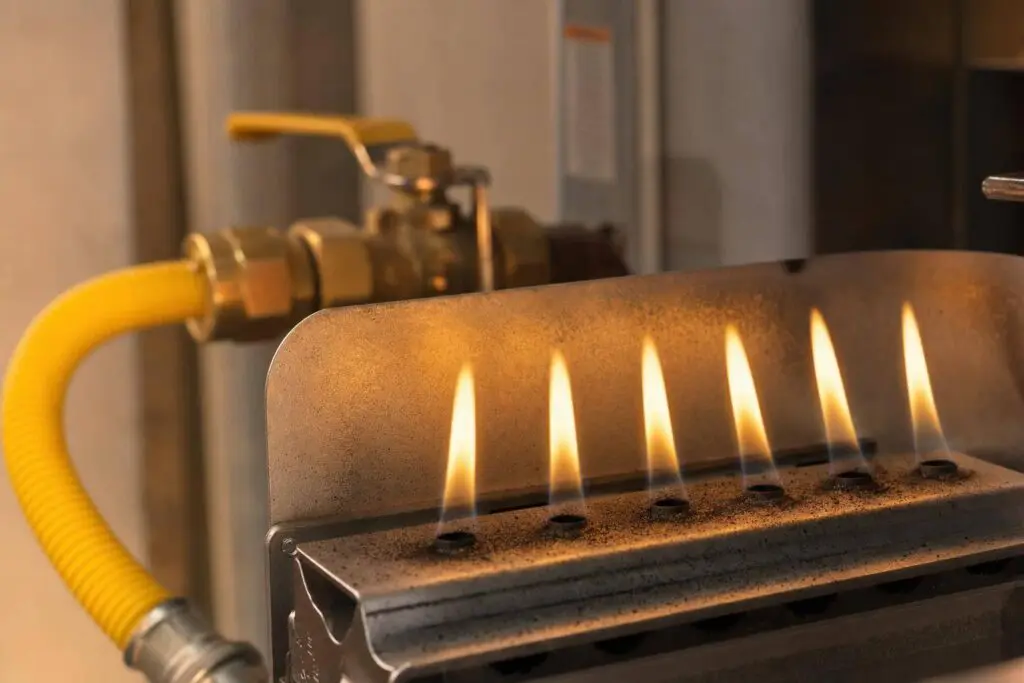
If I smell gas, hear hissing, see soot, or notice headaches that get better outside, I should stop using the furnace and get help right away. Poor gas connections can lead to gas leaks, bad burner flames, system shutdowns, and carbon monoxide exposure. In the U.S., carbon monoxide sends more than 100,000 people to the ER each year, which is why these warning signs should never be brushed off.
Here’s the short version:
- Gas leak signs: rotten-egg smell, hissing, whistling
- Burning problem signs: yellow or flickering flame, loud thump at startup, soot
- Heating trouble: weak heat, long run times, short cycling, cold rooms
- Health signs: headache, dizziness, nausea, confusion, symptoms that improve after leaving home
- Emergency signs: gas odor, CO alarm, heavy soot, or anyone feeling sick while the furnace runs
A few points matter most:
- Natural gas and propane do not smell on their own. Utilities add an odor so leaks are easier to notice.
- A normal furnace flame is usually steady blue.
- Many natural gas furnaces run at about 3.5 in. w.c. manifold pressure, so pressure problems can affect flame and heat.
- CO is colorless and odorless, so detectors are a must on every level and near sleeping areas.
If I notice one warning sign, I should not try to tighten fittings, open burner panels, or adjust valves myself. The safe next step is to turn the furnace off if it’s safe, leave the area if gas or CO is suspected, and call a licensed HVAC technician or 911 from outside.
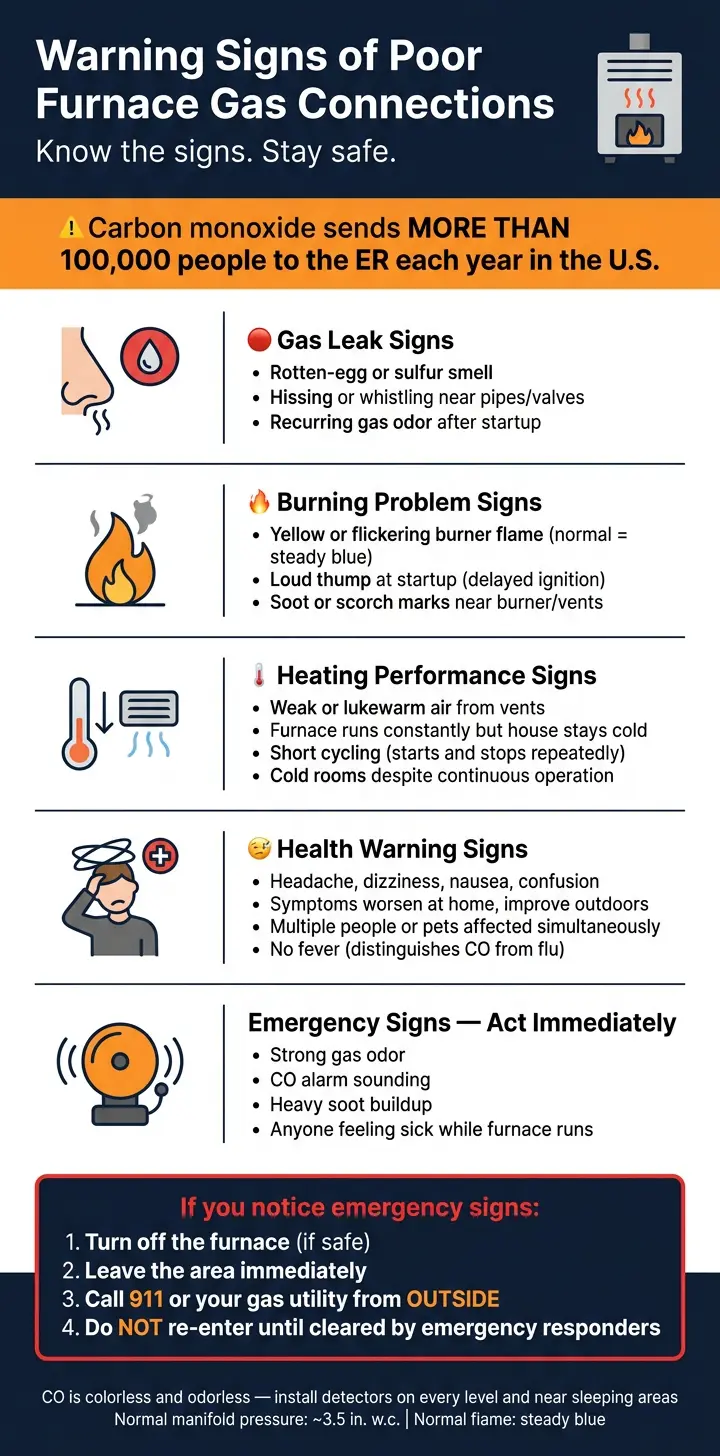
Warning Signs of Poor Furnace Gas Connections
How to Diagnose a Bad Furnace Gas Valve (10 Things To Check in 2021)
Warning Signs You Can Spot Near the Furnace
The first clues often show up right around the furnace. Leaks, rust, and burn issues tend to leave signs you can see, smell, or hear.
Rotten-Egg Smell, Hissing Sounds, or Recurring Gas Odor
A rotten-egg or sulfur smell near the furnace, utility room, or gas piping is a strong sign of a leak. If that gas odor comes back after startup, it needs immediate inspection.
Hissing or whistling near the cabinet, shutoff valve, flex connector, or pipe joints can mean gas is escaping through a loose or damaged connection. If you hear that sound, do not touch valves or remove panels to look into it.
Rust, Corrosion, Soot, or Dust Movement Around Connections
If you do not hear a leak, take a close look at the connections. A basic visual check can show damage near the shutoff valve, flex connector, or burner area.
Rust or corrosion on gas valves, flex connectors, or fittings where the gas line enters the furnace cabinet can mean a connection is starting to fail. Joints that look wet, stained, or discolored compared with the pipe around them should be checked by a technician.
Soot or scorch marks around the burner compartment or near the front panel vents suggest the furnace is not burning fuel cleanly. That can point to a combustion problem and a possible carbon monoxide risk. Do not remove panels or try to clean soot yourself. Note where you see it and call for service.
Any of these signs calls for a professional inspection before the furnace is used again.
How Faulty Gas Connections Affect Furnace Performance
Once the obvious warning signs show up, the next hints usually come from the way the furnace burns and heats.
Abnormal Flames, Ignition Trouble, and Repeated Shutdowns
A natural gas furnace that’s working the way it should produces a steady blue flame. When a gas connection is loose, partly blocked, or delivering the wrong pressure, that flame can shift to yellow or orange, flicker, or pull away from the burner instead of staying tight and steady. A yellow flame can point to incomplete combustion and a carbon monoxide risk.
A lot of the time, these issues show up first during startup. If gas delivery is uneven, the furnace can have delayed ignition. That means gas collects in the burner area before it finally lights, which can cause a loud thump when the system starts. If the gas flow is too erratic for ignition to happen at all, the furnace may attempt several restarts and then enter safety lockout, shutting down until someone resets it. To a homeowner, this can sound like repeated clicking, followed by the blower turning off with no warm air coming through the vents.
Modern furnaces have safety controls that shut the system down when flame conditions or venting become unsafe. That’s a good thing. But it also means a furnace with a gas connection issue may flash error codes or simply refuse to stay on.
Weak Heat, Long Run Times, Short Cycling, and Uneven Temperatures
When gas pressure is low or unstable, the burners can’t make full heat. The heat exchanger stays cooler than it should, and the air coming from the supply registers feels lukewarm instead of hot. The furnace then has to run much longer just to push the indoor temperature closer to the thermostat setting. Many homeowners describe it the same way: the furnace seems to run all the time, but the house never gets warm.
Short cycling is a different sign, but it can come from the same kind of problem. In this case, the furnace starts, runs for a few minutes, and shuts off before the house heats up. Safety controls may trip when they detect flame loss or poor combustion, cutting the cycle short and forcing the system to restart again and again. In multi-story homes, low heat output often makes upstairs rooms feel colder than the main floor.
| Symptom | Likely cause | What you notice |
|---|---|---|
| Yellow or flickering burner flame | Low gas pressure or incomplete combustion | Reduced heat; possible carbon monoxide risk |
| Loud thump at startup | Delayed ignition from unstable gas flow | Loud noise when the furnace lights |
| House never reaches thermostat setting | Burners producing too little heat from restricted gas flow | Long run times |
| Cold rooms despite continuous operation | Low heat output magnifying duct imbalances | Uneven temperatures floor to floor |
If you notice these patterns – especially repeated shutdowns, a furnace that runs nonstop without warming the home, or a loud thump at startup – write down what you’re seeing and call a licensed HVAC technician. Do not adjust gas valves or open the burner compartment.
Health and Safety Symptoms You Should Not Ignore
Headaches, Dizziness, Nausea, or Symptoms That Clear Up Outdoors
Some of the plainest warning signs show up in the people and pets living in the home. A bad gas connection can send combustion gases, including carbon monoxide, indoors before anyone spots a furnace issue. Carbon monoxide is colorless and odorless. Common CO symptoms include headache, dizziness, nausea, weakness, chest pain, and confusion. These symptoms can look a lot like the flu, but CO exposure usually does not cause a fever.
One pattern matters a lot: symptoms get worse at home and start to ease after you leave. Time outside means more fresh air, so exposure drops and symptoms may calm down. If you or someone in your home notices that pattern – especially when the furnace is running – don’t brush it off as stress or a short-lived illness.
When more than one person or pet has the same symptoms, that’s a strong sign of an indoor combustion problem. Higher exposure can lead to severe headache, confusion, fainting, loss of coordination, or unconsciousness. Children, older adults, and people with heart or lung conditions often show symptoms sooner and more intensely than healthy adults.
When to Turn Off the Furnace and Leave the Area
If symptoms or a CO alarm appear, treat the situation as an emergency.
For smaller furnace problems – like occasional cycling, mild uneven heating, no physical symptoms, and no strong odor – turn the furnace off at the thermostat and set up a prompt inspection. If you smell gas, hear hissing, see soot buildup, or hear a CO alarm, shut off the furnace if it’s safe to do so, leave right away, and call 911 or your gas utility from outside.
Do not go back inside until the fire department or utility crew has cleared the property with proper equipment. If anyone is confused, having trouble walking, or has lost consciousness, tell emergency responders that CO exposure is suspected. Use working CO detectors on every level of the home and near sleeping areas. They add a critical second layer of protection.
Professional Inspection, Repair, and Key Takeaways
What a Technician Checks
Once these warning signs show up, stop using the furnace and book an inspection.
A technician starts by reviewing what you’ve noticed. Then they inspect the gas valve, flex connector, hard piping, and fittings for rust, cracks, kinks, or materials that shouldn’t be there. From there, they connect your symptoms to the most likely cause: a leak, a combustion problem, or a venting fault.
To check for leaks, they use electronic gas detectors and leak-detection solution at joints and connections. If the detector alerts or bubbles appear, gas is escaping. They also use a manometer to compare inlet and manifold pressure with the furnace data plate. For many natural gas furnaces, manifold pressure is about 3.5 in. w.c. Low pressure can weaken flames. High pressure can lead to flame lift-off.
If the gas supply looks fine, the technician moves on to venting. The flue pipe is checked for proper slope, secure joints, and signs of backdrafting, such as soot near the draft hood. Combustion air openings are also checked to make sure they’re clear.
The visit usually ends with a test run. At that stage, the technician checks flame color, safety controls, venting, and repair choices. By the end of the inspection, you should know whether the issue is a leak, a combustion problem, or a venting fault.
In the Chicagoland area, Eco Temp HVAC follows this inspection process and offers annual safety checks before heating season.
Key Points to Remember
Here are the main warning signs to watch for:
- Gas odor
- Hissing
- Rust
- Soot
- Yellow flames
- Repeated shutdowns
- Weak heat
- CO symptoms, especially symptoms that improve after leaving the house
If you notice a gas odor, hissing, soot, a yellow flame, repeated shutdowns, or CO symptoms, stop using the furnace and call a certified HVAC professional.
Gas work isn’t a DIY job. It calls for a licensed technician with leak detectors, a manometer, and combustion-testing tools. Schedule an annual inspection before heating season starts each fall, and deal with warning signs right away instead of waiting to see if they get worse.
FAQs
Can a furnace gas leak come and go?
Yes. A gas leak can seem to come and go, but any suspected leak is a serious safety hazard. Changes in pressure, temperature, or loose fittings can make the smell seem stronger or weaker at different times, including during a heat cycle.
If you smell gas, often described as a rotten-egg odor, leave your home immediately and call 911 or your utility provider. Do not wait. Do not try to find the source yourself.
What color should a furnace flame be?
A healthy furnace flame should be steady blue.
If the flame looks yellow or starts flickering, the gas may not be burning all the way. That can create a serious safety risk, including possible carbon monoxide production. If your furnace flame is yellow instead of blue, contact Eco Temp HVAC for a professional inspection.
Who should I call for a gas furnace issue?
If you smell gas, which often smells like rotten eggs, leave your home right away and call 911 or your utility provider.
If your furnace has yellow or flickering flames, strange noises, uneven heat, or other mechanical problems, contact a licensed HVAC technician. Eco Temp HVAC provides 24/7 furnace repair and maintenance across the Chicagoland area.