
Estimate Heating Demand with More Confidence
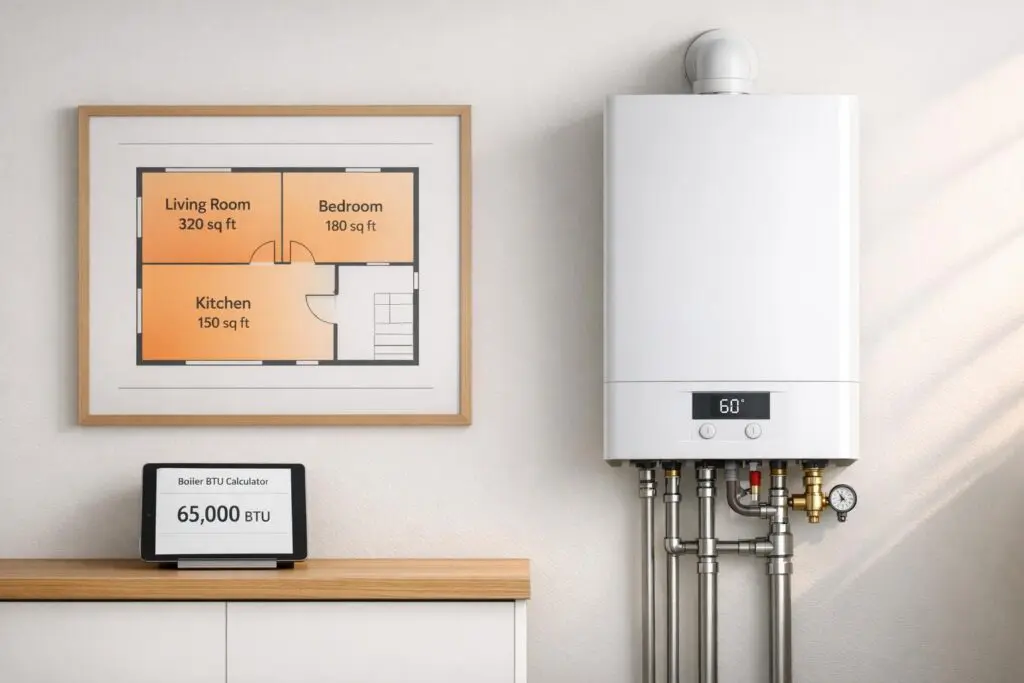
Choosing the right boiler size starts with a realistic view of how much heat your space actually needs. This Boiler BTU Calculator helps you estimate required output in BTU/hour using two practical approaches: a quick square-foot method and a more detailed room-by-room method. That makes it useful whether you’re budgeting a replacement, planning a renovation, or comparing heating options for a specific zone.
Two Ways to Size a Heating Load
The quick method works well for fast planning. It uses heated area, climate severity, insulation quality, ceiling height, and air leakage to create a conservative estimate. The detailed method goes further by looking at room dimensions, exterior wall exposure, windows, and insulation to build a clearer heating picture.
A Better Starting Point for Boiler Sizing
A good Boiler BTU Calculator should do more than spit out one number. This tool also shows a sizing range and explains the factors behind the estimate, so the result feels understandable rather than mysterious. It’s a smart first step for homeowners and pros alike, but final boiler sizing should still be confirmed with a full heat loss analysis, emitter review, and professional Manual J or equivalent calculation.
FAQs
How accurate is this boiler BTU calculator?
It’s designed to be a solid planning estimate, not a stamped engineering design. The quick method is useful for early budgeting and rough sizing, while the detailed room-by-room method gives you a more informed estimate by accounting for dimensions, exterior exposure, windows, insulation, and climate. Even so, final boiler selection should also consider the full building heat loss, distribution piping, radiator or baseboard output, and domestic hot water demand if the boiler handles both space heating and hot water.
What’s the difference between the quick and detailed methods?
The quick method starts with heated square footage and applies practical BTU-per-square-foot assumptions, then adjusts for climate, insulation, ceiling height, and how drafty or tight the space is. It’s fast and helpful when you need a broad range. The detailed method looks at each room or zone more closely, using length, width, height, exterior walls, windows, and insulation to build a more transparent estimate. If you’re comparing options or planning a larger project, the detailed approach is usually the better choice.
Should I size my boiler exactly to the calculator result?
Usually, no. A boiler that’s too small may struggle in colder weather, but one that’s oversized can short cycle, waste fuel, and reduce comfort. That’s why the tool gives a recommended BTU/hour figure along with a low-to-high range. The best next step is to compare that estimate with the output needs of your emitters and have a professional verify the load using a proper heat loss method, especially for whole-home replacements, older homes, or projects with domestic hot water demand.