
Frequently Asked Questions About Winter Thermostat Settings
What Midwest homeowners ask about winter thermostat settings, setbacks, and where the savings actually come from.
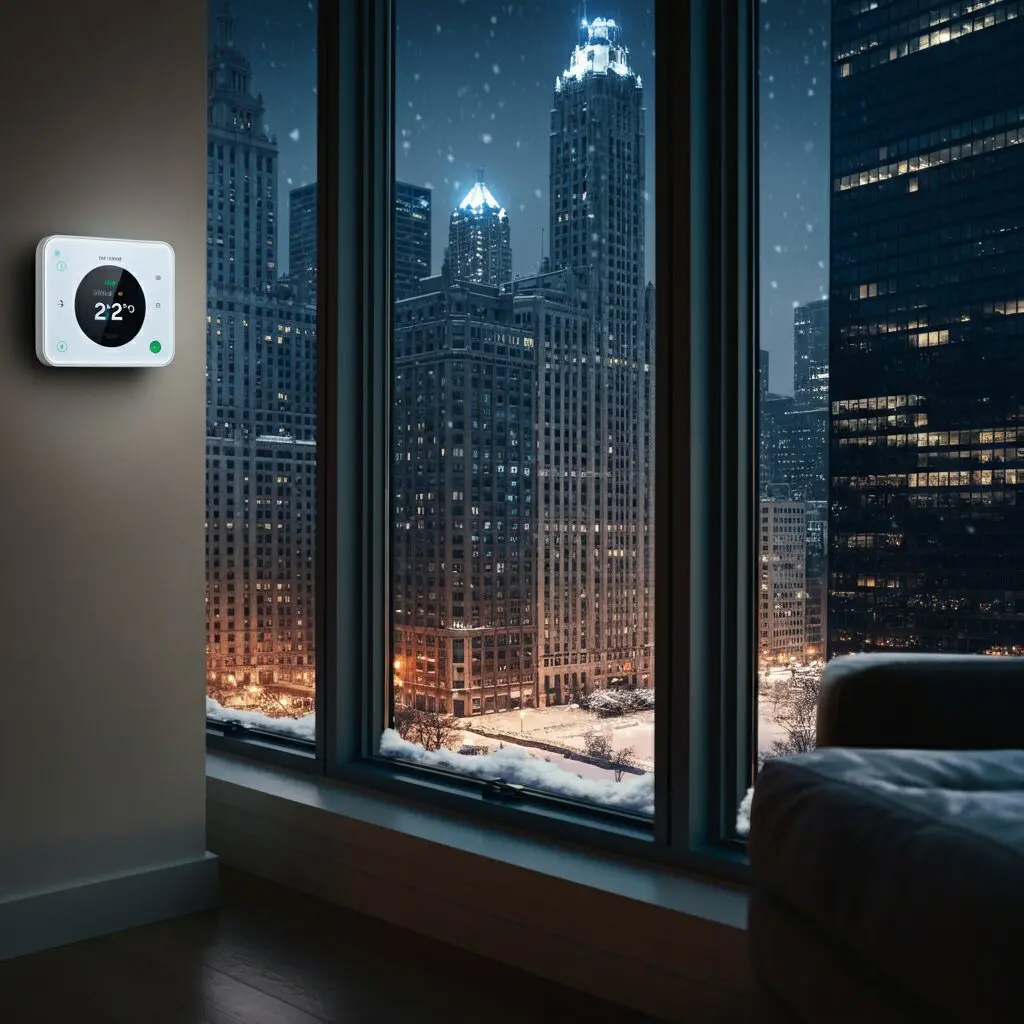
68°F while you're home and awake, per the U.S. Department of Energy. When you're asleep or away, drop it 7–10°F — that setback alone can cut your annual heating costs by up to 10%. In a Midwest winter, 68°F is the balance point where comfort, furnace strain, and your gas bill all behave.
60–62°F works for most households. Cooler bedrooms are generally better for sleep, heavier bedding covers the difference, and those overnight hours are where most of the setback savings come from since you're consistently getting 8 hours at the lower temperature every single night.
Turning it down saves money — the "it costs more to reheat" idea is a myth. Heat loss slows as the gap between indoor and outdoor temperature shrinks, so the longer your home sits at a lower temperature, the less energy it leaks. The Department of Energy estimates savings of roughly 1% per degree of setback held over an eight-hour period, which is exactly why the overnight and workday setbacks add up.
For a trip, 55–60°F — but never below 55°F, because that's where pipes in exterior walls and unheated spaces start freezing, and a burst pipe erases years of thermostat savings in one afternoon. A smart thermostat lets you check your home's temperature remotely and warm it back up before you pull into the driveway.
Be careful here. A large setback can force a heat pump to recover using its electric auxiliary heat, which can wipe out what the setback saved. Heat pumps do best with smaller setbacks — a few degrees — or a smart thermostat with heat pump logic that recovers gradually without triggering auxiliary heat. Furnace and boiler homes can set back more aggressively.
Only for one room, for limited stretches. A space heater warming the room you're actually in — while the rest of the house sits at a setback temperature — can be cheaper than heating the whole home to 72°F. Running one for hours as a substitute for your heating system usually costs more, since electric resistance heat is expensive per BTU. Keep it away from bedding and curtains, and never run one while you sleep.
Most cats and dogs are comfortable between 60°F and 68°F, so the standard winter setbacks are pet-safe for the average household. Senior pets, small breeds, hairless breeds, and exotic animals like reptiles or birds have narrower ranges — check with your vet before committing those homes to an aggressive setback schedule.
30–40% in a Midwest winter. Air that humid feels warmer at the same thermostat setting, which lets some homes run a degree or two cooler in comfort — while air that's too dry causes static, cracked wood, and irritated sinuses. Going much above 40% during subzero stretches risks condensation on windows. A whole-home humidifier holds the level automatically instead of you chasing it room by room.