
If I braze refrigerant lines without nitrogen, I can create oxide inside the tubing in minutes. That black scale can move through the system, plug a TXV or cap tube, load up a filter-drier, and add wear at the compressor. A low purge flow of 2-5 SCFH with line pressure kept under 5 psi helps stop that from happening.
Here’s the short version:
- I start nitrogen before heating the joint.
- I keep the flow low and steady, not blasting through the line.
- I leave a clear vent path open at the far end.
- I keep nitrogen flowing until the copper is cool to the touch.
- I still need clean tube prep, leak testing, evacuation, and charging done the right way.
This matters even more on R-410A and R-32 systems, where small debris can cause flow issues in tight metering parts. The setup is simple: a dry nitrogen cylinder, two-stage regulator, low-flow control, rated hoses, and PPE. The cost is small. The risk of skipping it can show up months later in service calls and part failure.
Use this as the baseline: 1.5-2 psi at the regulator, 2-5 SCFH purge flow, one end fed with nitrogen, the other end left open to vent. Then braze in order, keep the path open, inspect the joint, and pressure-test with dry nitrogen before evacuation.
How to Braze with Nitrogen! The Process up Close from Start to Finsh!
sbb-itb-b5c10b1
Why Nitrogen Purging Matters for Oxide Control and Line Life
When copper tubing gets heated during brazing with air still inside the line, the inner wall can form black copper oxide scale. That scale doesn’t just stay put. POE oil can pick it up and move it through the circuit, and once it starts traveling, the smallest parts usually get hit first.
How Oxide Scale Affects Compressors, TXVs, and Filter-Driers
Small passages tend to plug up before anything else. TXV orifices, capillary tubes, and filter-drier media are common spots where oxide collects, and even a partial blockage can mess with flow. A restricted TXV can cut capacity and make superheat less stable. A loaded filter-drier can add pressure drop and do a poorer job of protecting the system.
At the compressor, contamination can hurt oil condition, add wear, and shorten part life. Contamination is consistently listed as a leading non-electrical cause of compressor failure, and the damage can build so slowly that the root cause often goes unnoticed until months – or even years – after installation.
How Clean Lines Help System Performance Over Time
Clean tubing helps refrigerant move with less resistance. That gives you steadier superheat and subcooling, which makes the equipment more likely to keep its efficiency and avoid nuisance service calls. And with tight metering devices, there’s not much room for debris. Nitrogen purging during brazing is a low-cost step that helps cut down on restrictions, early part failure, and repeat breakdowns over time. That’s why purge setup and flow control matter before the first joint is heated.
Tools and Setup for a Safe, Low-Flow Nitrogen Purge
Get all of your purge gear in place before you heat the first joint. The goal is simple: keep a low, steady nitrogen flow moving through the line so oxygen stays out during brazing.
Required Tools and U.S. Measurement Basics
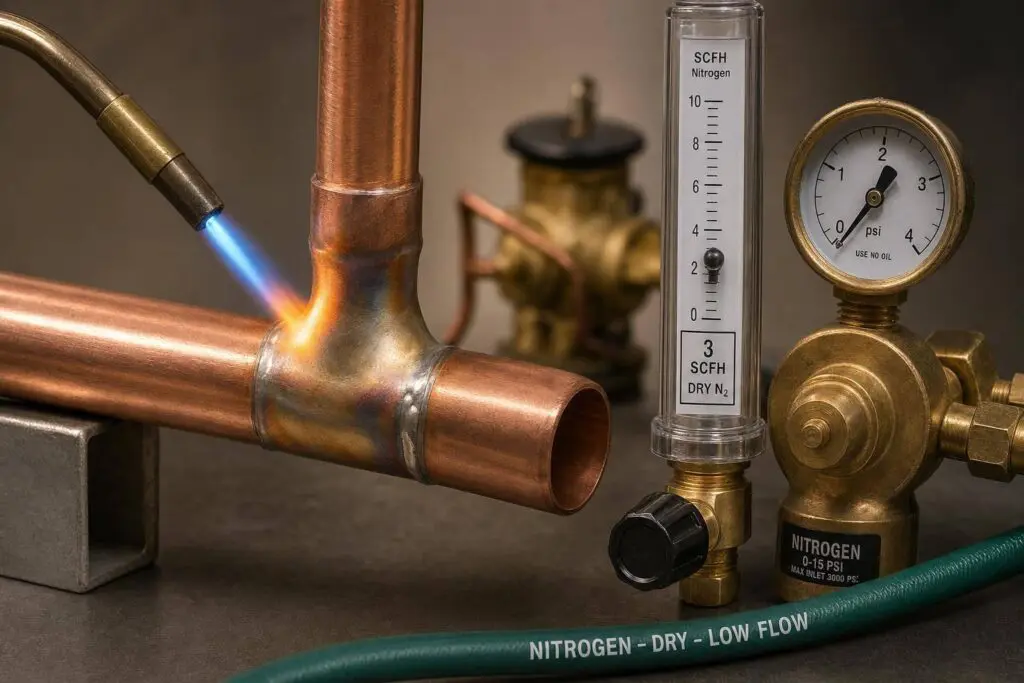
The main setup includes a dry nitrogen cylinder with 100% nitrogen, not a mixed gas, a two-stage regulator, and a low-flow control device such as a flowmeter or needle valve. You’ll also need rated hoses with 1/4-inch SAE flare fittings, a brazing torch, copper-safe brazing filler, and PPE: safety glasses or a face shield, heat-resistant gloves, and long sleeves. Each part has a job. Together, they keep oxygen out of the tubing without forcing too much pressure into it.
A two-stage regulator helps keep flow steady as cylinder pressure falls. On most home line sets, set the regulator to 1.5-2 psi and the flowmeter to 2-5 SCFH. You’re looking for a light, steady flow, not a loud hiss. Keep pressure in the line below 5 psi while brazing. If the pressure gets too high, it can disturb the molten filler.
With the gas flowing at the right rate, the next job is keeping that flow steady through every joint.
How to Set Up the Cylinder, Regulator, and Vent Path
Start by securing the cylinder upright with a chain or strap. Don’t leave it standing loose, and don’t lay it on its side during use. Before you install the regulator, crack the cylinder valve for a moment to clear the outlet, then close it and attach the regulator. After that, open the valve and check all connections with soapy water or leak-detection spray.
Connect the nitrogen hose to one end of the refrigerant line, usually at the indoor unit stub or a service port. Leave the far end open to the air with a loose fitting, an open tube end, or a removed Schrader core. That vent path matters a lot. If both ends are sealed while you braze, pressure can build inside the heated tubing and push molten alloy out of the joint.
Once the cylinder valve is open and the regulator is set, check the open end for a soft, steady flow before you pick up the torch. A tissue strip should move a little. If it barely moves, the vent may be blocked. If it snaps hard, the flow is too high.
Once the vent path is open and the flow is light, brazing can begin.
Step-by-Step: How to Purge During Welding and Brazing
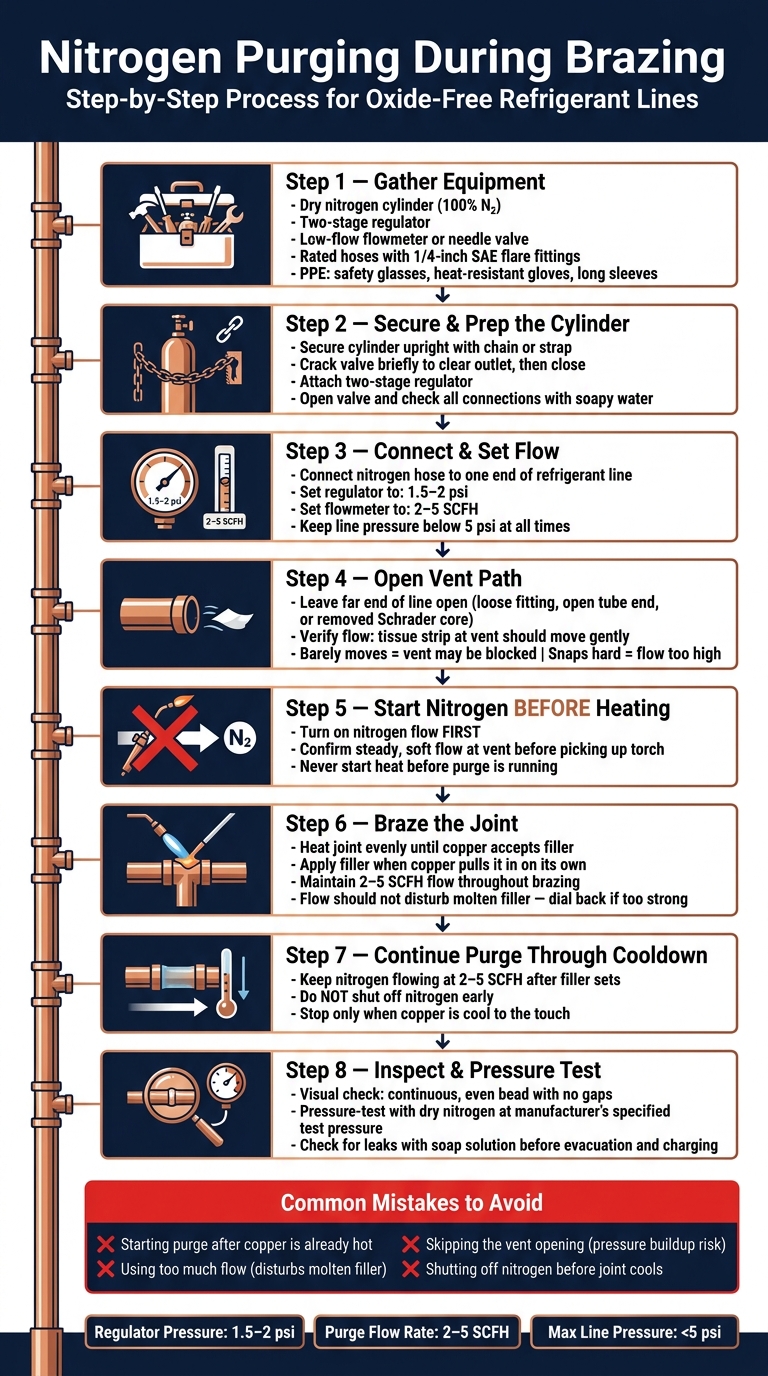
Nitrogen Purging During Brazing: Step-by-Step Setup & Flow Guide
Once setup is done, the next job is managing purge flow while each joint is heated. Start nitrogen before any heat goes on, keep the flow low, and leave it running until the copper cools. That way, oxygen can’t get to hot metal.
Recommended Flow Rate, Timing, and Brazing Order
Turn on the nitrogen before you pick up the torch. By the time you start heating, the line should already be pushing oxygen out. At 2–5 SCFH, the purge keeps oxygen away without building pressure inside the tubing.
When you’re ready to braze, heat the joint evenly until the copper is ready for filler. Then apply the filler when the copper pulls it in on its own. Keep the flow low so it doesn’t interfere with the filler. If the gas coming out feels too strong, dial the flow back. After the filler sets, keep the purge on during cooldown until the copper is cool to the touch so oxygen can’t reach the hot surface.
| Phase | Flow Rate | Purpose |
|---|---|---|
| Active brazing | 2–5 SCFH | Keep oxygen out without disturbing filler |
| Cooldown | 2–5 SCFH (until cool to the touch) | Prevent oxidation while copper is still hot |
Long Line Sets and Multiple Joints
On longer mini-split runs, or on any piping with several joints, keep a clear purge path from the inlet to the vent for the entire run. Use the same open vent path from the setup step. It helps to plan the joint order ahead of time so nitrogen can keep reaching the spot you’re heating.
Start at the nitrogen inlet and work toward the vent end. Keep the exit path open the whole time. Then repeat that same process at each joint without closing off the vent path.
Clean Joints, Common Mistakes, and Final Checks
Pre-Cleaning and Post-Brazing Checks for a Clean System
Nitrogen purging protects the inside of the line. But that alone isn’t enough. The joint still depends on clean copper and a tight fit-up on the outside of the pipe.
Use a tube cutter, not a hacksaw, so the copper ends come out square and clean. Deburr the inside and outside of each tube end. Then clean the mating surfaces with emery cloth or HVAC sanding cloth until the copper looks bright. If there’s oil or grease on the tubing, wipe it off with a clean, dry cloth and an approved solvent. A poor fit-up – whether it’s too loose or too tight – can leave gaps, slow filler flow, and set the stage for leaks.
After the joint cools, give it a close visual check. You want to see a continuous, even bead around the full joint, with no gaps and no signs of overheating.
Once that looks good, check the line before evacuation. Pressure-test the line set with dry nitrogen at the equipment manufacturer’s specified test pressure before evacuation and charging. Use a soap solution to check for leaks. Finding a bad joint at this stage is a lot cheaper than finding it after the system is charged.
Common Purging Mistakes and What They Cause
A few common mistakes can wipe out the whole point of purging. The big ones are:
- Starting the purge after the copper is already hot
- Using too much flow
- Skipping the vent opening
- Shutting off nitrogen before the joint cools
Each of these lets oxygen get back into the tube. And once that happens, the purge can’t do its job.
The problem is that the damage may not show up right away. Oxide flakes can move through the refrigerant circuit and collect in TXV screens, cap tubes, compressor oil, and filter-driers. Over time, that can lead to restrictions or compressor wear.
Conclusion: A Small Step That Helps Protect Refrigerant Lines for Years
A correct purge, clean joint prep, and a proper leak check work together to protect the system over the long haul. Nitrogen purging doesn’t take much gear or much extra time. What it does take is consistency: start the flow before heat, keep it low and steady, and leave it on until the copper cools.
That small habit helps limit oxide formation, supports clean joints, and protects compressors and metering devices from debris that can build up quietly over months of operation.
FAQs
Why is nitrogen used during brazing?
Nitrogen is used during brazing to flow dry nitrogen through the refrigerant line. The goal is simple: push out oxygen so copper oxide scale doesn’t form inside the tubing.
When brazing temperatures get high, copper will oxidize if oxygen is present. That scale can later break loose and move through the system. Once that happens, it may contaminate the system, clog parts like filter driers or metering devices, damage compressor valves, and shorten system life while hurting performance.
Can too much nitrogen flow cause problems?
Yes. During brazing, too much nitrogen flow can cause problems.
Use a low-pressure flow of dry nitrogen. The point is to push out oxygen during brazing, not blast the line with gas.
If the pressure is too high, the nitrogen can drive carbon deposits or scale through the tubing. That debris can end up clogging valves, screens, and other parts.
The goal is simple: stop copper oxide scale from forming inside the tubing while also avoiding contamination inside the system.
What happens if I skip purging?
Skipping nitrogen purging during line welding or brazing can cause the inside of the copper to oxidize and form copper oxide scale. Later, that scale can flake off, travel through the system, contaminate the refrigerant circuit, and damage sensitive parts such as compressor valves.
That can lead to poor performance, early failure, or even total system failure. For safe, code-compliant work, brazing should be done with dry nitrogen flowing through the lines.