
A fall furnace tune-up can cut wasted heat, lower the risk of a winter breakdown, and catch safety problems before cold weather hits. In Chicagoland, furnaces often run from October through April, and airflow problems alone can cut HVAC efficiency by up to 15%. If I want lower heating bills and fewer surprises, I should book service in September or early October.
Here’s the short version:
- Book before the first cold snap. October freezes are common in Chicagoland.
- Fix airflow issues first. Dirty filters, blocked vents, and dusty blower parts make the furnace work harder.
- Have a technician test safety items. That includes venting, heat exchanger condition, combustion, and safety switches.
- Check the filter every month in winter. Replace it when dirty, or at least every 3 months if the maker says so.
- Watch for common furnace problems. Strange sounds, short cycling, weak airflow, soot, yellow flames, gas smells, or a CO alarm all need fast action.
A tune-up is not just a quick look. I’m checking for clean airflow, steady ignition, correct thermostat response, safe venting, and proper furnace run time so the system uses less fuel and heats more evenly.
To keep it simple, this guide covers when to schedule service, what gets checked, how maintenance helps cut energy waste, and what I can do between visits.
How to Do a Furnace Tune-Up | Complete HVAC Maintenance Tutorial
sbb-itb-b5c10b1
How Fall Furnace Service Helps Cut Winter Energy Waste
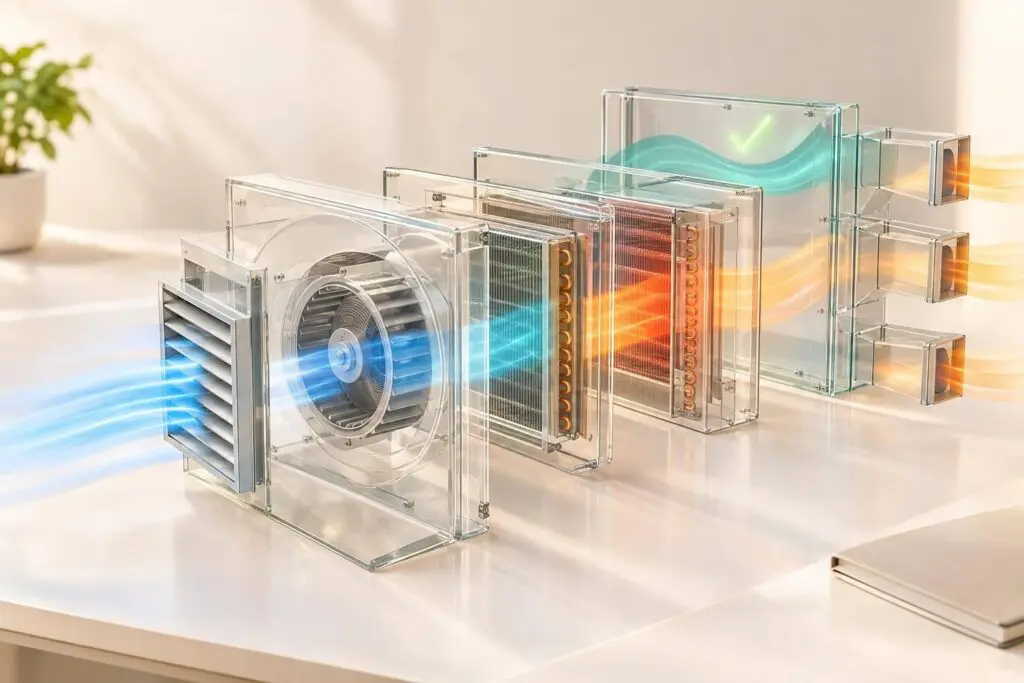
Fall furnace service deals with the usual sources of winter energy loss before heating season begins. Most furnaces waste energy in a few predictable ways: restricted airflow, weak combustion, off-target temperature control, and small mechanical issues that make the system run longer than it should. Taking care of those issues in the fall is usually a lot easier than dealing with them once winter is already here.
When airflow is clean, the blower doesn’t have to fight to move air. When combustion and gas input are set correctly, heat output stays steadier. When controls read temperature the way they should, the furnace is less likely to short cycle. And when small repair issues get fixed early, you’re less likely to face a midwinter breakdown when the system is under the most stress.
How Clean Components and Airflow Reduce Furnace Strain
A dirty or clogged filter is one of the most common reasons a furnace starts losing performance. As dust builds up, the blower has to work harder to pull air through the filter, and less heated air makes it into the living space. ENERGY STAR describes a dirty filter as something that can both increase energy costs and damage equipment. Check the filter monthly during heating season and replace it when dirty, at least every three months, following the manufacturer’s instructions.
The filter isn’t the only problem spot. Dust on blower parts can cut the amount of air the fan moves and add more strain to the motor. ENERGY STAR specifically recommends cleaning and adjusting blower components to support proper airflow. Blocked supply registers and obstructed return grilles make things worse by stopping heated air from moving evenly through the house. Airflow issues can reduce system efficiency by up to 15%.
That matters in day-to-day comfort. Fixing those restrictions can help rooms heat more evenly and keep the furnace from overworking during a Chicago cold snap.
How Inspection and Testing Improve Comfort, Control, and Safety
Airflow is only part of the picture. A furnace also needs to ignite on cue and respond to the thermostat the right way. During a fall tune-up, a technician checks burner operation, ignition, flame-sensor performance, gas input rate, and temperature rise, or how much the air warms as it passes through the furnace. A dirty flame sensor or worn igniter can lead to failed starts, repeated ignition attempts, or short cycling. All of that wastes fuel and leaves the home less comfortable, even when the cause isn’t obvious at first.
Thermostat accuracy matters too. A technician can compare the thermostat reading with an independent measurement, inspect the wiring, and make sure the furnace starts and stops at the right settings. If the thermostat is off by even a few degrees, the furnace may run longer than needed or shut off before the home reaches the set temperature. Technicians also tighten connections and spot worn parts before they fail, which can lower the odds of a no-heat service call when temperatures are well below freezing.
Venting and heat-exchanger checks finish the inspection. A technician should inspect the heat exchanger for visible damage, verify venting and flue connections, and test combustion and draft where needed. Restricted or disconnected venting can trap combustion gases and trigger unsafe shutdowns. These are the kinds of problems that need to be found and corrected before heating season is in full swing.
Next, timing matters: schedule service before the first cold snap leaves no room for repairs.
When to Schedule a Furnace Tune-Up in Chicagoland
In Chicagoland, the first seasonal freeze usually shows up in October. And Chicago cools off FAST: the average high drops from about 75.5°F in September to 48.4°F by November.
That’s why it makes sense to schedule a furnace tune-up early. You give yourself time to fix small issues before cold weather turns them into urgent ones. You also have a better shot at avoiding higher energy bills caused by an inefficient furnace running day after day.
Best Times to Book Service From Late Summer Through Early Fall
The sweet spot is early September through early October, before you’re using the heat every day and before HVAC calendars start filling up. ENERGY STAR recommends fall heating-system checkups because contractors get busier as winter gets closer.
| Booking Window | Main Advantage | Key Limitation |
|---|---|---|
| Late summer | Maximum appointment flexibility; most time for repairs or parts | Furnace has seen little recent use, so some symptoms may not yet be obvious |
| September–October | Best balance of pre-season readiness and early problem detection | Appointment availability starts tightening as demand picks up |
| First cold snap or winter | Problems are obvious when heat is clearly needed | Higher risk of emergency scheduling, delayed parts, reduced availability, and loss of heat |
Booking early also gives you time to deal with efficiency issues before the furnace starts working daily.
Try to book even sooner if:
- You have elderly residents, infants, or people with health concerns in the home
- Your furnace is older
- The system has a history of breakdowns
- The property sat vacant over the summer
Signs Your Furnace Needs Service Outside of Fall
For most homes, annual professional maintenance is a good baseline. But if your furnace is already acting up, don’t wait for fall.
Set up service any time if you notice unusual odors, strange sounds, frequent cycling, weak airflow, uneven heating, or repeated ignition problems. A heating bill that suddenly jumps for no clear reason can also point to a furnace issue.
Some warning signs call for service right away, not a later tune-up. A rotten-egg or sulfur smell may mean a gas leak. If that happens, leave at once, avoid using switches or open flames, and call the gas utility or emergency services from outside. If a carbon monoxide alarm goes off, get out and call emergency services from outside. Yellow or orange flames, black soot near the furnace, or a booming ignition sound also need immediate service.
What a Professional Furnace Tune-Up Includes
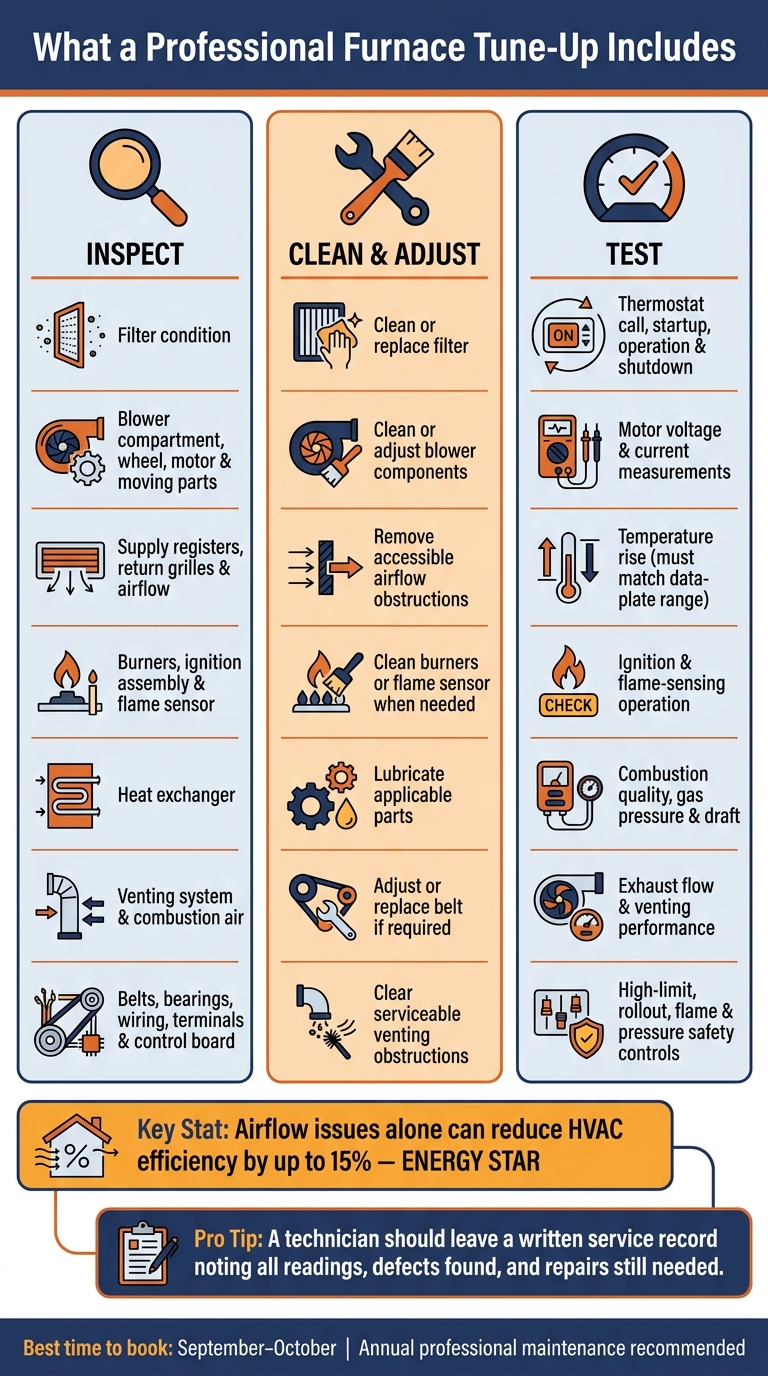
Fall Furnace Tune-Up Checklist: What Gets Inspected, Cleaned & Tested
A professional tune-up is a full inspection, cleaning, and test cycle aimed at efficiency, comfort, and safety. In plain English, the technician isn’t just “taking a look.” They’re checking how the furnace runs, cleaning parts that can drag down performance, and testing the system to make sure it heats the home without wasting fuel.
These checks help cut fuel waste and help the furnace move heat more well through the winter.
Inspection, Cleaning, and Testing Steps Technicians Perform
The technician follows a set sequence. Cleaning and adjustments are done only where needed, not as a one-size-fits-all routine.
Each step has a clear job: restore airflow, correct combustion, and stop avoidable heat loss.
| Inspection | Cleaning or Adjustment | Testing |
|---|---|---|
| Filter condition | Clean or replace filter per equipment requirements | Thermostat call, startup, operation, and shutdown |
| Blower compartment, blower wheel, motor, and moving parts | Clean or adjust blower components when needed | Motor voltage and current measurements |
| Supply registers, return grilles, and airflow | Remove accessible obstructions | Temperature rise within the manufacturer’s range |
| Burners, ignition assembly, flame sensor, and gas or oil connections | Clean burners or flame sensor when condition warrants | Ignition and flame-sensing operation |
| Heat exchanger | Correct only approved adjustments or recommend repair | Combustion quality, gas pressure, draft, and flue readings |
| Venting system and combustion air | Clear serviceable obstructions when safe and permitted | Exhaust flow and venting performance |
| Belts, bearings, wiring, terminals, control board, and damage | Lubricate applicable parts; adjust or replace belt when required | High-limit, rollout, flame, pressure, and other safety controls |
One reading matters more than many homeowners realize: temperature rise. This shows how much the air warms as it passes through the furnace. If that number falls outside the data-plate range, it can point to airflow trouble, blower problems, or firing issues.
ENERGY STAR specifically identifies measuring motor voltage and current, checking gas or oil connections and burner combustion, and evaluating the heat exchanger as part of recommended maintenance.
A good technician should also leave behind a service record. That record should note readings, defects found, work completed, and any repairs still needed. That way, you’re not left guessing about what was checked or what needs attention next.
The last part of the visit is safety testing, because fuel savings don’t mean much if the system isn’t safe to run.
Safety Checks: Venting, Carbon Monoxide, and Safety Controls
Safety testing is built into the tune-up. The technician confirms that exhaust gases are actually moving outdoors through the venting system. That matters because a flue can be connected and still draft poorly. Department of Energy field guidance calls for sampling combustion gases with a calibrated flue-gas analyzer, measuring chimney draft, and checking for spillage.
The technician also tests the high-limit, rollout, and pressure switches on equipment that uses them. If any of these controls trip again and again, that’s not something to brush off. It points to a fault that needs diagnosis.
Carbon monoxide checks are part of the visit too. The technician checks around the appliance and inspects combustion and venting for conditions that could allow gases to enter the home.
After service, a few simple owner checks help keep performance steady between visits.
What Owners Can Do Between Service Visits to Keep Efficiency Steady
After a tune-up, a few simple habits can help your furnace stay on track through the winter.
Owner Checks That Support Airflow, Comfort, and Furnace Performance
The filter is the big one. It’s the simplest owner task, and it has a direct effect on airflow and furnace performance. Check it once a month during winter and replace it when it looks dirty. When you install a new one, make sure the airflow arrow points toward the furnace or blower.
Airflow matters in other places too. Keep every supply register and return grille open and clear. Couches, rugs, curtains, and storage boxes often block them without anyone noticing. Around the furnace, keep the area clear of cardboard, paint cans, cleaning products, and anything that can burn.
It also helps to do a quick thermostat check. Set it to Heat, confirm the schedule is right, and swap out low batteries. Carbon monoxide alarms need attention too. Test them monthly and replace batteries at least once a year, unless the unit has a sealed 10-year battery.
These small steps help the system keep steady airflow, proper control, and safe operation between service visits.
Problems That Need Prompt Professional Service
If something changes between visits, don’t brush it off as “just one of those things.” Treat it like a maintenance issue.
Call a qualified technician if you notice:
- Loud banging, grinding, or scraping sounds
- Repeated short cycling
- A furnace that runs longer than usual without reaching the set temperature
Don’t remove sealed panels or try to inspect internal parts yourself.
If you smell gas, see smoke, or think carbon monoxide may be present, turn off the system if it’s safe to do so, leave the building right away, and call 911 or your gas utility from outside. Do not go back in until emergency responders say it’s safe.
How to Keep Your Furnace Running Efficiently Through a Chicagoland Winter
Once the basics are handled, a couple of thermostat and draft-control habits can help cut run time. A programmable or smart thermostat can reduce wasted runtime during heating season. The Department of Energy estimates that a setback of 7–10°F for eight hours per day can save up to 10% annually on heating and cooling costs.
A lower setback while you sleep or when you’re away for a long stretch is a practical place to start. Then adjust based on comfort, health needs, and any equipment or plumbing concerns.
You can also seal clear drafts around doors and windows with weatherstripping or caulk. One thing to avoid: closing several registers to push heat into other rooms. And if you notice odd heat patterns, strange sounds, or a jump in utility bills, write it down and share it at your next service visit. That kind of detail can help a technician track down off-and-on faults faster.
Conclusion: Schedule Early and Keep Your Furnace Running Efficiently
A fall tune-up helps cut energy waste, lowers the odds of a winter breakdown, and checks for safety issues before your furnace starts working every day. If you book service in September or October, a technician has time to fix airflow, combustion, venting, and safety problems before winter sets in.
That yearly service matters because it covers parts of the system most homeowners can’t check on their own. Combustion testing, heat exchanger inspection, electrical connections, and venting integrity all need a qualified technician. Homeowner tasks help the system run well between visits, but they don’t take the place of a yearly tune-up.
Between appointments, a few simple habits can help hold onto those efficiency gains. Check the filter every month during heavy-use periods, keep all supply registers and return grilles clear, confirm your thermostat settings before the first cold snap, and test carbon monoxide alarms on a regular basis.
If something changes during the season – odd sounds, weak airflow, short cycling, or a sudden jump in energy use – call a qualified technician instead of waiting for the next yearly visit. And if a CO alarm goes off, leave the house right away and call emergency services from outside.
Chicagoland homeowners can schedule a professional fall furnace inspection with Eco Temp HVAC.
FAQs
How long does a furnace tune-up take?
A professional furnace tune-up usually takes 60 to 90 minutes.
In that time, a certified technician checks and services the main parts that keep your system running safely and with less waste through winter. Booking it in early fall gives you a better shot at having your furnace set for colder weather.
Will a tune-up lower my heating bill?
Yes. A professional furnace tune-up can lower your heating bill by improving efficiency, which may cut energy costs by 10% to 30%.
Here’s why: when a furnace is dirty or slightly out of adjustment, it has to work harder to produce the same amount of heat. That extra strain shows up on your utility bill.
A tune-up helps fix that by:
- Cleaning key parts
- Calibrating the thermostat
- Adjusting the fuel-to-air ratio
- Fixing blocked airflow issues
It also helps reduce wasted energy from clogged filters and other airflow problems, so your furnace can heat your home more efficiently without extra effort.
Can I do any furnace maintenance myself?
Yes. There are a few simple things you can handle between service visits:
- Replace or clean air filters every 30 to 90 days
- Keep the area around the furnace clear
- Clean supply vents and return ducts
- Check thermostat settings and batteries
That said, some jobs should stay in a pro’s hands. Leave gas lines, electrical repairs, refrigerant, and heat exchanger inspections to a professional.
If you notice odd noises, yellow flames, or gas odors, call right away.