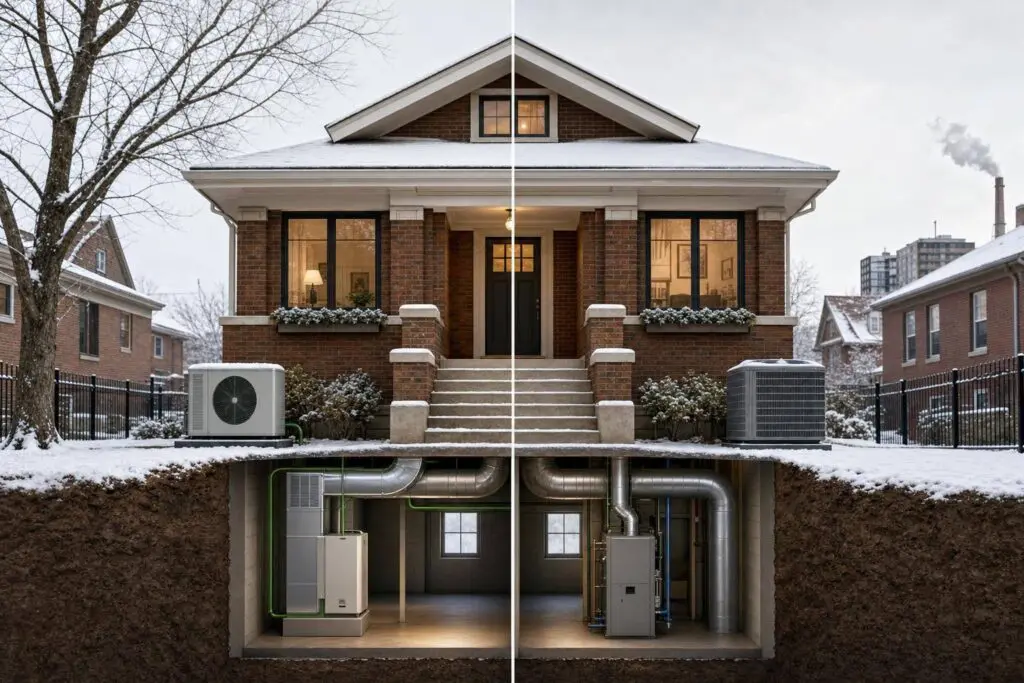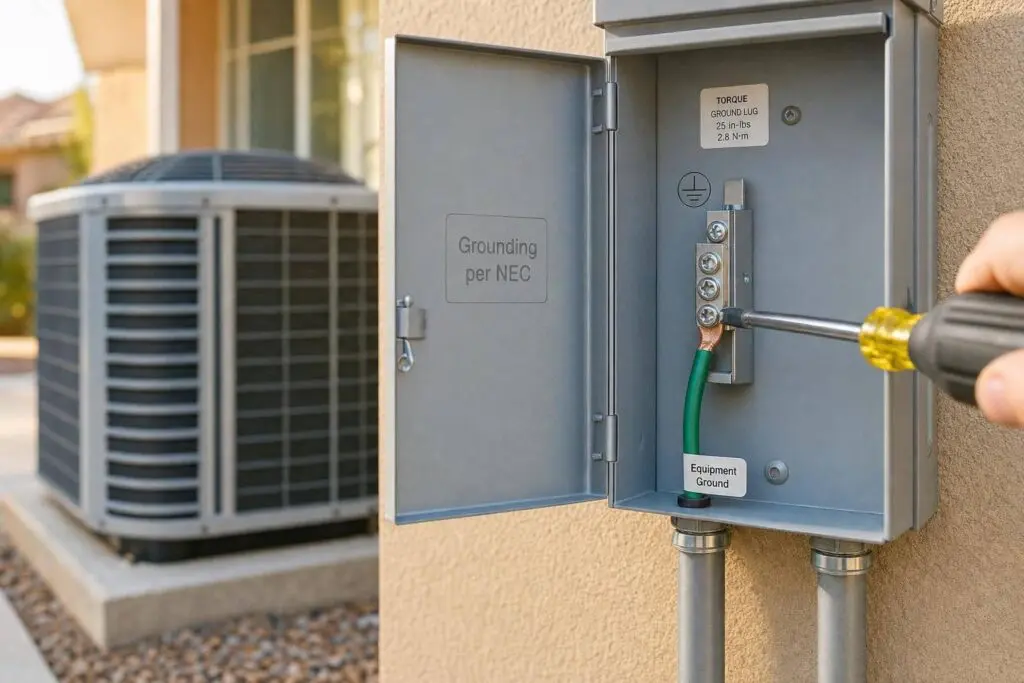

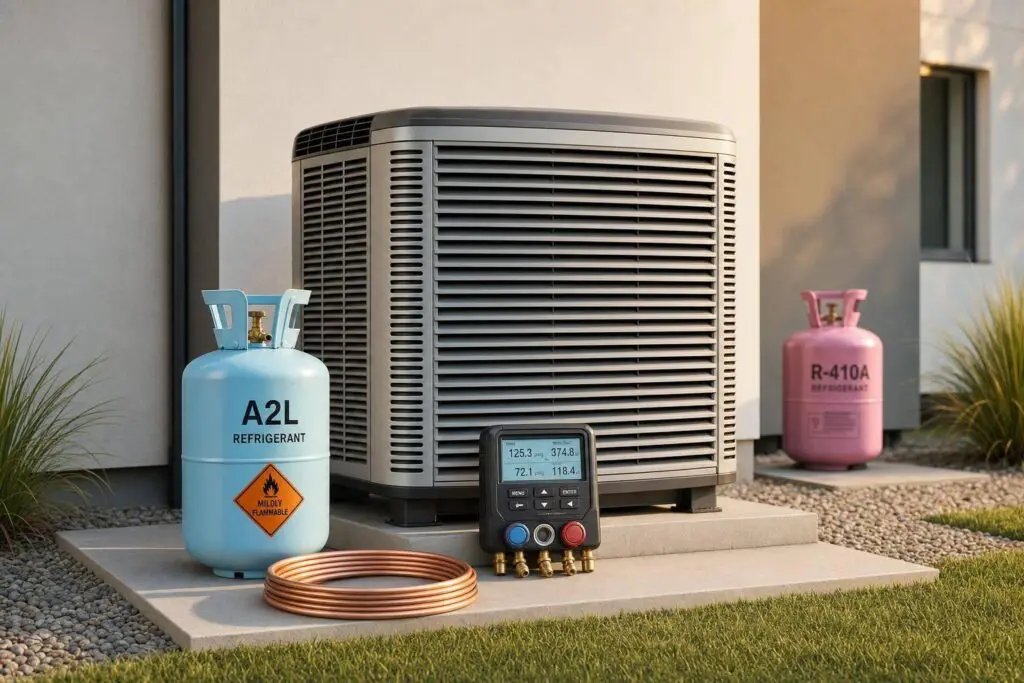
If I’m buying a new ultra-high SEER AC after January 1, 2025, I need to check one thing first: which refrigerant the system was built for. New residential AC systems now use R-454B or R-32, not R-410A. And no, those refrigerants are not mix-and-match.
Here’s the short version:
- New systems after 1/1/2025 moved to A2L refrigerants
- R-454B has about 78% lower GWP than R-410A
- Old R-410A systems can still be serviced
- R-410A, R-454B, and R-32 are not interchangeable
- A2L installs may need leak sensors, matched parts, and code review
- EPA 608 certification + A2L training should be on my checklist
- 18+ SEER2 systems need matched outdoor units, coils, and controls to hit rated performance
- In Chicagoland, permits, inspections, humidity, and sizing all matter
What this means for me is simple: I can’t shop by SEER2 rating alone. I need to check the refrigerant, the AHRI match, the line set, the install steps, and the paperwork before I sign.
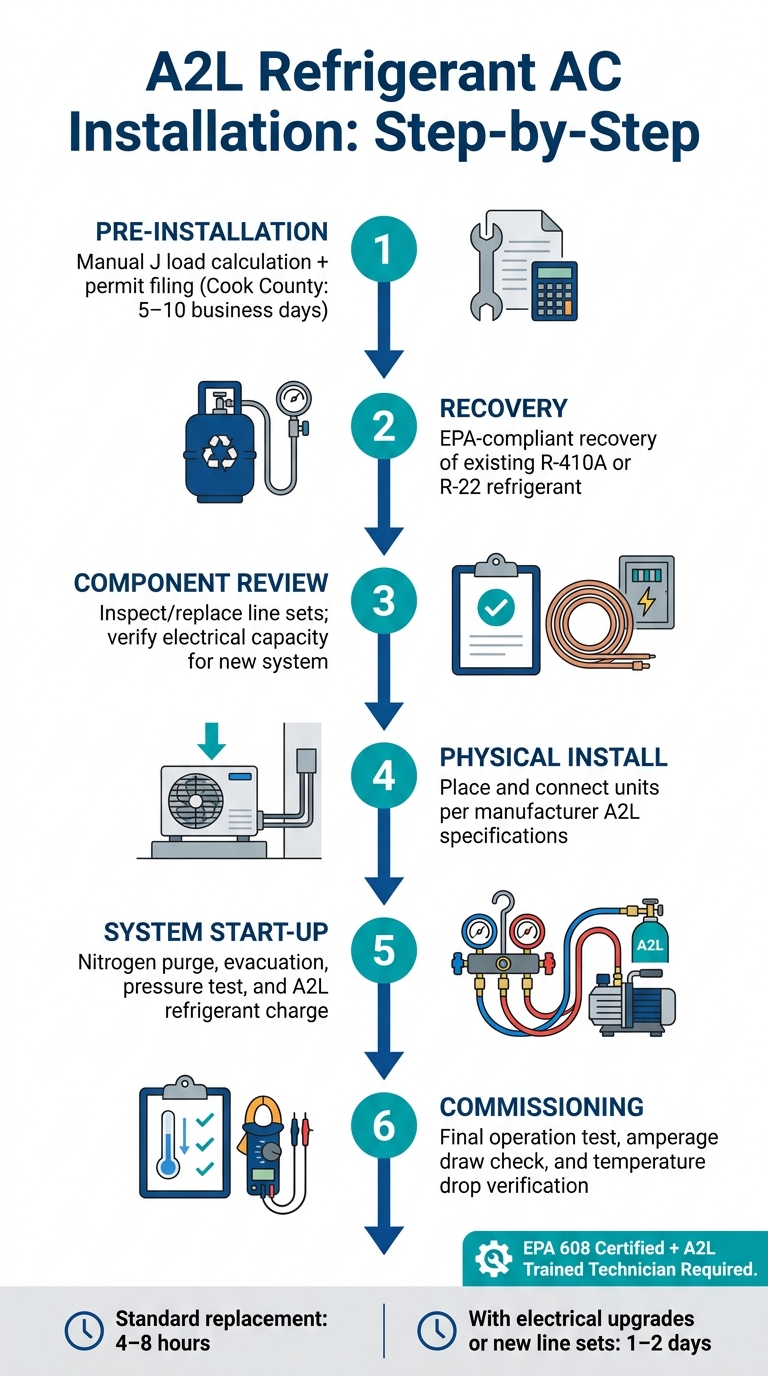
A2L Refrigerant AC Installation Process: Step-by-Step Guide
A2L Refrigerants & the 2025 HVAC Transition: What Building Officials Need to Know
sbb-itb-b5c10b1
Quick comparison
| Item | R-410A | R-454B | R-32 |
|---|---|---|---|
| Use in new residential AC | Older systems | Common in new systems | Used in some new systems |
| A2L class | No | Yes | Yes |
| Interchangeable with others | No | No | No |
| GWP | Higher | ~466 | ~675 |
| Service needs | Standard procedures | A2L tools and training | A2L tools and training |
So if I want a new ultra-high SEER AC without install problems, failed inspection, or part mismatch, I need to treat refrigerant choice as a system decision – not a small detail.
1. Know the 2025 Refrigerant Rules and Local Code Updates
EPA transition dates for residential and light commercial AC
The date that matters most is Jan. 1, 2025. From that point on, new residential and light commercial AC equipment moved to A2L refrigerants, mainly R-454B or R-32. Before you sign off on any system, check the manufacture date. A unit may be sold as "new" and still be older pre-2025 inventory.
If a home already has an R-410A system, that system can still be serviced through its normal lifespan.
Once you’ve got the rule straight, the next job is simple: make sure the equipment and parts match the refrigerant and the system design.
A2L refrigerants, code adoption, and safety standards
A2L installs need to follow the local mechanical and fire codes that have been adopted, along with the manufacturer’s A2L installation instructions. It’s smart to confirm the exact code version with the building department before work starts. That can save a lot of back-and-forth later.
Service and installation should also be handled by an EPA 608-certified technician who has A2L training.
That code check gives you the floor. After that, you can move into equipment and component compatibility.
R-410A vs. A2L rules at a glance
Use this table as a fast screening tool before you get into model-by-model SEER details.
| Feature | Legacy R-410A Systems | New A2L Systems (R-454B / R-32) |
|---|---|---|
| Global warming potential | High GWP | About 78% lower GWP than R-410A |
| Component compatibility | Not interchangeable with A2L systems | Requires approved A2L-compatible components |
| Service requirements | Standard service procedures | Requires EPA 608-certified technicians with A2L training |
| Safety listing | Legacy safety standards | Typically listed to standards such as UL 60335-2-40 |
2. Check Equipment and Existing System Compatibility
Once the rules are clear, the next step is simple: make sure the equipment and parts actually match the refrigerant.
How to verify A2L listing and manufacturer approval
Start with the outdoor unit nameplate. Then compare the refrigerant, safety class, and model number with the manufacturer’s submittal and installation manual.
That manual is the source that tells you what the system needs to stay within the listing. Use it to confirm:
- required accessories
- charge limits
- indoor location restrictions
A2L refrigerants have charge limits tied to room volume, and those room-size and placement limits are part of the approval process. If the nameplate, manual, and approved documents don’t line up, the unit isn’t being installed as listed.
Parts that may need replacement or review
Swapping refrigerant types into an existing system without manufacturer approval is a hard stop. Don’t do it.
Instead, review the line set, metering device, evaporator coil, controls, and any leak sensors listed by the manufacturer. Existing line sets may need replacement if the manufacturer does not approve them for the new refrigerant and oil. New A2L systems may also require integrated leak-detection sensors inside the air handler.
The point here is pretty practical: don’t assume old parts will work with new refrigerant. Check them one by one against the approved parts list.
R-410A systems should not be retrofitted with R-454B or R-32 unless the manufacturer explicitly approves that specific configuration.
R-454B vs. R-32 for ultra-high SEER systems
Both R-454B and R-32 are A2L refrigerants, but they are not interchangeable with each other. That’s the key thing to keep in mind. The refrigerant doesn’t decide the equipment. The equipment decides the refrigerant.
| Feature | R-454B | R-32 |
|---|---|---|
| Safety Class | A2L (Mildly Flammable) | A2L (Mildly Flammable) |
| GWP | ~466 (~78% lower than R-410A) | ~675 |
| Common Use | Used in many new residential AC systems | Used in some residential and ductless mini-split vs. traditional central HVAC systems |
| Service Tools | Requires A2L-rated tools and trained technicians | Requires A2L-rated tools and trained technicians |
With the refrigerant pinned down, the next step is checking installation and service safety.
3. Follow the Safe Installation and Service Process
Once the refrigerant and equipment match, the install needs to follow the manufacturer’s A2L procedure from start to finish.
Step-by-step installation sequence
A2L installation follows a set order. Skip a step, and you can run into safety problems, code issues, or even warranty trouble.
| Installation Step | Key Action |
|---|---|
| 1. Pre-Installation | Manual J load calculation and permit filing; Cook County permit approval typically takes 5–10 business days |
| 2. Recovery | EPA-compliant recovery of existing R-410A or R-22 refrigerant |
| 3. Component Review | Inspect or replace line sets; verify electrical capacity for the new system |
| 4. Physical Install | Place and connect units per manufacturer specifications |
| 5. System Start-up | Nitrogen purge, evacuation, pressure test, and A2L refrigerant charge |
| 6. Commissioning | Final operation test, amperage draw check, and temperature drop verification |
For timing, a standard residential AC replacement usually takes 4 to 8 hours. If the job also needs electrical upgrades or new line sets, expect 1 to 2 days.
A2L safety rules during charging and service
Charging and service must follow the manufacturer’s A2L procedures.
The technician must be EPA 608-certified and trained on the specific A2L refrigerant being installed. That means you should ask for EPA 608 certification plus A2L training for the exact refrigerant and equipment model. This isn’t just paperwork. It helps make sure the person handling the charge knows the system, the safety steps, and the service requirements.
What to document before the job is closed
Before the job is closed out, gather these records:
- Permit and inspection sign-off – required for code compliance
- Equipment labels and model/serial numbers – needed for warranty registration
- Startup and commissioning records – confirm refrigerant level verification and control calibration
- Refrigerant recovery records – show old refrigerant was handled per EPA guidelines
- Warranty registration details and terms – proper registration and annual professional maintenance are often required to keep parts coverage valid
Also confirm liability and workers’ comp coverage.
Keep all of these records tied to the exact model and refrigerant. That paper trail matters for the next approval step.
4. Plan the Upgrade Around Manufacturer Changes and Ask the Right Questions
How product line changes affect replacement timing and availability
Once you’ve checked compatibility and install rules, there’s another piece that can trip people up: the manufacturer’s current lineup may not line up with the system you want to buy.
As brands move away from R-410A models, the exact match for the indoor coil, controls, and air handler can shift based on product line and model year. That matters even more with ultra-high SEER systems (18+ SEER2). Variable-speed compressors need to be paired with compatible indoor coils, air handlers, and controls to reach the rated efficiency and keep the manufacturer warranty in place. If the indoor coil doesn’t match, SEER2 performance can drop, and dehumidification can suffer.
Dual-fuel systems need matched controls too, tied to both the furnace and the heat pump.
Approval checks before you sign
Use these checks when you compare bids so you don’t end up with parts that don’t belong together.
- Confirm the equipment uses R-454B or R-32.
- Confirm the outdoor unit, indoor coil, and controls form an AHRI-verified matched set so the system can reach its rated SEER2 performance and keep the warranty protected.
- Confirm the line set is approved for the refrigerant, oil, and size.
- Confirm the installation includes any required A2L safety devices, such as leak sensors or mitigation boards inside the air handler or furnace cabinet.
- Confirm the warranty terms in writing.
- Confirm the contractor will file permits and schedule inspections.
- Ask whether local rebates or federal credits apply.
Key checks before you move forward
Before you approve the upgrade, verify that the full system is A2L-compatible and AHRI-verified matched, and make sure the work will be done by a trained, EPA 608-certified technician. Review the manufacturer documents before you sign anything. Then ask for permit sign-off and startup records before you make the final payment.
FAQs
How do I verify an AHRI match?
Consult a licensed HVAC professional to make sure the indoor and outdoor units are certified to work together at the rated efficiency.
At Eco Temp HVAC, our NATE-certified technicians check that new installations meet manufacturer and safety standards. That helps confirm the system is matched correctly, runs at its best, and stays eligible for energy-efficient rebates.
Will my old line set work with a new A2L system?
Maybe not. Older copper lines can hold contaminants, and they may not match the specs required for newer high-efficiency refrigerants.
That matters for safety, system performance, and meeting both manufacturer rules and local building codes. Because of that, a new line set is often needed. During installation, Eco Temp HVAC technicians can inspect your current line set and let you know if it needs to be replaced.
What permits and inspections will I need?
When you upgrade to a high-SEER air conditioner, you may need a city or county permit. That depends on where you live. These permits help make sure the install follows local building codes and safety rules.
Eco Temp HVAC handles the permit paperwork, sets up inspections, and manages the final sign-off. In Cook County, that usually adds 5 to 10 business days to the project timeline.