
Chicago’s tightly sealed modern homes hold in heat beautifully — but they also trap stale air and let humidity swing to extremes: bone-dry in winter, muggy in summer. An energy recovery ventilator (ERV) is the fix. It continuously brings in fresh outdoor air and exhausts stale indoor air, and as the two airstreams pass each other it transfers both heat and moisture — so you get fresh air that stays comfortable and balanced all year, without the energy penalty of simply opening a window. Eco Temp HVAC installs, repairs, and maintains ERV systems for homeowners across Chicago and the surrounding suburbs.
What Is an Energy Recovery Ventilator (ERV)?
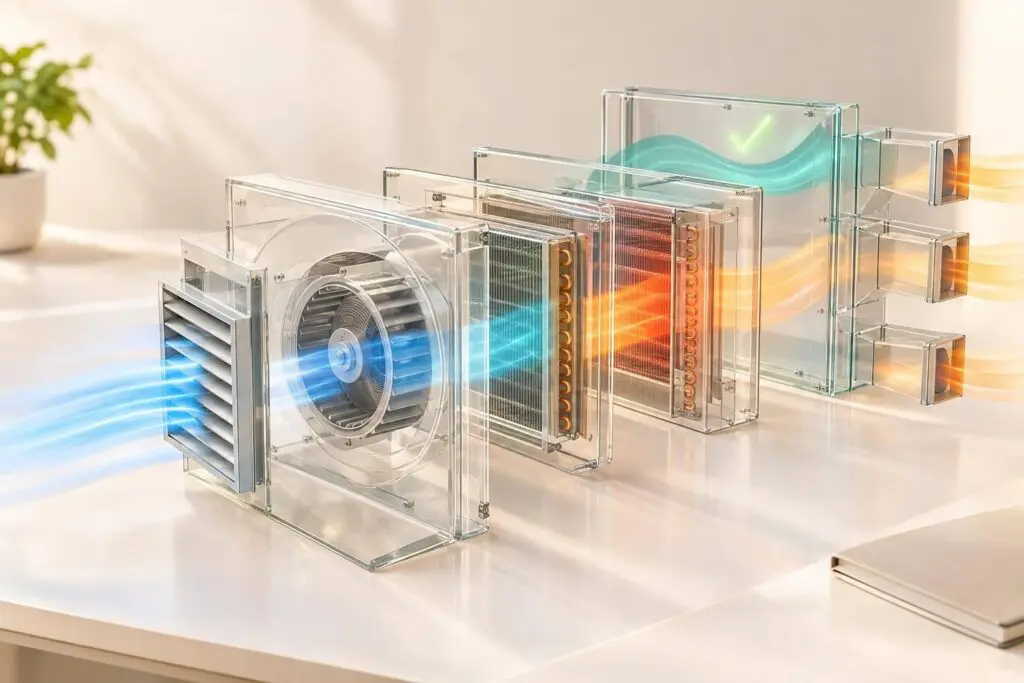
An ERV is a balanced, whole-home ventilation system built around an enthalpy core that recovers two things from the air it exhausts: heat and humidity. In winter, that means the fresh air coming in is pre-warmed and keeps some of the moisture indoors, so ventilation doesn’t leave your home bone-dry. In summer, the muggy outdoor air gives up much of its moisture to the drier air you’re exhausting, so you bring in far less humidity — easing the load on your air conditioner. An ERV doesn’t filter, humidify, or dehumidify on its own; it ventilates while moderating the humidity that comes with fresh air, which is what makes it such a good fit for Chicago’s climate.
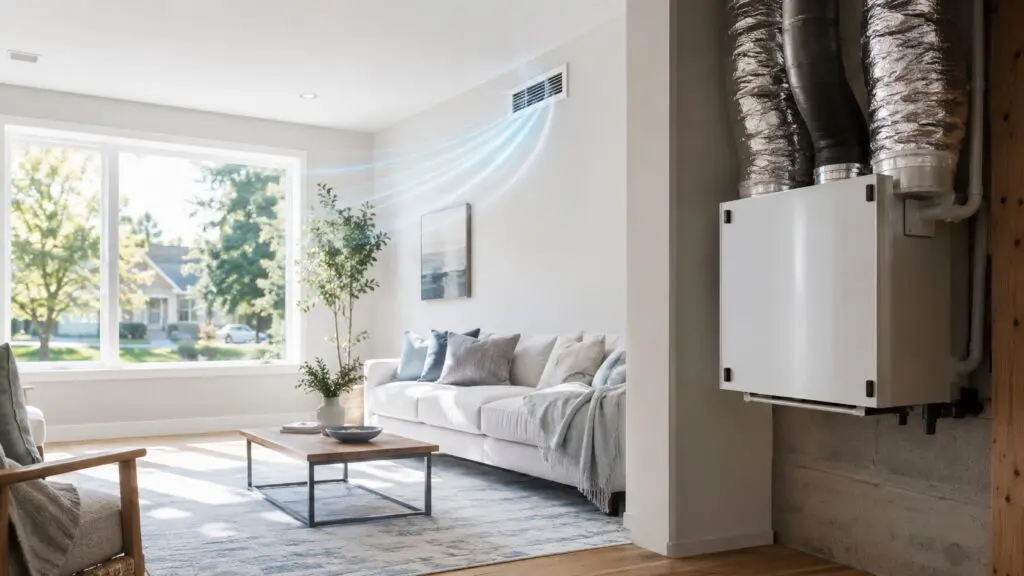
Why an ERV Makes Sense in Chicago’s Climate
Chicago gives you the full range — cold, dry winters and hot, humid summers — and that’s exactly the climate an ERV is designed for. Because today’s homes are sealed tight to meet energy codes, they need mechanical ventilation to stay healthy, but you don’t want that ventilation making the humidity swings worse. An ERV solves both at once:
- Humid summers: it cuts the amount of outdoor moisture you pull inside, so your home feels less sticky and your AC doesn’t work as hard to dehumidify.
- Dry winters: it retains some of your indoor humidity instead of venting it all away, helping avoid the static, dry skin, and irritated sinuses that come with over-dry winter air.
- Fresh, healthy air: it continuously dilutes CO2, odors, VOCs, and other indoor pollutants — and added ventilation also helps reduce radon, which is elevated across much of the Chicago area (a dedicated radon test and mitigation system is still recommended where levels are high).
- Year-round efficiency: recovering both heat and moisture means less wasted energy in every season.
ERV vs. HRV — Which Is Right for Your Chicago Home?
ERVs and heat recovery ventilators (HRVs) are close cousins — both deliver balanced fresh-air ventilation and recover energy — but they handle moisture differently, and that’s the whole decision:
- ERV (energy recovery): transfers heat and moisture. Best when you want to balance humidity year-round — retaining moisture in dry winters and rejecting it in humid summers. For a lot of Chicago homes, that makes the ERV the more comfortable choice.
- HRV (heat recovery): transfers heat only. Best when your home runs too humid in winter and you want to actively expel that excess moisture.
In short: if winter condensation and excess humidity are your problem, an HRV is likely the answer; if you want balanced humidity and relief from Chicago’s muggy summers, an ERV usually wins. For a full side-by-side, read our guide to the key differences between ERV and HRV systems — or let us assess your home and recommend the right one.
Our Energy Recovery Ventilator Services in Chicago
Eco Temp HVAC handles ERV systems from start to finish:
- ERV installation: we size the unit to your home’s square footage and ventilation needs (measured in CFM) and install it as a standalone ducted system or integrated with your existing forced-air furnace.
- ERV repair: weak airflow, humidity that feels off, noisy operation, or stale air despite a running unit — we find the cause and fix it.
- ERV maintenance: filter changes, enthalpy-core cleaning, and airflow balancing to keep it performing.
- ERV replacement: upgrading an aging or undersized unit to a modern, efficient system.
Correct sizing and balancing are everything with an ERV — they’re the difference between a system that quietly keeps your air fresh and balanced and one that just runs. That’s where local experience matters.
Signs an ERV Could Help Your Home
- Air that feels muggy and sticky indoors during Chicago summers
- Bone-dry winter air — static shocks, dry skin, scratchy sinuses — even in a tight house
- Stuffy, stale air, especially after a closed-up winter
- Lingering cooking, pet, or musty odors
- An airtight or newly built home with no dedicated fresh-air ventilation
ERV Maintenance Keeps It Balanced
An ERV needs a little routine care to keep doing its job: clean or replace the filters every few months, clean the enthalpy core periodically, and keep the supply and exhaust airflow balanced. We can handle it on a service visit. Paired with the rest of your indoor air quality setup — filtration, UV, and humidity control — an ERV rounds out a complete, healthy-air strategy for your home.
Why Choose Eco Temp HVAC for ERV Services in Chicago
Eco Temp HVAC was started right here in the Chicagoland area by Jordan Walczyk and Kyle Kozlowski, who grew the company from a garage into one of the area’s most trusted HVAC providers. We’re licensed, bonded, and insured in Illinois; our technicians know local building codes and our climate; and we quote every job honestly and upfront. New customers get free estimates, and we offer financing on installations.
Serving Chicago and the Surrounding Suburbs
We install and service energy recovery ventilators throughout Chicago and across the suburbs — including Lemont, St. Charles, Palatine, Bartlett, Kirkland, Elgin, Schaumburg, Hoffman Estates, and Streamwood, plus the surrounding Northwest and western suburbs. Not sure if you’re in our area? Just ask.
Schedule Your ERV Consultation in Chicago Today
Ready for fresh air that stays comfortable in every season? Call (224) 253-8131 or book online for a free assessment. We’ll evaluate your home, recommend an ERV or HRV based on what actually fits, and give you a written quote — serving homeowners across Chicago and the suburbs.
Frequently Asked Questions About Energy Recovery Ventilators in Chicago
What Chicago homeowners ask about ERVs — how they balance humidity, how they compare to an HRV, and what they cost. Call (224) 253-8131 or book online for a recommendation for your home.
Both ventilate and recover energy, but an ERV transfers heat and moisture while an HRV transfers heat only. For Chicago's humid summers and dry winters, an ERV's humidity balancing is often the more comfortable choice; homes that run too humid in winter may prefer an HRV. Our ERV vs. HRV guide breaks down the differences in detail.
Not exactly. An ERV doesn't add or remove humidity on its own — it moderates the moisture that comes and goes with ventilation, holding some indoors in winter and keeping some out in summer. It pairs well with a dedicated humidifier or dehumidifier if you want precise humidity control on top of fresh-air ventilation.
Yes — that's one of its biggest advantages here. As it brings in fresh air, an ERV transfers much of the incoming humidity back out, so you pull less mugginess into the house and your air conditioner doesn't have to work as hard to dehumidify. It's not a replacement for AC or a dehumidifier, but it meaningfully reduces the humidity load.
It helps. Because an ERV retains some of your indoor moisture instead of venting it all outside, it keeps ventilation from drying the air as much as an HRV would — easing the static, dry skin, and scratchy sinuses that come with a Chicago winter. For homes that struggle to hold humidity, we can pair it with a whole-house humidifier.
An ERV can run as its own dedicated duct system or tie into your existing forced-air furnace ductwork, depending on your home. Homes without ductwork — like many older Chicago homes with boilers — usually get a dedicated system. We assess your setup and recommend the cleanest way to integrate it.
Not much: clean or replace the filters every few months, clean the enthalpy core periodically, and keep the airflow balanced. We can handle it on a service visit so the system keeps delivering fresh, balanced air quietly and efficiently.
It depends on your home's size, whether it ties into existing ductwork, and the unit you choose, so we quote it after assessing your home — with the price upfront. We offer financing on installations.
Call (224) 253-8131 or book online. We install, repair, and maintain ERV and HRV systems across Chicago and the suburbs, and can recommend the right fresh-air solution for your home.
Eco Temp HVAC offers energy recovery ventilator (ERV) installation, repair, and maintenance services in the following cities in Illinois: Alsip | Arlington Heights | Antioch | Bellwood | Berwyn | Bridgeview | Broadview | Brookfield | Buffalo Grove | Burbank | Burr Ridge | Chicago | Des Plaines | Elk Grove Village | Evanston | Franklin Park | Glencoe | Glenview | Grayslake | Hanover Park | Hickory Hills | Hoffman Estates | La Grange | Lemont | Lincolnwood | Melrose Park | Mokena | Mount Prospect | Northbrook | Oak Lawn | Oak Park | Orland Park | Palatine | Palos Heights | Palos Hills | Palos Park | Prospect Heights | Rolling Meadows | Schaumburg | Skokie | South Chicago | Tinley Park | Westchester | Wheeling | Wilmette | Winnetka | Addison | Aurora | Bartlett | Bensenville | Bloomingdale | Carol Stream | Darien | Downers Grove | Elmhurst | Oak Brook | Roselle | St Charles | Villa Park | Glen Ellyn | Glendale Heights | Hinsdale | Lisle | Lombard | Naperville (Illinois) | Warrenville | West Chicago | Westmont | Wheaton | Willowbrook | Winfield | Wood Dale | Woodridge | Barrington | Deerfield | Fort Sheridan | Fox Lake | Green Oaks | Gurnee | Highland Park (Illinois) | Ingleside | Island Lake | Lake Bluff | Lake Forest | Lake Zurich | North Chicago | Round Lake | Vernon Hills | Wauconda | Waukegan | Bolingbrook | Homer Glen | Joliet | Lockport | New Lenox | Plainfield | Romeoville | Burlington | Carpentersville | Dundee | Elburn | Elgin | Geneva | Kaneville | North Aurora | Pingree Grove | Streamwood | Sugar Grove | Crystal Lake | Fox River Grove | Huntley | Lake In The Hills | Mchenry (Illinois) | Woodstock | DeKalb | Genoa | Sycamore | Cortland | Kirkland | Afton Center | Esmond | Morton Grove | Niles