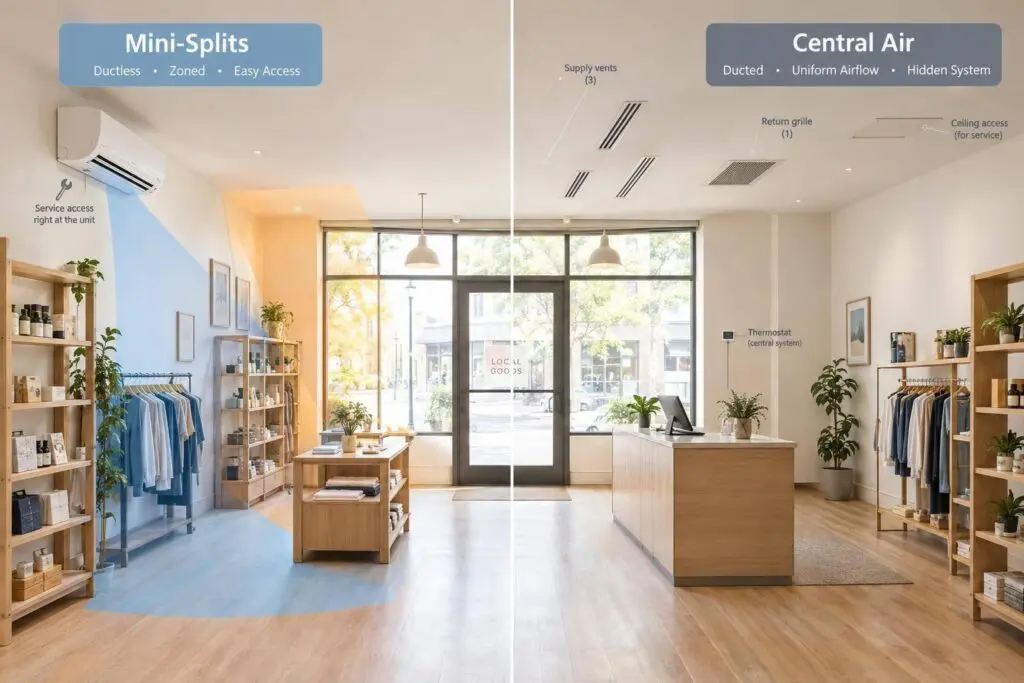

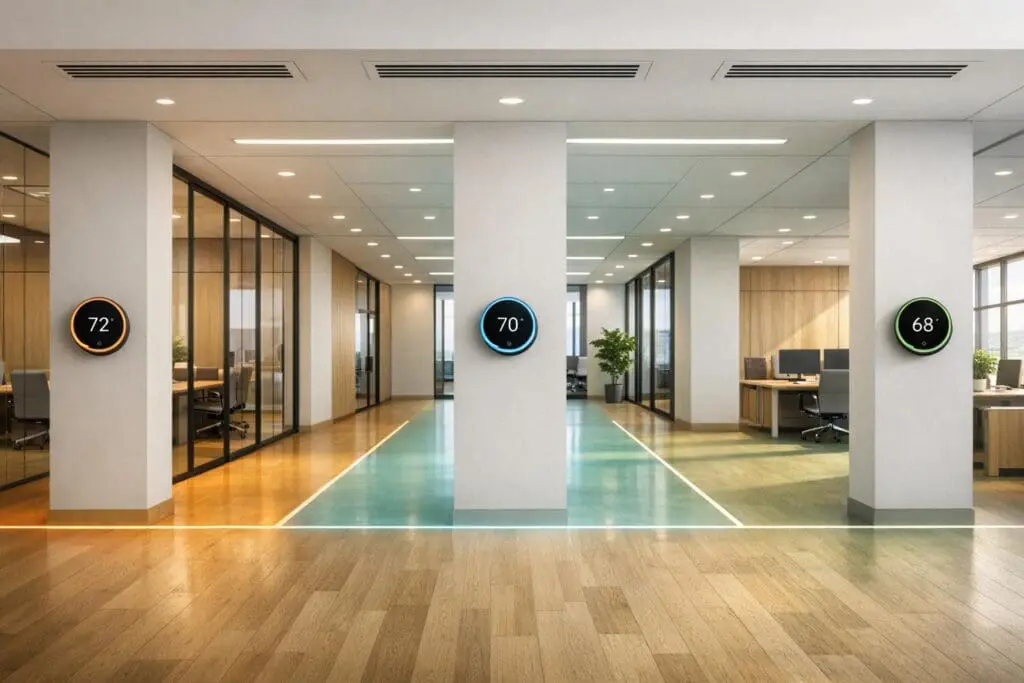
Zoning in commercial HVAC systems divides a building into multiple temperature-controlled zones, each managed by its own thermostat. This approach addresses common issues like uneven temperatures, wasted energy, and equipment strain found in single-zone systems. Key benefits include:
- Energy Savings: Zoned systems reduce energy use by up to 33%, cutting cooling costs by 20%-30%.
- Improved Comfort: Eliminates hot and cold spots by tailoring temperatures to specific areas.
- Extended Equipment Lifespan: Reduces wear and tear by operating only where needed.
- Cost Efficiency: Faster ROI, typically within 8 years, and lower utility bills.
- Flexible Design: Easily adds zones as business needs change.
Zoning is particularly effective for buildings with diverse heating and cooling requirements, such as multi-story offices or warehouses. It ensures precise climate control, lowers operational costs, and enhances system reliability.
HVAC Techs Can Zone Any Brand Without Bypass or Complexity with Christopher Rystedt Part 2
sbb-itb-b5c10b1
Common Problems with Single-Zone Commercial HVAC Systems
Single-zone HVAC systems may seem straightforward, but they come with their fair share of challenges. These systems function in a very basic way: when one area of a building needs cooling or heating, the entire system kicks in at full capacity. This approach treats the entire building as if it’s a single, uniform space. But in reality, different areas – whether it’s a multi-story office, a warehouse, or a retail store – have very different heating and cooling needs.
Inconsistent Temperatures Across Building Areas
One thermostat simply can’t manage the variety of conditions found across a commercial building. Think about it: south-facing offices bake in direct sunlight for hours, while north-facing rooms stay cooler. Server rooms constantly generate heat, and upper floors trap warm air, making them hotter than ground-level spaces. Despite these differences, single-zone systems distribute air evenly, creating uncomfortable hot and cold spots. Some areas end up too warm, while others are over-cooled, leaving employees and customers less than comfortable.
"If you’ve noticed hot or cold spots in your home [or building], it might be time for an upgrade."
- J.A. Bertsch Heating & Cooling
These temperature imbalances don’t just affect comfort – they also lead to wasted energy.
Wasted Energy and Higher Utility Bills
A major drawback of single-zone systems is how much energy they waste. Spaces like conference rooms, storage areas, or departments with different schedules get heated or cooled even when no one is using them. This inefficiency can drive up summer cooling bills by as much as 20%–30%. On top of that, these systems often demand maximum power during peak electricity hours, which means even higher costs. The constant strain also wears down the system, making it less efficient over time.
More Equipment Breakdowns and Shorter Lifespan
Running at full capacity all the time takes a toll on single-zone systems. Since one thermostat controls everything, these systems frequently operate longer cycles to meet the desired temperature. This constant use puts extra stress on parts like compressors and fans, leading to more frequent breakdowns. Over time, this wear and tear can shorten the system’s lifespan, which typically ranges from 10 to 15 years – or even less if the system is overworked.
When deciding whether to repair or replace an aging system, the $5,000 rule can help. Multiply the system’s age by the estimated repair cost. If that number exceeds $5,000, replacing the unit with a zoned solution might save you more money in the long run.
How Zoning Fixes These HVAC Problems
Zoning breaks a commercial building into separate areas, each with its own temperature settings. Instead of treating the entire building as a single space, a zoned HVAC system adapts to the specific needs of each area, making heating and cooling much more efficient.
Independent Temperature Control for Each Zone
Each zone has its own thermostat that communicates with a central control board. This board adjusts the dampers, which open or close based on the zone’s needs. For example, if a zone reaches its desired temperature, the dampers close to stop further conditioning. To prevent pressure buildup when dampers close, modern systems include bypass dampers or variable-speed blowers. This setup ensures that energy is directed only where it’s needed, cutting down on unnecessary usage.
Better Energy Efficiency
By focusing on occupied areas, zoning eliminates the waste of heating or cooling empty spaces. Systems with variable-speed equipment take this a step further by adjusting blower output to match the needs of active zones, reducing inefficiencies caused by recirculating air. The importance of this approach is highlighted in the ASHRAE Standard 90.1 (2022 edition), which requires zone-level controls in larger commercial buildings. This is especially beneficial for buildings with thermal stratification – where temperatures differ by more than 4°F between floors. Zoning helps balance these variations, lowering energy costs and extending the life of HVAC equipment.
Main Benefits of Zoning in Commercial HVAC Systems
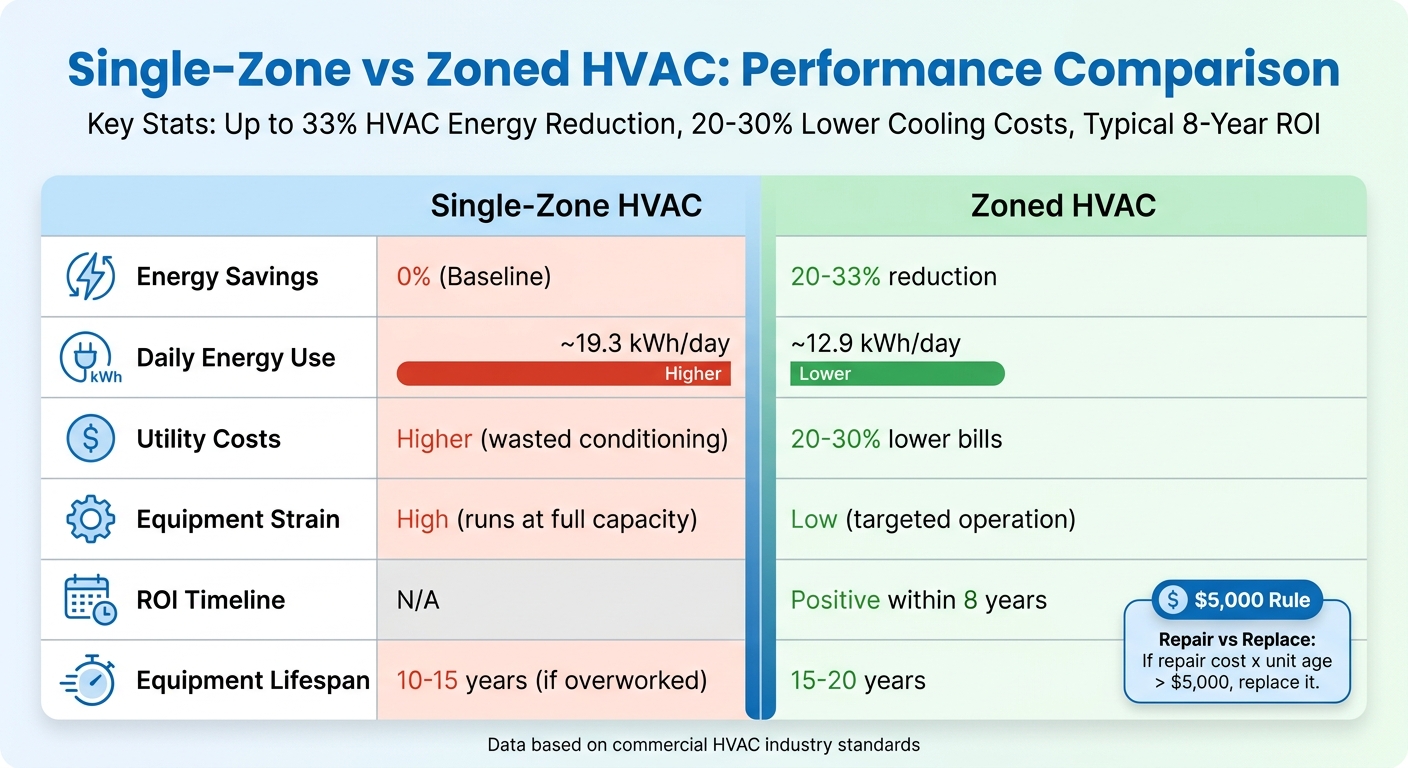
Single-Zone vs Zoned HVAC Systems: Energy Savings and Cost Comparison
Zoned HVAC systems bring clear advantages when it comes to cost savings, comfort, and extending the life of your equipment.
Lower Energy Costs and Faster Return on Investment
With zoning, airflow is directed only to the areas that need it, cutting down on unnecessary energy use. This approach can reduce HVAC energy consumption by up to 33%.
The financial benefits are noticeable almost immediately. Businesses often see summer cooling costs shrink by 20% to 30% after switching to zoned systems. Additionally, these systems help manage peak load stress by pre-cooling specific zones during off-peak hours when electricity rates are lower. In short, zoning doesn’t just lower energy use – it makes energy use smarter.
| Feature | Single-Zone HVAC | Zoned HVAC |
|---|---|---|
| Energy Savings | 0% (Baseline) | 20% to 33% reduction |
| Daily Energy Use | ~19.3 kWh/day | ~12.9 kWh/day |
| Utility Costs | Higher due to wasted conditioning | Lower; reduces bills up to 30% |
| Equipment Strain | High; runs at full capacity constantly | Low; operates in targeted shifts |
| ROI Timeline | N/A | Typically positive within 8 years |
For example, upgrading a 10,000-square-foot office building with a modern zoned system costs roughly $50,000 upfront. Considering energy costs rise by 3% to 5% annually, this investment becomes increasingly worthwhile. To decide between repairing an old system or upgrading, apply the $5,000 Rule: multiply the unit’s age by the repair cost. If the result exceeds $5,000, replacement is likely the smarter choice.
These savings are just the beginning – they also lead to improved comfort across the building.
Better Comfort and Temperature Control
Zoned systems go beyond saving money; they create a more comfortable environment by tailoring temperatures to specific areas. They eliminate the common hot and cold spots found in single-zone setups. For example, upper floors no longer overheat, and basements stay at a pleasant temperature instead of feeling like freezers. Independent thermostats in each zone allow areas like sunlit offices, busy spaces, or machinery-heavy rooms to maintain ideal settings.
This level of control keeps tenants happier and employees more productive. With independent controls, conflicts over temperature settings disappear. Specialized areas – like server rooms needing constant cooling or conference rooms used occasionally – get exactly the climate control they require, only when needed.
Longer Equipment Lifespan
Instead of running at full capacity all the time, zoned systems only operate where and when they’re needed. This reduces wear and tear, helping the equipment last longer. Commercial HVAC systems generally last 15 to 20 years, and zoning helps ensure they reach the upper end of that range.
Another bonus? Zoning makes troubleshooting easier. If an issue arises in one zone, the rest of the building remains unaffected while repairs are made. Isolated problems are simpler to diagnose, preventing small issues from escalating into major breakdowns.
Easy to Expand and Upgrade
Zoned systems are also incredibly flexible. As your business grows or undergoes renovations, you can add new zones without overhauling the entire system. This adaptability protects your initial investment and makes it easier to scale as your needs change.
Additionally, zoning pairs well with smart thermostats and automated controls. These tools optimize temperatures based on real-time occupancy and utility rates, further boosting efficiency. To get the most out of zoning, plan your setup carefully – group areas with high sun exposure, heavy traffic, or heat-producing equipment into separate zones for maximum benefit.
Conclusion: Why Zoning Makes Sense for Commercial Buildings
Zoning offers clear, measurable benefits for commercial HVAC systems, addressing both energy efficiency and comfort challenges.
By directing heating and cooling only to areas that need it, zoning can reduce energy waste by up to 33%. This means lower utility bills, fewer system breakdowns, and a more comfortable environment for occupants. Instead of running at full capacity all the time, a zoned system works smarter, not harder. In fact, businesses often experience cooling cost reductions between 20% and 30% with these systems. Plus, when issues arise, they typically affect just one zone, not the entire building.
For commercial properties across Chicagoland – whether it’s a multi-tenant office in Chicago, a retail shop in St. Charles, or a warehouse in Lemont – zoning tackles the challenges of extreme seasonal temperatures. Sun-facing offices, busy areas, and spaces with heavy equipment get the precise climate control they need, while unoccupied or low-use areas aren’t overcooled or overheated. This targeted approach makes zoning an ideal solution for commercial buildings in the region.
If you’re dealing with uneven temperatures or rising energy costs in your Chicagoland property, Eco Temp HVAC‘s certified technicians provide comprehensive HVAC services and can create a zoning system tailored to your building’s unique needs. With 24/7 local service, Eco Temp HVAC ensures your system operates efficiently and reliably. Visit ecotemphvac.com to schedule a consultation and explore how a zoned system can deliver long-term savings and improved comfort.
FAQs
How many HVAC zones does my building need?
The number of HVAC zones your building requires will depend on several factors, such as the building’s size, areas with different temperature requirements, and your energy efficiency goals. Larger buildings or those with multiple tenants often benefit from having more zones to address diverse preferences and usage patterns. On the other hand, smaller or less complex spaces might only need a few zones. To figure out the best zoning setup for your building, it’s a good idea to consult with an HVAC professional who can assess your layout and specific needs.
Can zoning be added to my existing commercial HVAC system?
Yes, you can typically add zoning to an existing commercial HVAC system, particularly in larger buildings. This process involves splitting the space into different zones, each with its own temperature controls. To achieve this, components like dampers, thermostats, and control panels are installed. However, whether this is possible depends on the current setup and age of your HVAC system. It’s a good idea to consult a professional HVAC technician who can evaluate your system and recommend the most effective way to implement zoning.
What’s the biggest sign I should switch from single-zone to zoned HVAC?
If you’re looking to improve energy efficiency and maintain comfort by targeting only the areas in use, switching to a zoned HVAC system could be the solution. This approach can cut energy use by as much as 33% while also solving temperature imbalances in various parts of your building – perfect for spaces with multiple zones.