
Boiler overheating is a serious issue that can lead to costly repairs, safety hazards, and system failures. Here’s what you need to know:
- Causes: Overheating often happens due to water circulation issues, such as sludge buildup, limescale, low water levels, or faulty components like pumps or sensors.
- Signs: Watch for unusual noises (e.g., whistling, banging), high pressure, error codes, or leaks from the pressure relief valve.
- Immediate Steps: Turn off power and gas, let the system cool naturally, and contact a certified technician for repairs.
- Prevention: Schedule annual professional inspections, perform regular system flushes, and install protective equipment like magnetic filters and scale reducers.
- Best Practices: Maintain proper pressure (1.0–1.5 bar when cold), monitor error codes, and avoid tampering with safety features.
How to Fix Boiler Overheating, All the Reasons Your Boiler is Over Heating Explained in Detail.
sbb-itb-b5c10b1
What Causes Boilers to Overheat
Boilers tend to overheat when water circulation is obstructed. Without proper flow, heat builds up, potentially triggering safety mechanisms or causing severe damage to key components. Let’s explore how buildup, low water levels, and mechanical issues contribute to this problem.
Sludge and Limescale Buildup
Mineral deposits from hard water, like calcium and magnesium, can coat the heat exchanger, reducing its ability to transfer heat effectively. This often results in kettling, a whistling noise caused by localized overheating spots. Additionally, sludge – formed from rust and debris in your pipes and radiators – can block water circulation. This blockage increases back pressure, trapping heat inside the boiler and putting the system at risk.
Low Water Levels and Dry Firing
Insufficient water in the system can cause metal components to overheat rapidly. This condition, known as dry firing, can lead to cracked tubes or thermal shock, especially if cold water suddenly enters an overheated boiler. To avoid this, maintaining proper water pressure and circulation is critical, as low flow rates can cause the boiler to overheat in no time.
Faulty Parts and Pressure Issues
Mechanical failures often play a significant role in overheating. For instance, a seized circulation pump can trap hot water in the heat exchanger, preventing it from reaching the radiators. Similarly, a malfunctioning thermistor might send inaccurate temperature data to the Printed Circuit Board (PCB), leading the boiler to heat beyond safe levels. As Tom Allen from Eco Happy explains:
"The PCB acts as the ‘brain’ of the boiler, controlling and directing the electrical signals that power various components. If the PCB fails… the boiler may overheat due to a failure in the temperature sensors [or] pressure switches".
Other issues include a blocked Pressure Relief Valve, which prevents the release of excess pressure, and frozen condensate pipes during winter, which force the boiler to overexert itself. Even airlocks – trapped air in radiators – can restrict water flow, causing heat to accumulate. Regular maintenance is essential to catch signs of pump failure, sensor malfunctions, or other faults before they escalate.
How to Spot an Overheating Boiler
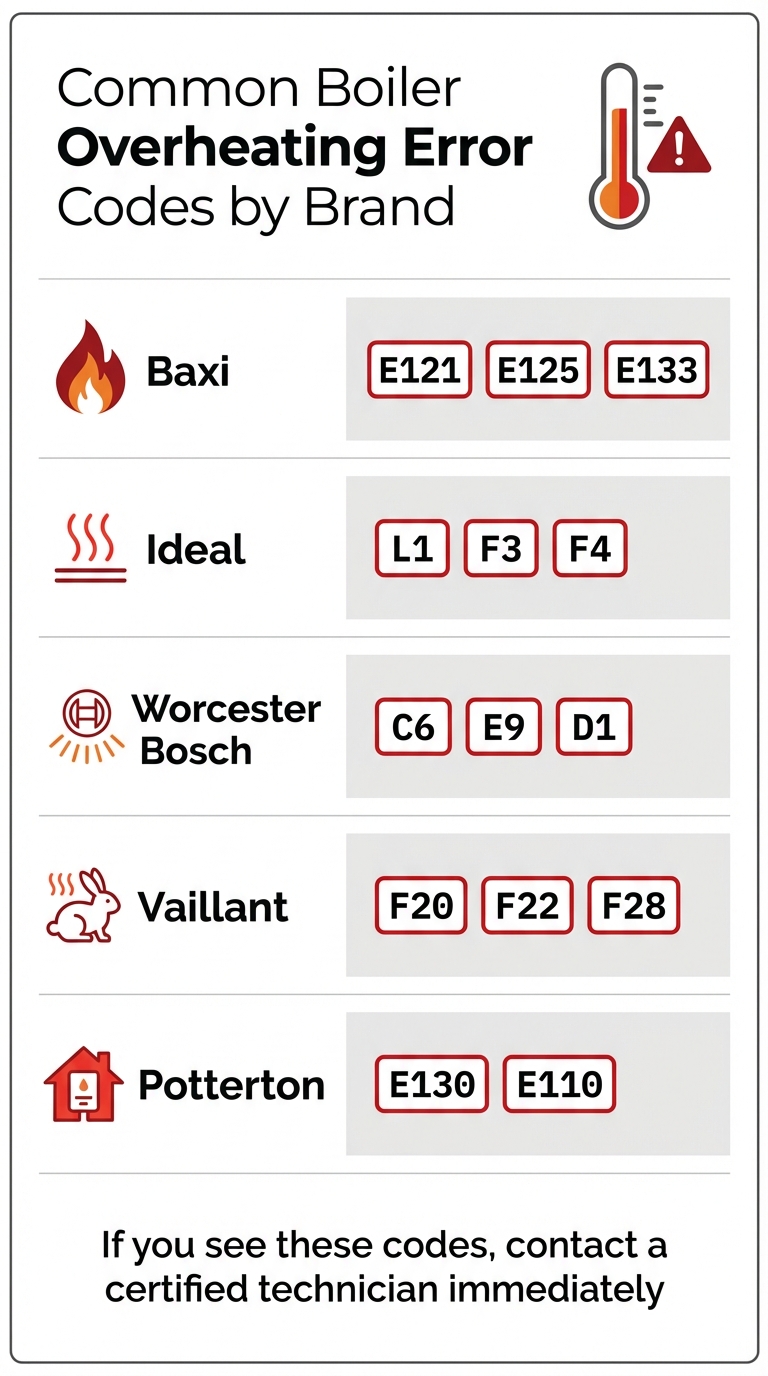
Boiler Overheating Error Codes by Brand – Quick Reference Guide
Catching the signs of an overheating boiler early can save you from costly repairs and potential safety risks. If you’re already experiencing issues, professional boiler repair is essential to prevent further damage. Boilers tend to give clear warnings when something’s wrong, and recognizing these signals is crucial before taking action or calling in a professional.
Strange Sounds and High Pressure
One of the most obvious signs of an overheating boiler is kettling – a loud whistling or rumbling noise. This happens when water flow is restricted, causing it to overheat and boil. Andy Kerr, Founder and CEO of BOXT, explains:
"One cause of loud boiler noises could be kettling, which happens when the flow of water through the boiler slows down, causing the water to overheat and reach boiling point; this is when you can hear a kettling noise".
Other unusual sounds include banging or knocking, which could mean that the pipes or heat exchangers are expanding and contracting under extreme heat. Gurgling or bubbling noises often point to trapped air disrupting water circulation. If you hear buzzing or humming, it might indicate that the circulation pump is struggling or failing due to pressure problems.
Keep an eye on your pressure gauge, especially in colder months. Ideally, the pressure should stay between 1.0 and 1.5 bar. If it climbs above 2.5 bar, the boiler is at risk.
Modern boilers often come with error codes designed to highlight overheating problems, providing another useful clue.
Error Codes and Leaking Safety Valves
When conditions become unsafe, modern boilers will lock out and display error codes. These codes vary by manufacturer but often indicate overheating:
| Boiler Brand | Common Overheating Error Codes |
|---|---|
| Baxi | E121, E125, E133 |
| Ideal | L1, F3, F4 |
| Worcester Bosch | C6, E9, D1 |
| Vaillant | F20, F22, F28 |
| Potterton | E130, E110 |
Another warning sign is water dripping from the pressure relief valve (PRV). This valve releases excess pressure caused by overheating, and you might notice moisture or even a small burst of steam from the pipe connected to it. If the boiler casing feels unusually hot or shows scorch marks and discoloration, it’s a sign that internal temperatures have reached dangerous levels. A burning smell – whether of plastic or metal – could mean components are melting, while a rotten egg odor might indicate a gas leak due to excessive stress on the system.
If your boiler locks out, avoid resetting it repeatedly without addressing the root cause. Resetting bypasses safety features and could lead to more severe damage.
What to Do When Your Boiler Overheats
First Safety Steps
If your boiler shows signs of overheating, it’s important to act quickly and carefully. Start by turning off the mains power to stop heat production, and shut off the gas supply to eliminate the risk of combustion or leaks. Then, locate the internal stop valve – commonly found under the sink or near the boiler – and close it to prevent water from entering the system, which could create dangerous high-pressure steam.
If you notice heavy steam, a rotten egg smell, or burning odors, evacuate the area immediately. As Myles Robinson, Director at Boiler Central, cautions:
"An overheating boiler is one of the clearest signs that you might have a pressure buildup that may result in a furnace explosion."
Allow the boiler to cool naturally – never pour water on it. Attempting DIY repairs on a pressurized or overheating boiler is highly risky and should be avoided. Tampering with the system could lead to an explosion or severe injury. Tom Allen from Eco Happy highlights the dangers:
"The fumes from the melted components of a boiler are toxic and can spread throughout your property. A gas leak as a result of an overheated gas boiler can lead to carbon monoxide poisoning, which can be fatal."
Once the immediate danger has passed and the boiler has cooled, a professional assessment is necessary.
When to Contact a Professional
After ensuring the area is safe, your next step should be to contact a certified technician. Overheating boilers often indicate underlying problems such as pump failures, blockages, or malfunctioning thermistors, all of which require expert diagnosis and repair. If your boiler displays an error code and locks out, avoid resetting it repeatedly – doing so can override safety features and lead to further damage.
For those in the Chicagoland area, Eco Temp HVAC offers 24/7 emergency boiler repair services. Their certified technicians are equipped to handle overheating issues safely, inspecting key components like the heat exchanger, pressure relief valve, and internal sensors to ensure the system is safe to restart.
Preventing Overheating with Regular Maintenance
Yearly Professional Inspections
Keeping your boiler from overheating starts with regular maintenance, and annual professional inspections are a cornerstone of this effort. When paired with periodic flushing, these inspections serve as a solid defense against potential overheating issues. Experts recommend that residential boilers undergo a yearly check-up by a certified technician.
During these inspections, technicians focus on key safety components like relief valves, shutoff controls, pressure gauges, and expansion tanks. They also test the low-water cutoff device, which is designed to shut down the boiler if water levels drop too low. This crucial mechanism helps prevent "dry firing", a dangerous condition that can melt metal parts or cause tube collapse [22, 24]. John Smart, Technical and Training Manager at Weil-McLain, underscores the importance of these annual services:
"Boilers should be inspected and serviced by a professional installer or technician at least once a year".
Beyond safety, there are financial perks. A properly maintained boiler can slash energy bills by up to 15%, with most homeowners saving at least 10% annually on heating costs [21, 28]. In the Chicagoland area, professional tune-ups typically cost between $150 and $350, a small price compared to emergency repairs, which can run about 50% higher [21, 26]. For residents in Chicago and nearby areas like St. Charles, Bartlett, and Downers Grove, Eco Temp HVAC offers thorough annual inspections that not only ensure safe operation but also help maintain manufacturer warranties.
This proactive approach ensures your boiler operates efficiently and sets the stage for additional preventive measures.
System Flushing and Part Inspections
In addition to annual inspections, regular system flushing is essential for removing harmful buildup that can jeopardize efficiency. Power flushing clears out sludge, sediment, and mineral deposits that accumulate in pipes and at the bottom of the boiler. These buildups can obstruct water flow and coat the heat exchanger, making it harder for the system to transfer heat effectively. This inefficiency forces the boiler to work harder, increasing the risk of overheating [29, 22, 25]. John Smart explains:
"Dirty system water will not absorb as much heat energy as clean system water and will degrade the heat-exchanger’s ability to transfer heat energy into the water, therefore reducing its efficiency".
Experts recommend flushing the system every five years, or annually in areas with hard water. During these visits, technicians also inspect and clean critical parts, such as the heat exchanger, burner assembly, and pump bearings [22, 25, 26]. They’ll clear debris from flue vents and air intakes to maintain proper airflow and reduce the risk of carbon monoxide exposure [22, 24].
These targeted maintenance tasks help ensure optimal pressure and water flow – key factors in preventing overheating.
| Maintenance Task | Frequency | Performed By | Purpose |
|---|---|---|---|
| Pressure Gauge Check | Weekly | Owner | Ensure pressure is 1–1.5 bars |
| Radiator Bleeding | Seasonally | Owner | Remove trapped air and improve flow |
| Heat Exchanger Cleaning | Annually | Professional | Prevent residue buildup and overheating |
| Low-Water Cutoff Test | Annually | Professional | Prevent dry firing and potential damage |
| System Power Flush | As Needed | Professional | Remove sludge and limescale |
Homeowners can complement professional maintenance by conducting simple weekly checks. Look for leaks, monitor the pressure gauge to ensure it stays between 1 and 1.5 bars, and keep the area around the boiler free of clutter to allow proper ventilation. Together with annual professional servicing, these steps create a well-rounded plan to keep your boiler running smoothly, safely, and efficiently – avoiding the risks and expenses of overheating.
Next, we’ll dive into equipment designed to further prevent overheating.
Equipment That Prevents Overheating
In addition to routine maintenance, installing specific protective equipment can help minimize the risk of boiler overheating. These devices address two primary causes of overheating: metallic debris (like rust and sludge) and mineral buildup (such as limescale). Hard water is a common issue in many regions, making these devices an important investment for homeowners. While regular maintenance is essential, these tools tackle problems that maintenance alone might not catch.
Magnetic Filters vs. Scale Reducers
Magnetic filters and scale reducers serve distinct purposes, and most manufacturers recommend using both to maintain warranty coverage.
- Magnetic filters are installed on the return pipe of the heating system. They use strong magnets to capture black sludge, a mix of rust particles and iron oxide that comes from radiators and pipes. Without a filter, this sludge can clog heat exchangers and pumps, overworking the boiler and leading to overheating.
- Scale reducers combat limescale, which forms from calcium and magnesium minerals in hard water. Limescale acts like insulation, trapping heat in the boiler’s metal components instead of transferring it to the water. This can create dangerous hot spots that may crack heat exchangers. Scale reducers are usually installed in the water supply line or added as a chemical treatment to the system water.
Myles Robinson, Director of Boiler Central, highlights the importance of both devices:
"A magnetic filter will not only help keep your system clean on top of your limescale reducer from sludge, rust and other debris. This is different as these can cause more issues than limescale as these debris are much bigger".
Here’s a quick comparison of the two:
| Feature | Magnetic Filter | Scale Reducer |
|---|---|---|
| Primary Function | Captures rust and debris | Reduces limescale in hard water |
| Installation | On heating system return | In water supply line |
| Benefits | Prevents blockages | Improves water flow |
| Maintenance | Periodic cleaning during service visits | Minimal (occasional chemical top-ups) |
Expect to spend between $60 and $360 on magnetic or electronic descaling devices, while chemical treatments range from $12 to $60. Professional installation costs typically fall between $60 and $240. Magnetic filters require cleaning during annual boiler maintenance visits, while scale reducers need very little upkeep.
Water Treatment Options
In addition to filters and scale reducers, chemical water treatments offer extra protection for your boiler. Corrosion inhibitors create a protective layer on internal components, preventing rust and debris caused by the interaction of water and steel. Meanwhile, cleaners lift existing sludge and scale, allowing it to be flushed out or trapped by a magnetic filter.
For homes with hard water, maintaining the correct chemical balance is crucial. Dan Holohan, a steam heating expert, explains the impact of limescale vividly:
"Having scale on heating surfaces is like having all the traffic lights in your town turn red at the same time, and stay red. Most movement stops. In the case of a boiler, that movement is heat… the boiler just keeps getting hotter as your building gets colder".
To ensure the effectiveness of your water treatment, test chemical levels annually with dip-test indicator strips. If your system frequently needs fresh water, there may be a leak introducing new minerals. Temporarily closing the automatic feed valve and monitoring for pressure drops can help confirm a leak. For high-pressure or steam systems, consider adding deaerators and oxygen scavengers to remove dissolved gases that cause corrosion and stress cracking in high-temperature areas.
Before installing new equipment, such as a new boiler installation, perform a chemical flush to clear out existing contaminants that could clog your system or reduce the effectiveness of your filters. By combining physical filtration with chemical treatments, you can create a robust defense system to keep your boiler running efficiently and safely.
Adjusting Boiler Settings and Usage
Even with protective gear in place, incorrect settings or poor usage habits can still cause your boiler to overheat. Regular inspections and maintenance are essential, but understanding how to set up and operate your boiler properly adds another layer of protection. By configuring your system correctly and using it responsibly, you can help prevent dangerous spikes in temperature and pressure.
Temperature and Pressure Controls
Your boiler’s pressure gauge is a key indicator of system health. When the system is cold, the pressure should sit in the "green zone", typically between 12–15 PSI (1.0–1.5 bar). During operation, this may rise to 18–25 PSI (1.5–2.5 bar). If the pressure exceeds 30 PSI (2.75–3.0 bar), it enters the danger zone, often triggering the pressure relief valve.
To stay ahead of potential issues, check the cold pressure gauge monthly. If the pressure climbs too high, you can bleed excess air from the system using a radiator key. Once you’ve repressurized the system, make sure to turn the filling loop handles off (position them at 90° to the pipe) to prevent additional water from flowing in.
Temperature settings are just as important. A faulty thermostat can lead to excessive fuel delivery, which may cause the boiler to overheat. Set your hot water temperature to 120°F – higher settings can cause thermal expansion, increasing pressure to unsafe levels. Ryan Gill, an engineer at BOXT, offers this insight:
"Boiler pressure refers to the balance between the quantities of water and air inside the system".
Here’s a quick reference table for boiler pressure levels:
| System Status | Recommended Pressure (PSI) | Recommended Pressure (Bar) |
|---|---|---|
| Cold (Off) | 12–15 PSI | 1.0–1.5 bar |
| Hot (Operating) | 18–25 PSI | 1.5–2.5 bar |
| Danger Zone | Above 30 PSI | Above 2.75–3.0 bar |
These settings are crucial for keeping your boiler safe. Beyond these, adopting smart usage habits can further reduce strain on your system.
Best Usage Practices
Daily habits can make a big difference in your boiler’s performance and safety. For example, avoid leaving the hot water system or tank on continuously, as this puts unnecessary pressure on the boiler and plumbing. Setting your thermostat to 68°F is another way to reduce strain and avoid costly repairs.
If you live in a hard water area, consider using softened water or installing a scale reducer to minimize limescale buildup on the heat exchanger. Limescale can cause "kettling", a condition where localized overheating occurs. Additionally, ensure there’s at least three feet of clearance around your boiler to reduce fire risks and improve heat dissipation.
During winter, a frozen external condensate pipe can cause your boiler to overheat. If this happens, thaw the pipe using warm (not boiling) water.
Finally, never bypass automatic gas valves or safety controls. According to Metropolitan Engineering, this dangerous practice can lead to a "runaway boiler" condition, which carries a risk of explosion. If your boiler displays error codes like E15 (overheating) or E01 (low pressure), consult the manual and contact a professional instead of attempting complex repairs yourself.
Conclusion
Keeping your boiler from overheating requires consistent care and attention. This guide has highlighted the main culprits behind boiler overheating – like sludge accumulation and malfunctioning components – along with key warning signs such as kettling noises and spikes in pressure that can indicate trouble brewing.
The best way to avoid these issues? Regular maintenance and the right equipment. Annual inspections by certified professionals are crucial to ensure safety mechanisms work properly, water pressure stays within safe ranges, and internal parts remain clean. Essential practices like system flushing, installing magnetic filters or scale reducers, and monitoring gauges daily can go a long way in maintaining both safety and efficiency. As Tom Allen from Eco Happy wisely points out:
"An overheating boiler is a serious concern and should not be dealt with lightly. Your safety is the number one priority."
It’s important to never bypass safety features or ignore warning signs – they exist to protect you from hazardous situations.
For residents and businesses in the Chicagoland area, Eco Temp HVAC provides a full range of boiler services, including maintenance, repairs, and installations, available around the clock. Their certified technicians, including Navien Service Specialists, can handle everything from system flushing and magnetic filter installation to thermostat calibration and diagnosing tricky issues before they escalate. Taking these proactive steps ensures your boiler remains safe, efficient, and reliable.
FAQs
Can an overheating boiler be fixed without replacing it?
Yes, an overheating boiler can usually be fixed without requiring a complete replacement. Issues like a malfunctioning pump, limescale buildup, or a faulty thermostat are often resolved through maintenance or by swapping out specific parts. However, if the boiler has severe damage or several components are failing, replacing it might be the better option. It’s best to have a professional technician evaluate the boiler to figure out the most effective solution.
What’s the fastest way to tell if my pump or heat exchanger is causing overheating?
To figure out whether the pump or heat exchanger is behind the overheating, keep an eye out for these clues:
- Pump: Check if it’s operating as it should. Listen for odd noises, feel for vibrations, or examine water flow. Overheating can result from a blocked or malfunctioning pump.
- Heat Exchanger: Watch for strange odors, leaks, discoloration, or soot buildup. If the boiler casing feels excessively hot, it might point to a problem with the heat exchanger.
How do I know if I need a magnetic filter, a scale reducer, or both?
If your boiler system is dealing with rust or metallic debris, a magnetic filter is a must-have. It works to capture and remove these particles, helping to prevent sludge from forming. On the other hand, if your water supply has high mineral content leading to limescale buildup, a scale reducer is the better choice. Limescale can reduce your boiler’s efficiency over time.
If your system faces both problems – metallic debris and limescale – using both devices together provides thorough protection. The key is to assess your system’s specific needs to keep it running efficiently and avoid costly issues down the line.