
If your mini-split system is leaking water, struggling to cool, or emitting musty odors, the problem likely lies in its drainage system. This guide explains everything you need to know about diagnosing and fixing common issues like clogged drain lines, dirty filters, and improper installation. Here’s a quick summary:
- How it works: Mini-splits remove moisture during cooling, collecting water in a drain pan and channeling it outside through a condensate drain line.
- Common issues: Blocked drain lines (due to algae, debris, or poor installation), frozen coils, and dirty air filters.
- DIY solutions: Clean filters every 2–4 weeks, flush drain lines with vinegar monthly, and ensure proper unit leveling.
- When to call a pro: Persistent leaks, frozen coils, or damaged components require professional attention.
Regular maintenance, like monthly vinegar flushes and seasonal checks, can prevent up to 80% of these problems. For severe issues, consult a certified technician for expert air conditioning repair to avoid costly repairs and ensure your system runs efficiently.
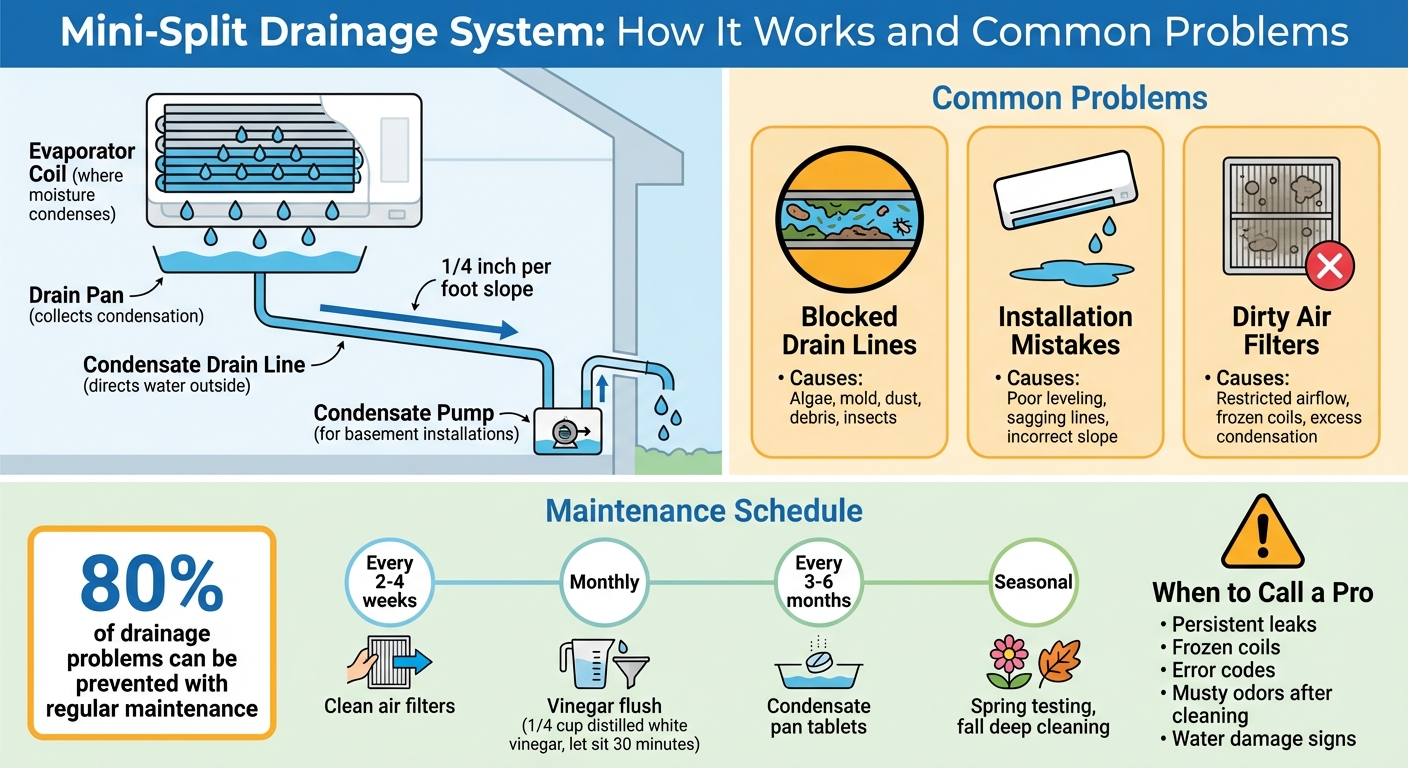
Mini-Split Drainage System: How It Works and Common Problems
Why Mini-Split is Dripping or Leaking Water and How to Fix it
sbb-itb-b5c10b1
How Mini-Split Drainage Systems Work
Mini-split systems cool your home while also removing excess moisture from the air. As warm air flows over the cold evaporator coil inside the indoor unit, water vapor in the air condenses into liquid droplets. This process happens continuously when the system is cooling, and the resulting water needs to be properly drained.
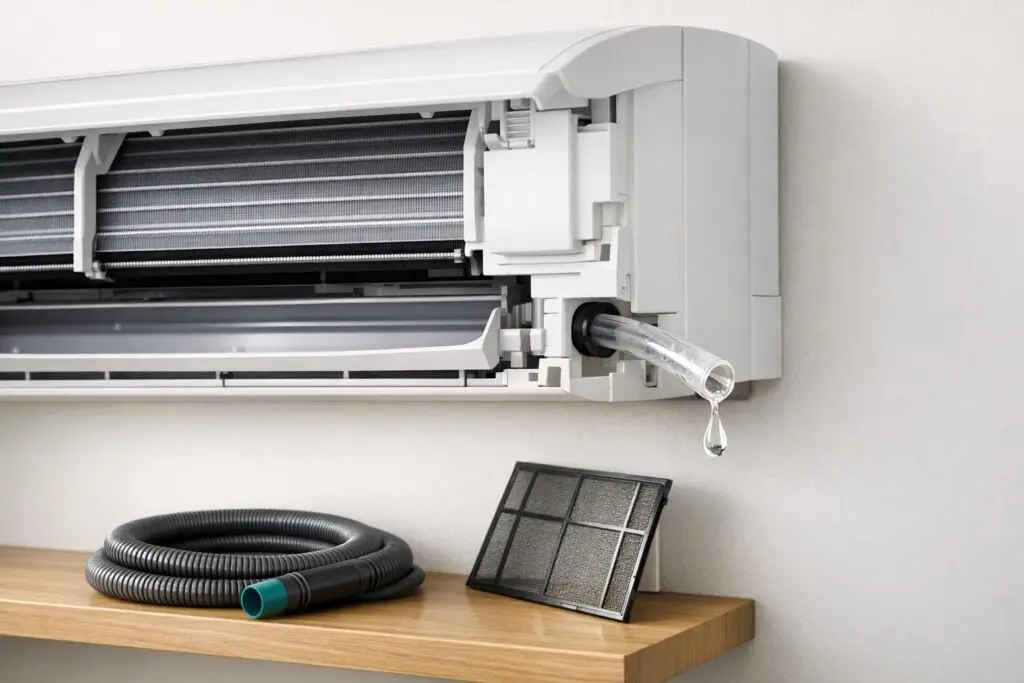
The condensed water collects in a catch basin or drain pan located beneath the evaporator coils. From there, it flows out through a condensate drain line, typically made of PVC pipe or flexible tubing, which directs the water outside. To keep the water moving efficiently, the drain line is installed with a slight downward slope (1/4 inch per foot), relying on gravity to maintain a steady flow.
In cases where gravity alone can’t do the job – such as basement installations or horizontal pipe runs – a condensate pump is used. This pump features a float switch that activates automatically when water in the drain pan reaches a certain level, pushing the water to its discharge point. This setup is essential for avoiding drainage issues, which will be discussed in more detail later.
Why Drainage Matters
Proper drainage is critical for protecting your home from water damage. When water from the mini-split system can’t drain properly, it can leak onto walls, floors, baseboards, and drywall. This can lead to saturated insulation, peeling paint, warped wood, and even structural rot. Beyond physical damage, standing water creates the perfect environment for mold and mildew, which can produce musty odors and harm indoor air quality.
Drainage issues can also affect the system’s performance. Many newer mini-split models are equipped with sensors that detect excess water in the drain pan. If the water doesn’t drain, the system may trigger an automatic safety shutdown to prevent flooding. While this safety feature protects your home, it also halts cooling until the issue is fixed. Chronic drainage problems can lead to faster wear on the system’s components, potentially cutting its lifespan short – well below the expected 10 years.
Understanding how the drainage system works is key to maintaining your mini-split and avoiding costly repairs.
Main Parts of the Drainage System
The drainage system is made up of four key components that work together to handle condensation:
- Evaporator coil: This is where the moisture in the air condenses into liquid.
- Drain pan: Positioned beneath the evaporator coils, it collects the condensation to prevent leaks into your home.
- Condensate drain line: This pipe or flexible tubing directs the water outside, ensuring proper discharge.
- Condensate pump: When gravity isn’t enough, this pump moves the water to its exit point.
To keep the system running smoothly, the drain line must be free of sags or upward slopes, as these can trap water and encourage algae or other biological growth. The outdoor end of the line should also remain clear of debris like soil and leaves that could block the flow of water. Regular inspections of these components can help you catch minor issues early, preventing them from turning into major, expensive problems.
What Causes Mini-Split Drainage Problems
Recognizing the common causes of mini-split drainage problems can save you from costly repairs and headaches. Most of these issues stem from a handful of preventable factors.
Blocked Condensate Drain Lines
The drain line’s moist environment is a breeding ground for mold, algae, and fungi, which can clog the system. Dust, dirt, and pet hair can mix with these elements, creating stubborn blockages. Outside, the discharge point might get obstructed by spiderwebs, insects, soil, or leaves. On top of these biological culprits, mistakes during installation can exacerbate drainage issues.
Installation Mistakes and Leveling Issues
If a mini-split isn’t installed correctly, it can disrupt the natural flow of condensate. Flexible drain lines, for example, may sag and trap water or get pinched by nearby structures, halting proper drainage. When the outdoor unit is set higher than the indoor one, a condensate pump is essential to prevent water from backing up. According to Comfort Bros HVAC Chicago experts:
If the drain line gets clogged by algae, dust, spiderwebs, or other debris, the water will accumulate and leak from the indoor unit into your home.
Neglecting routine maintenance, especially with air filters, can also lead to drainage problems.
Dirty Air Filters
Clogged air filters restrict airflow, which reduces heat transfer and encourages condensation buildup. This poor airflow can even cause the evaporator coils to freeze. When the ice melts, the excess water can overwhelm the drain pan, leading to leaks. HVAC expert Nicholas Gildark notes:
Poor airflow due to a dirty or clogged air filter… reduces heat transfer capabilities and causes condensation to accumulate inside the unit.
To avoid these issues, filters should be cleaned monthly during heavy cooling periods. Proper maintenance and timely diagnosis, which will be covered in the next section, are key to keeping your mini-split system running smoothly.
How to Diagnose Drainage Issues
Always prioritize safety. Before you start, turn off your mini-split and disconnect power at the breaker to avoid any risks. Once the system is powered down, you can begin troubleshooting common drainage problems.
Checking the Drain Pan and Lines
Start by lifting the indoor unit’s front cover until it locks into place. Remove the mesh air filters to access the evaporator coil and the drain pan located at the base. Look for standing water, debris, or any signs of cracks or corrosion in the pan. To check for clogs, slowly pour 1–2 cups of water onto the evaporator coil or directly into the drain pan. If the water doesn’t drain quickly and starts pooling, there’s likely a blockage.
Next, examine the flexible tubing or PVC drain line. Look for sharp bends, sags, or pinched sections that could restrict water flow. Check the outdoor end of the condensate line as well, ensuring it’s not obstructed by soil, leaves, or insect nests. Pay attention to gurgling or bubbling sounds and any musty smells – these can signal a backed-up or moldy drain line. Avoid using bleach for cleaning. As MRCOOL advises, "Never use bleach in a mini-split system – it can damage the materials and corrode the lines". Once you’ve ruled out clogs and debris, it’s time to look at possible installation issues.
Looking for Installation Problems
Improper installation can often contribute to drainage issues. Mini-split units need to be slightly tilted toward the drain exit to allow gravity to move condensate effectively. If the unit is perfectly level or tilted backward, water won’t drain as it should. Check that the indoor unit is securely mounted on its wall brackets. Over time, units can shift – especially after remodeling or painting projects.
Inspect the drain line to ensure it has a consistent downward slope without any sags or upward bends. As noted by HVAC-Talk, "The condensate drain is very finicky. The line has to have a positive slope, no sagging and no P-trap". Look for signs of water damage, like wet spots, peeling paint, or cracks in the drywall beneath the unit, which could indicate an overflowing drain pan. If you hear trickling or gurgling noises during or after cooling cycles, it may mean water is struggling to flow through an improperly sloped line.
Spotting Frozen Evaporator Coils
Ice or frost on the evaporator coils often points to airflow problems or low refrigerant levels, and it can lead to drainage overflows when the ice melts. If the coils freeze despite having clean filters, you might be dealing with a refrigerant leak rather than a simple drainage issue. Be cautious – if you hear hissing sounds alongside ice buildup, avoid touching the refrigerant lines, as they contain hazardous materials that require professional handling. Frozen coils can result in excessive water runoff during the defrost cycle, potentially overwhelming the drain pan and causing leaks inside your home. Catching these signs early can help guide the next steps for repairs.
How to Fix Mini-Split Drainage Problems
Once you’ve pinpointed the cause of your mini-split drainage issue, it’s time to take action. Many common problems can be resolved with simple fixes that don’t require professional intervention.
DIY Repairs You Can Try
Start by cleaning the air filters every 2–4 weeks during peak usage. This ensures proper airflow, as restricted airflow can lead to colder evaporator coils, which in turn produce excessive condensate and increase the risk of clogs.
For regular maintenance, a monthly vinegar flush is highly effective in preventing most drainage problems during the cooling season. Here’s how to do it:
- Turn off the power to the unit at both the system and breaker.
- Locate the T-shaped clean-out or drain access point near the indoor air handler, remove the cap, and clear any visible debris with a small brush.
- Pour 1/4 cup of distilled white vinegar into the drain line and let it sit for 30 minutes to break down algae and slime.
- Rinse the line with warm water, replace the cap, and restore power to the system.
If clogs persist, try the vacuum method. Locate the drain line’s exit point outside your home, and use a vacuum to pull out any debris:
- Place the vacuum hose over the drain outlet, sealing it with a rag or rubber adapter.
- Run the vacuum for 60–90 seconds while pouring water into the indoor drain pan to help dislodge blockages.
- Check for a steady drip at the outlet to confirm the line is clear. Keep in mind that mini-split drain lines are narrower than those in central HVAC systems, making them more prone to clogs caused by dust, lint, and algae.
If these steps don’t resolve the issue, it’s time to bring in a professional.
When to Call a Technician
Certain problems require expert attention. For instance, if leaks return shortly after you’ve cleaned the system or if musty odors persist, the issue may go beyond surface-level debris. Ice on the evaporator coils is another red flag – it could indicate low refrigerant levels or a malfunctioning defrost function. Both situations call for immediate professional assistance.
Mechanical failures, such as a broken or jammed condensate pump, also require professional repair. If your system displays error codes or if the overflow safety switch keeps shutting it down, avoid attempting further DIY fixes. Additionally, structural damage near the unit – like wet insulation, cracked drywall, or peeling paint – signals deeper issues that need expert care.
Installation errors, such as an improperly sloped drain line or a unit that’s not level, can disrupt gravity-assisted drainage. These problems must be corrected by a qualified technician to restore proper function.
If you’re in the Chicagoland area and dealing with ongoing mini-split drainage problems, consider reaching out to a trusted provider like Eco Temp HVAC (https://ecotemphvac.com). Their certified technicians can deliver reliable repairs and help prevent future issues.
Preventing Drainage Problems
Keeping your drainage system in good shape requires regular maintenance and a proactive approach. For example, a simple monthly vinegar flush during the cooling season can prevent up to 80% of drainage problems. This straightforward step helps avoid water damage, mold growth, and costly repairs.
Regular Maintenance Tasks
To keep things running smoothly, there are a few tasks you can handle yourself:
- Clean air filters every 2–4 weeks during periods of heavy use, especially if you have pets or allergies. Clean filters reduce the risk of excessive condensate production.
- Flush the system with vinegar monthly during warm, humid months. If you live in an area with high humidity, increase the frequency to every 1–2 weeks. You can also use condensate pan tablets every 3–6 months to help prevent algae and mold buildup.
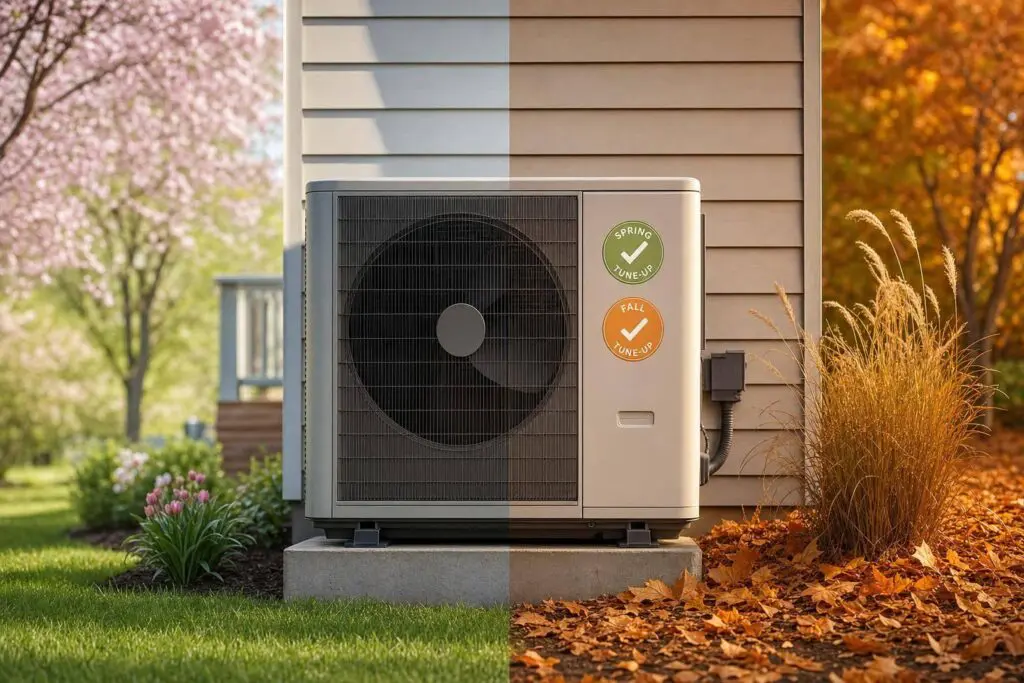
- Perform seasonal checks. In spring, test the drain with water and ensure it drips steadily outside. In the fall, schedule a deep cleaning before the cooling season ends. Throughout the year, clear at least 3 feet of space around indoor units and 2–3 feet around outdoor units for proper airflow. Regularly inspect the outdoor drain for any blockages.
While these steps cover day-to-day upkeep, some issues require professional attention.
Benefits of Professional Maintenance
Certified technicians bring tools and expertise that go beyond routine care. They handle tasks like:
- Deep cleaning evaporator coils and blower wheels.
- Ensuring drain lines have the correct slope (at least 1/4 inch per foot) and checking for sags or kinks that could trap water.
- Using specialized tools, like compressed air or nitrogen, to clear stubborn blockages.
- Testing condensate pumps and float switches and checking refrigerant levels. Low refrigerant can cause coils to ice over, leading to overflow when the ice melts.
- Conducting installation audits to catch mistakes like uneven unit placement or poorly insulated lines.
"The trained eyes of a pro can identify emerging mechanical issues that you might not see or be aware of and take care of them before they turn into breakdowns or costly repairs." – Lennox
For homeowners in the Chicagoland area, Eco Temp HVAC offers a range of maintenance plans with certified technicians. Their Mitsubishi Diamond Elite Contractor certification ensures they’re equipped to handle mini-split systems. With service locations in Chicago, St. Charles, Bartlett, Lemont, Downers Grove, and Palatine, they provide fast and reliable care to keep your system running all year long. Learn more at Eco Temp HVAC.
Conclusion
Mini-split drainage issues might seem minor at first, but they can quickly escalate into serious problems like water damage, mold growth, and even system failure if left unchecked. Common culprits include clogged drain lines, dirty filters, and poor installation. By learning how your drainage system operates and recognizing early signs – such as water pooling, musty smells, or odd noises – you can safeguard your home and avoid expensive repairs.
"If you put off having your mini-split repaired, you risk mold and mildew in your home, structural water damage, and HVAC system inefficiency or total failure." – Comfort Bros Heating, Air & Plumbing
Staying ahead of these issues is as simple as routine maintenance. Cleaning filters and flushing drain lines with vinegar can tackle most drainage problems. However, more severe issues like refrigerant leaks, damaged drain pans, or failing condensate pumps require professional attention. When DIY fixes don’t cut it, calling in the experts is a must.
Eco Temp HVAC provides certified maintenance and repair services for ductless mini-split systems. With a 12-year Mitsubishi warranty and 24/7 availability, they serve Chicago, St. Charles, Bartlett, Lemont, Downers Grove, and Palatine.
Don’t wait for minor issues to turn into major headaches. Schedule your seasonal tune-up with Eco Temp HVAC today and keep your mini-split system running smoothly all year long.
FAQs
Is water dripping from my mini-split ever normal?
Water dripping from a mini-split system is often due to condensation, which is completely normal. However, if the leaking becomes persistent or excessive, it’s usually a sign of an underlying issue. Potential culprits include blocked drain lines, incorrect installation, or faulty components. If the problem persists, it’s wise to call in a professional to check the system. This can help avoid further damage or a drop in performance.
What can I safely use to clean a mini-split drain line?
To keep your mini-split drain line in good shape, you can rely on simple tools like vinegar for regular upkeep or a wet/dry vacuum for handling tougher clogs.
- Monthly maintenance: Pour vinegar down the drain line once a month to help prevent any buildup.
- Dealing with clogs: If the line gets blocked, a wet/dry vacuum can effectively clear the obstruction.
Staying on top of this routine, especially before the cooling season kicks off, helps your system run smoothly and avoids issues like leaks or mold.
How do I know if I need a condensate pump?
If your mini-split system isn’t draining as it should, a condensate pump might be the solution. These pumps are particularly useful when the drain line needs to go uphill or cover a long distance where gravity can’t do the job. Watch for signs like water leaking near the indoor unit, puddles forming on the floor, or a musty smell in the room – these can all point to condensate not being properly removed.