
Cleaning your air ducts regularly improves air quality, lowers energy costs, and extends the life of your HVAC system. For most homes, professional duct cleaning is recommended every 3 to 5 years. However, factors like pets, smoking, allergies, or recent renovations can shorten this timeline to every 2 to 3 years, or even annually in severe cases. Commercial spaces often require cleaning every 2 to 3 years, with high-risk facilities needing more frequent attention.
Key Takeaways:
- Standard Homes: Clean every 3–5 years.
- Homes with Pets/Smokers: Clean every 2–3 years.
- Asthma/Allergy Sufferers: Clean every 1–2 years.
- Post-Renovation or Mold Issues: Clean immediately.
- Commercial Spaces: Clean every 2–3 years.
Signs your ducts need cleaning include visible dust, musty odors, uneven airflow, or rising energy bills. Addressing these issues promptly ensures cleaner air and a more efficient HVAC system.

Air Duct Cleaning Frequency Guide by Home Type and Situation
How Often to Clean Air Ducts
Residential Cleaning Schedule
For most homes, professional air duct cleaning is recommended every 3 to 5 years. In some cases, advanced cleaning methods can stretch this interval to 6 to 8 years.
However, certain situations call for more frequent attention. If your household includes pets that shed, smokers, or family members with asthma or allergies, aim for cleaning every 2 to 3 years. For those with severe respiratory conditions or weakened immune systems, cleaning might be necessary every 1 to 2 years.
| Situation | Recommended Cleaning Frequency |
|---|---|
| Standard Residential Home | Every 3–5 years |
| Households with Pets or Smokers | Every 2–3 years |
| Residents with Asthma/Allergies | Every 1–2 years |
| Post-Renovation or Construction | Immediately after project completion |
| Visible Mold or Pest Infestation | Immediately upon discovery |
While these guidelines cover residential settings, commercial properties follow a different set of requirements due to their unique demands.
Commercial Cleaning Schedule
In commercial environments like offices, schools, and hospitals, air duct cleaning is typically needed every 2 to 3 years. These spaces experience higher occupancy and must meet stricter air quality standards.
"Most commercial buildings should follow a 2-3 year schedule to maintain safe, clean air for staff, students, or patients." – COIT
Certain high-risk facilities, such as food production areas and healthcare centers, may need more frequent cleanings to comply with stringent health and safety requirements. Regular maintenance ensures both compliance and optimal HVAC system performance. Additionally, annual HVAC inspections can help facility managers track dust buildup and address potential problems early.
Next, we’ll explore the factors that influence these cleaning schedules.
How often should you have your air ducts cleaned in your home? There is a good answer.
What Affects Your Cleaning Schedule
Several key factors can impact how often you need to clean your air ducts. By understanding these elements, you can maintain better indoor air quality and reduce unnecessary strain on your HVAC system. Everything from household habits to structural changes can play a role in determining your cleaning schedule.
Pets and Allergies
Pet hair and dander can quickly build up in your ductwork, obstructing airflow and forcing your HVAC system to work harder. If you have pets or family members with allergies or asthma, you may need to clean your ducts more often.
"If anyone in your house struggles with allergies or asthma, you’ll definitely want to clean your ductwork frequently to keep the HVAC system from circulating these respiratory triggers." – Stanley Steemer
Pay attention to any worsening allergy symptoms when your HVAC system is running. If sneezing, coughing, or itchy eyes seem to intensify, it might be a sign your ducts are overdue for cleaning. Also, check for visible signs like pet hair or dust "poofs" coming from supply registers when the system kicks on. Using high-efficiency (HEPA) filters and replacing them regularly can help reduce buildup, potentially extending the time between professional cleanings.
Renovations and Water Damage
Physical changes to your home, like renovations, can introduce a lot of dust and debris into your ductwork. Construction activities generate fine particles that easily find their way into your HVAC system. After any remodeling project, it’s a good idea to have your ducts professionally cleaned to remove this debris.
Water damage is another critical factor. Leaks or flooding can create the perfect environment for mold to grow inside your ducts, spreading spores throughout your home. A musty odor is often a sign of moisture and possible mold growth.
Before tackling water-damaged ducts, address the root cause – whether it’s a leak, condensation, or drainage issue – to prevent future problems. If the internal insulation of your ducts becomes wet or moldy, it cannot be salvaged and will need to be replaced entirely.
During construction, take precautions by sealing off all supply and return registers and avoiding HVAC use until the area is thoroughly cleaned. This simple step can prevent contamination and save you from costly emergency cleanings.
Older Homes and New Occupancy
For standard homes, cleaning your ducts every 3 to 5 years is a good rule of thumb. However, moving into an older home comes with additional considerations. Older homes often contain residues left by previous occupants, such as tobacco smoke, pet dander, and accumulated debris.
"If your home is over 10 years old and there is no record of prior duct cleaning, chances are it has either never been done or is long overdue." – Total Comfort
These homes may also harbor layers of dust from past renovations, including drywall dust, sawdust, and even potentially hazardous materials like lead or asbestos disturbed during earlier work.
When moving into an older property, make sure maintenance records are up to date. This is especially important if you or your family members have allergies, asthma, or young children. In humid climates, inspect vent registers for signs of mold or musty odors before settling in.
Signs Your Air Ducts Need Cleaning
Knowing when your air ducts need attention is crucial for maintaining good air quality and keeping energy costs under control. Here are some key indicators that it might be time to clean your ducts.
Dust and Debris Around Vents
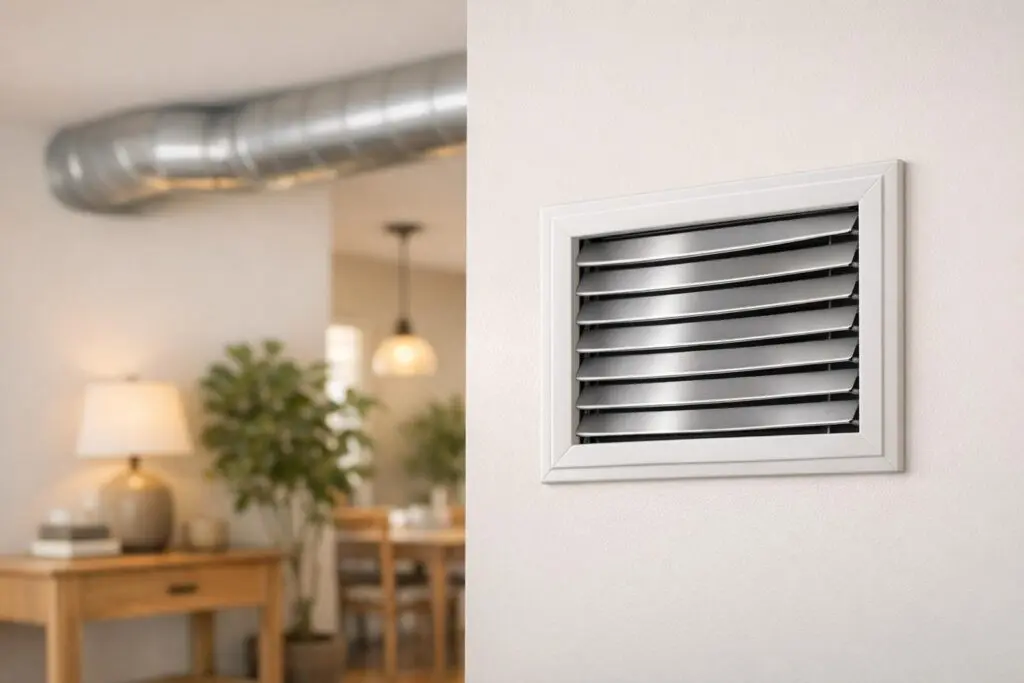
One of the first signs of trouble is visible dust buildup. If you notice bursts of dust blowing out of your supply vents when the HVAC system kicks on, it’s likely a sign of heavy buildup inside the ducts. These “dust storms” mean particles are being circulated throughout your home every time the system runs.
Take a flashlight and inspect the inside of your vents. If you see a thick layer of dust, it’s a clear signal that cleaning is overdue. Another clue? If your furniture and surfaces get dusty again soon after cleaning, your system might be recirculating particles from contaminated ducts.
"Ducts are clogged with excessive amounts of dust and debris and/or particles are actually released into the home from your supply registers." – U.S. Environmental Protection Agency (EPA)
Keep in mind that dusty return registers are normal since they pull in air, but clogged grates or particles blowing out of supply vents require immediate attention.
Musty Odors or Mold Smells
A musty smell when your system is running often points to moisture buildup and possibly mold inside the ducts. Because air ducts are dark, damp, and hard to clean, they can become a breeding ground for mold, especially in humid climates.
Look for signs like condensation around vent registers or moisture on nearby surfaces – these suggest that moisture has likely built up inside the ductwork. Bad odors could also mean a pest problem, as rodents or insects may leave droppings or carcasses in the system.
"Mold loves to grow in humid and damp, hard-to-reach places, like your air ducts." – Service Legends
Here’s a quick test: if the musty smell only occurs when your heating or cooling system is running, the odor is probably coming from your ducts.
Higher Energy Bills or Poor HVAC Performance
If your energy bills are climbing without explanation, clogged ducts might be the reason. Blockages force your HVAC system to work harder, which increases energy use. Over time, this extra strain can also shorten the lifespan of your system.
Pay attention to uneven room temperatures or weak airflow from vents – these could indicate debris or blockages restricting air movement through the ducts. If you’re changing HVAC filters more often than every 2–3 months because they’re clogging quickly, that’s another sign your ductwork may be full of debris.
sbb-itb-b5c10b1
Benefits of Regular Air Duct Cleaning
Keeping your air ducts clean offers several advantages, including improved air quality, lower energy bills, and a longer-lasting HVAC system. Let’s break down these benefits.
Better Indoor Air Quality
Clean air ducts mean cleaner air in your home or workplace. Professional duct cleaning removes contaminants like bacteria, dust mites, pet dander, pollen, and lint – all of which can trigger respiratory issues. Since HVAC systems circulate air 5 to 7 times a day, these particles can spread quickly if not addressed. Cleaning also tackles mold growth and musty odors, preventing spores from circulating through your space. This is especially important in commercial buildings, where higher occupancy levels can lead to faster accumulation of pollutants.
Lower Energy Costs
When your air ducts are clogged with dust and debris, your HVAC system has to work harder, using more energy and driving up your utility bills. As the National Air Duct Cleaners Association puts it:
"When an HVAC system is clean, it doesn’t have to work as hard to maintain the temperature you desire. As a result, less energy is used, leading to improved cost-effectiveness."
A clean system can boost efficiency by as much as 60%, and regular maintenance could cut your energy bills by 20% to 30%. Clearing out blockages allows your HVAC system to operate more smoothly and efficiently.
Longer HVAC System Life
Routine duct cleaning helps protect your HVAC system by reducing the strain on its components. Dust and debris buildup forces the system to work harder, putting extra stress on critical parts like motors, coils, and fans. Over time, this can lead to breakdowns and shorten the lifespan of your equipment. By keeping components like the blower wheel, evaporator coils, and heat exchangers free from dust, regular cleaning not only minimizes wear and tear but also helps your system last longer.
Eco Temp HVAC Air Duct Cleaning Services

Why Choose Eco Temp HVAC
Eco Temp HVAC provides expert air duct cleaning services across the Chicagoland area, delivered by certified technicians who follow strict guidelines set by the National Air Duct Cleaners Association (NADCA). Our approach ensures a deep clean for every part of your HVAC system, including supply and return ducts, heat exchangers, cooling coils, and fan motors. Before starting any work, we provide upfront, written pricing, with services typically ranging between $450 and $1,000. To ensure a safe and thorough cleaning, we use HEPA-filtered vacuums and specialized tools designed to remove debris without spreading contaminants.
We understand that every home or business is unique, so we tailor cleaning schedules to suit your needs. For instance, if you have pets, allergies, or have recently completed renovations, we might recommend cleaning every 2–3 years instead of the usual 3–5 years. For commercial properties, we adjust cleaning intervals based on specific industry requirements. For example, food manufacturing facilities may need quarterly cleanings to maintain compliance and hygiene. With 24/7 availability and a satisfaction guarantee, we’re always ready to assist, no matter when you need us.
Curious about how we deliver such thorough results? Let’s walk you through our process.
What to Expect from Our Service
Our air duct cleaning process typically takes 2 to 6 hours for most homes. We start with a detailed inspection to check for mold, pests, or hazardous materials, all while ensuring your floors and furnishings are protected during the process.
Using high-powered vacuums to create negative air pressure, our technicians remove contaminants from your ducts with tools like rotary brushes, air whips, and blowers. The cleaning covers every part of your system, including registers, grilles, diffusers, heat exchangers, cooling coils, condensate drain pans, and fan motors. Once the cleaning is complete, we seal and re-insulate any access points to restore airtightness, then test both heating and cooling modes to confirm everything is functioning properly.
For an added layer of cleanliness, we offer optional eco-friendly treatments to help reduce bacteria and odors. These treatments are only applied after a thorough mechanical cleaning to ensure maximum effectiveness.
Conclusion
Regular air duct cleaning isn’t just about keeping your home or workplace tidy – it’s about protecting your health, cutting down on energy costs, and ensuring your HVAC system runs smoothly for years to come. The ideal cleaning schedule depends on your living or working situation. For most homes, a cleaning every 3 to 5 years suffices. However, households with pets, smokers, or individuals with allergies may need cleaning every 2 to 3 years to maintain optimal air quality and system efficiency.
For commercial spaces, the timeline is usually 2 to 3 years, but high-traffic or sensitive environments like restaurants or healthcare facilities may require more frequent attention. Keep an eye out for warning signs like dust blowing from vents, musty smells, or unexplained spikes in energy bills. According to the U.S. Department of Energy, contaminants in HVAC systems can waste 25% to 40% of the energy used for heating or cooling. Routine cleaning not only tackles these issues but also enhances air quality, lowers energy consumption, and prolongs the lifespan of your HVAC equipment.
Don’t wait for your system to underperform or for problems to arise. Eco Temp HVAC’s NADCA-certified technicians are ready to assist homeowners and businesses across the Chicagoland area. With upfront pricing, round-the-clock availability, and a satisfaction guarantee, we’re here to handle everything from routine maintenance to more serious concerns like mold, pest issues, or post-renovation debris.
Breathe easier starting today. Reach out to Eco Temp HVAC to schedule your air duct inspection and cleaning service – because clean air and a reliable system are just a call away.
FAQs
What factors affect how often I should clean my air ducts?
The timing of air duct cleaning can vary based on several factors. These include how much dust and debris accumulate in your home, whether pets or smokers live there, if anyone has allergies, or if there’s been recent construction or remodeling. Other factors, like mold issues, exposure to wildfire smoke, high humidity, or living in a particularly dusty area, can also play a role.
For most homes, experts suggest inspecting and cleaning air ducts every 3 to 5 years. However, if you have pets, smokers, or allergy-prone individuals in the household, you might need to clean them more often to maintain good air quality and keep your HVAC system running smoothly.
What are the signs that my air ducts need cleaning sooner than usual?
If you spot dust or debris accumulating on your vent covers, detect musty smells, or find mold growth around your ducts, it’s probably time to have your air ducts cleaned – even if it hasn’t been the usual 3–5 years. Other red flags to watch for include weaker airflow, a spike in allergy or respiratory issues, or signs of pests like insects or rodents inside the ducts. Ignoring these problems can hurt both your indoor air quality and the efficiency of your HVAC system, so it’s best to tackle them quickly.
Why should I clean my air ducts more often if I have pets or allergies?
If you have pets or deal with allergies, keeping your air ducts clean can make a noticeable difference. Over time, things like pet dander, hair, and allergens such as dust and pollen can accumulate in your ductwork. Every time your HVAC system kicks on, it circulates these particles throughout your home.
Regular cleanings can help boost indoor air quality, making it easier to breathe and potentially easing allergy or asthma symptoms. Plus, it helps your HVAC system run more smoothly, which can save on energy bills and even extend the system’s lifespan. For households with pets or allergy sufferers, cleaning the ducts every 1–2 years is usually a good rule of thumb, though you may need to adjust depending on your situation.