Professional Furnace Installation Across Elgin, IL
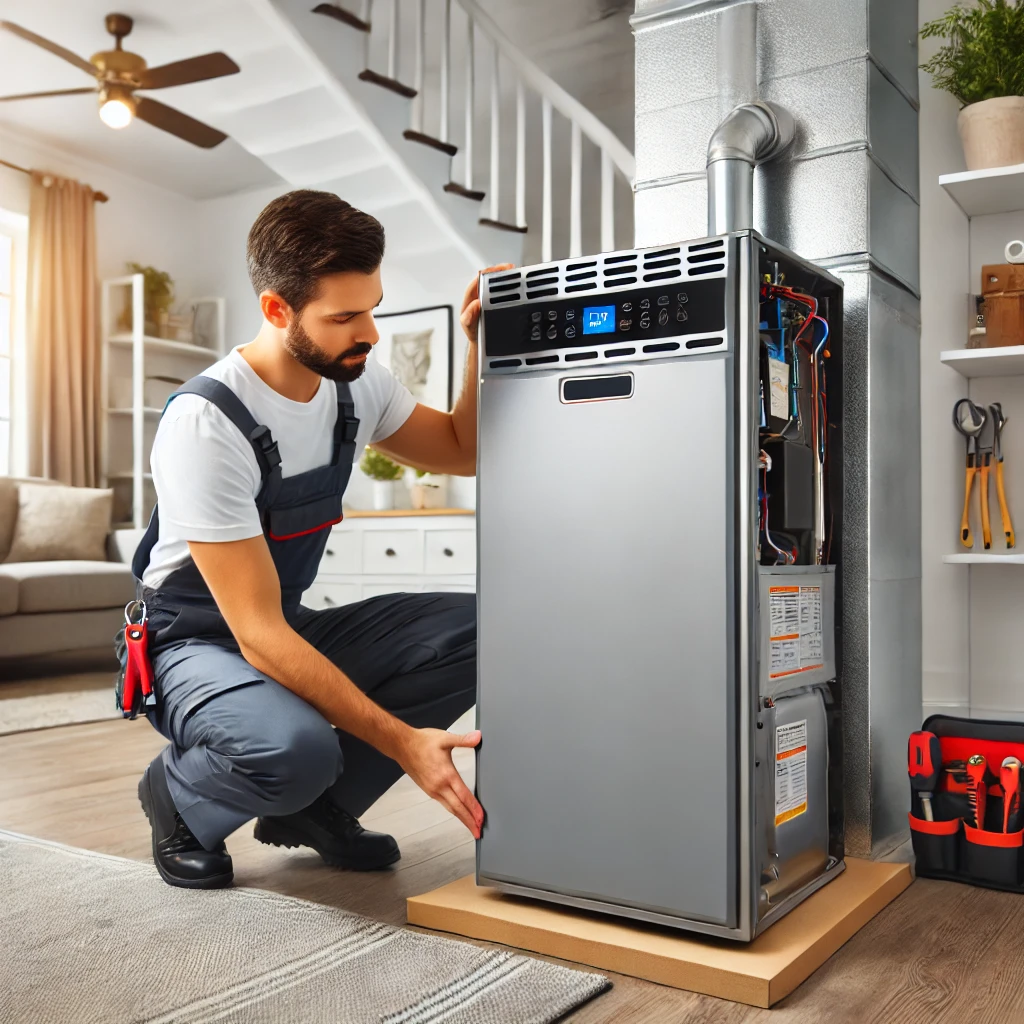
A furnace lasts 15-25 years — installation quality directly determines how reliable and efficient those years are. Eco Temp HVAC provides full-service furnace installation across Elgin, IL including Manual J load calculations, Kane County and Cook County permit handling, EPA-compliant disposal of your old furnace, post-installation system commissioning, and our complete workmanship warranty. We install every major brand including Trane, Bryant, Carrier, Lennox, American Standard, Rheem, and Goodman. Call (224) 253-8131 for a free in-home estimate, or book online.
What’s Included in Every Elgin Furnace Installation
- Free in-home consultation with Manual J load calculation — proper sizing based on your Elgin home’s square footage, insulation, window type, ceiling height, and orientation
- Multiple equipment tier options — value, mid-tier, and premium with side-by-side AFUE efficiency and cost comparison
- Written estimate with itemized parts, labor, permits, and disposal
- Removal and EPA-compliant disposal of your old furnace
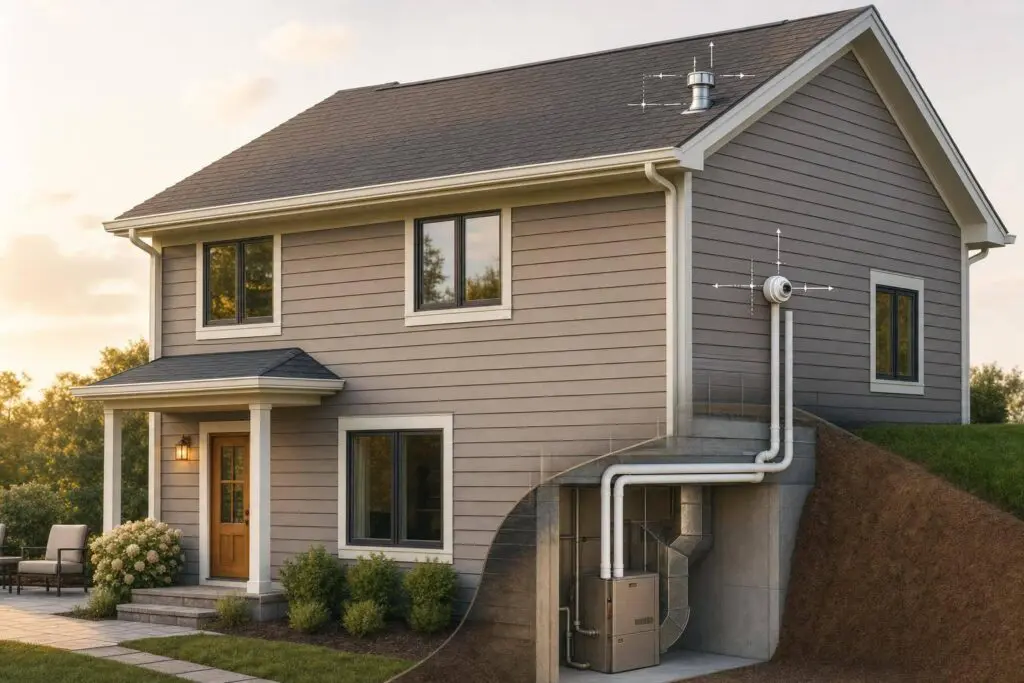
- New gas line, venting, and electrical work as required by code
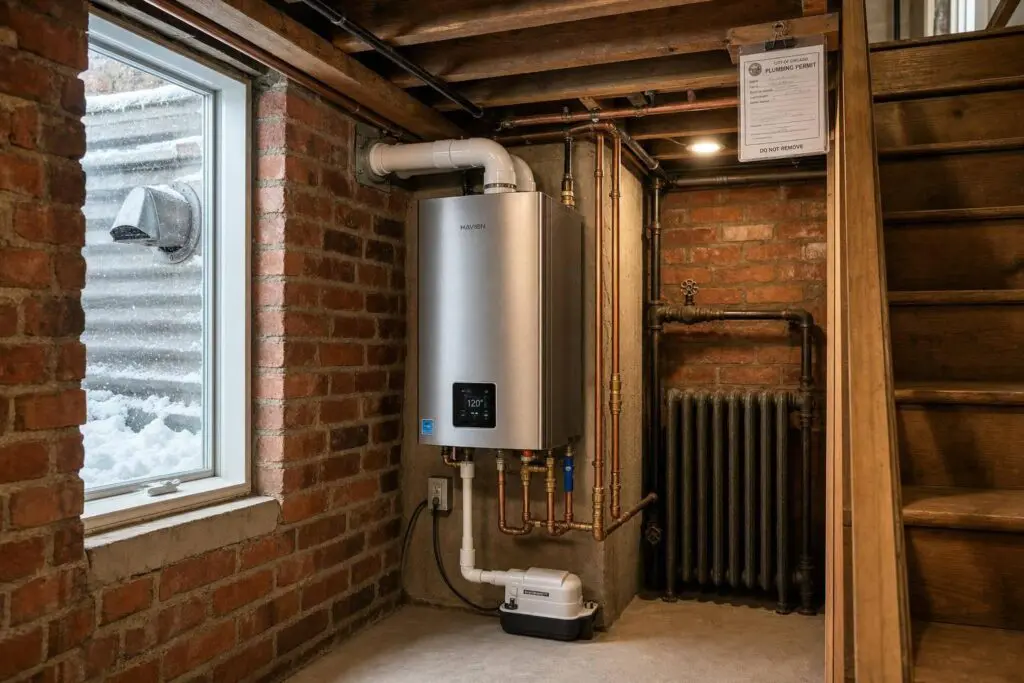
- Kane County or Cook County permit filing — we handle the paperwork, inspection scheduling, and final sign-off
- Post-installation system commissioning — combustion analysis, temperature differential measurement, gas pressure verification
- Manufacturer warranty registration
- Eco Temp HVAC workmanship warranty on installation labor
- Rebate paperwork submitted on your behalf — Nicor Gas rebates, ComEd rebates if applicable
Proper Furnace Sizing — Manual J Load Calculation
The single biggest mistake in furnace installation is improper sizing. Furnaces sized to your old equipment’s BTU rating rather than your home’s actual heat load are wrong roughly 70% of the time — usually oversized, which causes short-cycling, premature failure, uneven heating, and higher gas bills. We perform a full Manual J calculation on every Elgin installation, considering your home’s exact square footage, insulation R-values, window types and orientations, air infiltration rate, ceiling heights, and Elgin’s specific climate zone. The result is a furnace correctly sized to your home — typically 60,000-100,000 BTU for most Elgin single-family homes.
Furnace Installation Cost in Elgin, IL
- Standard 80% AFUE furnace installation: $3,500–$5,500
- High-efficiency 95%+ AFUE furnace installation: $4,500–$8,500
- Premium variable-speed modulating furnace: $7,500–$12,000
- Furnace + AC combined installation: $9,500–$18,000 (better value than separate installations)
- Gas line upgrade if needed: $500–$1,500
- Ductwork modifications: $500–$3,000 depending on extent
- Permit fees (Kane or Cook County): $150–$350 (included in install bid)
Nicor Gas rebates of $200-$800 typically apply to qualifying high-efficiency furnaces. Federal Inflation Reduction Act tax credits up to $600 apply to qualifying ENERGY STAR-certified furnaces. We handle all rebate paperwork.
The Elgin Furnace Installation Process
- In-home consultation and Manual J calculation — typically 60-90 minutes
- Written estimate with multiple equipment tier options
- Installation scheduling — typically within 1-2 weeks, faster for emergencies
- Installation day — 6-10 hours for a typical furnace replacement, longer for new ductwork or gas line work
- Permit inspection — Kane County or Cook County inspector visits to verify work
- System commissioning and homeowner walkthrough
- Rebate paperwork submission on your behalf
Best Time to Install a New Furnace in Elgin
The best time to install a new furnace in Elgin is late summer or early fall — September through October. Equipment availability is best, manufacturer rebates are typically strongest, scheduling is flexible, and the new system is ready before Elgin winter sets in. Winter emergency installations are also possible but typically cost more and have less equipment flexibility.
Brands We Install in Elgin Homes
We install premium tier (Trane, Carrier, Lennox, American Standard), mid-tier (Bryant, Rheem, Ruud, York), and value tier (Goodman, Amana, Payne) furnaces. During your in-home consultation we discuss the trade-offs of each — premium tier offers longer warranties and quieter operation, value tier offers similar efficiency at lower upfront cost. For brand-specific buying detail, see New Furnaces on our main heating page.
About Eco Temp HVAC in Elgin
NATE-certified, BBB A+ rated, Illinois Licensed (TGC119983). St. Charles GMB is 4 miles from Elgin with 71 reviews at 4.9 stars. See our complete Elgin HVAC service area page.
Schedule Your Free Elgin Furnace Installation Estimate
The best Elgin furnace installations start with a proper in-home consultation — not a phone quote based on your old equipment’s BTU rating. Our free in-home estimate includes Manual J load calculation, equipment options at multiple price tiers, side-by-side efficiency and cost comparison, and full rebate and tax credit analysis.
Three ways to schedule your estimate:
- Call to book the next available estimate slot: (224) 253-8131
- Book online at ecotemphvac.com/book-online
- Request quote with photos: text your existing furnace nameplate photo to the dispatch number for a preliminary range before scheduling
The estimate visit typically takes 60-90 minutes and includes:
- Walkthrough of your current heating system, ductwork, gas service, and electrical capacity
- Manual J load calculation factoring your home’s exact square footage, insulation, windows, ceiling heights, and Elgin Climate Zone 5A design temperature
- Discussion of 80% vs 95% AFUE options with payback analysis based on your actual Nicor Gas usage
- Equipment tier options — premium, mid-tier, and value — with side-by-side warranty, efficiency, and cost comparison
- Assessment of any required gas line upgrades, chimney/venting work, electrical service capacity, or ductwork modifications
- Kane County or Cook County permit cost (depending on your specific Elgin address)
- Identification of all eligible rebates and tax credits — Nicor Gas, ComEd, federal Inflation Reduction Act, Illinois Home Energy Rebate Programs
- Financing options if desired, including 0% promotional plans on qualifying systems
You’ll receive a written estimate before our installer leaves your home. No high-pressure sales tactics, no “today-only” pricing nonsense — just a clear, itemized quote you can review at your own pace.
If you’re replacing during an emergency (failed furnace, no heat in winter), call the dispatch number directly — we can typically schedule emergency furnace installations within 24-48 hours and provide temporary heating arrangements if needed during the install window.
Illinois License TGC119983, BBB A+ rated, NATE-certified, factory-trained on all major brands.