
Your mini-split system can last 15–20 years with proper care, but neglecting maintenance can shorten its lifespan and increase energy costs compared to ductless mini split vs. traditional central HVAC systems. Here’s how to keep it running efficiently:
- Year-Round Tasks: Clean air filters every 2–4 weeks, clear debris around outdoor units, and inspect for unusual sounds or odors.
- Spring: Prep for cooling by cleaning the outdoor unit, testing the system, and clearing the condensate drain line.
- Summer: Check filters frequently, ensure drain lines stay clear, and monitor for frost or ice on coils.
- Fall: Remove debris, test heating mode, and inspect refrigerant line insulation.
- Winter: Clear snow and ice from the outdoor unit and keep vents unobstructed indoors.
Pair these DIY steps with professional tune-ups twice a year – spring and fall. Professionals handle tasks like refrigerant checks, coil cleaning, and electrical inspections, ensuring your system stays efficient and avoids costly repairs. Pro maintenance costs range from $150 to $500 but can extend the system’s life significantly.
Staying consistent with maintenance saves money, improves performance, and prevents unexpected breakdowns.
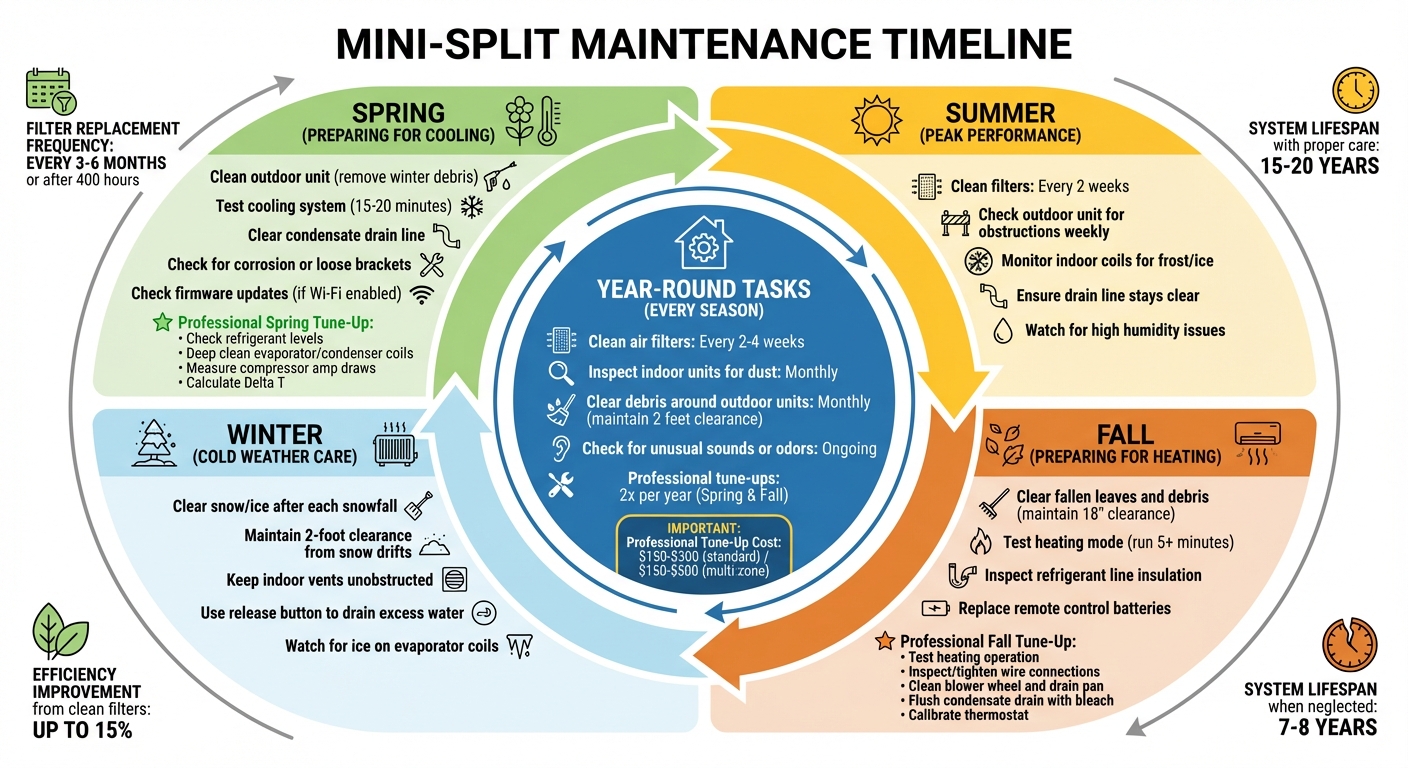
Mini-Split Maintenance Schedule: Year-Round and Seasonal Tasks
Mini Split Maintenance – The Only Guide You Need [Checklist]
sbb-itb-b5c10b1
Year-Round Maintenance Tasks
Some maintenance tasks are essential no matter the season. These steps ensure your mini-split operates efficiently year-round and help sidestep larger, more expensive problems down the line. A good place to start? The air filters, which play a key role in keeping your system running smoothly.
Clean or Replace Air Filters
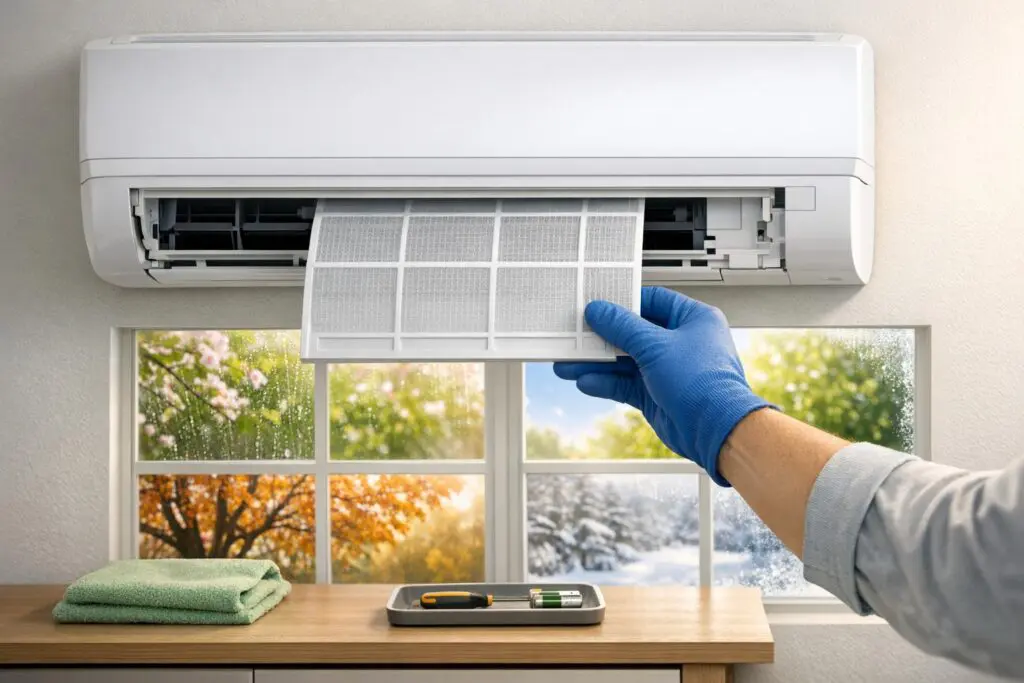
Air filters deserve regular attention, especially during peak heating and cooling months. Aim to clean or replace them every 2 to 4 weeks during these times. If you have pets, allergies, or live in a high-pollen area, check them even more frequently. Most mini-splits come with reusable mesh filters that can be rinsed with warm water and mild soap. Just make sure they’re completely dry before putting them back to avoid mold growth. Some systems also use disposable pleated filters, which typically need replacing every 3 to 6 months or after about 400 hours of use. Keeping filters clean can improve system efficiency by up to 15%.
Before removing filters, turn off the power at both the thermostat and the breaker. A quick visual inspection every two weeks for dust buildup can help you stay ahead of potential issues.
Inspect Indoor Units for Dust
Dust doesn’t just settle on furniture – it can also collect on your indoor units. Once a month, wipe down the exterior with a damp microfiber cloth and use a soft brush to clean the louvers. For the interior, a vacuum with a soft-bristled brush attachment can gently remove dust from the evaporator fins without bending them. Always turn off the unit at the thermostat and breaker before cleaning. Avoid using a pressure washer on indoor components, as the delicate fins can easily be damaged.
Clear Debris Around Outdoor Units
Your outdoor unit needs breathing room to function properly. Keep at least 2 feet of clearance around it, and check monthly for leaves, grass clippings, or weeds that might be blocking airflow. Restricted airflow forces the system to work harder, which can shorten its lifespan.
"Your outdoor condenser needs room to breathe to effectively release heat."
– Travis Baugh, Digital Brand Marketing Manager, Bryant
Every 3–6 months, rinse the coils and fins with a low-pressure garden hose. Steer clear of pressure washers, as they can harm the aluminum fins. Trim back any shrubs or bushes that might encroach on the unit’s vents.
Check for Unusual Sounds or Odors
Pay attention to any new or unusual sounds, like rattling, grinding, or squealing, as these could point to emerging issues. A musty odor might indicate mold growth on the blower wheel or in the drain pan. Catching these warning signs early can save you from costly repairs down the road.
Seasonal Maintenance Checklists
In addition to year-round upkeep, seasonal maintenance tackles weather-specific challenges. These tasks work alongside your regular efforts to keep your system running smoothly, no matter the time of year.
Spring: Preparing for Cooling Season
As temperatures start to rise, it’s time to get your system ready for cooling. Begin by cleaning the outdoor unit – vacuum away any winter debris like leaves, dirt, or twigs. Check for corrosion or loose brackets that might have developed over the colder months. Test your cooling system by setting the thermostat 5–9°F below the current room temperature and running it for 15–20 minutes. Pay attention to airflow consistency and listen for unusual noises. Also, ensure the condensate drain line is clear. If your mini-split system has Wi-Fi capabilities, check for firmware updates that could improve efficiency.
Once your system is prepped for cooling, you’ll be set for the demands of summer.
Summer: Maintaining Peak Performance
During the heat of summer, your system works overtime. This means filters may need cleaning or replacement as often as every two weeks. Regularly check the outdoor unit for obstructions like grass clippings or weeds that could block airflow. Keep an eye on the indoor coils for frost or ice buildup – this could signal airflow issues or low refrigerant levels, which might require professional attention. With summer’s high humidity, it’s also crucial to ensure the drain line stays clear to prevent water damage.
As summer winds down, it’s time to get ready for the cooler months ahead.
Fall: Preparing for Heating Season
When fall arrives, clear any fallen leaves or debris from around the outdoor unit, maintaining at least 18 inches of clearance. Before the first cold snap, switch your system to heating mode and let it run for at least five minutes to ensure it reaches the desired temperature without any unusual sounds. Inspect the insulation on your refrigerant lines for cracks or wear, and replace the batteries in your remote control to ensure accurate temperature settings.
With these steps, your system will be ready for the winter chill.
Winter: Cold Weather Maintenance
Snow and ice are the main concerns for your outdoor unit during winter. After each snowfall, clear snow and ice from the unit to maintain proper airflow and prevent damage to the fan blades. Keep a two-foot area around the unit free of snow drifts. Indoors, check that furniture, curtains, or holiday decorations aren’t blocking the vents, as this can impact heating performance. If you notice ice on the indoor evaporator coils or detect a musty smell, it’s time to call a professional. Lastly, use the release button on your outdoor unit as needed to drain excess water and avoid freezing issues.
Professional Maintenance and Tune-Ups
Taking care of your ductless mini-split system goes beyond the occasional DIY cleaning. To keep it running at its best, professional tune-ups are a must. While your regular maintenance helps with day-to-day performance, scheduling professional service twice a year ensures your system is fully prepared for the demands of each season. Experts recommend setting up one visit in spring before the cooling season and another in fall before the heating season.
These tune-ups not only improve efficiency but can also significantly extend the life of your system. A well-maintained mini-split can last 15–20 years, compared to just 7–8 years for neglected units. On average, a standard tune-up costs between $150 and $300, while servicing more complex multi-zone systems may range from $150 to $500, depending on the scope of work. These professional services go beyond your seasonal checklists, addressing hidden issues and fine-tuning performance for optimal results.
Spring Tune-Up Tasks
Spring tune-ups are all about getting your system ready for cooling. During this visit, technicians focus on tasks like:
- Checking refrigerant levels and inspecting lines for leaks.
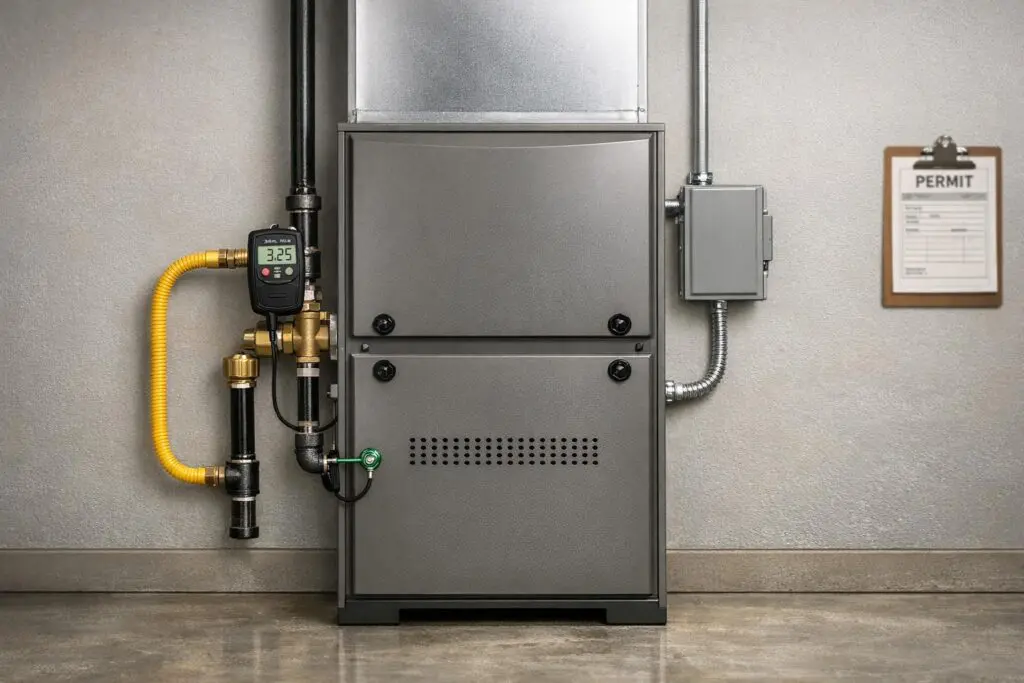
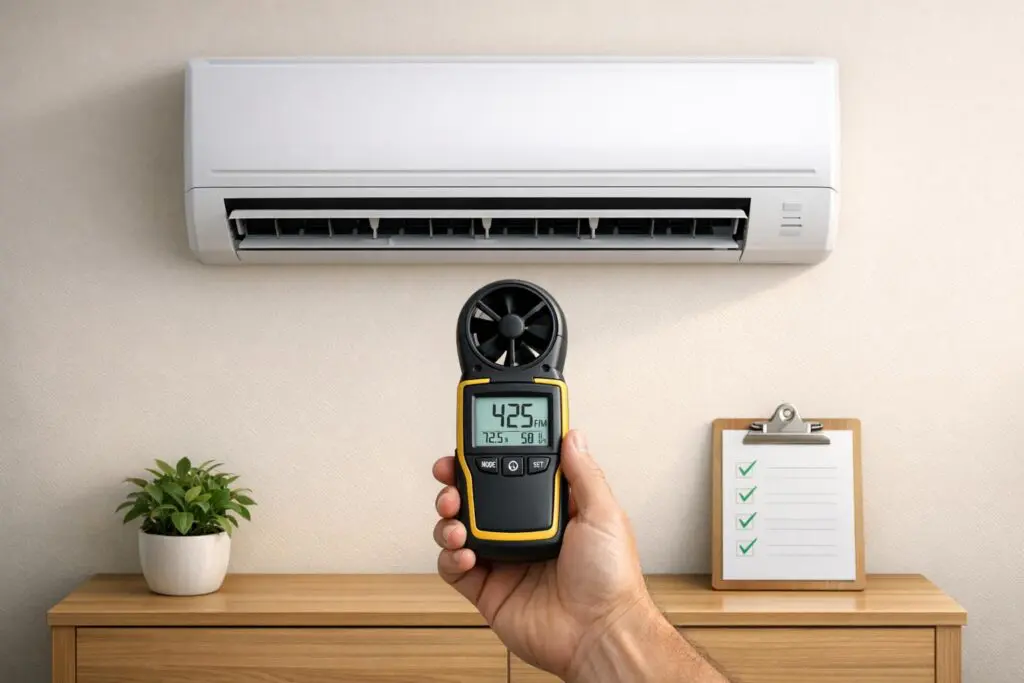
- Measuring suction pressure, superheat, and discharge air temperature, while performing tactile checks on the suction line to confirm proper refrigerant flow.
- Deep cleaning evaporator and condenser coils to support efficient heat exchange.
In addition to these cooling-specific steps, technicians also measure compressor and blower amp draws, check applied voltage, and calculate Delta T (the temperature difference between supply and return air) to ensure your system is operating at its rated efficiency. Brian Redmond, Owner of Redmond’s Complete Comfort, emphasizes the importance of these inspections:
"We encourage homeowners to get a precision inspection where the dealer verifies refrigerant temperatures, air temperatures, voltages, amp draws, and the tightness of wire connections."
Fall Tune-Up Tasks
As fall rolls in, the focus shifts to preparing your system for heating and ensuring safety. During these visits, technicians:
- Test heating mode operation to confirm consistent temperature output.
- Inspect and tighten wire connections, test voltages, and check capacitors for signs of wear.
Once electrical safety is verified, they clean and balance the blower and fan wheel to improve airflow. This deep cleaning is especially critical. As Redmond points out:
"The blower wheel should be pulled and cleaned at least once a year, and the drain pan needs to be cleaned and treated to prevent bacteria or mold."
Technicians also sanitize components using specialized solutions, flush the condensate drain line with bleach, inspect mounting hardware and brackets, check for wire or tubing rubouts, lubricate moving parts, and calibrate the thermostat for accurate temperature control.
For those in the Chicagoland area, Eco Temp HVAC offers certified technicians who can help ensure your mini-split system stays in top shape year-round.
Conclusion
The checklist above highlights key DIY tasks and professional maintenance steps to keep your mini-split system running smoothly throughout the year. By staying on top of maintenance, you can protect your system, improve its efficiency, and lower energy bills.
Pair regular DIY care – like monthly filter cleaning and checking the outdoor unit – with professional tune-ups twice a year. These professional visits include detailed services like coil cleaning, refrigerant checks, and electrical inspections, which help identify and address potential issues before they turn into expensive repairs.
If you’re in the Chicagoland area, Eco Temp HVAC offers expert service as a Mitsubishi Diamond Elite Contractor. Their factory-trained technicians ensure your system is installed and maintained to the highest standards, with the added benefit of a 12-year warranty for peace of mind.
Taking a consistent approach to maintenance not only boosts performance but also helps you save money in the long run.
FAQs
How do I know my mini-split needs professional service?
If your mini-split starts acting up, it might be time to call in a professional. Some warning signs include strange noises like buzzing, rattling, or hissing. You might also notice reduced heating or cooling performance, water leaks, ice forming on the unit, or the system constantly turning on and off. Other potential red flags are refrigerant leaks, electrical problems, or the system struggling to keep your space at the right temperature. When these issues pop up, reaching out to a licensed HVAC technician is the best way to get an accurate diagnosis and proper repair.
What should I do if I see ice on the coils?
If you spot ice on your mini-split’s coils, the first thing to do is shut off the unit to avoid any potential damage. Once it’s off, make sure to clear the surrounding area, as melting ice can lead to water leakage. To prevent this from happening again, make it a habit to clean the filters and coils regularly. Keeping up with routine maintenance is crucial for keeping your mini-split running smoothly throughout the year.
How often should I clean the condensate drain line?
It’s a good idea to clean the condensate drain line at least once a year. This helps prevent clogs and keeps the drainage working smoothly. If you use your mini-split system a lot or spot issues like water pooling or slower drainage, you might want to check and clean it more often.