

Mold in air ducts is a serious issue that can harm your health and reduce HVAC efficiency. This guide explains how to prevent mold by controlling moisture, maintaining your HVAC system, and identifying signs of mold early. Key steps include:
- Control humidity: Keep indoor humidity between 30–50% to stop mold growth.
- Regular maintenance: Replace air filters every 1–3 months and clean cooling coils annually.
- Fix moisture issues: Address leaks, standing water in drain pans, and condensation on ducts immediately.
- Inspect for mold: Look for musty odors, visible discoloration near vents, or health symptoms that worsen indoors.
- Professional help: Call experts if mold recurs, odors persist, or moisture problems remain unresolved.
Advanced solutions like UV-C lights, high-efficiency filters, and whole-home dehumidifiers can provide added protection, especially in humid climates. Regular inspections by certified HVAC professionals ensure long-term mold prevention and better air quality.
MOLD in HVAC System or Ductwork!
sbb-itb-b5c10b1
How to Identify Mold in Air Ducts
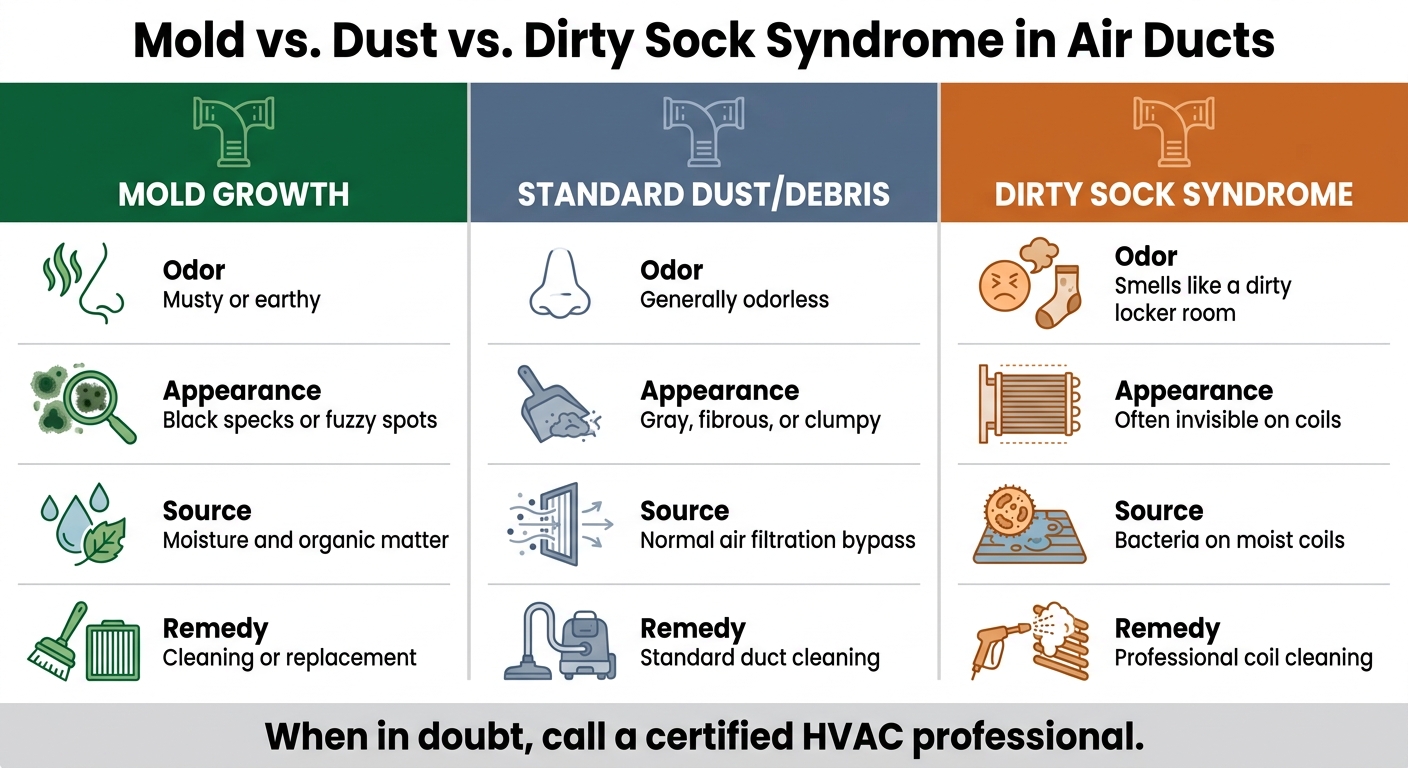
Mold vs. Dust vs. Dirty Sock Syndrome in Air Ducts
Spotting mold early in your HVAC system is crucial to avoid expensive repairs and potential health problems. Since most ductwork is tucked away behind walls, ceilings, or crawl spaces, you’ll often need to rely on indirect signs to catch mold before it becomes a bigger issue.
Common Signs of Mold in HVAC Systems
One of the clearest signs of mold is a persistent musty smell when your HVAC system is running. If the odor fades when the system is off, it’s a strong clue the source might be inside the ducts or air handler.
Another red flag is visible discoloration near vents. Look out for black specks, fuzzy patches, or streaks – these could indicate mold growing inside the system.
Health symptoms can also offer clues. If anyone in your household experiences sneezing, itchy eyes, coughing, or worsened asthma while indoors – and those symptoms improve when they leave the building – your air ducts might be spreading mold spores.
For a quick check, remove a vent cover and shine a flashlight into the duct. Look for fuzzy textures, dark stains, or unusual buildup along the interior walls. This simple test can help you identify mold on the surface.
You might also encounter something called Dirty Sock Syndrome. This occurs when bacteria grow on moist coils, creating a sweaty, locker room-like smell.
Here’s a quick comparison to help you differentiate between mold, standard dust, and Dirty Sock Syndrome:
| Feature | Mold Growth | Standard Dust/Debris | Dirty Sock Syndrome |
|---|---|---|---|
| Odor | Musty or earthy | Generally odorless | Smells like a dirty locker room |
| Appearance | Black specks or fuzzy spots | Gray, fibrous, or clumpy | Often invisible on coils |
| Source | Moisture and organic matter | Normal air filtration bypass | Bacteria on moist coils |
| Remedy | Cleaning or replacement | Standard duct cleaning | Professional coil cleaning |
If these issues persist even after basic cleaning, it’s time to bring in professional duct cleaners.
When to Call a Professional for Inspection
Certain situations require expert help. If you notice recurring mold, persistent musty odors, or unexplained health issues, it’s best to call in a professional.
HVAC professionals use specialized cameras to inspect deep within ductwork – areas you can’t easily access. This is especially important for fiberglass duct boards or flexible ducting, which are porous and often need to be replaced if contaminated.
Other signs that warrant professional attention include standing water or slime in the drain pan, evidence of rodents or insects in the ducts, and ongoing moisture problems near vents or the air handler. Experts generally recommend a professional duct inspection every 3 to 5 years. However, if you live in a humid climate or an older home, annual inspections might be more appropriate.
If mold remediation is necessary, costs typically range from $700 to $3,000.
Core Mold Prevention Strategies
Once you understand what mold looks like and when to seek professional help, the next step is to focus on prevention. The good news? Most mold issues in air ducts can be avoided with consistent, practical steps.
Controlling Moisture and Humidity
Since moisture is the main culprit behind mold growth in ductwork, managing it is critical. The US EPA emphasizes this point:
"Controlling moisture is the most effective way to prevent biological growth in air ducts."
Aim to keep indoor relative humidity between 30% and 50%. Sticking to this range is more important than many people realize.
Two often-overlooked sources of moisture are duct leaks and condensation. To address leaks, use mastic sealant or professional-grade metal tape instead of standard duct tape, which tends to degrade over time. Insulating ducts in unconditioned spaces like attics or crawl spaces can also help prevent condensation caused by temperature changes.
Check your condensate drain pan regularly to ensure it’s properly sloped and free of standing water. If you notice pooling, deal with it immediately to avoid creating an environment where mold can thrive. Another key point: oversized AC units may seem appealing, but they can cycle on and off too often, leading to poor moisture removal – especially in humid climates. Choosing the right-sized equipment is essential for both comfort and moisture control.
Regular HVAC Maintenance
Routine maintenance is another powerful tool for preventing mold. Start by replacing air filters every one to three months. Dirty filters can restrict airflow and push moisture into areas it shouldn’t reach.
Schedule a yearly HVAC tune-up to clean cooling coils and inspect the condensate drain pan – two common trouble spots for mold. If you use a fuel-burning furnace, make sure to have it serviced before the heating season begins. Regular professional duct inspections are also smart, especially if you live in an older home or a particularly humid area. Staying on top of these tasks helps create an environment where mold struggles to take hold.
Air Duct Cleaning and Surface Treatments
In addition to moisture control and routine maintenance, targeted cleaning and treatments offer another layer of protection. Air ducts should only be cleaned when you notice visible mold, pest infestations, or a significant buildup of debris.
After cleaning, professionals may apply EPA-registered chemical biocides to bare sheet metal ducts or use encapsulant sealants to coat interior surfaces. These treatments can help prevent particles from becoming airborne. However, it’s important to note that no EPA-registered biocides are approved for porous materials like fiberglass duct liners. If those materials develop mold, they need to be completely removed and replaced.
While surface treatments can be helpful, they’re not a substitute for addressing the root cause: moisture. Use them only after the system has been thoroughly cleaned, and ensure any product applied is specifically EPA-registered for HVAC use.
Advanced Mold Prevention Solutions
When basic maintenance and moisture control aren’t cutting it – especially in areas with high humidity or larger commercial buildings – it’s time to consider advanced methods. These solutions go beyond the basics, offering extra protection against mold in more challenging environments. Below are some advanced strategies that work alongside routine maintenance to help reduce mold risks even further.
UV-C light installation for mold control
UV-C germicidal lights operate at a wavelength of 253.7nm, effectively disrupting the DNA of microorganisms to stop them from reproducing. A study from the University of Michigan Medical Center showed a 15.62% improvement in heat transfer efficiency just seven weeks after UV-C lights were installed. These lights should be placed in direct line-of-sight with the evaporator coil and run continuously to create a constant germicidal environment.
It’s important to note that while UV-C lights kill biological growth on surfaces like coils and drain pans, they don’t remove dust, dirt, or pet dander. This means proper filtration and regular duct cleaning are still necessary. Additionally, UV-C light can cause plastic or rubber components nearby to become brittle, so shielding these materials with aluminum foil or tape is recommended. Pairing UV-C systems with upgraded filtration provides a more comprehensive solution, as filters can trap particles UV-C light alone cannot handle.
High-Efficiency Filters and Air Cleaning Systems
Standard fiberglass filters often let mold spores slip through, making higher-efficiency filters a better choice. HEPA filters, for instance, capture 99.97% of particles as small as 0.3 microns, which includes most microscopic mold spores. Upgrading to thicker filters, such as 5-inch models, can further improve particle capture. Some filters also incorporate activated carbon layers to neutralize musty odors – a common sign of mold.
Washable filters, however, should be avoided. They can hold moisture, creating an ideal environment for mold growth inside the ductwork. To keep filters effective, inspect them monthly to ensure they remain dry and functional.
Whole-Home and Commercial Dehumidification
Dehumidification systems play a crucial role in mold prevention by reducing indoor moisture levels. Ideally, indoor relative humidity should stay below 60%, with the optimal range being 30–50%.
In commercial spaces like medical clinics, gyms, or retail stores, integrated dehumidifiers connected to the HVAC system are far more effective than standalone units. These systems control moisture throughout the entire duct network, rather than just individual rooms. To ensure these systems work efficiently, keep drain lines clear and drip pans functioning properly, as poor drainage can undermine their effectiveness.
Working with HVAC Professionals for Mold Prevention
High-tech tools like UV-C lights and whole-home dehumidifiers are only as effective as the expertise behind their installation. That’s why partnering with a certified HVAC technician is essential for proper setup and maintenance.
How HVAC Professionals Help Prevent Mold
Certified HVAC specialists play a key role in addressing the conditions that encourage mold, such as excess moisture, poor ventilation, and unbalanced temperatures. A NADCA Certified HVAC Inspector goes beyond surface cleaning – they focus on identifying and resolving the root causes that allow mold to thrive.
"The informed diagnosis by a NADCA Certified HVAC Inspector is crucial to resolving indoor air quality and climate issues, ensuring that problems don’t persist." – EnviroAir Systems
Proper containment is critical when dealing with mold. Without it, disturbing mold colonies can release spores, leading to further contamination and health risks. Always confirm that your technician holds NADCA certification and adheres to strict containment protocols. Many reputable providers also offer third-party clearance testing after completing a job, giving you independent assurance that your system meets health and safety standards.
This thorough process ensures that HVAC professionals not only address mold problems but also implement measures to prevent future issues.
Eco Temp HVAC‘s Approach to Mold Prevention

Eco Temp HVAC operates with a commitment to professional excellence, offering comprehensive solutions to keep your air ducts mold-free. Their services include air duct cleaning, indoor air quality evaluations, and preventative HVAC maintenance tailored to both homes and businesses.
Available 24/7, Eco Temp HVAC’s certified technicians are ready to tackle moisture and air quality concerns whenever they arise. Serving areas like Chicago, St. Charles, Bartlett, Lemont, Downers Grove, and Palatine, they provide fast, reliable assistance across the region. Whether you need a routine inspection, a deep duct cleaning, or expert advice on upgrading to a more mold-resistant HVAC system, their team is equipped to evaluate your needs and recommend effective solutions for your space.
Key Takeaways for Mold Prevention
Keeping moisture under control is the cornerstone of preventing mold growth. Without addressing this key factor, even the best HVAC maintenance efforts can fall short.
"If the conditions causing the mold growth in the first place are not corrected, mold growth will recur." – US EPA
Regular HVAC upkeep plays a significant role in managing these conditions. Tasks like replacing filters regularly, cleaning cooling coils, insulating ductwork in unconditioned spaces (like attics and crawl spaces), and ensuring your system is properly sized all contribute to reducing mold risks. For instance, an oversized HVAC unit that short-cycles may fail to remove humidity effectively, leaving behind the moisture mold thrives on.
When moisture issues arise, acting quickly is critical. Mold can start growing in as little as 24 to 48 hours after moisture becomes present. This makes prompt professional action essential – waiting too long can allow the problem to escalate.
"Well-maintained systems regulate airflow and moisture more effectively, reducing the risk of mold development." – ServiceMaster Restore
There isn’t a single tool or method that guarantees complete mold protection. Options like UV-C lights, high-efficiency filters, and whole-home dehumidifiers can all help, but they’re most effective when combined with consistent maintenance. Regular inspections by certified professionals, such as the team at Eco Temp HVAC, add another layer of assurance, ensuring your system performs at its best. Together, these steps form a comprehensive strategy to keep mold at bay.
FAQs
Can mold in ducts spread to other parts of my home?
Mold in air ducts has the potential to release spores that travel through your forced-air system. As the air circulates, these spores can spread to various parts of your home, potentially lowering indoor air quality and posing health risks. To minimize this problem, regular cleaning and upkeep of your HVAC system are essential.
Will a higher-MERV filter restrict airflow in my HVAC system?
Yes, using a higher-MERV filter can reduce airflow in your HVAC system. This can cause problems such as frozen coils, short cycling, or higher energy use, particularly if your system isn’t built to manage the extra resistance. Always check that the filter is compatible with your system before making an upgrade.
Are UV-C lights worth it if I already control humidity?
UV-C lights are definitely worth considering. They play a key role in preventing mold growth on evaporator coils and duct surfaces, which directly contributes to better indoor air quality. Even if you’re already managing humidity levels effectively, UV-C lights offer an extra layer of defense to help keep your HVAC system cleaner and running more efficiently.