
HEPA filters are designed to remove 99.97% of airborne particles as small as 0.3 microns, making them far more effective than standard HVAC filters. These filters improve air quality by trapping dust, pollen, mold, bacteria, and other microscopic particles. However, they also create higher airflow resistance, which can strain HVAC systems if not properly integrated. Here’s a quick breakdown:
- Efficiency: HEPA filters outperform standard filters like MERV 13 or 16, especially at capturing tiny particles.
- Airflow Impact: They increase pressure drop (0.5–1.5 inches WC), requiring HVAC systems to be adjusted for compatibility.
- Installation Options: Common setups include bypass systems (residential) and inline systems (commercial).
- Maintenance: Lifespan ranges from 1–5 years; pre-filters can help extend their use. Proper sealing is critical to avoid air leaks.
HEPA filters are ideal for homes with allergies, asthma, or respiratory concerns but need careful planning to avoid damaging your HVAC system. Costs for installation range from $419 to $4,962, with ongoing maintenance required. Always consult a professional HVAC service to ensure your system is equipped to handle the added demands.
How HEPA Filters Work
HEPA Filter Structure and Materials
HEPA filters are made from a pleated, dense mat of fibers arranged randomly. This pleating increases the surface area available for trapping particles without making the filter itself bulkier. As air flows through, these fibers create more opportunities to catch contaminants.
The fibers used in HEPA filters typically range from 0.5 to 2.0 micrometers in diameter. Common materials include fiberglass (borosilicate glass) and synthetic options like polypropylene (PP) or PTFE. Fiberglass provides the highest efficiency but can restrict airflow more, while synthetic fibers strike a balance between performance and airflow resistance.
"HEPA air filters are nothing fancy. They were invented back in the 1940s… and they’re just a mat of randomly aligned fibers, made from either glass or synthetic materials." – Paddy Robertson, Smart Air
These materials and their arrangement enable the filter to effectively capture particles using three main mechanisms.
3 Filtration Mechanisms
The structure of a HEPA filter supports three processes that trap particles:
- Inertial Impaction: Larger particles (over 1.0 micron) can’t follow the curved airflow around the fibers due to their momentum, so they collide with the fibers and get trapped.
- Interception: Medium-sized particles follow the airflow but, if they come close enough to a fiber (within one particle-radius), they stick to it.
- Diffusion: Tiny particles (smaller than 0.1 microns) move erratically due to Brownian motion, increasing the likelihood of colliding with a fiber.
HEPA filters are particularly efficient at removing particles outside the tricky 0.3-micron size range, which is the hardest to capture. They can remove over 99.97% of particles larger or smaller than this critical size.
How Air Moves Through a HEPA Filter in an HVAC System
In HVAC systems, air passes through several stages to maximize the performance of HEPA filters. First, the air is drawn into return ducts and goes through a pre-filter, usually rated around MERV 11. This pre-filter catches larger debris like hair, lint, and coarse dust, preventing the HEPA filter from clogging too quickly. This step not only extends the life of the HEPA filter but also improves overall air quality with advanced air cleaners.
Once pre-filtered, the air moves into the dense HEPA filter media, where impaction, interception, and diffusion work together to capture microscopic particles. The cleaned air is then distributed back into the building via supply ducts.
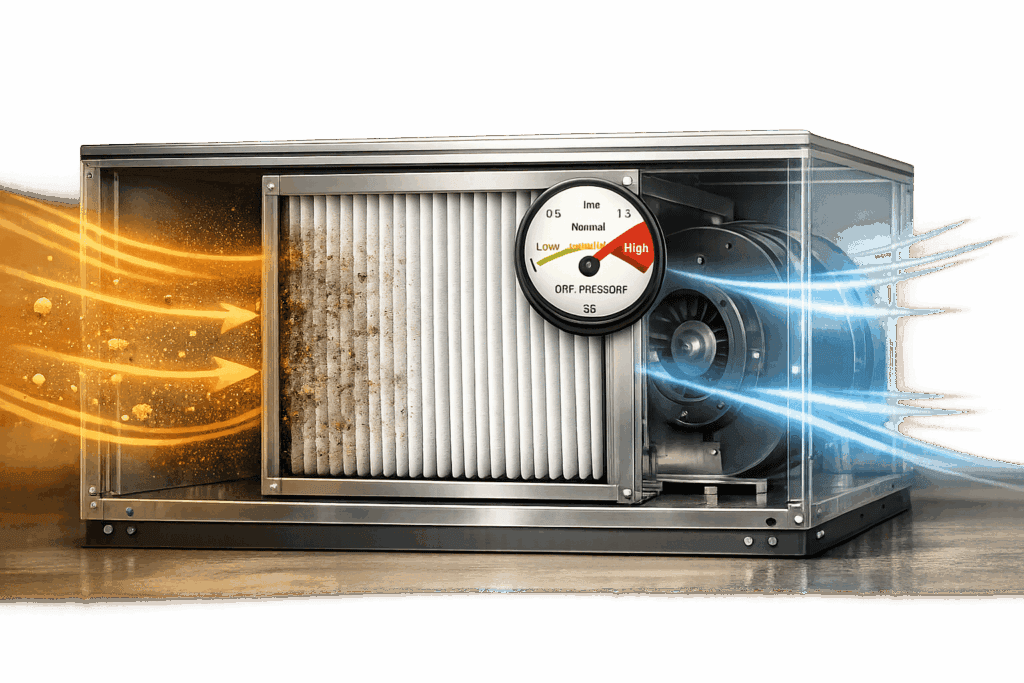
Since HEPA filters create significant airflow resistance – ranging from 0.5 to 1.5 inches water column – many HVAC systems use a bypass configuration. This setup directs only part of the airflow through the HEPA filter at a time, preventing the blower motor from being overworked.
sbb-itb-b5c10b1
Integrating HEPA Filters with HVAC Systems
Common Integration Configurations
HEPA filters, known for their high airflow resistance, require specialized methods for integration rather than simply replacing standard filters. The best approach depends on your building type and air quality goals. Here’s a quick breakdown of common configurations:
| Configuration | Best For | Airflow Impact |
|---|---|---|
| Bypass HEPA System | Residential / Light Commercial | Low – uses its own dedicated blower |
| Inline HEPA Housing | Purpose-built Commercial | High – requires fan and duct reinforcement |
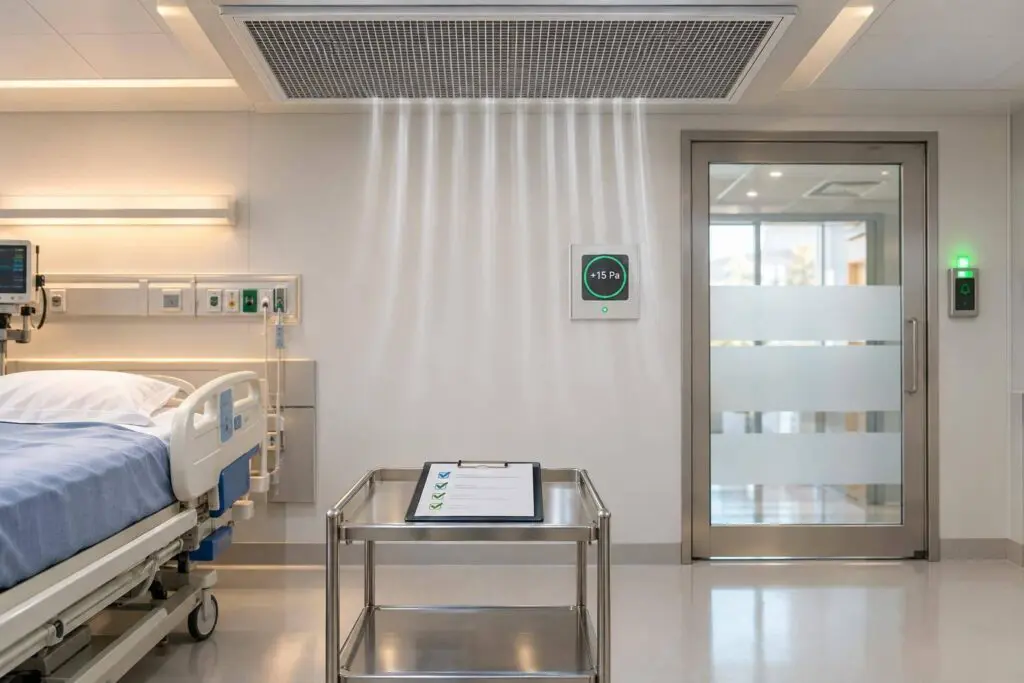
| Terminal HEPA Filtration | Hospitals / Cleanrooms | Managed at point of delivery |
| Portable HEPA Air Cleaner | Single rooms / Supplemental use | None – operates independently of HVAC |
A bypass system is often the go-to for residential and light commercial use. It works by pulling a portion of air from the return duct, filtering it through a HEPA unit with its own dedicated fan, and then reintroducing the filtered air into the main ductwork. This setup minimizes strain on the HVAC system’s main blower while maintaining effective filtration.
For commercial setups, inline HEPA systems are installed directly in the main airflow path. However, this approach only works in systems designed to handle the added resistance, such as those with reinforced ducts and high-capacity fans.
Regardless of the configuration, proper installation is key to achieving the desired air quality.
Installation Considerations
To get the most out of a HEPA filter, installation must be done with care. The most critical factor? Airtight sealing. Any gaps in the filter housing allow air to bypass the filter media, rendering the system ineffective.
"Placing [a HEPA filter] in a standard residential furnace or air handler causes a massive increase in static pressure… The resistance can burn out your system’s fan (blower) motor or cause the heat exchanger to overheat." – Meyer Heating & Air
Most residential HVAC systems are not designed to handle the high static pressure of HEPA filters, which can range from 0.5 to 1.5 inches WC. Standard air handlers typically operate below 0.5 inches WC, making a dedicated bypass fan essential for residential installations.
Beyond airtight seals, system compatibility must be carefully assessed to prevent performance issues.
System Compatibility
Before integrating a HEPA filter, it’s crucial to confirm that your HVAC system can handle the added demands. An HVAC technician should evaluate the blower motor’s capacity, ductwork condition, and the system’s ability to maintain adequate airflow. This ensures compliance with ventilation standards such as ASHRAE 62.1-2022.
Ductwork is a particularly important factor. High static pressure can push air through gaps in poorly sealed ducts or around filter frames, bypassing the filtration process entirely. If your ductwork is aging or has leaks, these issues must be addressed—often through professional air duct cleaning and sealing—before installing a HEPA system.
For many homes, especially those without severe air quality needs, MERV 13 or 14 filters may be a more practical alternative. However, HEPA filtration is ideal for households dealing with severe allergies, asthma, or immunocompromised individuals, where maintaining the highest air quality is a priority.
Best HVAC Filtration!
Benefits and Tradeoffs of HEPA Filtration
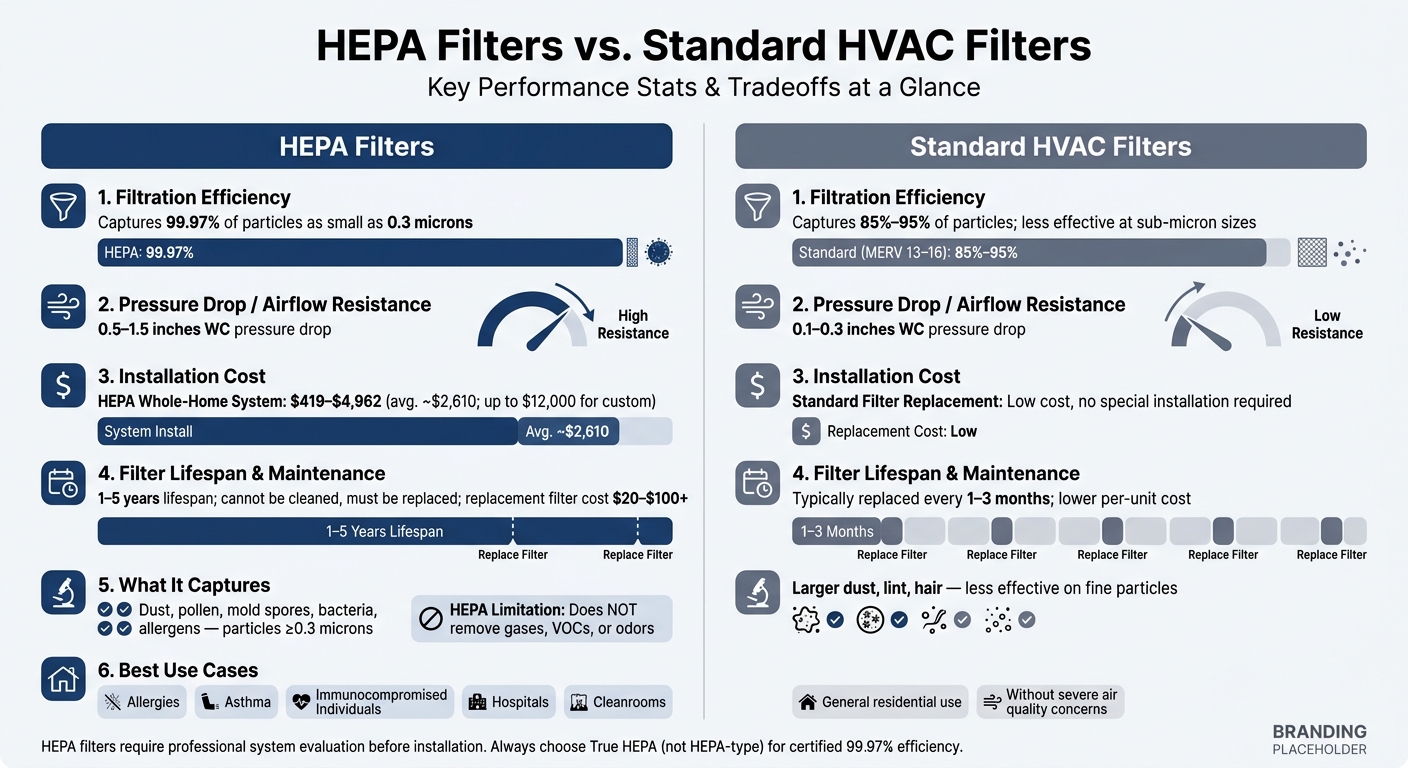
HEPA vs Standard HVAC Filters: Key Stats & Tradeoffs
HEPA filters bring noticeable improvements to indoor air quality, but they come with specific design and maintenance requirements to ensure your HVAC system operates efficiently.
Indoor Air Quality Improvements
HEPA filters are incredibly effective at cleaning the air, capturing 99.97% of particles as small as 0.3 microns – a size much smaller than what the human eye can detect. This makes them especially valuable for households with individuals who have allergies, asthma, or compromised immune systems, as well as homes with young children or elderly residents.
Beyond health benefits, these filters reduce the amount of dust settling on furniture and surfaces, cutting down on cleaning time.
However, it’s important to note that HEPA filters don’t remove gases, odors, or volatile organic compounds (VOCs). If these are concerns, combining a HEPA filter with an activated carbon filter can address both particle and chemical pollutants.
Effects on HVAC System Performance
The dense fibers in HEPA filters, which are key to their high filtration efficiency, also create significant airflow resistance. This results in a pressure drop between 0.5 and 1.5 inches WC, compared to the 0.1 to 0.3 inches WC typical of standard filters. While HEPA filters can keep coils and ducts cleaner over time, the added strain on the blower increases energy consumption and may reduce the lifespan of HVAC components.
"Energy costs typically represent the largest component of HEPA filter total cost of ownership due to increased fan energy required to overcome filter pressure drop." – Camfil
Costs for replacement filters range from $20 to $100 or more, and installing a whole-home HEPA system can cost anywhere from $419 to $4,962, with a national average of around $2,610. For more advanced or custom setups, costs can go as high as $12,000. While this is a considerable investment, it’s most worthwhile for households where air quality is a top health concern.
These factors highlight the importance of proper system design and evaluation before integrating HEPA filtration into your HVAC system.
Benefits vs. Tradeoffs at a Glance
| Feature | Benefit | Tradeoff |
|---|---|---|
| Particle Removal | Captures 99.97% of particles at 0.3 microns | Does not address gases, VOCs, or odors |
| Health Impact | Filters allergens, bacteria, and mold spores | High airflow resistance may reduce ventilation if not properly designed |
| System Cleanliness | Keeps coils and ducts cleaner over time | Increases energy usage due to higher pressure drop |
| Cost | Provides medical-grade air quality | Higher upfront and replacement costs ($20–$100+ per filter) |
| Maintenance | Long lifespan (1–5 years in clean environments) | Requires professional evaluation of fan and duct capacity before installation |
Balancing these benefits and tradeoffs is essential to choosing the right HEPA filtration setup for your home. Proper planning can ensure you get the most out of your investment while maintaining your HVAC system’s performance.
Planning, Using, and Maintaining HEPA Filters
Choosing the Right HEPA Solution
Before installing a HEPA filter, ensure your HVAC system can handle the increased static pressure these filters require. Standard air handlers are designed for lower static pressure, and exceeding their capacity can strain the blower motor and reduce airflow.
You have two primary options for integrating a HEPA filter into your system:
- Inline filter box: This is installed directly in the ductwork and requires a fan capable of managing the higher pressure drop.
- Whole-house bypass system: This uses a dedicated side-stream blower to pull air through the HEPA unit independently, reducing strain on the central fan.
For most homes, the bypass system is often the more practical choice. When selecting a unit, match it to your system’s airflow, measured in cubic feet per minute (CFM). Residential systems typically range from 280 CFM to over 1,200 CFM. Also, make sure the filter is labeled as "True HEPA" rather than "HEPA-type" or "HEPA-like", as only True HEPA filters are certified to capture 99.97% of particles, unlike alternatives that may only trap 85%–95%. Proper sizing and labeling are critical to ensure compatibility with your system, as previously discussed.
Once you’ve chosen the right HEPA solution, maintaining it properly is essential for long-term performance.
Routine Maintenance Practices
HEPA filters last significantly longer than standard filters, with a lifespan of one to five years if maintained correctly. To extend their life, use a MERV 11 pre-filter, which helps reduce particle buildup. Regularly monitor the pressure drop, replacing the filter when it reaches 2.0–3.0 inches WC to prevent damage to the fan motor. Additionally, inspect the filter housing seal to ensure no air bypasses the filter, as this can compromise its effectiveness. These steps help maintain both system efficiency and the improved air quality that HEPA filters provide.
"The higher the efficiency, the more often you will have to clean or replace it." – Jake Loiko, Owner, Hawks Mountain Home and Property Services
It’s important to note that HEPA filters cannot be cleaned. Once they become loaded with particles, they must be replaced.
How Eco Temp HVAC Supports HEPA Integration
Eco Temp HVAC specializes in ensuring seamless HEPA filter integration tailored to your system’s needs. Installing a HEPA filter often requires adjustments such as fan upgrades, duct reinforcement, or implementing a bypass configuration. Eco Temp HVAC evaluates your system’s static pressure capacity to recommend a solution that ensures proper airflow without overloading the equipment.
Serving the Chicagoland area, Eco Temp HVAC’s certified technicians handle everything from system assessments to installation and maintenance. Whether you’re addressing allergies, dealing with aging ductwork, or meeting specific air quality needs for a commercial space, their expertise can help you find a HEPA solution that works for your system and requirements.
For more information, visit Eco Temp HVAC.
Conclusion
HEPA filters are incredibly effective, capturing 99.97% of airborne particles as small as 0.3 microns. They can trap dust, pollen, mold spores, and bacteria, significantly improving indoor air quality. However, their performance depends on proper integration into your HVAC system. Using a bypass configuration, selecting the right CFM rating, and ensuring the filter is True HEPA-certified are crucial steps. Skipping any of these can lead to restricted airflow, higher energy bills, and even premature system wear.
In areas like Chicagoland, where urban pollutants and seasonal pollen are common, HEPA filters may need more frequent replacement. Regular professional evaluations are essential to ensure that your system modifications maintain both air quality and energy efficiency.
Eco Temp HVAC is dedicated to helping homeowners and businesses in Chicagoland navigate these challenges. From assessing system capacity to selecting the best integration method and ensuring long-term efficiency, they provide the expertise needed to make HEPA filtration work seamlessly. For more details, check out Eco Temp HVAC.
FAQs
Can my HVAC system handle a HEPA filter?
Most typical HVAC systems aren’t built to accommodate HEPA filters right out of the box. Why? Because these filters create high airflow resistance, which can put extra pressure on the system’s components. To use a HEPA filter, you might need to modify your system or add specialized equipment. That’s why many people turn to portable air purifiers with HEPA filters instead. It’s always a good idea to consult an expert to determine if your HVAC setup can handle a HEPA filter or if there are better alternatives for your needs.
Do I need an inline or bypass HEPA setup?
A bypass HEPA setup is often the go-to choice for whole-house air filtration. Here’s how it works: a portion of the air from the return duct is diverted, passed through a HEPA filter, and then sent back into the system. This method not only ensures cleaner air throughout your home but also helps keep your HVAC system running efficiently.
Will HEPA filters remove odors and VOCs?
HEPA filters are excellent at capturing airborne particles like dust, pollen, mold, and bacteria with an impressive efficiency of at least 99.97% for particles as small as 0.3 microns. However, they aren’t designed to tackle odors or volatile organic compounds (VOCs). If you’re looking to address odors or VOCs, you’ll need to explore other filtration methods specifically designed for that purpose.