
Refrigerant leaks can disrupt your air conditioner’s performance, increase energy bills, and damage critical components like the compressor. Ignoring these leaks may also harm the environment and violate federal regulations. Here’s what you need to know:
- Common Causes: Corrosion in copper tubing, aging parts like seals and valves, poor installation, and physical damage to outdoor units.
- Signs of a Leak: Weak cooling, frozen coils, hissing sounds, and higher energy bills.
- Prevention and Fixes: Regular maintenance, hiring certified technicians, and addressing leaks promptly.
If you suspect a leak, turn off the system immediately and consult a licensed professional to prevent further damage and ensure safe handling of refrigerants.
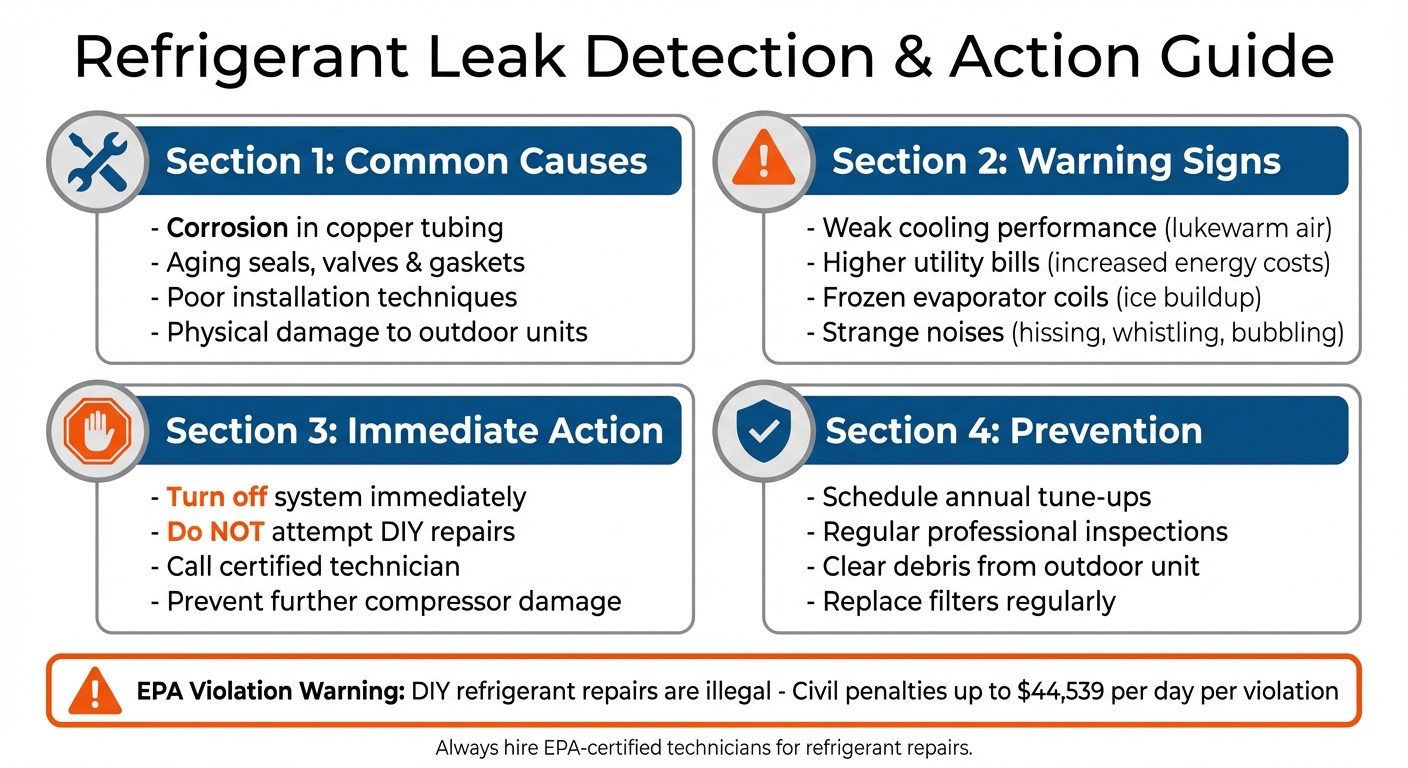
How to Identify and Address Refrigerant Leaks: 4 Warning Signs
Refrigerant Leak Repair Explained Step by Step
sbb-itb-b5c10b1
What Causes Refrigerant Leaks
Knowing what leads to refrigerant leaks can help you protect your HVAC system and avoid expensive repairs. Here’s a breakdown of the most common causes.
Corrosion and Material Breakdown
Copper tubing, which carries refrigerant in your HVAC system, is prone to corrosion. When moisture, pollutants, or certain chemicals come into contact with the copper, they can trigger a chemical reaction that creates tiny leaks. If you live near the coast, the salty air speeds up this process, making corrosion happen faster than it would in inland areas.
Modern systems with microchannel coils are also at higher risk. While these coils improve energy efficiency, their thinner walls and higher operating pressures make them more likely to leak. Applying protective coatings to copper coils can help shield them from corrosive elements, especially in environments where exposure is unavoidable. This becomes even more important as the system’s components age.
Aging Components and Standard Wear
Seals, valves, and gaskets are critical for keeping refrigerant contained, but they don’t last forever. Over time, these parts wear out – they can crack or become brittle due to temperature changes and frequent use. Systems that experience frequent start-stop cycles or extreme temperature swings tend to see faster wear and tear.
Additionally, vibrations from the system can loosen connections, causing refrigerant to escape. Installing anti-vibration pads can reduce movement and help keep connections secure, minimizing the risk of leaks caused by external forces.
Poor Installation Techniques
According to Royal Refrigerants, "An improperly installed HVAC system can develop leaks soon after installation. Common errors include loose connections, improper sealing of joints, and inadequate tightening of fittings." If technicians skip important steps, like following manufacturer guidelines or performing pressure tests, the system may have vulnerabilities from the start. Hiring licensed professionals ensures proper installation, as they follow best practices and thoroughly test the system before completing the job.
Physical Damage and External Impacts
Outdoor HVAC units are exposed to potential hazards like falling branches, debris, or accidental collisions. These impacts can dent or puncture refrigerant lines, leading to leaks. Keeping the area around your unit free of vegetation and debris can lower the risk of damage. For added protection, you can install physical barriers around the unit. Regular inspections are also essential to catch damage early before it turns into a bigger problem.
Understanding these causes allows you to take proactive steps to prevent leaks through proper maintenance and timely repairs.
How to Identify a Refrigerant Leak
Spotting a refrigerant leak early can save you from expensive repairs and protect your HVAC system from further harm. Here are some key signs to watch for to address the issue before it escalates.
Weak Cooling Performance
When the air from your vents feels lukewarm instead of cold, it could mean your system is running low on refrigerant. A leak disrupts heat absorption, causing longer cooling cycles and warmer air. As Elite Comfort Systems explains, "Without enough refrigerant, the AC might just keep running without providing good cooling, which leads to a frustrating cycle of poor performance and rising costs". However, before assuming a refrigerant leak, check your air filters – clogged filters can also reduce your system’s cooling efficiency.
Higher Utility Bills
A refrigerant leak often forces your HVAC system to work overtime, running longer to maintain your desired temperature. This increased workload drives up energy use, leading to surprising spikes in your utility bills. If left unchecked, it could even damage the compressor, adding to repair costs.
Frozen Coils and Strange Noises
Ice on the evaporator coils is another clear sign of a refrigerant leak. According to Lennox, "Condensation can build up and freeze on the evaporator coils when there isn’t enough refrigerant to absorb the hot air". This happens because the lack of refrigerant causes the remaining liquid to over-expand, dropping the coil temperature below freezing and leading to ice buildup.
Additionally, unusual noises like hissing, whistling, or bubbling often indicate that pressurized refrigerant is escaping through a crack or hole. If these sounds occur near the copper lines or coils, it’s crucial to shut off the system immediately and call a certified technician. Continuing to run the system under these conditions can result in severe compressor damage. These signs highlight the importance of addressing refrigerant issues promptly to avoid more extensive problems.
How to Fix and Prevent Refrigerant Leaks
Once you’ve identified the causes and signs of refrigerant leaks, the next step is tackling repairs and ensuring proper maintenance to keep your system running smoothly.
Hire Certified Technicians for Repairs
Refrigerant leaks can be hazardous, so repairs should always be handled by licensed professionals. Certified technicians, like those at Eco Temp HVAC, use advanced tools to locate leaks and safely restore refrigerant levels. Their Mitsubishi Diamond Elite Contractor certification guarantees that repairs meet manufacturer standards while protecting your warranty.
Here’s a helpful tip: apply the $5,000 rule to decide between repair and replacement. Multiply your HVAC unit’s age by the repair cost. If the result exceeds $5,000 (e.g., 12 years × $500 = $6,000), replacing the unit might be the wiser choice. Most HVAC systems last between 10 and 15 years, and older units are more likely to experience frequent leaks and reduced efficiency. A certified technician can evaluate your system and provide honest advice on whether repair or replacement is the better option. Plus, professional care lays the groundwork for effective maintenance, which we’ll cover next.
Regular Maintenance and Inspection
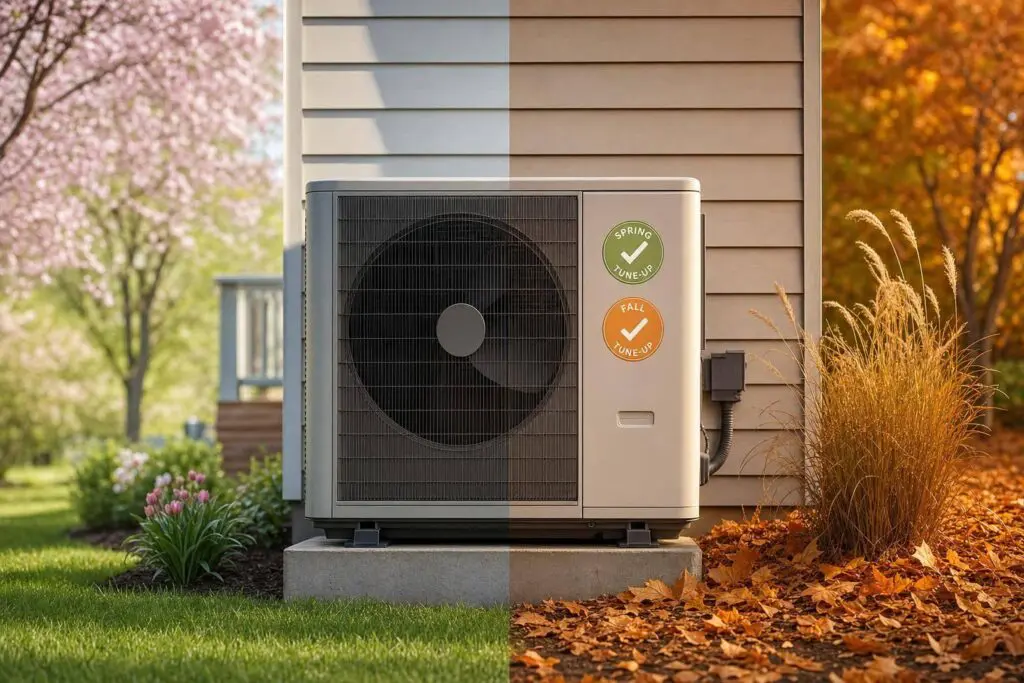
Routine maintenance is key to keeping refrigerant leaks at bay. Scheduling annual tune-ups is one of the most effective ways to detect and prevent leaks early , such as a professional air conditioner clean. During these check-ups, technicians will measure refrigerant levels, inspect coils for corrosion, and assess connections for any weak spots. Catching leaks early helps maintain your system’s efficiency and keeps energy bills under control.
Regular inspections also protect your compressor from unnecessary wear caused by low refrigerant levels. To stay ahead of potential issues, schedule professional HVAC service at least once a year and keep an eye on your system between visits. If you notice a sudden drop in cooling performance or an unexpected spike in utility costs, don’t ignore it. With new Department of Energy efficiency standards requiring higher SEER2 ratings as of 2023, regular maintenance not only prevents leaks but also extends your system’s lifespan and ensures compliance with modern standards.
Why Professional HVAC Service Matters
Handling refrigerant repairs yourself is not just risky – it’s illegal under EPA Section 608 of the Clean Air Act. Violating this law can lead to civil penalties of up to $44,539 per day for each violation. Beyond the legal risks, DIY repairs can expose you to refrigerant poisoning, which may cause symptoms like dizziness, nausea, shortness of breath, and even throat swelling. Modern refrigerants, such as A2L types like R-32 and R-454B, add another layer of danger since they are mildly flammable and require advanced detection tools and strict safety measures. These are tools and expertise that homeowners typically don’t have. All of this highlights why certified professionals are essential for refrigerant-related issues.
"Refrigerant leaks rank among the most consequential failure modes in mechanical cooling and heat pump systems, triggering cascading equipment damage, regulatory exposure, and environmental harm." – HVAC Maintenance Authority
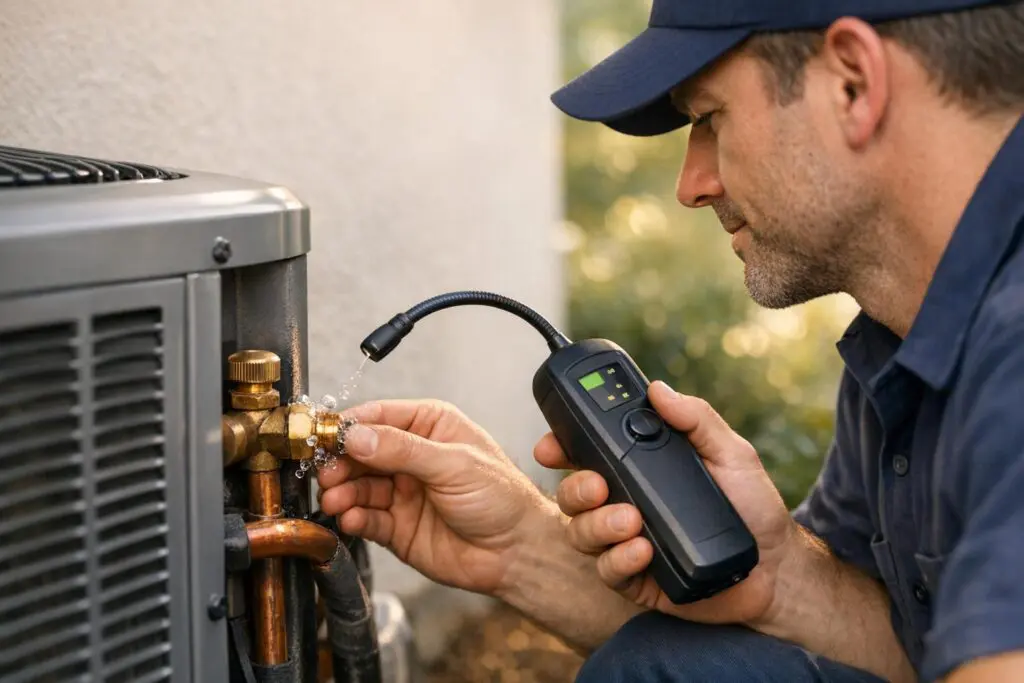
Certified HVAC technicians bring specialized skills and equipment to the table. For example, they use high-precision leak detectors capable of identifying leaks as small as 6 grams per year. Once repairs are made, they ensure the system is properly sealed by evacuating it to below 500 microns, confirming there are no leaks. This level of precision isn’t just about keeping your system running – it’s also crucial for preventing environmental damage, as refrigerants have a high global warming potential.
Eco Temp HVAC: Certified Service in Chicagoland

This is where companies like Eco Temp HVAC make a difference. Their team of EPA-certified technicians is equipped to handle refrigerant issues while adhering to federal regulations. Eco Temp HVAC also holds specialized certifications, such as the Mitsubishi Diamond Elite Contractor certification, which ensures repairs meet manufacturer standards and protects your Mitsubishi product’s 12-year warranty.
Eco Temp HVAC offers 24/7 service and operates across Chicagoland, with service locations in Chicago, St Charles, Bartlett, Lemont, Downers Grove, and Palatine. Whether it’s an emergency or routine maintenance, their technicians are equipped with advanced detection tools and follow all necessary safety protocols. With Eco Temp HVAC, you can rest easy knowing your system is in expert hands.
Conclusion
Refrigerant leaks often stem from corrosion or aging components, leading to compressor strain and higher energy costs. Scheduling annual tune-ups can catch these problems early, preventing expensive repairs down the line.
If you notice signs like hissing noises, frozen coils, or unexplained spikes in energy bills, it’s crucial to act quickly. Shut off your system immediately and contact a certified technician. Ignoring these issues could result in equipment failure or even expose you to refrigerant poisoning.
Refrigerant repairs and refills should always be handled by licensed professionals to ensure they meet safety and environmental standards. For those in Chicagoland, Eco Temp HVAC provides 24/7 certified service that adheres to manufacturer guidelines and protects your warranty.
Routine maintenance is key to avoiding system breakdowns and safeguarding your investment. Clear debris from your outdoor unit, replace filters regularly using an HVAC filter replacement planner, and schedule annual inspections to keep your system running efficiently. These simple steps can save you money and ensure your home stays comfortable all year long.
FAQs
How urgent is a refrigerant leak?
A refrigerant leak isn’t something to ignore. When refrigerant levels drop, your HVAC system’s compressor has to work harder than it should, which can cause serious damage over time. To avoid expensive repairs and keep your system running smoothly, it’s crucial to have a professional address the issue right away.
Can low airflow mimic a refrigerant leak?
Low airflow can sometimes trick you into thinking there’s a refrigerant leak in your HVAC system. Why? Because it forces the system to work harder, leading to symptoms like reduced cooling performance and extra strain on the equipment. Tackling airflow problems quickly can help you avoid unnecessary damage and extend the life of your system.
Can a leak damage my compressor?
Yes, a refrigerant leak can damage your compressor. When refrigerant levels are too low, the compressor has to work harder than it should, which can lead to significant wear and tear. Over time, this extra strain may cause serious damage. It’s crucial to fix leaks quickly to avoid expensive repairs or even a complete system breakdown.