
Frequently Asked Questions About How Heat Pumps Work
Learn the basics of how heat pumps work, the different types available, and what to expect in terms of efficiency, maintenance, and lifespan.
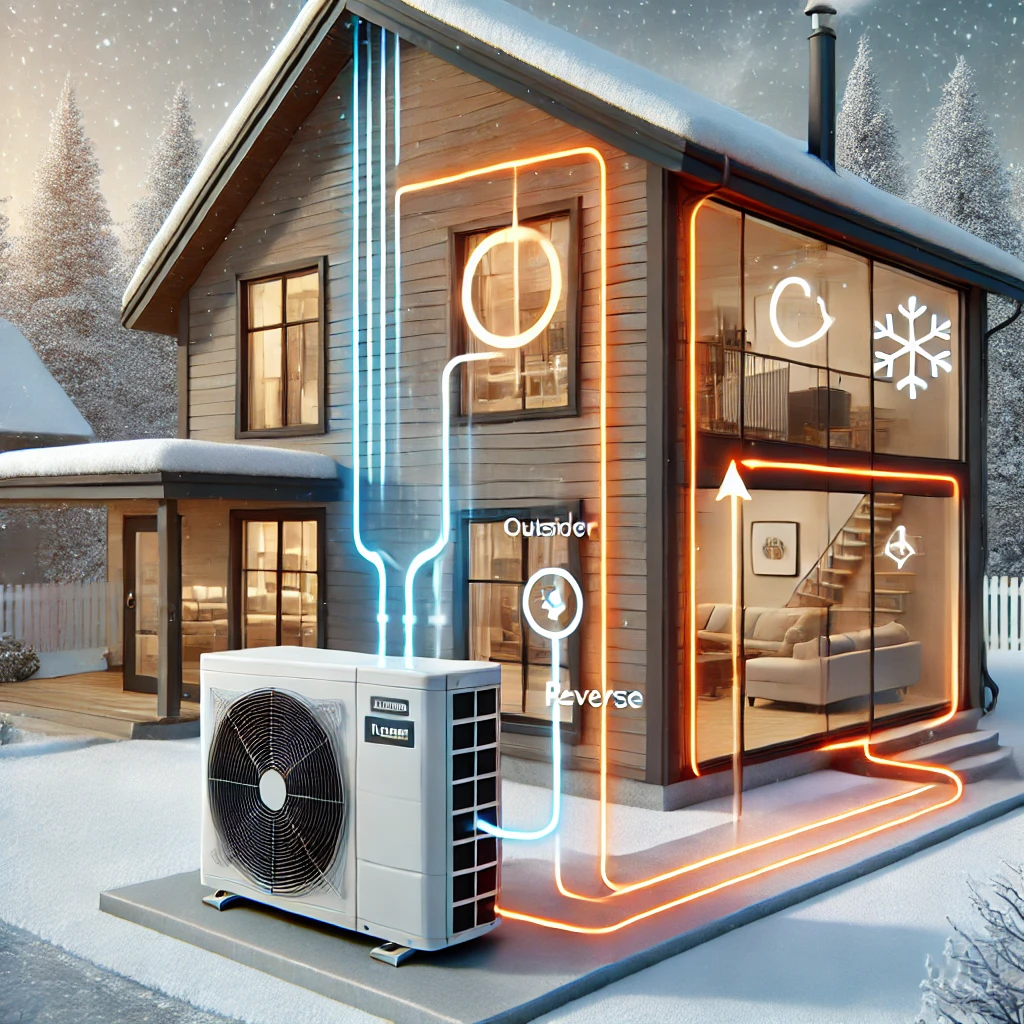
A heat pump is an energy-efficient system that provides both heating and cooling by transferring heat between the inside and outside of a building. In winter, it extracts heat from outdoor air (or the ground) and moves it indoors, and in summer it reverses the process, removing heat from your home to keep it cool.
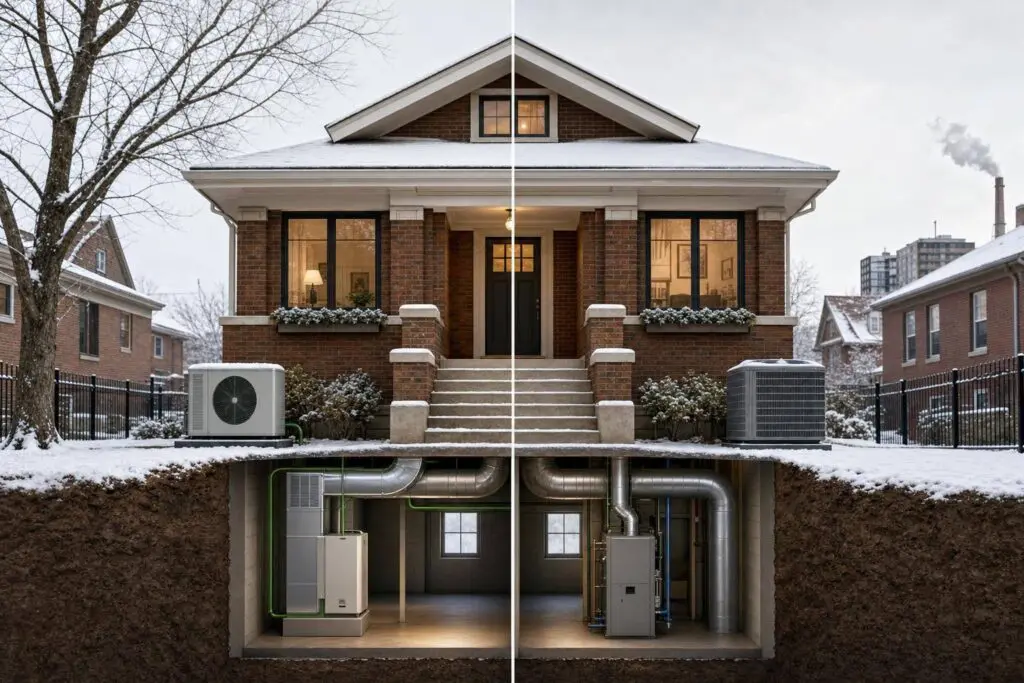
Yes. Modern heat pumps, especially cold-climate models, are designed to operate efficiently in much lower temperatures than older units. They use advanced compressors and refrigerants to extract heat from cold outdoor air, making them suitable for Midwest winters when properly sized and installed.
The main types of heat pumps include air-source heat pumps, ground-source (geothermal) systems, ductless mini-split heat pumps, and hybrid heat pump systems that work alongside a furnace or boiler. The best choice for your home depends on your climate, existing equipment, and comfort and efficiency goals.
Yes. Heat pumps are highly efficient because they move heat instead of generating it. In many cases, they can achieve efficiencies of 200–400%, meaning they can deliver two to four units of heat for every unit of electricity they consume, which often translates into lower energy bills compared with older HVAC systems.
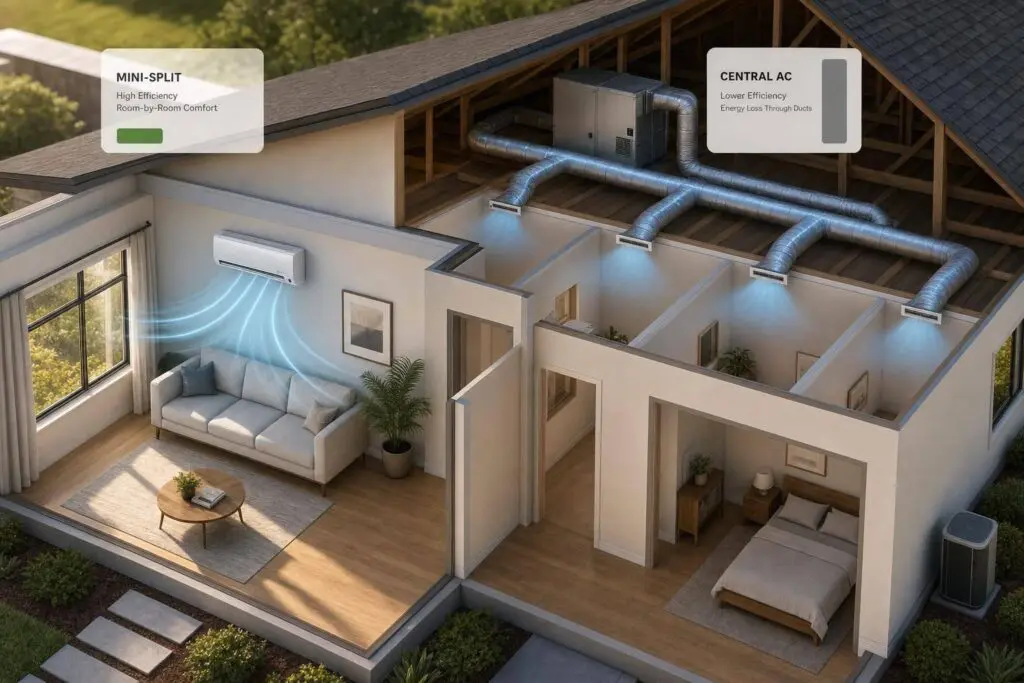
Yes. Ductless mini-split heat pumps are ideal for homes without existing ductwork, as well as for additions, finished basements, and bonus rooms. They use compact indoor units mounted on walls or ceilings to provide efficient heating and cooling without the need for ducts.
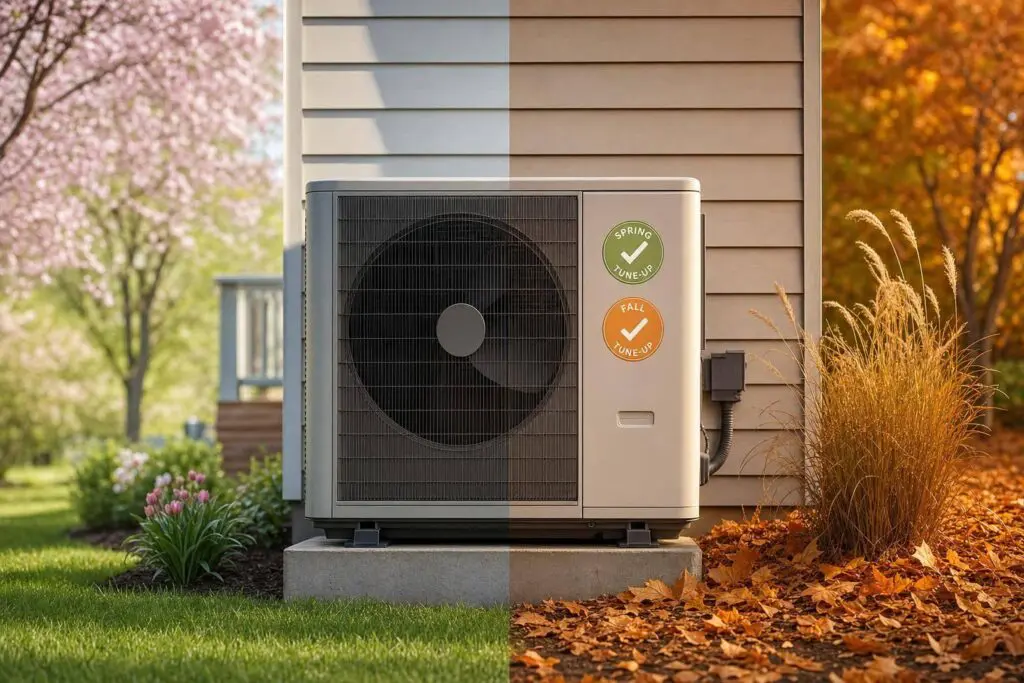
Heat pumps should receive regular maintenance, including cleaning or replacing filters, checking electrical connections, inspecting coils, and verifying refrigerant levels. A professional tune-up is typically recommended at least once a year to keep the system running efficiently and to help prevent breakdowns.
Most air-source heat pumps last around 15–20 years with proper maintenance, while the buried loop field in a ground-source (geothermal) system can last 50 years or more. Actual lifespan depends on factors like maintenance, installation quality, and operating conditions.
In many homes, a heat pump can replace both a traditional furnace and central air conditioner by providing year-round heating and cooling in one system. In colder climates, some homeowners choose a hybrid setup, where the heat pump does most of the work and a furnace only runs during the coldest weather.
Many homeowners see lower heating and cooling costs when switching to a modern, properly sized heat pump, especially when replacing older, less efficient systems. Your savings will depend on your home’s insulation, the efficiency of the new equipment, and your local energy rates. Tools like our Cost Savings Calculator can help estimate your potential savings.
Many utilities and government programs offer incentives or rebates for installing qualifying energy-efficient heat pumps. Availability and requirements vary by location, so it’s a good idea to check with your local utility and energy programs or visit resources like ENERGY STAR for current information.
Heat Pump vs. Traditional HVAC Cost-Saving Calculator
Heat Pump vs. Traditional HVAC: Efficiency Comparison
| Category | Traditional HVAC | Heat Pump |
|---|---|---|
| Energy Efficiency | 80–90% | 200–300% |
| Operating Cost (Annual Avg.) | $2,500 | $1,500 |
| Lifespan | 15–20 years | 15–25 years |
| Maintenance Frequency | Every Year | Every 1–2 Years |
| Eco-Friendliness | Moderate | High |