
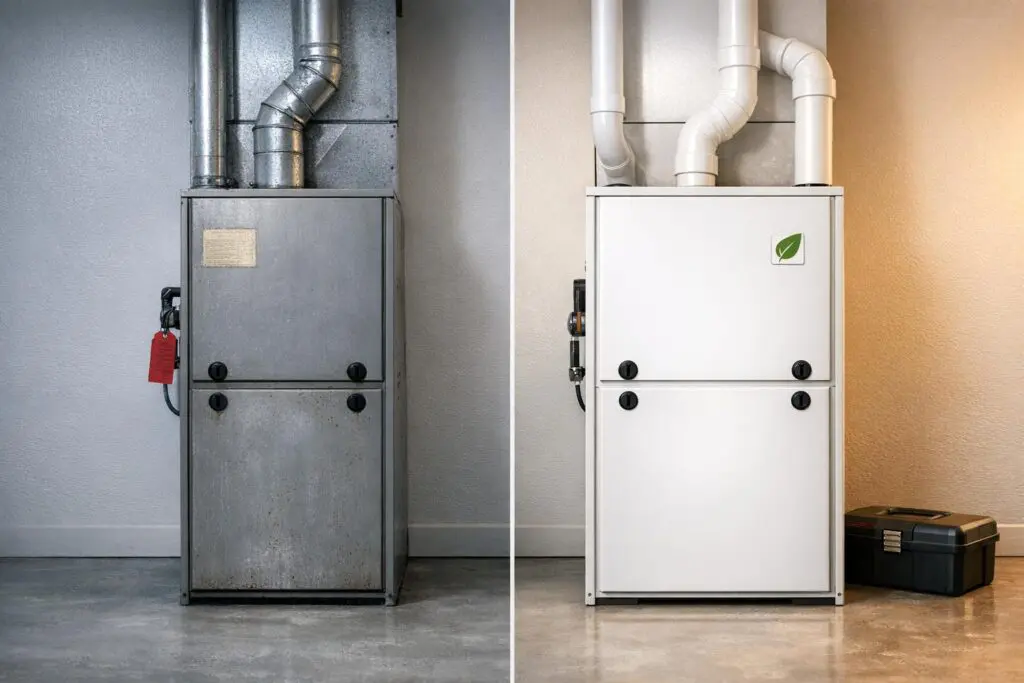
Your gas furnace won’t last forever. Most gas furnaces provide reliable heating for 15–20 years with proper maintenance. However, factors like installation quality, climate, and upkeep significantly impact their lifespan.
Here are the key points to know:
- Average Lifespan: 15–20 years, up to 25–30 years with exceptional care.
- When to Replace: After 15 years or if repair costs exceed 50% of a new unit’s price.
- Warning Signs: Rising energy bills, frequent breakdowns, visible rust or cracks, and a yellow or flickering burner flame.
- Maintenance Tips: Annual professional inspections, changing air filters every 1–3 months, and keeping vents clear can extend your furnace’s life by 5–10 years.
Upgrading to a modern furnace with 90–98% AFUE can save up to 17% on fuel costs and improve safety with advanced features like sealed combustion systems.
If your furnace is old, inefficient, or frequently breaking down, replacing it with a high-efficiency model can lower energy bills, enhance comfort, and provide peace of mind.
Key Signs It’s Time to Replace Your Furnace
sbb-itb-b5c10b1
Average Lifespan of Gas Furnaces
Gas furnaces typically provide dependable heating for 15 to 20 years with regular maintenance. High-end models that receive exceptional care can sometimes last up to 25–30 years, though their efficiency often starts to decline after the 15-year mark.
Brands like American Standard, Lennox, and Trane generally last 15–25 years, while Amana, Carrier, and Rheem average closer to 15–20 years. However, longevity largely depends on proper installation and consistent upkeep.
Interestingly, about 25% of gas furnaces fail within their first 10 years. These early breakdowns are usually caused by poor installation or a lack of maintenance rather than manufacturing defects.
What Affects How Long Your Furnace Lasts
Several factors beyond the furnace’s build can significantly influence its lifespan.
Installation quality is the most critical factor. If a furnace is too large for the space, it will short-cycle – turning on and off frequently. On the other hand, an undersized unit runs constantly to keep up, which puts undue strain on components like the blower motor and heat exchanger. Improper installation can also reduce efficiency by up to 30%, leading to faster wear and tear.
Climate and usage intensity are also key. In colder areas like Northern Illinois, furnaces work harder during the heating season, which can shorten their lifespan to the lower end of the 15-year range. Additionally, units installed in uninsulated spaces like attics or crawl spaces are exposed to more extreme temperature swings, which can further reduce their service life.
Indoor environmental factors also play a role. High humidity levels or exposure to corrosive substances – such as certain cleaning chemicals – can lead to rust and corrosion on metal components, causing premature failure.
Why Maintenance Matters
Maintenance is just as important as proper installation and climate considerations when it comes to maximizing the life of your furnace.
With regular professional servicing, you can add 5 to 10 years to your furnace’s lifespan. Annual inspections help catch common furnace problems before they become major issues, and routine filter changes prevent overheating by ensuring proper airflow.
"The three keys are regularly changing the filter, having the unit serviced yearly, and ensuring the quality of the original installation." – Andrew Mackey, Owner, Superior Service
Skipping maintenance forces your furnace to work harder. For example, clogged filters restrict airflow, causing the heat exchanger to overheat and crack – a repair that can cost between $1,500 and $2,500. Modern high-efficiency furnaces, which boast 90–98% AFUE, often use variable-speed technology to reduce mechanical strain, potentially extending their lifespan even further.
Warning Signs Your Furnace Needs Replacement
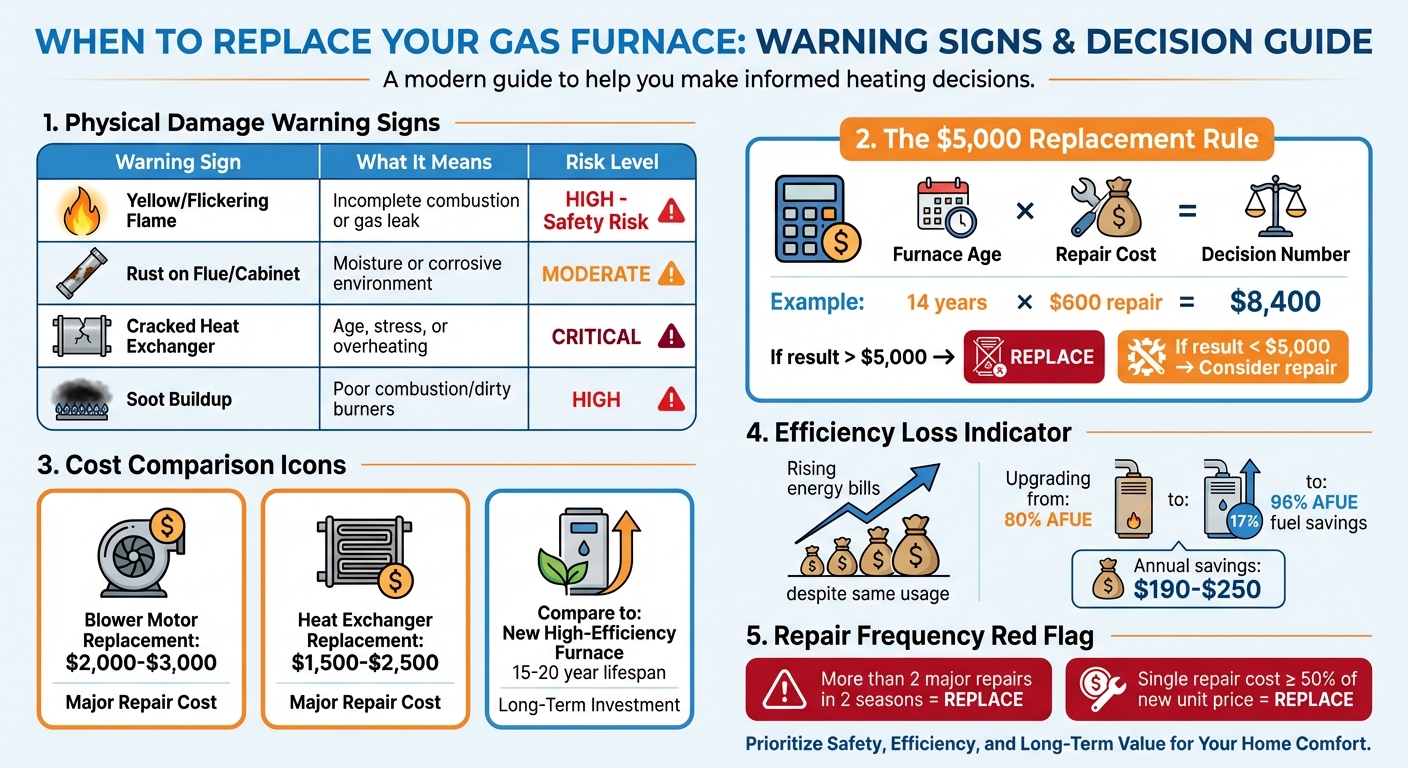
Gas Furnace Warning Signs and Replacement Decision Guide
After 15 years of service, your furnace may start showing signs that it’s time to replace rather than repair it. Spotting these issues early can help you avoid sudden breakdowns and potential safety hazards. While regular maintenance can extend a furnace’s lifespan, these warning signs indicate when repairs may no longer be worth the cost.
Higher Energy Bills and Lower Efficiency
If your heating bills keep climbing despite no changes to your thermostat, your furnace’s efficiency might be decreasing. As key components like the blower motor and heat exchanger wear out, the system has to work harder – running longer and cycling more often – to maintain your desired temperature. Upgrading to a more efficient model can make a big difference. For example, replacing an 80% AFUE furnace with a 96% AFUE model can reduce fuel usage by around 17%.
Repeated Repairs and System Failures
Frequent breakdowns are a clear sign it might be time for a new furnace. If you’ve had to make more than two major repairs in two seasons, or if a single repair costs half the price of a new unit, replacement is usually the smarter option. The $5,000 Rule can help: multiply your furnace’s age by the repair cost. If the result exceeds $5,000, replacement is the better choice. For example, a $600 repair on a 14-year-old furnace equals $8,400 – well above the threshold. Keep in mind that major repairs, like replacing a blower motor or heat exchanger, can cost between $2,000 and $3,000.
Beyond rising energy costs, frequent repairs and system failures are strong indicators that your furnace is nearing the end of its lifespan.
Rust, Cracks, or Physical Damage
Physical damage to your furnace is another red flag. Look for rust on the cabinet, burners, or flue pipe – especially if your furnace is in a damp basement or near household chemicals like bleach or pool supplies, which can speed up corrosion.
"Visible rust or cracks in the body: These visual signs are serious indicators that your furnace could be leaking combustion by-products, posing safety risks to your household." – Dan Simms, Today’s Homeowner
A cracked heat exchanger is particularly dangerous because it can leak carbon monoxide into your home. This is a critical safety issue where replacing the furnace is typically the only safe solution. Soot buildup is another warning sign, as it points to improper combustion and increases the risk of carbon monoxide leaks.
Pay attention to your burner flame as well. A healthy gas flame should burn steady and blue. If you see a yellow or flickering flame, turn off the system immediately and call a professional. This could indicate incomplete combustion or a gas leak. Additionally, if your furnace is blowing visible dirt, dust, or rust through your vents, it’s likely a sign of internal deterioration.
| Sign of Damage | Potential Cause | Risk Level |
|---|---|---|
| Yellow Flame | Incomplete combustion / Gas leak | High (Safety Risk) |
| Rust on Flue/Cabinet | Moisture / Corrosive environment | Moderate |
| Cracked Heat Exchanger | Age / Stress / Overheating | Critical |
| Soot Buildup | Poor combustion / Dirty burners | High |
Why Upgrading to a New Furnace Makes Sense
If your furnace is on its last legs, switching to a modern system can bring noticeable improvements in energy efficiency, comfort, and safety. These benefits directly address common concerns about reliability and performance.
Lower Energy Bills with Modern Efficiency
Today’s furnaces are far more efficient than older models. Modern systems achieve 95–98% AFUE (Annual Fuel Utilization Efficiency) compared to the 70–80% range of older units, meaning they waste significantly less gas – about 20–30% less, to be exact. For a homeowner upgrading from an 80% AFUE furnace to a 95% model, this can mean saving $190 to $250 annually on natural gas bills.
If you opt for an ENERGY STAR certified furnace, you could see about 15% more efficiency compared to standard models – potentially saving up to $140 per year. In colder regions, the higher upfront cost of these high-efficiency units is typically recouped within 5 to 10 years through lower energy bills. Plus, many of these systems qualify for financial incentives like the Energy Efficient Home Improvement Credit (up to $600) and utility rebates ranging from $100 to $800.
Better Heating Performance and Comfort
Modern furnaces don’t just save money – they also make your home more comfortable. With features like two-stage and modulating burners, these systems operate at lower levels for longer, avoiding the temperature swings and cold spots that older furnaces often struggle with.
"Advanced features like variable-speed blowers and modulating gas valves provide superior comfort through more consistent temperatures and humidity control."
In addition, variable-speed ECM blowers dynamically adjust airflow throughout your home, improving humidity control while using less electricity. Other upgrades, such as insulated cabinets, soft-start motors, and advanced burners, help reduce noise. Many models are also compatible with smart thermostats, enabling remote monitoring and predictive maintenance alerts for added convenience.
Improved Safety Technology
Safety is another area where modern furnaces shine. High-efficiency systems often feature sealed combustion technology, which draws air from outside and vents exhaust directly outdoors, reducing the risk of indoor air contamination. These units also come equipped with safeguards like flame sensors, roll-out switches, and pressure checks, which automatically shut off gas if a problem arises.
Unlike older models, modern furnaces use electronic ignition instead of a standing pilot light, significantly lowering the risk of gas leaks.
"Think of safeties as the seatbelt, and detectors as the airbag. In our experience… the safest homes use both." – Budget Heating
Even with these advanced protections, it’s essential to install UL-listed carbon monoxide detectors on every level of your home and near sleeping areas for added peace of mind.
Upgrading to a modern furnace enhances efficiency, improves comfort, and prioritizes safety – all while offering long-term savings. For expert advice on selecting and installing the right high-efficiency furnace for your home, contact Eco Temp HVAC.
How to Extend Your Furnace’s Lifespan
Regular maintenance plays a huge role in how long your furnace will last. A well-maintained gas furnace can operate for 15–20 years, while neglecting it might cut that down to just 10–12 years. The good news? A few simple habits can prevent costly breakdowns and keep your system running smoothly for years.
"Furnaces that get consistent maintenance last 5–8 years longer than furnaces that don’t. That’s not a belief. That’s math, physics, and field data." – Tony Marino
Get annual professional inspections
Make it a point to have your furnace inspected by a professional every year, ideally in late summer or early fall. This timing ensures any potential problems – like cracks, worn-out parts, or electrical issues – are caught before the colder months hit. Annual inspections can prevent small problems from snowballing into major failures. For instance, systems that undergo regular electrical checks experience 30–40% fewer control board failures.
Certified technicians, such as those at Eco Temp HVAC, can spot issues during routine maintenance that could add 4–6 years to your furnace’s lifespan. Scheduling during the off-season also helps you avoid peak-season delays and extra repair costs. This annual check-up is one of the best ways to keep your furnace in top shape.
Change Air Filters Every 3 Months
Airflow is critical for your furnace’s efficiency and longevity, and clean filters are key to maintaining it. Dirty filters can reduce airflow by 20–50% and increase the heat exchanger’s temperature by 30–60°F, which speeds up wear and tear on the system.
- Replace 1-inch filters every 1–3 months (monthly if you have pets or allergies).
- For 3–5 inch filters, inspect them quarterly and replace them every 6–12 months.
"Filter replacement is the basic thing that homeowners can do to make their furnace last longer." – Tamer Sayed, Owner, Tamas Mechanical
To stay on top of this, mark the installation date on each filter. This simple habit can extend your furnace’s life by 3–5 years.
Check vents and ducts for blockages
Proper airflow isn’t just about filters – it also depends on keeping vents and ducts clear. Make sure there’s at least 3 feet of space around your furnace and that supply and return vents are free from obstructions like furniture, rugs, or curtains. Blocked vents force your system to work harder, which strains the blower motor and other components.
If you have an outdoor unit, check the intake and exhaust vents regularly to clear away snow, ice, debris, or nesting materials. Even minor vent blockages can reduce efficiency by 5–10% and might even pose safety risks.
Also, take a look at your furnace’s burner flame. A steady blue flame indicates proper combustion, while a yellow or flickering flame could signal incomplete combustion, which requires immediate attention from a professional.
Conclusion
Regular upkeep, paying attention to warning signs, and upgrading when necessary are key to keeping your furnace running safely and efficiently while meeting your home’s heating needs.
A well-maintained gas furnace typically lasts 15–20 years, but certain red flags – like rising energy bills, frequent breakdowns, uneven heating, or visible damage (e.g., rust or cracks) – suggest it might be time for a replacement. If you spot unusual flame colors, like yellow or flickering flames, it could indicate incomplete combustion, and you should call a professional immediately.
When repair costs climb too high or the furnace’s age becomes a factor, replacement is often the smarter financial choice. Experts recommend replacing your furnace if a single repair exceeds 50% of a new unit’s cost or if the furnace’s age multiplied by the repair cost surpasses $5,000. Upgrading to a modern furnace with 90–98% AFUE ratings can cut fuel use by about 17%, saving homeowners roughly $200 per year.
Beyond savings, new furnaces offer better comfort with features like variable-speed blowers, improved safety through sealed combustion systems, and warranties that cover unexpected repairs. Plus, many ENERGY STAR-certified models qualify for federal tax credits up to $600 and local utility rebates, making upgrades even more appealing.
"Making sure the proper furnace size is installed and ensuring a high-quality installation by an HVAC professional are two of the major factors [in furnace lifespan]." – Kevin Dickson, President, Energy Services Air Conditioning, Heating and Electrical
For expert advice and service, consider reaching out to certified professionals like Eco Temp HVAC, servicing the Chicagoland area. Their licensed technicians, including Mitsubishi Diamond Elite Contractors (offering a 12-year warranty on Mitsubishi products), ensure accurate load calculations, code-compliant installations, and guidance on rebates and incentives.
FAQs
How do I find out my furnace’s age?
To figure out how old your furnace is, start by finding the model and serial number on the unit. Once you have that information, you can refer to the owner’s manual or reach out to the manufacturer for specific details. On average, gas furnaces tend to last about 15–20 years. Signs that your furnace might be nearing the end of its lifespan include decreased efficiency and the need for more frequent repairs.
What AFUE rating should I choose for my home?
For improved energy efficiency and reduced heating costs, choose a gas furnace with an AFUE rating of 90% or higher. Opting for models with ratings of 95% or above can maximize efficiency, offering even greater savings on your energy bills in the long run.
Which furnace issues are safety emergencies?
Furnace safety emergencies can pose serious risks. For instance, cracks or corrosion in the heat exchanger can lead to the release of toxic gases, while gas leaks – often marked by a strong gas odor – are another major concern. Both situations demand immediate action to avoid health dangers or potential fire hazards. If you encounter these issues, contact a professional technician immediately to address the problem.