
When budgeting for a mini-split system, the total cost typically falls between $2,000 and $14,500 in the U.S., depending on the number of zones and installation complexity. Costs are divided into three main categories:
- Equipment: Single-zone systems cost $2,000–$6,000, while multi-zone systems can exceed $18,000. Wall-mounted units are the cheapest option, while ceiling cassettes are more expensive.
- Labor: Installation costs range from $300 to $2,000 for single-zone systems and $700 to $3,000 for multi-zone setups.
- Extras: Expenses for permits, electrical upgrades, and accessories like condensate pumps or condenser stands can add $300–$4,000+.
Premium brands like Mitsubishi and Carrier are pricier but offer high efficiency and reliability, while LG, Daikin, and Fujitsu provide more budget-friendly options. Professional installation is essential to avoid issues and maintain warranties. Federal tax credits and utility rebates may reduce costs by up to 30%, making high-efficiency systems more affordable over time.
How Much Does a Mini Split System Cost
Cost Breakdown by Category
When it comes to mini-split systems, the total cost is influenced by three main categories: equipment, labor, and additional extras. These costs vary depending on the number of zones and the type of unit you choose.
Equipment Costs
The price of the equipment is largely determined by the number of zones you need. Here’s a breakdown:
- Single-zone systems: Installed costs range from $2,000 to $6,000.
- Dual-zone systems: Expect to pay between $4,500 and $8,800.
- Three-zone systems: Costs typically fall between $6,500 and $11,000.
- Whole-home systems (five or more zones): Prices start at $12,000 and can exceed $18,000, with larger setups potentially costing over $30,000.
The style of the indoor unit also impacts pricing. Wall-mounted units are the most budget-friendly, costing about $2,500 to $5,000 per zone. On the other hand, ceiling cassettes, which require ceiling modifications, range from $3,500 to $6,000 per zone.
Labor Costs
Labor expenses depend on the complexity of the installation and the number of zones. For a single-zone system, labor costs range from $300 to $2,000. Multi-zone installations, which require additional refrigerant lines and electrical circuits, can cost between $700 and $3,000. On average, labor makes up 40% to 50% of the total installation cost.
Additional Extras
There are often extra costs for permits, electrical upgrades, and accessories:
- Permits and fees: Local building permits typically cost between $250 and $400.
- Electrical upgrades: Adding a dedicated circuit costs about $250, while a full panel upgrade in older homes can range from $1,100 to $3,500.
- Refrigerant lines: Beyond the standard 15 feet, expect to pay $5 to $7 per linear foot.
- Electrical wiring: Additional wiring costs approximately $6 to $8 per linear foot.
- Accessories: Items like condensate pumps (needed if gravity drainage isn’t possible) cost $120 to $280, while outdoor condenser stands range from $100 to $210.
Below is a summary of key additional expenses:
| Category | Item | Estimated Cost |
|---|---|---|
| Permits & Fees | Local Building Permit | $250–$400 |
| Electrical | Dedicated Circuit | $250 |
| Panel Upgrade (if needed) | $1,100–$3,500 | |
| Labor | Single-Zone Installation | $300–$2,000 |
| Multi-Zone Installation | $700–$3,000 | |
| Accessories | Condensate Pump | $120–$280 |
| Condenser Stand | $100–$210 | |
| Concrete Pad | $150–$300 | |
| Wireless Remote | $50–$300 |
These details can help you estimate the total cost of installing a mini-split system, ensuring you’re prepared for both the main expenses and any extras that might come up.
1. Mitsubishi Mini-Split Systems
Here’s a closer look at Mitsubishi’s pricing details, breaking down unit costs, installation expenses, and other factors that influence the overall investment.
Unit Costs
Mitsubishi stands out as a premium brand in the mini-split market, which means its equipment comes with higher upfront costs compared to budget-friendly alternatives. As of October 2025, indoor unit prices depend on the style and capacity. For instance:
- A 9,000 BTU wall-mounted unit (GX Series) starts at $773.
- Floor-mounted units (KJ Series) cost about $1,215.
- For larger areas, an 18,000 BTU wall-mounted unit is priced at $1,144, while a ceiling cassette of the same capacity costs $1,313.
Outdoor condenser units also reflect this premium pricing. Mitsubishi’s H2i Hyper-Heating models, designed for colder climates, range from $2,955 for a 20,000 BTU unit to $7,113 for a 48,000 BTU system. A popular 36,000 BTU outdoor unit is priced around $4,675 wholesale. Fully installed systems typically cost between $1,200 and $8,650, based on the number of zones and configuration.
Labor Costs
Professional installation is a must for Mitsubishi systems to ensure proper operation and warranty protection. Michael Haines, Senior Comfort Specialist at AC Direct, explains:
DIY installation is not recommended. Mitsubishi mini split systems require professional installation to ensure proper operation, compliance with local codes, and warranty coverage.
Labor costs vary depending on the system’s complexity. Here’s what you can expect:
- Single-zone systems (6,000–18,000 BTUs): Installation costs range from $1,500 to $3,000.
- Multi-zone systems (2–3 zones): Labor costs typically fall between $2,500 and $5,000.
- Whole-home setups (4+ zones): Costs range from $5,000 to $7,000+.
Installation time also depends on the setup, with single-zone systems taking 4–8 hours and multi-zone systems requiring 1–3 days.
Extra Costs
Certain additional expenses can influence the final price of a Mitsubishi installation. Some of these include:
- Electrical work: A dedicated 220V circuit may be necessary ($300 to $1,200), or a full panel upgrade in older homes ($1,500 to $3,500).
- Condensate pumps: Needed if gravity drainage isn’t possible, costing $120 to $300.
- Line set covers: For a cleaner look, priced between $100 and $400.
- Condenser pads or stands: Essential for outdoor units, costing $100 to $250.
- Smart controls: Options like the Kumo Cloud app for remote management range from $100 to $300.
Efficiency and Warranties
Mitsubishi systems offer impressive energy efficiency, with ratings as high as 33 SEER. Homeowners can save 20% to 40% on energy costs compared to traditional HVAC systems. The Hyper-Heating INVERTER® (H2i®) technology ensures reliable heating even in extreme cold climates.
For those in the Chicagoland area, Eco Temp HVAC, a Mitsubishi Diamond Elite Contractor, provides an extended 12-year warranty on Mitsubishi products – far longer than standard coverage. Additionally, federal tax credits under Section 25C can reduce costs by 30% (up to $2,000) for systems installed before December 31, 2025.
2. Daikin Mini-Split Systems
Daikin stands out as a premium option in the mini-split market, directly competing with brands like Mitsubishi and Fujitsu. Known for its advanced technology and energy efficiency, Daikin systems come with reliable warranties, but their pricing reflects their high-end positioning. Let’s break down the costs and features of these systems.
Unit Costs
The cost of Daikin equipment depends on the system’s capacity and configuration. For single-zone systems, prices typically range from $1,100 to $5,600. For instance, the Daikin 12,000 BTU Entra System, offering an 18 SEER2 rating, is priced around $1,298.00, including the unit and remote.
The installation style can also influence costs. Wall-mounted units are generally the most affordable, with installation costs ranging from $2,500 to $5,000. Ceiling cassette systems, requiring additional ceiling modifications, are priced between $3,500 and $6,000. Concealed ducted systems, which involve more complex installation, represent the highest investment at $4,000 to $7,500.
Labor Costs
Installing a Daikin system requires professional expertise to ensure proper setup and maintain warranty coverage. Labor costs for single-zone installations typically range from $800 to $2,300, while multi-zone setups can cost $1,600 to over $5,000. HVAC technicians generally charge between $100 and $150 per hour.
As one industry expert explains:
"You need a professional who understands pressures and temperatures, psychrometric charts, how to recover refrigerant, how to evacuate a system properly, how to charge a system properly, and has all of those specialty tools."
Extra Costs
Additional expenses can add to the overall price of a Daikin installation. These may include:
- Permits: $250 to $400
- Dedicated electrical circuits: Around $250
- Panel upgrades: Necessary for older homes
Daikin-specific accessories like wall mount brackets ($40 to $100), line hide kits for exterior piping, and refrigerant line extensions for runs over 25 feet may also be required.
Efficiency and Warranties
Daikin systems use inverter technology to adjust performance based on room needs, making them about 30% more efficient than traditional ducted systems. Their cold-climate models operate effectively at temperatures as low as –13°F (–25°C). Additionally, Daikin was among the first to adopt the R-32 refrigerant, which has a lower global warming potential compared to the older R-410A.
The brand offers a 12-year limited parts warranty on select models, such as the Entra series. To maintain peak performance and extend system lifespan, homeowners should schedule annual professional maintenance, costing between $100 and $300, and clean indoor unit filters monthly to prevent buildup.
3. Fujitsu Mini-Split Systems
Fujitsu is a well-known name in the mini-split market, offering high-quality systems with a slightly more accessible price tag compared to other premium brands. Known for their customizable setups, reliable warranties, and eligibility for utility rebates, Fujitsu systems are a solid choice. Here’s a breakdown of what you can expect to spend and the factors that influence the final cost.
Unit Costs
The cost of Fujitsu mini-split units depends on the system’s capacity and the number of zones you need. For a single-zone system, prices range from $1,300 to $4,700 for the unit alone. Multi-zone systems naturally cost more; for instance, a 4-zone Fujitsu setup runs about $6,942 for equipment only. If you’re considering a 36,000 BTU outdoor unit, expect to pay around $4,226, while a 9,000 BTU high-wall indoor unit is priced at roughly $679. Wall-mounted units are typically the most budget-friendly option, whereas ceiling cassettes and floor-mounted styles come with higher price tags. These equipment costs provide a starting point, but the total investment will also depend on installation complexity.
Labor Costs
Proper installation by a professional is essential to maintain your warranty. For a single-zone Fujitsu system, labor costs generally fall between $300 and $2,000. Multi-zone installations are more labor-intensive, with prices ranging from $700 to $3,000. Technician rates typically run between $18.93 and $35.23 per hour, and most installations take 5 to 10 hours to complete. If your project involves additional carpentry work, such as routing refrigerant lines through walls, you should budget an extra $140 to $600, with carpentry rates ranging from $35 to $100 per hour.
Extra Costs
Additional expenses can also affect the total cost of your Fujitsu system. Accessories like condensate removal pumps ($120 to $280), wireless remote controllers ($50 to $300), and wall mount brackets ($40 to $100) may be needed. If you’re replacing an old HVAC system, expect removal fees of about $80 to $150.
Efficiency and Warranties
Fujitsu systems are eligible for federal tax credits under the Inflation Reduction Act, covering 30% of the total installation cost, up to $2,000, for qualifying heat pumps. Many homeowners have reported cutting their electric bills by as much as 30% after switching to a high-efficiency mini-split system. With their high SEER ratings, Fujitsu systems often qualify for additional utility rebates, which can help reduce upfront costs even further.
4. LG Mini-Split Systems
LG is known for offering a balance of premium performance and competitive pricing, making it a strong contender in the mid-to-high-tier HVAC market. These systems deliver dependable climate control at a reasonable cost, appealing to homeowners who want quality without overspending. Here’s a breakdown of the costs and features associated with LG mini-split systems.
Unit Costs
For single-zone units, prices range between $1,100 and $5,000. Multi-zone setups come at a higher cost – an LG 4-zone system is priced around $7,157, which is about $600 less than a similar Mitsubishi system. To give you an idea of individual component costs, a 36,000 BTU outdoor unit is approximately $4,373, while a 9,000 BTU high-wall indoor unit costs about $696.
Labor Costs
Proper installation by certified professionals is essential to maintain the warranty. Labor for single-zone systems typically adds $300 to $2,000 to the total cost. For multi-zone systems, which are more complex, installation labor ranges from $700 to $3,000. Standard installation quotes generally include 15 feet of refrigerant line, but additional length will increase the price. Keep in mind that attempting a DIY installation will void the warranty, so hiring certified professionals is a must.
Extra Costs
In addition to equipment and labor, there are other expenses to consider. These include:
- Permits: Around $250 to $400
- Dedicated electrical circuits: Approximately $250
- Condensate removal pumps: Between $120 and $280
- Wireless remote controllers: Priced at $50 to $300
- Wall mount brackets: Costing $40 to $100
If you’re replacing an old HVAC system, expect removal fees of about $80 to $150.
Efficiency and Warranties
LG mini-splits are designed with energy efficiency in mind, achieving SEER ratings over 18, with some high-end models exceeding 40. This can lead to significant energy savings, with many homeowners reporting up to a 30% reduction in their electric bills after switching to a zoned mini-split system. These savings can help offset the upfront costs. Additionally, LG systems qualify for a 30% tax credit under the Inflation Reduction Act, and local utility rebates may offer further financial incentives. Be sure to check with your utility provider for available programs.
5. Carrier Mini-Split Systems
After exploring systems from Mitsubishi, Daikin, Fujitsu, and LG, Carrier stands out with a tiered structure designed to accommodate a range of budgets and performance expectations. Known as a premium brand in the mini-split market, Carrier offers three product lines: the Infinity® series, which tops their lineup with efficiency ratings of up to 35.1 SEER2 and 30 HSPF2, and the Performance™ and Comfort™ series, which provide mid-range and entry-level options. This tiered approach allows homeowners to weigh the initial investment against long-term energy savings.
Unit Costs
Carrier’s single-zone mini-split units typically range from $2,400 to $6,000, placing them on the higher end compared to brands like LG or Fujitsu. When factoring in installation, the total cost generally falls between $2,000 and $10,500, depending on the system’s complexity and the number of zones. For example, a 12,000 BTU system averages about $5,086 fully installed, while a larger 3-ton system can cost up to $10,726, including labor and materials. These prices underscore the importance of professional installation to ensure the system operates as intended.
Labor Costs
Installing a new Carrier system costs approximately $1,340 on average. This includes placing the outdoor unit, routing refrigerant lines, mounting the indoor unit, connecting electrical components, and calibrating the system. If you’re replacing an existing unit, labor costs drop to around $900, as much of the necessary infrastructure is already in place. Technicians typically charge $100–$150 per hour, with single-zone installations requiring 6–10 hours. Multi-zone systems, however, are more complicated, with labor costs ranging from $1,600 to over $5,000.
Extra Costs
Additional expenses with Carrier systems are generally in line with industry norms. These may include permits ($50 to $300), installing a dedicated 220V circuit ($300 to $1,200), or upgrading an older electrical panel ($1,500 to $3,500) if your home has a 100-amp service. If gravity drainage isn’t feasible, you might need a condensate pump, which costs between $150 and $300. Standard installations include 15 to 25 feet of refrigerant line; exceeding that length will add $15 to $35 per foot.
Efficiency and Warranties
Carrier’s Infinity® series offers impressive efficiency, which can lead to noticeable reductions in energy bills over time. Additionally, certain high-efficiency models qualify for the 30% federal tax credit under the Inflation Reduction Act, with a cap of $2,000 – a welcome offset to the higher upfront costs. To ensure optimal performance, always request a professional load calculation. Oversized systems can waste energy, while undersized ones may wear out prematurely.
Pros and Cons
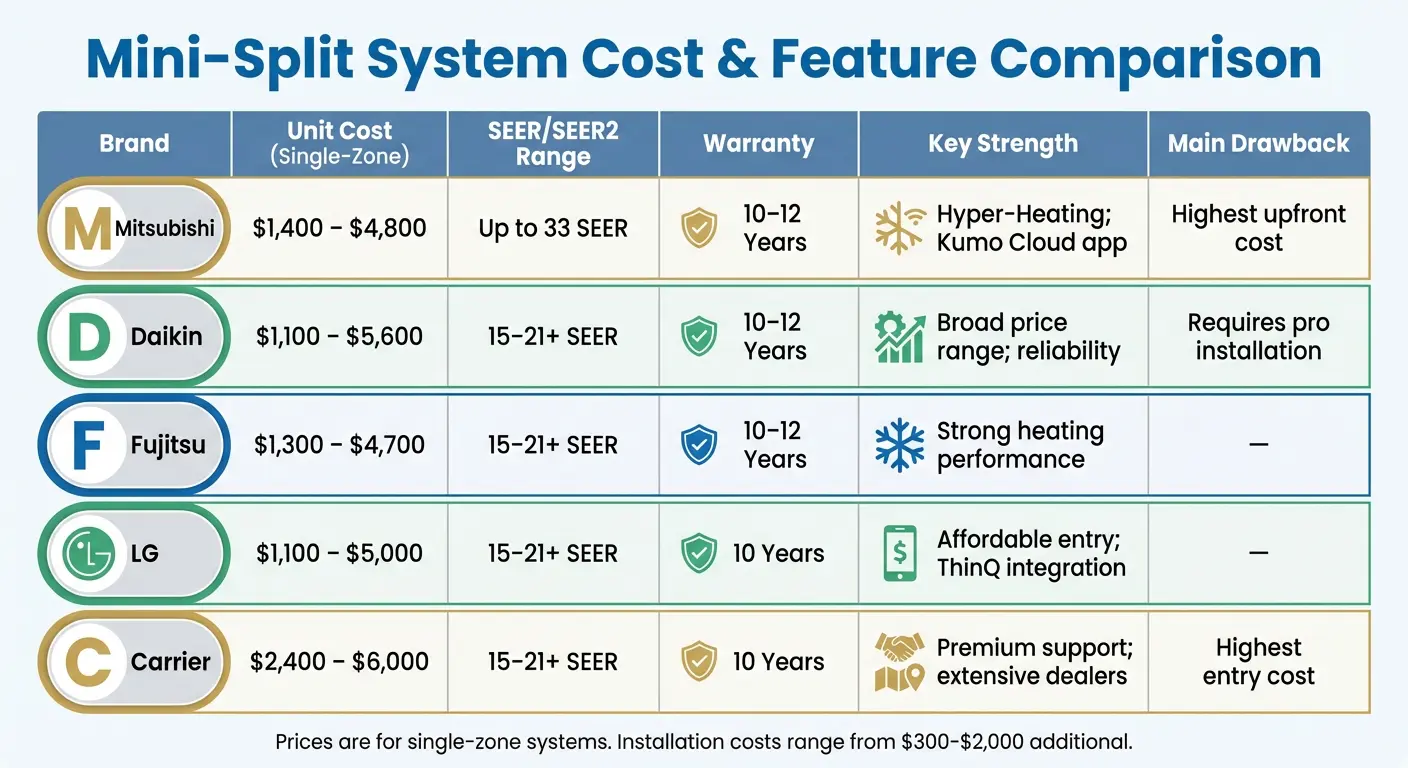
Mini-Split System Cost Comparison by Brand: Equipment, Labor, and Efficiency Ratings
Taking a closer look at the cost breakdowns above, here’s a quick comparison of the key advantages and disadvantages for each brand.
Mitsubishi stands out for its premium pricing – starting at $1,400 for the hardware alone – but justifies this with high reliability and features like Hyper-Heating technology, which is especially useful in colder climates. With efficiency ratings reaching up to 33 SEER, Mitsubishi systems can help lower utility bills over their typical 15- to 20-year lifespan. That said, the upfront cost is on the higher side, and professional installation is necessary to maintain the 10- to 12-year warranty.
Daikin and LG offer more affordable entry points, with units starting at $1,100, making them solid choices among premium brands. Daikin’s wide price range ($1,100 to $5,600) caters to both budget-conscious buyers and those seeking high-performance systems. Meanwhile, LG’s indoor units stand out for their sleek design and ThinQ smart-home integration, appealing to tech-savvy homeowners. Like Mitsubishi, both brands require professional installation to keep the warranty valid.
Carrier takes a more premium approach, with units starting at $2,400. While their systems deliver reliable performance in the 15–21+ SEER range and come with the benefit of an extensive dealer network, the higher upfront cost may deter budget-minded buyers.
Fujitsu offers a competitive middle-ground option, with pricing between $1,300 and $4,700, along with strong heating performance.
| Brand | Unit Cost (Single-Zone) | SEER/SEER2 Range | Warranty | Key Strength | Main Drawback |
|---|---|---|---|---|---|
| Mitsubishi | $1,400 – $4,800 | Up to 33 SEER | 10–12 Years | Hyper-Heating; Kumo Cloud app | Highest upfront cost |
| Daikin | $1,100 – $5,600 | 15–21+ SEER | 10–12 Years | Broad price range; reliability | Requires pro installation |
| Fujitsu | $1,300 – $4,700 | 15–21+ SEER | 10–12 Years | Strong heating performance | – |
| LG | $1,100 – $5,000 | 15–21+ SEER | 10 Years | Affordable entry; ThinQ integration | – |
| Carrier | $2,400 – $6,000 | 15–21+ SEER | 10 Years | Premium support; extensive dealers | Highest entry cost |
Weighing these pros and cons can help you decide which brand aligns best with your budget and long-term needs.
Conclusion
Premium brands like Mitsubishi (priced between $1,400 and $4,800) and Carrier (ranging from $2,400 to $6,000) stand out for their high efficiency – reaching up to 33 SEER+ – and extended warranty options. On the other hand, budget-friendly choices like LG and Daikin start at around $1,100, offering more affordable entry points for buyers.
While upfront costs are important, long-term savings can’t be ignored. High-efficiency systems help offset their price tags by lowering monthly energy bills. Plus, systems with higher SEER2 ratings may qualify for federal tax credits under the Inflation Reduction Act. These credits can cover up to 30% of installation costs, with a maximum benefit of $2,000. For example, a $6,000 system could effectively cost you about $4,200 after applying these incentives.
The complexity of the system also plays a big role in overall costs. Single-zone systems typically fall between $2,000 and $7,000, while multi-zone setups designed for larger homes can go beyond $20,000. Multi-zone systems come with a key advantage: they allow precise control over individual rooms, enabling you to turn off units in unused areas and save on energy consumption.
For Chicagoland residents, these considerations are especially relevant. Partnering with a certified installer, like Eco Temp HVAC, ensures optimal system performance and protects your investment. Eco Temp HVAC, for instance, holds Mitsubishi Diamond Elite Contractor certification, which extends warranties to 12 years. Professional installation not only maximizes system efficiency but also helps maintain warranty coverage, saving you from potentially costly repairs down the road.
To make the best decision, consider balancing your budget, comfort needs, and energy efficiency goals. Get three detailed quotes, take advantage of rebates, and evaluate efficiency ratings over the system’s typical 15- to 20-year lifespan.
FAQs
What affects the cost of installing a ductless mini-split system?
The price of installing a ductless mini-split system can vary widely, depending on a handful of key factors. One major influence is the number of indoor units or zones. A single-zone system is generally more affordable, while multi-zone setups with multiple indoor units will increase costs. Another important factor is the system’s size and capacity, measured in BTUs – larger or higher-capacity units tend to come with a higher price tag.
Installation complexity also plays a role. For example, challenges like limited site accessibility or the need for electrical upgrades can drive up costs. The energy efficiency rating (SEER) of the unit is another consideration. While high-efficiency models may cost more initially, they often lead to savings on energy bills in the long run. Additional expenses could stem from features such as smart thermostats or advanced airflow settings, as well as local labor rates and any required permits.
On average, the total cost of installation can range from $2,000 to over $15,000, depending on these variables. For those seeking professional installation and expert advice, Eco Temp HVAC offers services backed by certifications like the Mitsubishi Diamond Elite Contractor designation, ensuring both quality and reliability for the long haul.
How does the brand of a mini-split system impact its efficiency and reliability?
When it comes to mini-split systems, the brand you choose can significantly impact both efficiency and reliability. Well-known brands often incorporate higher-quality components and advanced technology, which translates into better energy efficiency – typically reflected in their SEER ratings – and lower energy bills over time. These systems are also built to last, requiring fewer repairs and offering longer lifespans.
Another advantage of sticking with reputable brands is the added peace of mind they provide. Many offer extended warranties and access to certified technicians, ensuring proper installation and dependable maintenance. On the other hand, opting for a lesser-known, budget-friendly brand might save you some money upfront, but it could lead to more frequent breakdowns, reduced efficiency, and higher maintenance expenses down the road.
Choosing a trusted, certified brand means investing in a system that’s not only more reliable and energy-efficient but also delivers better long-term value for your home.
Are there any tax credits or incentives for installing energy-efficient mini-split systems?
Homeowners can take advantage of federal tax credits and energy-saving incentives when they install high-efficiency mini-split systems. Until 2025, you might be eligible for tax credits of up to $3,200 or save as much as 30% on installation costs. These programs are designed to encourage energy-efficient home improvements. Be sure to consult your tax advisor or explore local programs to confirm your eligibility and make the most of these savings.