

Spring is the best time to prepare your AC system for summer. Proper maintenance can extend your unit’s lifespan, cut energy costs by up to 30%, and prevent breakdowns during hot months. Here’s a quick rundown of what you need to know:
- Why Spring Maintenance Matters: Avoid costly repairs, improve efficiency, and ensure your AC handles summer heat. A well-maintained system lasts 15–20 years, compared to 7–10 years for neglected units.
- DIY Tasks: Clean outdoor condenser units, replace filters, check vents, test thermostats, and flush the condensate drain line.
- Professional Tune-Ups: Includes refrigerant checks, electrical inspections, coil cleaning, and thermostat calibration. Costs range from $75 to $200.
- Red Flags: Weak airflow, odd noises, frequent cycling, or rising energy bills may signal repairs or replacement.
- Savings: Regular maintenance can save $200–$500 annually on energy bills and improve cooling efficiency by 5–15%.
Tackling these tasks early in spring ensures your AC is ready for the summer heat while saving money and avoiding headaches.
Central Air Conditioner Service Maintenance Spring Tune & Clean
DIY Spring AC Preparation Checklist
Spring is the perfect time to tackle a few key tasks to get your AC ready before summer’s heat arrives. Spending a few hours on maintenance now can save you from costly repairs later. Before you start, make sure to turn off the power to your system at both the thermostat and the circuit breaker.
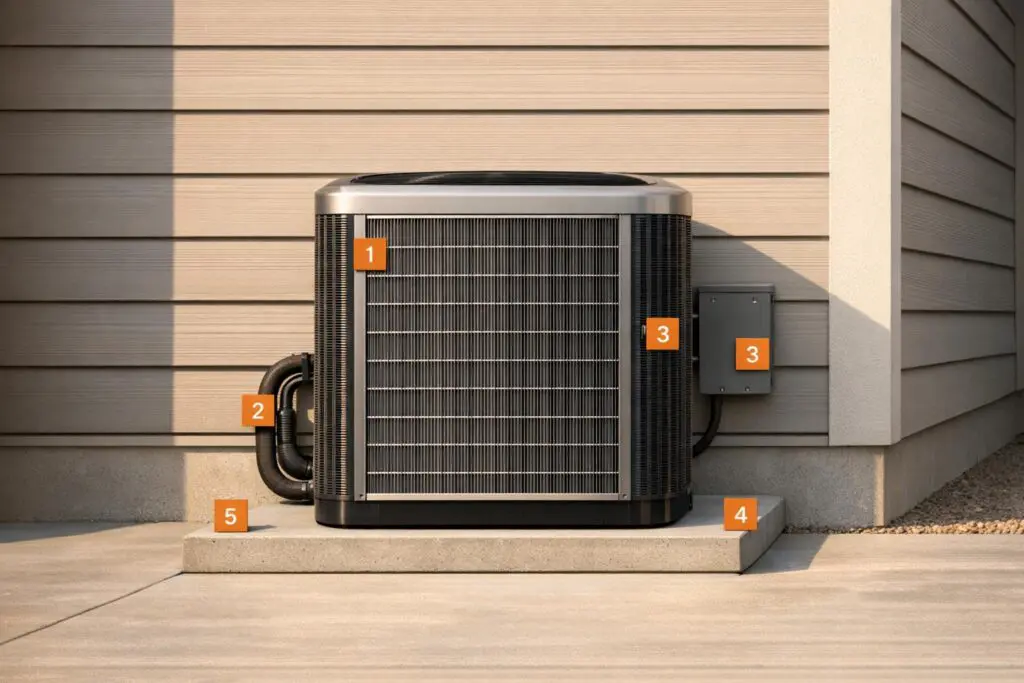
Clean the Outdoor Condenser Unit
Winter can leave your outdoor unit in rough shape – leaves, dirt, and debris can block airflow, forcing the system to work harder. Begin by removing any winter covers, coil blankets, or lids. Terri Beth Miller, a writer for Angi, emphasizes:
"Starting the system with any of these [winter] covers in place, even for a short time, could severely damage your system".
Next, unscrew protective panels and clear away any debris. Trim back vegetation around the unit, ensuring there’s at least a 2-foot clearance. For the condenser coils, use a soft-bristle brush or fin comb to gently remove dirt without bending the aluminum fins. Rinse the coils with a garden hose set to low pressure – spray downward to avoid damage. For a deeper clean, apply a non-acidic foaming coil cleaner or a mild dish soap solution. Dirty coils can increase energy use by up to 40% and reduce cooling efficiency by over 30%.
Lastly, inspect the foam insulation on the larger copper suction line. If you see cracks or sun damage, replace it with new foam pipe insulation. Only the larger line needs insulation, not the smaller liquid line.
Replace or Clean Air Filters
Clogged filters are one of the most common AC issues, and they’re easy to fix. Replace 1-inch filters monthly and 4-inch filters every six months – or more often if you have pets, smokers, or allergy sufferers in the house. According to the Department of Energy, replacing a dirty filter can improve efficiency by 5–15%.
Check your filter monthly. If it looks gray or dusty, replace it immediately. Signs that you’ve waited too long include weak airflow, rising energy bills, musty odors, or even ice on the coils. When installing a new filter, make sure the arrows on the frame point in the direction of the airflow.
For allergy-prone households, choose filters with a MERV rating of 12–16 for better particle removal. Stock up on filters so you’re always ready to replace them when needed.
Inspect and Clean Indoor Vents and Registers
Dust and debris in your vents can reduce airflow and spread allergens. Start by turning off the HVAC system, then use a flashlight to check for dust buildup or musty odors.
Remove vent covers with a screwdriver and brush off loose dust. For heavily soiled covers, wash them with warm soapy water. To clean inside the ducts, use a long-handled scrub brush to loosen dust and follow up with a shop vacuum equipped with a long hose. Wipe down accessible surfaces with a damp microfiber cloth to trap fine particles.
The US EPA notes:
"It is normal for the return registers to get dusty as dust-laden air is pulled through the grate. This does not indicate that your air ducts are contaminated with heavy deposits of dust or debris; the registers can be easily vacuumed or removed and cleaned".
If dust clouds appear when the system starts, allergy symptoms persist, or musty smells linger, professional duct cleaning may be necessary. This service typically costs between $450 and $1,000.
Test and Adjust Thermostat Settings
After cleaning the outdoor unit and replacing filters, test your thermostat. Switch it to cooling mode and set the temperature a few degrees lower than the current room temperature. Listen for the system to turn on and check for cool air from the vents. If your thermostat uses batteries, replace them now to avoid issues later.
To verify accuracy, place an indoor thermometer nearby and compare the readings. If there’s a noticeable difference, your thermostat might need recalibration or replacement.
Check the Condensate Drain Line
Your AC’s condensate drain line removes moisture, but it can clog with algae, mold, or debris. A blocked drain can cause water damage or even shut down the system. Inspect the PVC drain near the indoor unit for leaks or standing water.
For minor clogs, pour a cup of distilled white vinegar into the drain line, let it sit for 30 minutes, and then flush with water. For tougher blockages, use a wet/dry vacuum to remove debris. Regularly cleaning the drain line helps prevent water overflow during humid summer months.
Professional AC Tune-Up Services
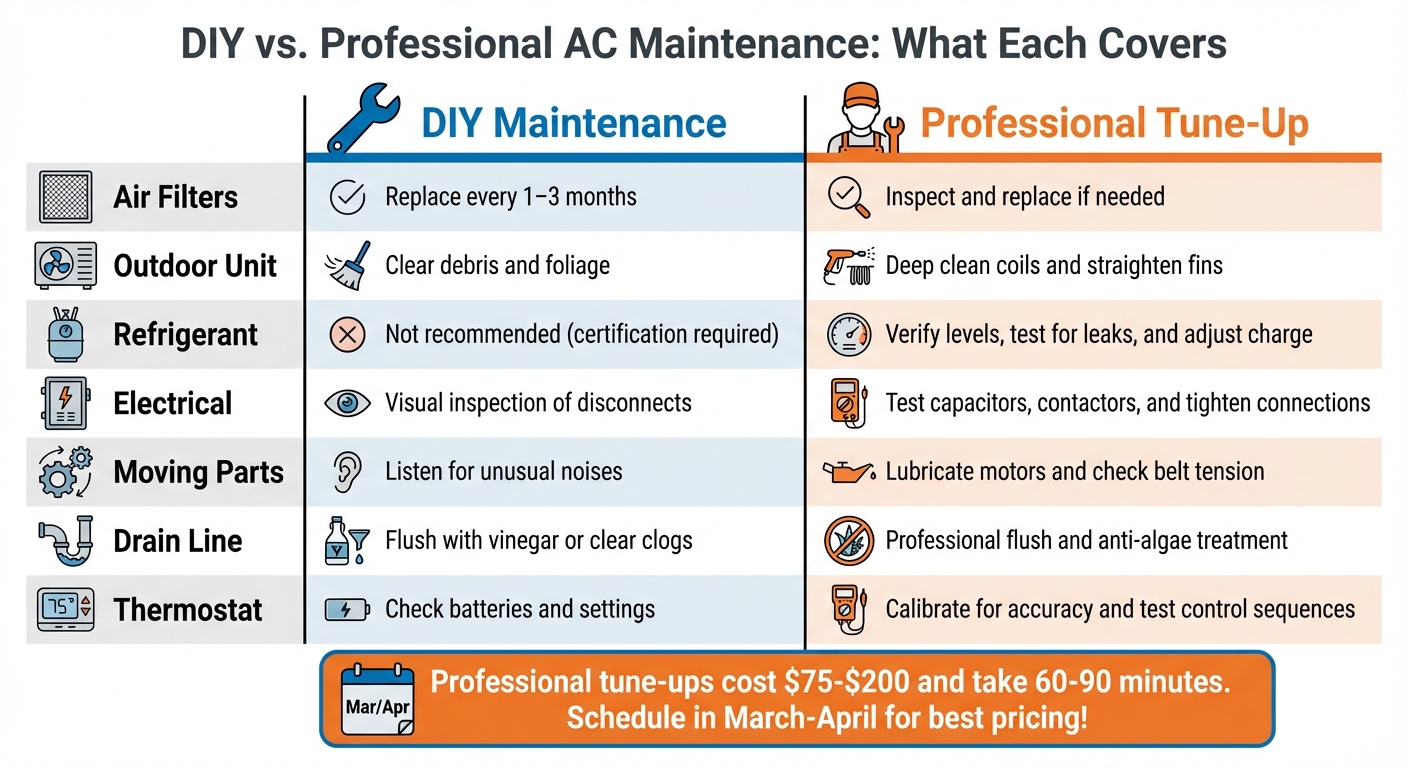
DIY vs Professional AC Maintenance Tasks Comparison Chart
After you’ve tackled the basics of DIY maintenance, a professional AC tune-up takes things a step further. While DIY efforts handle surface-level upkeep, professional services uncover and address hidden issues like slow refrigerant leaks, worn-out electrical parts, and calibration problems that can quietly drain your system’s efficiency. Without regular maintenance, your AC could lose up to 5% of its efficiency each year. Over time, this decline can lead to higher energy bills and even shorten your system’s lifespan. Professional tune-ups build on your DIY work, ensuring your AC is ready to tackle the summer heat.
What’s Included in a Professional Tune-Up
A professional tune-up goes beyond just the basics. It typically takes about 60 to 90 minutes and dives into both visible and hidden components of your system. Here’s what you can expect:
- Coil Cleaning and Airflow Optimization: Technicians clean the evaporator and condenser coils and use fin combs to straighten bent aluminum fins, ensuring proper airflow.
- Refrigerant Checks: They verify refrigerant levels, test for leaks, and adjust the charge for maximum cooling efficiency.
- Electrical Inspections: Professionals tighten connections, test capacitors and contactors for wear, and ensure the control sequence is functioning correctly. (Note: Capacitors can retain dangerous electrical charges even when the system is off, so testing them is best left to the pros.)
- Lubrication and Airflow Testing: Motors and fans are lubricated to minimize friction, the blower assembly is inspected, and airflow across the evaporator coil is measured.
- Condensate Drain Maintenance: The condensate drain line gets a professional flush and anti-algae treatment, which is far more thorough than DIY methods.
- Thermostat Calibration: Thermostats are calibrated for accuracy to ensure efficient system operation.
As Tom Moor from HVAC.com points out:
"The vast majority of HVAC manufacturers require annual HVAC maintenance to keep your system’s warranty intact".
Skipping regular service could mean paying out of pocket for expensive repairs if your warranty becomes void.
Why Choose Eco Temp HVAC for Your Tune-Up

Eco Temp HVAC sets itself apart with 24/7 availability and a team of certified technicians who are background-checked and drug-tested. The company boasts an A+ rating from the Better Business Bureau – an achievement earned by just about 2% of HVAC providers – and backs its services with a 100% money-back guarantee and a two-year service warranty.
Eco Temp HVAC technicians are skilled in working with top brands like American Standard, Mitsubishi, Trane, Lennox, Goodman, and Carrier. As a Mitsubishi Diamond Elite Contractor, they offer a 12-year warranty on Mitsubishi products. They also hold certifications as a Navien Service Specialist and an American Standard Customer Care Dealer. With locations across Chicago, St. Charles, Bartlett, Lemont, Downers Grove, and Palatine, they provide quick service throughout the Chicagoland area.
Professional tune-ups generally cost between $75 and $200. Eco Temp HVAC also offers the Eco Home Program, a year-round maintenance plan that includes annual AC and furnace tune-ups, priority scheduling, and discounts on parts and labor. Regular maintenance through this program can help you save up to 15% on monthly energy bills and extend your system’s lifespan to 10–15 years or more.
DIY vs. Professional Maintenance Comparison
Professional tune-ups are the perfect complement to your DIY efforts, combining to keep your AC in peak condition.
| Task | DIY Maintenance | Professional Tune-Up |
|---|---|---|
| Air Filters | Replace every 1–3 months | Inspect and replace if needed |
| Outdoor Unit | Clear debris and foliage | Deep clean coils and straighten fins |
| Refrigerant | Not recommended (certification required) | Verify levels, test for leaks, and adjust charge |
| Electrical | Visual inspection of disconnects | Test capacitors, contactors, and tighten connections |
| Moving Parts | Listen for unusual noises | Lubricate motors and check belt tension |
| Drain Line | Flush with vinegar or clear clogs | Professional flush and anti-algae treatment |
| Thermostat | Check batteries and settings | Calibrate for accuracy and test control sequences |
To avoid the summer rush, schedule your tune-up in March or April. Many companies, including Eco Temp HVAC, offer seasonal discounts during this time. Booking early also ensures that if repairs are needed, parts will be readily available.
sbb-itb-b5c10b1
Signs Your AC Needs Repair or Replacement
Even with regular maintenance, AC systems can develop issues over time. Spotting these problems early – ideally in spring – can help you avoid costly breakdowns and emergency repairs. Knowing whether your system needs a simple fix or a complete replacement is key.
Common AC Problem Warning Signs
Strange sounds like banging, hissing, or bubbling could mean trouble. These noises might point to loose parts, refrigerant leaks, or failing components. For instance, a hissing or bubbling sound often signals a refrigerant leak.
If you notice weak airflow coming from your vents, it could be due to blocked ducts, a failing blower motor, or clogged filters. Uneven cooling – where some rooms stay too hot or too cold no matter how you adjust the thermostat – may also suggest poor air distribution.
Another red flag is frequent on/off cycling, which can wear down components and may indicate malfunctioning parts or an improperly sized system. Physical signs like ice buildup on coils, water leaks, unpleasant odors (moldy or burnt smells), or an unexpected spike in energy bills are clear signals that your AC might be overworking.
As Frontdoor points out:
"If your A/C is older or a major component has failed, it may make more sense to simply replace the unit".
When these problems persist, it’s worth considering a more permanent solution. If your AC is nearing the end of its lifespan or requires constant repairs, upgrading to a newer system could save you money in the long run.
Consider Upgrading to Modern AC Systems
Modern air conditioning systems are built to address many of the common issues older units face, such as refrigerant leaks and inconsistent airflow. If major components like the compressor or main coil break down, replacing the unit often makes more financial sense than repairing it. Plus, newer systems are designed with higher energy efficiency, which can lower your monthly utility bills. Many also feature smart technology for enhanced control and monitoring.
For year-round comfort, modern options like heat pumps are excellent choices. Ductless mini-split systems provide flexible installation and zoned cooling, making them ideal for homes without existing ductwork or for improving comfort in specific areas.
Eco Temp HVAC specializes in installing energy-efficient systems from trusted brands like American Standard, Mitsubishi, Trane, Lennox, Goodman, and Carrier. As a Mitsubishi Diamond Elite Contractor, they offer an impressive 12-year warranty on Mitsubishi products – far exceeding standard warranties. Their certified technicians can evaluate your current system and help you decide whether repair or replacement is the better option for your needs and budget. With service locations across Chicagoland – including Chicago, St. Charles, Bartlett, Lemont, Downers Grove, and Palatine – they’re ready to provide expert assistance for all your AC concerns.
Seasonal AC Maintenance Schedule
Keeping your air conditioner in good shape throughout the year requires consistent upkeep. A well-planned maintenance routine can stop minor problems from turning into costly repairs. According to All Temp, regular maintenance can increase equipment lifespan by 40% and cut energy costs by up to 30%. Considering that cooling typically accounts for 48% of total summer energy use in an average household, staying ahead with maintenance is a smart financial move. Below is a breakdown of monthly and annual tasks designed to keep your AC running smoothly and efficiently.
Monthly Maintenance Tasks
These monthly tasks align with earlier DIY and professional maintenance tips. During the spring and summer months, follow this schedule to keep your system in top condition.
- Replace air filters: Swap out filters every 1 to 3 months, depending on factors like pets, allergies, or dust levels. This simple step helps maintain good air quality and prevents unnecessary strain on the system.
- Clear the area around the condenser: Make sure there’s at least 2 feet of clearance by trimming back plants and removing debris such as leaves or grass clippings.
- Clean the condensate drain: Pour 1 cup of white vinegar down the drain monthly to avoid algae buildup and clogs.
- Dust and vacuum vents: Keep vents free of dust to ensure smooth airflow.
- Check thermostat settings and batteries: Verify that your thermostat is functioning properly and replace batteries if needed.
- Inspect for unusual issues: Pay attention to any odd sounds – like banging or grinding – or signs of water leaks or ice on the coils.
To stay on track, set a recurring reminder on your smartphone for tasks like these, ideally on the first Saturday of each month.
Annual Professional Inspections
While monthly DIY tasks are essential, an annual professional inspection is key to ensuring your AC’s long-term reliability. Technicians handle more complex tasks, such as checking refrigerant levels, calibrating thermostats, tightening electrical components, and lubricating moving parts. According to the U.S. Department of Energy, regular AC maintenance can boost system efficiency by 5-15%, and the Comfort Institute highlights that 50% of HVAC system failures stem from inadequate maintenance.
Certified technicians from Eco Temp HVAC offer detailed tune-ups that catch small issues before they turn into expensive repairs. With service locations across Chicagoland – including Chicago, St. Charles, Bartlett, Lemont, Downers Grove, and Palatine – they make it convenient to schedule a check-up before the summer heat sets in. Plus, many manufacturers require proof of annual maintenance to keep warranties valid. Scheduling a spring inspection not only protects your system but also helps safeguard your budget.
Conclusion
Getting your AC ready in spring is a smart move for both your comfort and your wallet. Tackling basic maintenance tasks helps you avoid turning small issues into expensive repairs later on. As Tom Moor from HVAC.com explains:
"AC maintenance is akin to an annual vehicle tune-up, ensuring optimal functionality and preventing unexpected breakdowns".
While DIY maintenance is helpful, professional tune-ups take it a step further by addressing deeper issues. These services include checking refrigerant levels, testing electrical components, and calibrating your system to meet manufacturer guidelines. This kind of care helps catch problems before they ruin your summer plans with a mid-season breakdown. Plus, scheduling your tune-up early in the spring not only avoids the summer rush but also helps you lock in better pricing.
For those in the Chicagoland area, Eco Temp HVAC offers expert-level AC care. Their certified technicians deliver thorough tune-ups backed by industry-leading guarantees, ensuring your system runs efficiently and lasts longer.
FAQs
Why is it important to schedule AC maintenance in the spring?
Spring is the perfect time to give your air conditioning system the attention it needs to perform efficiently when summer rolls around. Tackling minor issues early – like clearing out debris or swapping out worn components – can help you avoid the headache of unexpected breakdowns when the heat is at its peak.
Routine maintenance doesn’t just help prevent problems; it also makes your system more energy-efficient. A well-maintained AC uses less energy, which means lower utility bills for you. Plus, it doesn’t have to work overtime to keep your home cool.
Another big perk? Spring maintenance helps extend the life of your AC. Dirt and neglect can lead to wear and tear, but regular upkeep keeps everything running smoothly for longer. And let’s not forget about indoor air quality. Cleaning filters and ducts during the spring is especially beneficial for allergy sufferers, as it reduces allergens and keeps your home’s air fresh.
By prepping your system in the spring, you’re setting yourself up for a summer that’s cool, comfortable, and free from unexpected (and expensive) repair surprises.
How do I know if my air conditioner needs professional service instead of DIY maintenance?
While simple maintenance tasks like cleaning filters or clearing debris from your air conditioner are manageable on your own, certain problems signal the need for professional help. If your AC is struggling to cool your home, making strange noises, leaking, or causing a sudden increase in energy bills, it’s a clear sign to bring in an expert. These persistent issues often demand specialized tools and knowledge to fix safely and properly.
Another factor to consider is if your system has sat idle through the winter months. Dust buildup, rust, or even pests could be affecting its performance. A professional service visit ensures your unit gets a thorough inspection, cleaning, and preparation to handle the demands of warmer weather. When DIY fixes fall short, calling an HVAC technician is the smartest move for both peace of mind and keeping your system running efficiently.
What are the signs that it’s time to replace my air conditioner instead of repairing it?
If your air conditioner is more than 10–15 years old, it might be worth thinking about a replacement. As units age, they tend to become less efficient and often need repairs more frequently – costs that can pile up over time.
You might also notice performance issues. These could include uneven cooling, excessive humidity, or warm air blowing from the vents, even after routine maintenance. Another red flag is rising energy bills, which could mean your system is working overtime to keep up, signaling a drop in efficiency.
Lastly, if you’ve had to arrange several repairs in a short span, it may make more financial sense to invest in a new unit rather than continuing to patch up the old one.