
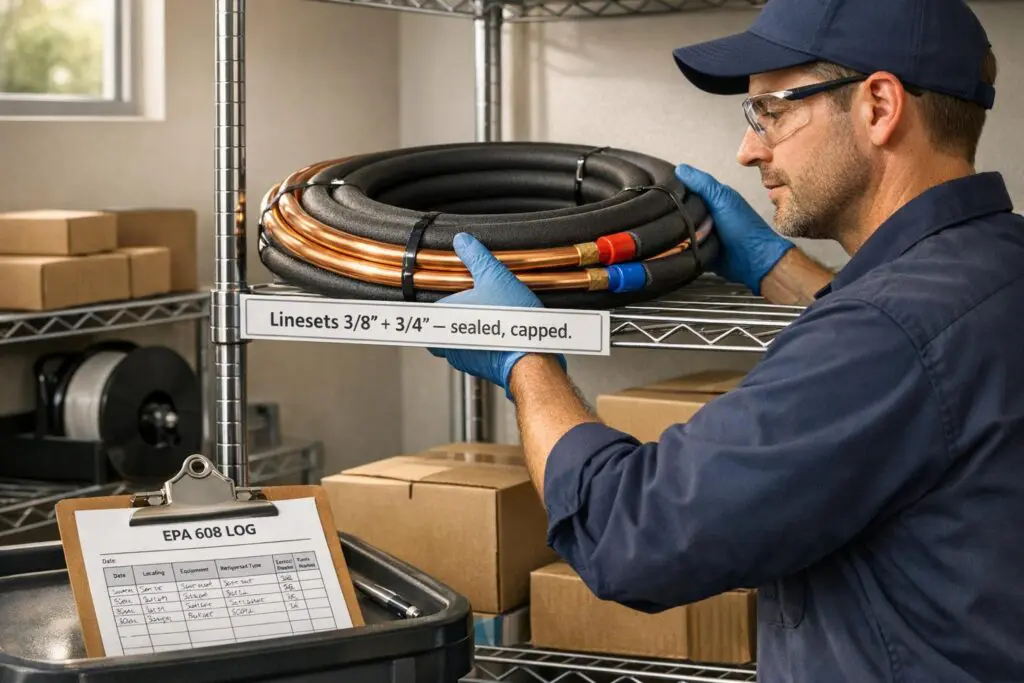
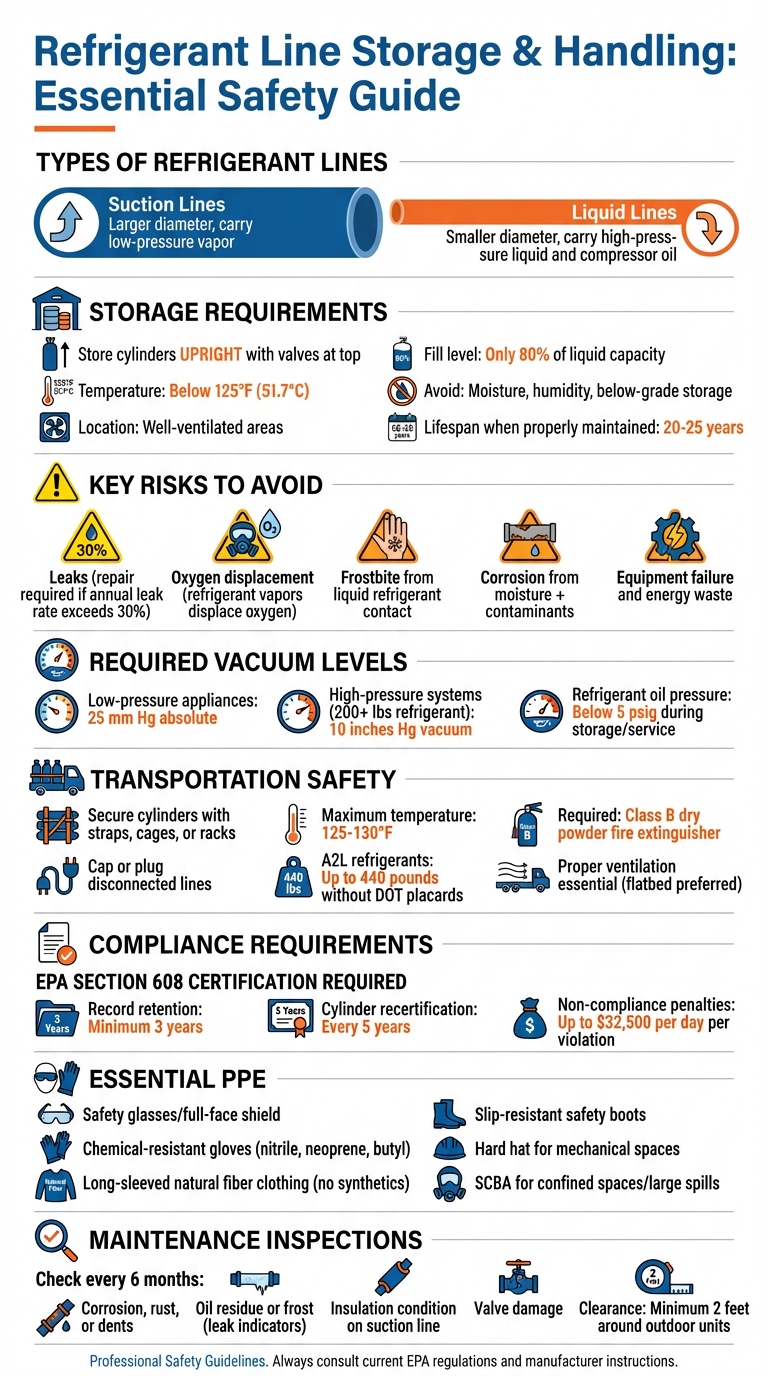
- Types of Lines: Suction lines (larger) carry low-pressure vapor; liquid lines (smaller) carry high-pressure liquid and compressor oil.
- Key Risks: Leaks, blockages, or poor insulation can impact performance, waste energy, and damage equipment.
- Storage Guidelines: Store lines upright, below 125°F, in ventilated areas. Avoid moisture to prevent contamination or corrosion.
- Safety Measures: Use protective gear, ensure proper ventilation, and follow EPA Section 608 regulations to avoid hefty fines or health hazards.
- Transportation Tips: Secure cylinders, label refrigerants, and maintain temperature control during transit.
- Compliance: Maintain records for at least three years to meet EPA standards and avoid penalties.
Proper refrigerant line handling ensures efficiency, safety, and compliance. Mismanagement can lead to equipment failure, legal penalties, and health risks.
Refrigerant Line Storage and Handling Safety Requirements Guide
Handling, Transport, and Storage
sbb-itb-b5c10b1
Why Proper Refrigerant Line Storage Matters
Storing refrigerant lines correctly is essential for keeping HVAC systems running efficiently, ensuring technician safety, and staying compliant with regulations. Improper storage can lead to contaminants like air and moisture entering the system, making it harder for technicians to reach the required vacuum levels before restarting operations. For example, low-pressure appliances need to hit 25 mm Hg absolute, while high-pressure systems with 200 pounds or more of refrigerant must achieve a 10 inches Hg vacuum when using post-1993 recovery equipment.
How Storage Affects HVAC System Performance
The way refrigerant lines are stored has a direct impact on HVAC system performance. When air or moisture gets into the lines due to poor storage practices, technicians have to spend extra time removing these contaminants. This can also lead to leaks, and if the annual leak rate exceeds 30%, repairs are required to maintain system efficiency. Additionally, refrigerant oil, which plays a crucial role in lubrication, can lose effectiveness if pressure isn’t kept below 5 psig during storage or service (such as during oil changes). This can result in refrigerant loss and reduced lubrication performance.
Preventing Safety Hazards
Improper refrigerant storage isn’t just an inconvenience – it can be dangerous. Refrigerant vapors displace oxygen, which makes storing cylinders or lines in below-grade areas like basements a serious risk.
"Oxygen monitors shall be installed where leaks from appliances or containers of refrigerant can cause an oxygen-deficient atmosphere." – University of Chicago Environmental Health and Safety
On top of that, direct contact with liquid refrigerant can cause severe frostbite-like injuries and even permanent eye damage. Modern refrigerants, such as R-410A, operate at much higher pressures than older types. If storage lines are damaged or not secured properly, they could rupture unexpectedly, releasing high-pressure refrigerant.
Industry Standards and Regulations
Strict regulations at both federal and local levels govern how refrigerant lines must be stored and documented. EPA Section 608, for instance, lays out mandatory recovery and recycling protocols, while local codes can impose additional rules. In Chicago, for example, below-grade storage is prohibited, and facilities must install oxygen monitors and maintain detailed records of refrigerant storage and leak repairs for at least three years.
Facilities must also ensure that all recovery and storage equipment is EPA-certified, with visible tags showing the date of manufacture and serial number.
| Regulation/Standard | Focus Area | Key Requirement |
|---|---|---|
| EPA Section 608 | Environmental Protection | Mandatory recovery/recycling; no venting |
| 40 CFR Part 82 | Federal Law | Specific evacuation levels for different pressures |
| Local Codes (e.g., Chicago) | Safety/Installation | Prohibits below-grade storage; requires oxygen monitors |
| ASHRAE 15 | Safety Standard | Governs safe design and operation of refrigeration systems |
These rules emphasize the importance of proper refrigerant line storage, not just for maintaining system efficiency but also for ensuring safety and compliance.
How to Store Refrigerant Lines Correctly
When it comes to refrigerant line storage, ensuring safety and maintaining performance are the top priorities. Proper storage involves careful attention to positioning, environmental conditions, and corrosion prevention. Following these steps helps keep refrigerant lines in optimal condition.
Positioning and Placement
Refrigerant cylinders should always be stored upright, with their valves positioned at the top. This setup ensures the refrigerant stays in the correct state and reduces the chances of leaks. To prevent accidents, cylinders must be secured using straps, cages, or specialized storage racks. Avoid rolling or laying cylinders on their sides, and use appropriate tools like wheeled carts or forklifts for transportation.
It’s important to note that a "full" cylinder is only filled to 80% of its liquid capacity to allow for safe expansion. Mark Harbin, Manager of Compliance Services Division at Environmental Support Solutions, warns about the dangers of overfilling:
"Hydrostatic pressure can be deadly in an overfilled refrigerant container."
Environmental Conditions
Refrigerant cylinders should be stored in cool, well-ventilated areas, with temperatures kept below 125°F (51.7°C). If heating is necessary, warm water (not exceeding 125°F) can be used. Never rely on open flames or electric heaters, as excessive heat can cause dangerous pressure buildup, potentially leading to container ruptures or explosions.
For A2L refrigerants, which are mildly flammable, ensure ventilation systems are rated for these gases. A2L classification refers to refrigerants with a burning velocity of 10 centimeters per second or less. High humidity levels should also be avoided, as they can interfere with the accuracy of leak detection sensors. Additionally, any relief or purge vent piping must be directed outdoors and away from building air intakes to maintain safety.
Preventing Corrosion and Damage
Corrosion prevention is essential for maintaining the integrity of refrigerant containers. Cylinders should be stored in dry areas to avoid steel oxidation and rust, which can weaken their walls and seams. As stated by Coolers Inc.:
"The most common cause of corrosion in refrigeration is moisture combining with environmental contaminants (dust, dirt, salt, etc.)"
Dust accumulation can trap moisture, creating an electrolyte that accelerates corrosion through electrochemical reactions. To combat this, refrigerant components should be cleaned at least every six months to remove dust and debris.
Regular inspections are also crucial. Check cylinders for dents, rust, or valve damage, and never use a cylinder that appears compromised. Refillable cylinders must undergo professional retesting and recertification every five years, with the test date clearly stamped on the cylinder shoulder. Keep in mind that failing to comply with EPA refrigerant regulations can result in severe penalties, with fines reaching up to $32,500 per day per violation.
Safe Transportation of Refrigerant Lines
Once refrigerant lines are properly stored, the next step is ensuring their safe transportation. Careful planning is essential to keep refrigerant lines and cylinders intact and secure, avoiding leaks, damage, or hazards during transit.
Securing and Positioning During Transport
Refrigerant cylinders must be securely fastened to prevent tipping or damage while being moved. For A2L refrigerants, cylinders can be transported either horizontally or vertically, but they must be tightly secured using straps, cages, or specialized racks to avoid shifting during transit. Disposable cylinders should remain in their original cartons to protect surfaces and absorb impacts.
Disconnected lines should be capped or plugged, and valves must be tightly closed. For returnable cylinders, a protective cap should be screwed onto the valve before transport. Additionally, pressure vessels should be partially relieved of gaseous refrigerant to ensure that the Maximum Allowable Work Pressure (MAWP) is not exceeded at temperatures up to 130°F (54°C). To prevent valve damage, always use a dedicated valve wrench.
Vehicle Ventilation and Temperature Control
Proper ventilation is critical to prevent refrigerant vapor buildup in case of a leak. HVAC Site recommends, "If the cylinder is carried in a car or a van then it should have proper ventilation". Whenever possible, use a flatbed vehicle, as natural airflow provides effective ventilation. For enclosed vans, installing a ventilation system is necessary to safely exhaust any fumes.
Temperature control is just as important. Refrigerant cylinders should not be exposed to temperatures higher than 125°F to 130°F. Parking vehicles in shaded areas can help reduce heat exposure and prevent excessive pressure buildup inside the cylinders. High temperatures can compromise cylinder integrity and create dangerous pressure levels.
Labeling and Safety Equipment Requirements
Proper labeling and safety equipment are key to safe transport. Vehicles carrying A2L refrigerants must display clear labels and carry the necessary safety gear. A label or tag identifying the refrigerant type and charge size should be placed prominently, such as in the engine bay, and should include a Division 2.1 class label or GHS pictogram. Service vehicles can carry up to 440 pounds of A2L refrigerants without requiring DOT placards.
Always have a Class B dry powder fire extinguisher on hand when transporting A2L refrigerants. Technicians should also carry personal protective equipment like gloves, safety goggles, and flame-resistant clothing to guard against potential leaks or ruptures. Before loading, inspect refrigeration systems for any signs of damage or leaks, and ensure that systems pressurized with refrigerant gas are proof pressure tested after any repairs or damage.
Safety Measures for Refrigerant Line Handling
Handling refrigerant lines during maintenance or repairs requires strict attention to safety. According to Mark Harbin, Manager of the Compliance Services Division at Environmental Support Solutions, oxygen starvation is the leading cause of fatalities in refrigerant-related accidents. Because refrigerant vapors are denser than air, they can displace oxygen in confined spaces, creating asphyxiation risks. Technicians also face hazards like frostbite from liquid refrigerants, electrical dangers, and chemical exposure. Following these safety measures helps ensure safe and compliant procedures.
Personal Protective Equipment (PPE)
Using the right PPE is crucial when working with refrigerant lines. Eye protection, such as safety glasses with side shields or a full-face shield, guards against high-pressure splashes that could cause serious eye injuries. For hand protection, opt for chemical-resistant gloves made of nitrile, neoprene, or butyl-lined materials to prevent frostbite and skin damage from liquid refrigerants. Wear long-sleeved shirts and pants made of natural fibers; synthetic materials should be avoided as they can melt if exposed to heat or flash fires.
Slip-resistant safety shoes or boots are essential, especially since refrigerant leaks can make surfaces dangerously slick. Hard hats offer protection from physical hazards in mechanical spaces. In poorly ventilated areas or during large spills, a self-contained breathing apparatus (SCBA) may be necessary to avoid asphyxiation.
Preparation and Risk Mitigation
Before starting any refrigerant line work, assess the environment for adequate ventilation, locate emergency exits, and use electronic refrigerant detectors along with personal gas monitors to confirm that oxygen levels are safe. Identify the specific refrigerant type and quantity, and ensure that heavier-than-air vapors haven’t compromised air quality in confined spaces.
When preparing the system, use nitrogen regulators and hoses for safe pressure testing and purging. Never apply direct heat to a closed system containing refrigerant. For newer A2L refrigerants like R-32 or R-454B, which are mildly flammable, check for potential ignition sources before proceeding. Additionally, verify that all hoses, gauges, and seals are rated for the refrigerant’s pressure – this is especially important for high-pressure refrigerants like R-410A, which operates at much higher pressures than R-22.
Lockout/Tagout and Voltage Verification
Electrical isolation is a key part of refrigerant line safety. HVAC systems often contain live electrical circuits and moving parts that can cause severe injuries or fatalities if accidentally energized. Lockout/tagout (LOTO) procedures ensure equipment is physically and visibly isolated from energy sources. Lockout involves using a physical lock to prevent power engagement, while tagout uses warning labels. OSHA prioritizes lockout and mandates its use whenever possible.
Follow the six-step LOTO process, which includes shutting down the system, isolating it, applying lockout devices, releasing stored energy, and verifying isolation with a digital multimeter. Always confirm circuits are completely de-energized before making contact. Use a multimeter to check that the system is "dead" after turning off the breaker. For added safety, test the controls to confirm isolation. When multiple technicians are involved, a multi-hole hasp ensures that each person applies their own lock, preventing re-energization until all locks are removed.
Maintaining Refrigerant Lines to Prevent Damage
Taking care of refrigerant lines is essential for keeping HVAC systems running efficiently and for extending their lifespan. When installed and maintained correctly, refrigerant lines can last 20 to 25 years. However, physical damage, corrosion, and moisture contamination can drastically reduce their lifespan. Regular upkeep and careful handling can help you avoid expensive repairs and system breakdowns.
Avoiding Physical Damage
Physical damage is one of the most common causes of refrigerant line failure. To avoid this, handle refrigerant cylinders carefully. Keep them in their original cartons and secure them to prevent tipping. Always use protective caps on returnable cylinder valves during transport or storage to prevent accidental discharge or damage.
When opening or closing cylinder valves, use a proper valve wrench to avoid damaging the mechanism. If a cylinder needs warming, use a warm water bath with water temperatures no higher than 125°F. Avoid using open flames or electric resistance heaters, as these can cause dangerous explosions. For outdoor units, ensure there’s at least two feet of clearance around the condenser. Be cautious when using lawn equipment like weed trimmers and mowers, as they can easily damage copper tubing.
If you’re upgrading or replacing an HVAC system, it’s important to replace the refrigerant lines rather than reusing older ones. As Trane explains, "It is not advisable to reuse old refrigerant lines as the sealant on the lines can wear down over time. If this happens, moisture will get in and mix with the coolant, which can damage the inside of your system". Worn seals allow moisture to infiltrate, which can harm the system’s internal components.
Routine inspections can help detect damage early and prevent further issues.
Inspection and Leak Prevention
Regular inspections are key to identifying potential problems before they escalate. Check copper lines for signs of corrosion, oil residue, or frost, as these may indicate leaks. If you hear hissing or bubbling sounds, it’s a clear sign of a leak. Additionally, inspect the suction line insulation – the larger, cold line – for any worn, cracked, or missing sections, and replace it as needed to maintain system efficiency.
For thorough leak detection, use a combination of methods. Electronic detectors can find very small leaks, soap bubble solutions visually confirm leak locations, and ultraviolet (UV) dyes are useful for spotting intermittent or hard-to-reach leaks. After making repairs, always perform an initial verification test before recharging the system. Follow up with another verification test within 30 days of the system returning to normal operation. To prevent damage from vibrations, secure refrigerant lines with brackets or padding if they rub against walls or metal surfaces, as constant friction can eventually puncture the copper.
Compliance and Documentation Requirements
Proper handling and maintenance go hand in hand with thorough compliance documentation, ensuring safety and adherence to regulations. When working with refrigerant lines, following federal guidelines and keeping detailed records isn’t optional – it’s mandatory. The EPA’s Section 608 of the Clean Air Act sets the standard for refrigerant handling, and maintaining accurate documentation helps individuals and businesses avoid regulatory issues.
Safety Data Sheet (SDS) Reviews
Every refrigerant has unique characteristics, and the Safety Data Sheet (SDS) is your go-to resource for understanding them. It provides critical details like pressure differences, recommended storage temperatures, handling precautions, and emergency procedures. These sheets need to be easily accessible and reviewed by technicians before starting any work.
EPA 608 Compliance
If you’re working on a refrigerant circuit, you need EPA Section 608 certification. Technicians must keep proof of this certification at their primary work location for at least three years.
Documentation requirements vary depending on the system size. For mid-sized appliances (5–50 pounds), such as residential split systems, you’ll need to maintain disposal logs. These logs should include the recovery date, location, refrigerant type, monthly totals, and details about reclamation or destruction. For larger systems containing 50 pounds or more of ozone-depleting refrigerants, owners must keep records like invoices showing the amount of refrigerant added, along with leak inspections and verification test results.
| Role | Required Documentation | Retention Period |
|---|---|---|
| Technician | Proof of certification; disposal logs (5–50 lbs appliances); leak inspection/test results (>50 lbs systems) | 3 years |
| Owner/Operator | Service records; leak inspection reports; verification test results (>50 lbs systems) | 3 years |
| Retailer/Wholesaler | Invoices (including purchaser name, sale date, and quantity); copies of purchaser certifications | 3 years |
Refrigerant sellers also have specific responsibilities. They must verify that buyers are certified and retain invoices with purchaser details for three years. If a non-certified employee picks up refrigerant, the seller needs documentation proving that the company employs at least one certified technician.
To stay organized, consider keeping digital backups of all records, whether they’re paper or electronic. This not only supports safe practices but also simplifies future regulatory inspections.
Conclusion
Handling refrigerant lines safely isn’t just about following rules – it’s about protecting people, equipment, and the environment. As BTrained HVAC Training puts it:
"Improper refrigerant handling can result in serious consequences, including EPA fines, personal injury, environmental damage, and costly equipment failures".
The penalties for non-compliance are steep, with violations carrying significant daily fines. That’s why it’s crucial to stick to best practices like using proper PPE, verifying refrigerant types, ensuring adequate ventilation, and maintaining detailed records for at least three years. These measures help prevent injuries like frostbite, reduce respiratory risks in confined spaces, and avoid system contamination that could make reclamation impossible.
Beyond safety, proper refrigerant handling is key to keeping systems running efficiently. Incorrect refrigerant levels can lead to equipment damage, reduced efficiency, and even compressor failure. It also minimizes the release of harmful substances like ozone-depleting chemicals and greenhouse gases.
For those in the Chicagoland area, Eco Temp HVAC offers EPA-certified services to ensure your HVAC systems are safe and efficient. Their expert technicians focus on compliance and maintaining peak system performance.
FAQs
How can I tell if moisture got into my refrigerant lines?
Moisture in refrigerant lines can lead to a range of problems, including lower compressor efficiency, corrosion, and, in severe cases, complete compressor failure. One warning sign to watch for is the formation of frost or ice on the lines, which is often more noticeable if the insulation is damaged or missing. Tackling these issues quickly is key to avoiding more extensive harm to your HVAC system.
When should refrigerant lines be replaced instead of reused?
Refrigerant lines need to be replaced if they show signs of damage, corrosion, or don’t meet the manufacturer’s specifications for the new system – this includes requirements for size or length. This step is particularly critical during system upgrades or replacements to ensure the system operates efficiently and functions as intended.
What records do I need to keep for EPA Section 608 compliance?
To comply with EPA Section 608 requirements, you need to maintain detailed records of refrigerant sales. These records should include:
- Invoices with the purchaser’s name, the date of the sale, and the quantity of refrigerant sold.
- Verification that the buyer is a certified technician.
Make sure to keep these records for a minimum of three years to ensure compliance.