
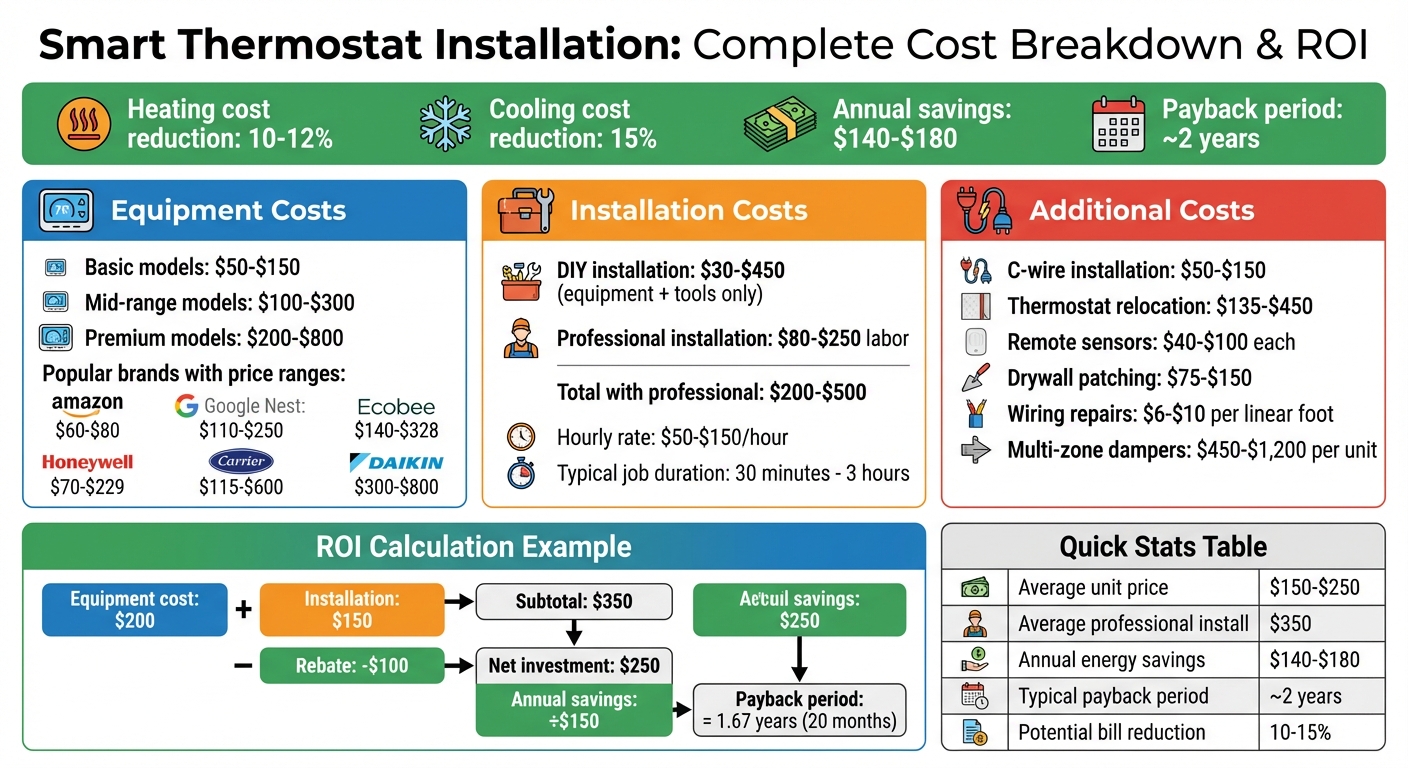
Smart thermostats offer convenience and energy savings by learning your habits and adjusting settings automatically. They can reduce heating costs by 10–12% and cooling expenses by about 15%, saving homeowners $140–$180 annually. Installation costs range from $200 to $500, with additional charges if your system lacks a C-wire ($50–$150). DIY installation is cheaper but riskier, while professional installation ensures proper setup and warranty protection. Most users recoup their investment within two years through energy savings. Check for utility rebates to lower upfront costs and ensure compatibility with your HVAC system before purchasing.
Smart Thermostat Installation Cost Breakdown and ROI Calculator
Preparation: Check Your System and Plan Your Budget
Check Your HVAC System Compatibility
Start by removing your thermostat’s faceplate to inspect the wiring terminals. If you see thin, multicolored 18-gauge wires, you likely have a standard low-voltage (24V) system, which works with most smart thermostats. On the other hand, thick 10- to 14-gauge wires indicate a line-voltage system (120V or 240V), which requires specialized models and won’t work with standard units.
The C-wire (common wire) is a key component because it provides the continuous power that smart thermostats need for Wi-Fi connectivity and display functions. Roughly 90% of these devices require a C-wire. Take a photo of your wiring terminals and use compatibility tools on manufacturer websites like Nest or Ecobee to confirm your setup. If your system lacks a C-wire, adding one can cost between $50 and $150. For homes with heat pumps, boilers, or ductless mini-splits, additional compatibility checks may be necessary. Make sure to verify your wiring and system type before deciding how many thermostats you’ll need.
Determine How Many Thermostats You Need
For most single-zone HVAC systems, one thermostat is sufficient to control the entire house. Adding multiple thermostats to a single-zone system can lead to conflicting commands, which wastes energy. Larger homes or multi-story layouts may require a multi-zone system with electronic baffles to direct airflow to specific areas. These setups involve professional HVAC and electrical work.
If you’re looking for a simpler and more affordable solution, consider using remote sensors. Priced at around $100 each, these sensors monitor temperature and movement in specific rooms and work with your main thermostat to adjust heating and cooling efficiently. For multi-zone systems, scheduling all installations in one visit can help reduce labor costs per unit. Proper planning here will streamline your equipment choices and overall budget.
Set Your Budget and Research Local Labor Costs
Once you’ve confirmed compatibility and equipment needs, it’s time to budget for both hardware and labor. Professional installation typically costs $50 to $150 per hour, with most jobs taking between 30 minutes and 3 hours. Keep in mind that technicians often charge a one-hour minimum, even if the job takes less time. To get the best deal, request estimates from at least three licensed HVAC technicians or electricians.
"You can also check with your utility company to obtain a smart thermostat. They may offer rebates and incentives for an even lower price compared to purchasing directly from a store." – Salvatore Cutrona, Owner, Cutrona Electric, LLC
To save on service fees, try scheduling the installation during a routine HVAC maintenance visit. Be prepared for additional costs, such as installing a C-wire ($50–$150), patching drywall if the unit is relocated ($75–$150), or purchasing remote sensors ($40–$100 each).
Smart Thermostat Costs: Equipment and Installation
Thermostat Unit Prices
Smart thermostats come in a variety of price ranges, depending on features and capabilities. Basic models, which include features like scheduling and smartphone control, typically cost $50–$150. Mid-range options, such as the Google Nest Thermostat, Ecobee3 Lite, and Sensi Touch 2, are priced between $100–$300 and offer advanced interfaces and learning capabilities. At the high end, premium models like the Nest Learning Thermostat 4th Gen, Ecobee Smart Thermostat Premium, and Daikin One+ range from $200–$800, offering extras like built-in voice assistants, additional sensors, and advanced algorithms.
Optional features can add to the cost. For example, built-in voice assistants or remote sensors might increase prices by $35–$100. Pricing also varies by brand:
- Amazon: $60–$80
- Google Nest: $110–$250
- Ecobee: $140–$328
- Honeywell: $70–$229
- Carrier: $115–$600
- Daikin: $300–$800
Professional Installation Fees
Professional installation is an additional cost to consider. On average, hiring a professional adds $80–$250 to your overall expenses. When combining equipment and installation, costs typically range from $200 to $500. However, specific tasks can increase the total. For instance:
- C-wire installation: $90–$140
- Thermostat relocation: $135–$450
If you’re installing multiple units, you might save on the per-unit rate. For example:
- Installing 2–3 units: $250–$600
- Installing 4 or more units: $500–$1,200
DIY Installation vs. Hiring a Professional
For those who prefer a hands-on approach, DIY installation is an option. This approach typically costs between $30–$450, covering the thermostat and any necessary tools. On the other hand, hiring a professional increases the total to $120–$650, accounting for labor and potential complexities.
DIY installation works well for simple, low-voltage replacements, especially if you’re confident your wiring is compatible. While it saves on labor costs, there are risks, including electrical hazards and potentially voiding warranties.
Professionals, however, offer more security for your investment. They ensure compatibility, prevent damage from incorrect wiring or voltage, and may extend manufacturer warranties. For instance, some brands offer extended warranties – from 3 to 5 years – if their products are installed by certified technicians. This is especially important for systems without a C-wire, as adding one often requires expert electrical work. On average, the cost for a professional thermostat replacement, including both the unit and installation, is around $420. Proper planning ensures you get the most out of your smart thermostat investment.
Extra Costs and System Upgrades
Hidden Costs to Expect
When installing a smart thermostat, there are often extra expenses to consider beyond the device itself and the basic installation. For example, if your system lacks a C-wire, you may need an adapter or C-wire installation, which can cost $50–$100 per hour. In older homes, wiring repairs might be necessary, running about $6–$10 per linear foot, and if drywall repairs are required, you’re looking at an additional $75–$150.
Smart thermostats are designed for 24V low-voltage systems, which are identified by thin, 18-gauge multicolored wires. If your system uses 120V or 240V wiring, modifications can become costly. Additionally, existing HVAC issues could lead to service calls costing $100–$250. Some municipalities also require permits or inspections for electrical work, which adds another layer of expense. These hidden costs highlight the need to plan carefully before starting your installation.
System Upgrades for Better Performance
For homes with multi-zone systems, additional upgrades are often necessary. These systems require electronic dampers or baffles to coordinate thermostat functions, which can cost $450–$1,200 per unit. Successfully integrating these upgrades may involve both HVAC specialists and electricians. Remote temperature sensors, priced between $40–$100 each, can help maintain even temperatures in different rooms.
Older HVAC systems might need $100–$200 in upgrades to support multi-stage or variable-speed equipment. If your thermostat is in a problematic location – like near drafts, direct sunlight, or areas with poor airflow – relocating it can improve accuracy, though it may cost $135–$450, depending on the distance. For app configuration, Wi-Fi troubleshooting, or sensor setup, expect to budget $50–$150 per hour.
Eco Temp HVAC‘s Installation Services
To handle these hidden costs and system upgrades with ease, professional services can make a big difference. Eco Temp HVAC serves areas like Chicago, St Charles, Bartlett, Lemont, Downers Grove, and Palatine. Their team evaluates HVAC compatibility, checks for C-wire requirements, and resolves wiring issues before they escalate. With 24/7 availability and certifications such as Mitsubishi Diamond Elite Contractor, Navien Service Specialist, and American Standard Customer Care Dealer, they ensure installations comply with local codes and manufacturer guidelines. Whether it’s multi-zone controls or optimizing system performance, their expertise helps homeowners avoid costly errors while boosting energy efficiency and protecting warranties.
sbb-itb-b5c10b1
Rebates, Energy Savings, and Return on Investment
Rebates and Incentive Programs
Before making your purchase, take some time to explore rebates and incentives that might be available. Many utility companies offer rebates that can significantly reduce the cost of a smart thermostat compared to buying one directly from a retail store. The amount of savings will depend on your location and the specific smart thermostat model you choose.
One of the easiest ways to find these offers is by using the ENERGY STAR Rebate Finder tool. By entering your zip code, you can quickly access a list of local deals. ENERGY STAR certified smart thermostats, which meet the U.S. EPA’s efficiency standards, are often eligible for these regional programs. You can also check your utility bill or visit your provider’s website to look for "demand response" programs that offer instant rebates.
If you choose professional installation, your installer can often help identify current rebate programs during the consultation. However, make sure the thermostat you select is compatible with your HVAC system to avoid any surprise installation fees. These rebates not only lower the upfront cost but also enhance the energy savings potential of smart thermostats, as outlined below.
Monthly Energy Bill Savings
Smart thermostats are designed to save you money over time by automatically adjusting your home’s temperature based on your schedule, occupancy, and even the weather. Since heating and cooling account for nearly half of the average U.S. household’s yearly energy costs – over $900 – small changes can lead to big savings.
On average, homeowners save 10%–15% on annual energy bills, which translates to about $140–$180. These savings come from features like learning your daily routine to create energy-efficient schedules and geofencing, which adjusts settings based on your smartphone’s location.
Even simple manual adjustments can make a noticeable difference. For example, setting your thermostat back 7–10°F for eight hours a day can cut heating and cooling costs by up to 10%. In pilot programs in Florida and California, homeowners using utility-synced smart thermostats saved $65 to $110 in just one summer by reducing air conditioning usage by one hour per day. Understanding these savings can help you evaluate the overall return on investment for a smart thermostat.
Calculate Your Total Investment and Payback Period
Calculating your payback period is a great way to see the long-term value of your investment. Start by adding up the equipment and installation costs, then subtract any rebates or incentives. For instance, if you paid $200 for the thermostat and $150 for professional installation (totaling $350), and you received a $100 rebate, your net investment would be $250.
To estimate the payback period, divide your net cost by your annual savings. If your yearly savings amount to $150, your payback period would be around 1.67 years, or about 20 months. Most homeowners recover their investment in about two years through energy savings alone.
| Cost/Savings Factor | Estimated Value |
|---|---|
| Average Unit Price | $150–$250 |
| Average Professional Installation | $350 |
| Annual Energy Savings | $140–$180 |
| Typical Payback Period | ~2 Years |
| Potential Utility Bill Reduction | 10%–15% |
To get the most out of your smart thermostat, use features like "vacation mode" and learning schedules to avoid heating or cooling an empty home. If you’re planning a scheduled HVAC maintenance visit, consider upgrading your thermostat at the same time to avoid additional service fees. Beyond the immediate energy savings, a smart thermostat can also make your home more appealing to potential buyers who prioritize energy-efficient technology.
How much should it cost to install a smart thermostat?
Conclusion
Installing a smart thermostat is a thoughtful investment that requires careful planning. Start by checking if your HVAC system is compatible – especially whether it supports a C-wire. It’s also a good idea to get multiple quotes since labor costs can range between $50 and $150 per hour. To offset initial expenses, look into local utility rebates.
Smart thermostats often pay for themselves within about two years and can last anywhere from 10 to 20 years. On average, homeowners save 10%–15% annually on energy bills, making the payback period relatively short.
For the best results, consider hiring a professional for installation. They’ll ensure everything is properly calibrated, handle any tricky wiring, and help preserve your warranty. Plus, they can confirm compatibility and guide you through using the thermostat’s energy-saving features, so you can start reducing costs immediately.
For homeowners in the Chicagoland area, Eco Temp HVAC offers expert installation services. Their certified technicians can evaluate your system, manage wiring upgrades if needed, and ensure your thermostat performs at its best. Serving areas like Chicago, St. Charles, Bartlett, Lemont, Downers Grove, and Palatine, they provide dependable service with industry certifications and 24/7 support.
FAQs
How do I know if my HVAC system works with a smart thermostat?
To figure out if your HVAC system works with a smart thermostat, start by checking the thermostat’s specs and the types of systems it supports. Most smart thermostats are designed to work with popular setups like forced air, heat pumps, and radiant systems, but compatibility depends on the specific model.
Take a look at your current thermostat’s wiring and match it up with the wiring requirements in the smart thermostat’s installation guide. Pay special attention to the wiring layout and system voltage. If this feels overwhelming or you’re unsure, an HVAC technician can assess your system and handle the installation to make sure everything runs smoothly.
If you’re in the Chicagoland area, Eco Temp HVAC provides professional advice and installation services for smart thermostats, helping you achieve a perfect fit and improved energy efficiency.
What unexpected costs should I consider when installing a smart thermostat?
When setting up a smart thermostat, you might run into extra expenses beyond the standard installation cost, which usually falls between $200 and $500. These additional costs can arise from wiring updates, electrical upgrades, or modifications to your HVAC system if it’s not compatible with the new thermostat. For more advanced models or intricate setups, the total cost could climb as high as $1,200.
Other potential charges could include professional electrical services, extra hardware, or resolving compatibility issues. To prevent unexpected costs, it’s wise to have your system checked by a certified technician beforehand. If you’re in the Chicagoland area, Eco Temp HVAC provides expert support to help you plan your installation and sidestep hidden fees.
How can utility rebates help lower the cost of installing a smart thermostat?
Utility rebates can make smart thermostats much more affordable. Many utility companies provide cash rebates or bill credits to promote energy-efficient upgrades, including smart thermostats. These incentives can help cover a noticeable chunk of the upfront purchase or installation costs.
On top of that, smart thermostats often qualify for energy-saving programs, offering even greater long-term savings on your energy bills. It’s worth reaching out to your local utility provider to explore the rebates or incentives available in your area.