
When your HVAC system fails, it’s not just inconvenient – it can lead to costly repairs and even safety risks. The good news? Most HVAC breakdowns are avoidable with regular maintenance and simple checks. Here’s what you need to know:
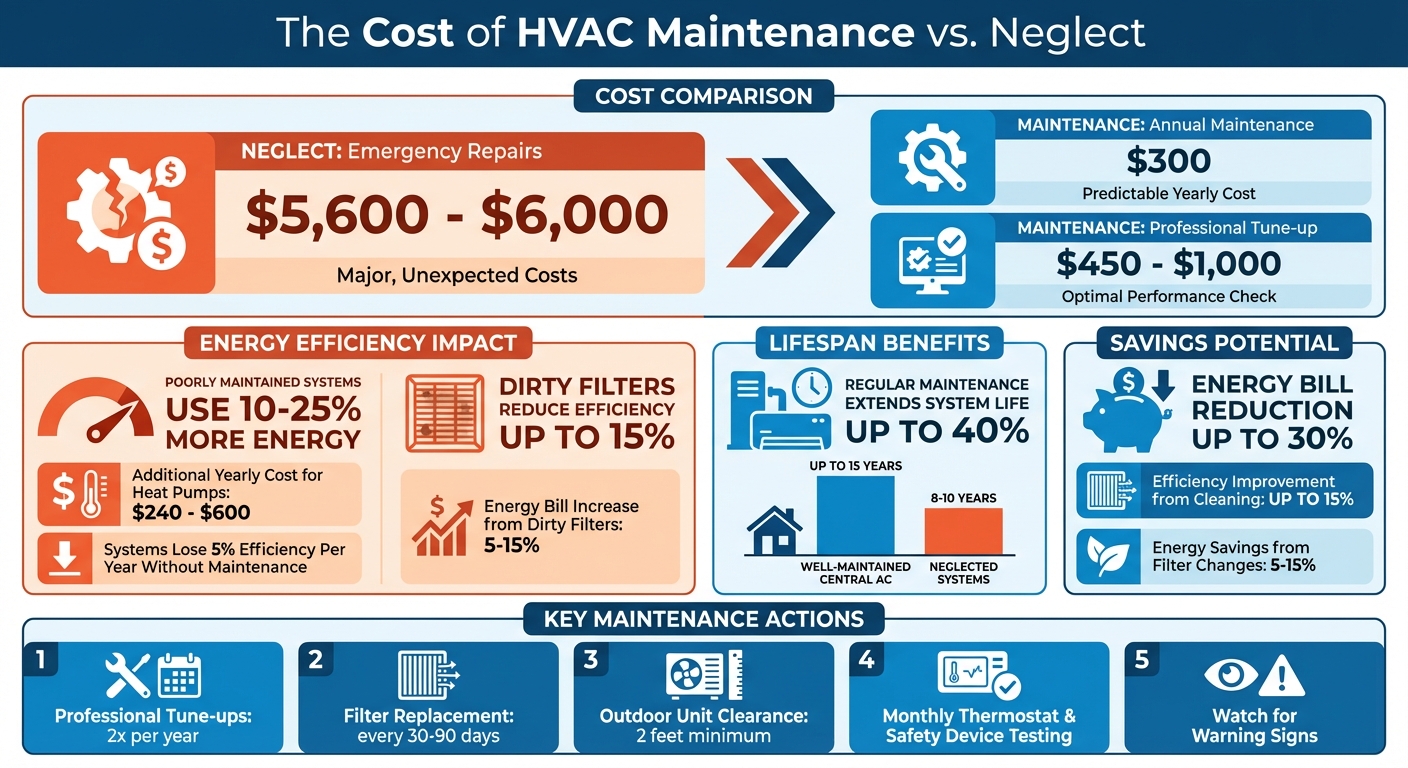
- Cost of Neglect: Repairs can cost $5,600–$6,000, while routine maintenance averages $300 annually.
- Energy Efficiency: Poorly maintained systems use 10–25% more energy, adding $240–$600 yearly for heat pumps alone.
- Lifespan Impact: Regular care can extend your system’s life by up to 40%.
Key Steps to Avoid HVAC Issues:
- Schedule professional tune-ups twice a year (spring for cooling, fall for heating).
- Replace air filters every 30–90 days to prevent clogs and improve airflow.
- Keep outdoor units clear of debris and ensure at least 2 feet of space around them.
- Test thermostats and safety devices monthly to catch issues early.
- Watch for warning signs like strange noises, odors, or uneven temperatures.
HVAC Maintenance Cost Savings and Prevention Statistics
HVAC expert provides maintenance tips to help save on energy bills amid cold weather
Schedule Regular Professional Maintenance
Professional HVAC maintenance is one of the smartest ways to prevent unexpected system failures. Certified technicians can identify and fix small issues before they escalate into costly emergencies. A typical inspection takes about 1–2 hours, during which experts check electrical connections, refrigerant levels, and mechanical components that are both unsafe and difficult for homeowners to access.
During these visits, technicians secure electrical connections to avoid power outages and fire risks, measure voltage and current on motors, and lubricate moving parts to reduce wear and tear. They also look for refrigerant leaks – imbalanced levels can harm both efficiency and your system’s lifespan. For heating systems, the inspection includes evaluating gas connections, burner combustion, and the heat exchanger for cracks, which could potentially leak dangerous carbon monoxide.
To keep your HVAC system ready for peak performance, schedule air conditioning maintenance in late winter or early spring, and heating system maintenance in late summer or early fall. This timing ensures your equipment is prepared before demand spikes and helps you avoid the seasonal rush for emergency repairs.
Benefits of Regular Maintenance
Did you know that HVAC systems lose about 5% of their efficiency every year without proper care? This decline not only drives up energy bills but also shortens your equipment’s lifespan. For example, airflow issues caused by neglect can reduce efficiency by as much as 15%.
Investing in regular professional maintenance offers tangible benefits. While a tune-up typically costs between $450 and $1,000, it can extend your system’s life by up to 40% and lower your monthly energy bills by as much as 30%. To put that into perspective, a well-maintained central AC unit can last up to 15 years, while neglected systems often fail within 8–10 years.
"Regular maintenance keeps your system operating efficiently and safely." – Jim Snyder, Owner, Irish Air Now
Eco Temp HVAC Maintenance Plans
Eco Temp HVAC provides two maintenance plans designed to keep your system in top shape all year long.
- The Basic Maintenance Plan includes annual inspections, system cleaning, and performance testing – covering the essentials to prevent common failures.
- The Advanced Maintenance Plan offers even more protection, including priority scheduling, 24/7 emergency support, and discounts on repair parts and labor. This plan is especially useful for older systems or businesses where downtime can disrupt operations.
Eco Temp HVAC serves the Chicagoland area with locations in Chicago, St Charles, Bartlett, Lemont, Downers Grove, and Palatine, ensuring quick response times when you need them most. Their certified technicians hold specialized credentials, such as Mitsubishi Diamond Elite Contractor certification (extending warranties on Mitsubishi products to 12 years), Navien Service Specialist certification, and American Standard Customer Care Dealer certification.
Next up, discover how routine filter care can further protect your HVAC system.
Change and Monitor Air Filters Regularly
Your air filter plays a crucial role in protecting your HVAC system. It traps airborne particles, keeping your ductwork clean and your system running smoothly. When filters get clogged, your system has to work harder, which can lead to overheating, breakdowns, or even complete failure during high-demand times. Regularly checking and replacing filters helps avoid unnecessary strain and costly repairs.
A dirty air filter can cut your system’s efficiency by as much as 15% and increase energy bills by 5–15%. Glenn Wiseman highlights that clogged filters make your HVAC system overwork, which accelerates wear and tear, causes overheating, and can even result in total shutdown. Shockingly, about 42% of homeowners have faced HVAC issues during heat waves due to maintenance oversights like dirty filters.
So, how often should you swap out your air filter? It depends on your household. If you don’t have pets, you can usually go 90 days between changes. Homes with pets should replace filters every 60 days, while households with allergy sufferers should aim for every 30 to 45 days. During extreme weather seasons – like Chicago’s freezing winters or scorching summers – it’s wise to check your filter every 30 days.
Wondering if your filter needs replacing? Try the light test: hold the filter up to a light source. If little to no light shines through, it’s time for a new one. Other red flags include weaker airflow from vents, more dust settling on furniture, or rising energy bills. To stay on top of things, schedule monthly inspections and keep spare filters handy to avoid last-minute scrambles.
Finally, proper installation is just as important as a clean filter. Always check the arrow on the filter frame – it should point toward the furnace or the airflow direction. Installing it backward forces your system to work harder, reducing efficiency. And never run your HVAC system without a filter. Doing so allows debris to enter and damage internal components, potentially causing system failure.
How to Choose the Right Air Filter
Regularly checking your air filter is just the first step – picking the right one is equally important for maintaining efficiency and improving air quality.
The key to choosing an HVAC filter lies in understanding its MERV rating (Minimum Efficiency Reporting Value). This rating, which ranges from 1 to 16, measures how effectively the filter captures particles between 0.3 and 10 microns. Higher MERV ratings mean better filtration, but they also increase airflow resistance. If a filter is too restrictive, it can strain your HVAC system.
Here’s a quick breakdown of common filter types and their performance:
- Fiberglass filters (MERV 1–4): These are budget-friendly and ensure good airflow but only trap large particles, offering minimal improvement to indoor air quality.
- Pleated filters: With more surface area, these are better at capturing allergens like pollen, mold, and pet dander. A MERV rating of 8–13 is ideal for most residential systems.
- HEPA filters: Designed for households with severe allergies or respiratory issues, these filters can capture 99.97% of particles as small as 0.3 microns, including bacteria and viruses.
"As the MERV rating increases, the filter adds airflow resistance that may impact HVAC system performance." – Anne Fonda, Content Writer, Trane
Before upgrading to a high-efficiency filter, check your system’s specifications. Using a filter that’s too restrictive can reduce efficiency by up to 15% and even cause the blower motor to overheat. Matching the filter’s MERV rating to your HVAC system’s capacity helps maintain both efficiency and longevity. If you’re unsure, consult a technician to determine the maximum static pressure your system can handle.
Filter Comparison Table
| Filter Type | MERV Rating | Filtration Performance | Airflow Resistance | Relative Cost |
|---|---|---|---|---|
| Fiberglass | 1–4 | Low (Large particles only) | Very Low | Low |
| Standard Pleated | 5–8 | Moderate (Dust, mold, pollen) | Low to Moderate | Moderate |
| High-Efficiency Pleated | 9–12 | High (Lead dust, pet dander) | Moderate | High |
| Elite Residential Pleated | 13–16 | Superior (Bacteria, smoke, virus) | High | Very High |
For homes in the Chicagoland area, a MERV 8–11 pleated filter strikes a good balance between air quality and system efficiency. Households with pets or allergies might benefit from a MERV 10–12 filter. Remember to inspect and replace your filter every 30–45 days to keep airflow unrestricted.
Finally, make sure the filter fits snugly in its slot. If there are any gaps, seal them with duct tape to prevent unfiltered air from bypassing the filter. Choosing the right filter ensures your HVAC system runs safely and efficiently, while also improving the air you breathe.
Step-by-Step Filter Replacement
Replacing your air filter is a simple task, but it’s important to do it the right way to keep your HVAC system running smoothly. Start by turning off the HVAC system at the thermostat or circuit breaker. This step is crucial – it prevents debris from getting pulled into the blower motor while the compartment is open. Once the system is safely off, you’re ready to locate the filter and begin the replacement process.
Your filter is typically located in one of three places: inside the return air duct, within the blower compartment, or behind a wall-mounted grille. Before removing the filter, take note of the directional arrows printed on its frame. These arrows indicate the direction of airflow and should always point toward the furnace or blower motor when you insert the new filter.
It’s a good habit to check your filter every 30 days. If you notice the once-bright white surface has darkened or become discolored, it’s time for a replacement. Regular monitoring not only helps prevent strain on your system but also keeps it running efficiently.
When removing the old filter, check its dimensions (usually printed on the side) to ensure you purchase the correct replacement. Before inserting the new filter, take a moment to clean the slot and surrounding grille with a vacuum or microfiber cloth to remove any dust. Never operate your system without a filter in place – unfiltered air can cause serious damage to internal components.
When installing the new filter, make sure the directional arrows are pointing toward the unit, and ensure it fits snugly to prevent air from bypassing the filter. Once you’ve removed the old filter, seal it in a plastic bag and dispose of it in an outdoor trash bin to avoid spreading dust and allergens inside your home.
For standard 1-inch pleated filters, replacement is typically recommended every 60–90 days. However, if you have pets or household members with allergies, you may need to replace them every 30 days. Keeping up with filter changes can even lower your energy bills by 5% to 15%.
Next, we’ll cover how to inspect and clean around your indoor and outdoor units to keep your entire system in top shape.
sbb-itb-b5c10b1
Inspect and Clean Around Indoor and Outdoor Units
Keeping your HVAC units free of debris is one of the simplest ways to prevent breakdowns and ensure they operate efficiently. Surprisingly, dirt and neglect are the leading causes of heating and cooling system failures. Yet many homeowners don’t think about this basic upkeep until something goes wrong. By incorporating a regular cleaning routine alongside maintenance and filter changes, you can keep your HVAC system in great shape.
Both indoor and outdoor units require consistent care throughout the year. Outdoor condensers are constantly exposed to elements like leaves, grass clippings, pollen, and weather, while indoor components can accumulate dust that blocks airflow. Thankfully, most of this maintenance is straightforward and doesn’t require much more than a few tools and a little time. In fact, keeping things clean can boost your system’s efficiency by up to 15% and even add years to its lifespan.
Outdoor Unit Maintenance
Your outdoor condenser needs at least two feet of clearance on all sides to work effectively. This open space allows air to circulate properly, helping the unit release heat. If vegetation, debris, or stored items crowd the area, airflow becomes restricted, forcing the system to work harder and use more energy. Maintaining this clearance can improve efficiency by as much as 10%.
Before cleaning, always disconnect the electrical power at the circuit breaker. Once the power is off, start by removing visible debris like leaves, twigs, and dirt by hand. Use a soft-bristled brush to sweep away remaining dirt, then rinse the condenser coils using a low-pressure garden hose. Spray from the inside out, directing water through the fins to push debris outward. Avoid using a pressure washer, as the high-pressure water can damage or flatten the fins. If you notice bent fins, use a fin comb to straighten them – this ensures proper heat transfer.
This outdoor cleaning should be done at least once a year, ideally in early spring before the cooling season starts. In areas with heavy vegetation or frequent storms, you might need to clean the unit more often. Trim back any shrubs, weeds, or branches near the unit to prevent debris from falling into it. Once the outdoor unit is ready, it’s time to shift your attention indoors.
| Tool / Material | Purpose |
|---|---|
| Screwdriver set | To remove the top cover or side panels safely |
| Soft-bristled brush | To clean dust from coils and fins |
| Garden hose | To rinse away dirt and pollen (low-pressure setting only) |
| Shop vacuum | To clear small debris or unclog drain lines |
| Fin comb | To straighten bent fins for better airflow |
Indoor Unit and Air Duct Cleaning
Even with regular filter changes, indoor components like the evaporator coil need attention. Over time, the coil can collect dirt, reducing its ability to cool your home efficiently. Locate the evaporator coil access door (usually near the blower) and gently dust the coils with a soft brush. For stubborn buildup, use a no-rinse coil cleaner if the manufacturer allows it.
Vacuum vents and registers often to remove dust, pet hair, and lint that can clog the system and affect indoor air quality. This quick task significantly improves airflow. At the same time, inspect accessible ductwork in your attic or basement for signs of separation, holes, or kinks. Use mastic sealant or metal-backed foil tape to seal any leaks – avoid regular duct tape, as it doesn’t hold up over time. In many homes, 20% to 30% of the air traveling through the duct system is lost due to leaks or poor connections.
Don’t forget the condensate drain line, which should be cleaned with vinegar every three to six months. If you notice excessive dust from vents, visible ductwork leaks, or signs of pests, it’s a good idea to schedule professional air duct cleaning with Eco Temp HVAC to restore airflow and improve air quality.
"Regular maintenance can extend equipment life by 40% and reduce energy costs by up to 30%." – All Temp Heating & Air Conditioning
Test and Maintain Thermostats and Safety Devices
Your thermostat and safety devices are the backbone of your HVAC system, ensuring comfort, safety, and efficiency. When these components malfunction, they can lead to discomfort, safety risks, and expensive repairs. Regular testing helps catch minor issues before they snowball into costly problems.
Calibrating Thermostats
To check if your thermostat is accurate, place a thermometer near it. Be sure to avoid spots with direct sunlight, drafts, or other heat sources. After about 15 minutes, compare the thermometer’s reading to your thermostat’s setting. A small difference of one to three degrees is normal, but if the gap is larger, it might be time to recalibrate. Environmental factors can also throw off accuracy, so clean the thermostat’s components and recalibrate if the discrepancy exceeds three degrees.
For smart or programmable thermostats, use the built-in calibration mode to fine-tune the temperature offset. Older mechanical models may require manual adjustments, like tweaking a calibration screw or leveling the sub-base in mercury-switch units. If your system cycles more frequently than usual or your energy bills suddenly rise, poor calibration might be the culprit . Clean the internal parts gently with a soft brush or Q-tip (skip the vacuum), and if problems persist, call a certified technician to inspect the wiring and connections.
Upgrading to a smart thermostat can simplify these tasks and improve overall system performance.
Smart Thermostat Benefits
Switching to a smart thermostat offers a range of tools that can help you avoid HVAC emergencies. These devices can send alerts for unusual temperature changes, power outages, or system failures, giving you a chance to address issues before they worsen. They also provide automated reminders for routine maintenance tasks like filter changes and seasonal check-ups, ensuring your system stays efficient .
With remote monitoring features, you can check and adjust your home’s temperature from anywhere – perfect for when you’re traveling or managing rental properties . Plus, energy usage reports can pinpoint inefficiencies or stress on your system, potentially signaling upcoming problems. Many smart thermostats can also trim heating and cooling costs significantly, often paying for themselves within two years . Installation costs typically range from $200 to $500, so check for compatibility with your HVAC system and look out for rebate offers . Eco Temp HVAC offers installation and configuration services for smart thermostats, ensuring proper setup for optimal performance.
While thermostats keep your system running efficiently, safety devices like carbon monoxide detectors are equally critical for protecting your home.
Testing Carbon Monoxide Detectors
Carbon monoxide detectors are your first line of defense against this odorless, deadly gas, which can result from poorly maintained HVAC systems. Test your detectors monthly by pressing the test button to ensure the alarm works. Replace the batteries every six months to avoid unexpected failures. Setting a recurring reminder – like the first Saturday of each month – can help you stay consistent.
"Carbon Monoxide is a silent killer. Make sure they [detectors] are in good working order." – i4T Global Team
During annual maintenance, have a certified technician inspect your system. They can verify electrical connections, check voltage and current on motors, and test safety controls to ensure everything is functioning properly . Glenn Wiseman, Sales Manager at Top Hat Home Comfort Services, emphasizes that "faulty wiring or an outdated model" can cause systems to operate incorrectly, such as turning on and off at the wrong times or failing to maintain the desired temperature. Professional inspections can catch these problems early. Eco Temp HVAC’s certified technicians include thorough safety checks as part of their maintenance services, ensuring your system and safety devices are in top condition.
Monitor for Early Warning Signs
Catching HVAC problems early can save you from expensive repairs or sudden breakdowns. As Tom Moor from HVAC.com explains: "The quicker you have the HVAC issue properly identified and repaired, the less damage it will cause". Addressing these issues promptly ensures they don’t spiral into bigger, costlier problems.
Signs to Watch For
Your HVAC system often gives clear signals when something’s wrong. Here’s what to look out for:
Unusual noises are one of the most common early indicators. For example, banging or rattling could mean loose or broken parts. Screeching or squealing often points to a failing blower motor or worn-out bearings, while hissing might signal a refrigerant leak. Grinding sounds are usually tied to mechanical issues in your furnace or air handler.
Strange odors also shouldn’t be ignored. A musty or stale smell could mean mold or mildew has developed in your ducts or coils. Burning odors might indicate overheating components or electrical issues. If you notice a gas smell – often described as similar to rotten eggs – turn off your system immediately and seek professional help.
Performance issues can appear in several forms. Weak airflow from vents might be due to clogged filters or blocked ductwork. Hot and cold spots around your home suggest the system is struggling to maintain even temperatures. Frequent short cycling could mean thermostat or sensor problems. Another red flag: rising utility bills without increased usage. Since heating and cooling account for nearly 50% of annual energy costs, sudden spikes might mean dirty coils, refrigerant leaks, or aging components reducing efficiency by up to 15%.
Physical indicators are often easy to spot. Puddles or leaks near your indoor unit usually result from a clogged condensate drain line. Ice buildup on your outdoor unit or frozen evaporator coils could mean low refrigerant or restricted airflow. If your system frequently trips circuit breakers or blows fuses, it might be overworking or have a short circuit.
These warning signs can help you decide when to take action.
When to Call Eco Temp HVAC
While regular maintenance can prevent many issues, some situations demand immediate professional attention. As one guideline puts it: "Any lack of thermal control that jeopardizes the integrity of your home or health and safety of your family is considered an HVAC emergency". If you smell electrical burning or gas, turn off your system at the circuit breaker and call a technician immediately to avoid potential fire or health risks.
Before reaching out for emergency repairs, try a few simple troubleshooting steps. Replace your thermostat batteries if needed, ensure the power switch is on, and check that your air filter is clean. Also, clear any debris or trim back shrubs to maintain 18 to 36 inches of space around your outdoor unit. If these steps don’t resolve the problem, it’s time to call in the experts.
Eco Temp HVAC provides 24/7 emergency repair services throughout Chicagoland, covering areas like Chicago, St. Charles, Bartlett, Lemont, Downers Grove, and Palatine. Their certified technicians are equipped to diagnose and fix issues before they lead to a complete system failure. With credentials like Mitsubishi Diamond Elite Contractor and American Standard Customer Care Dealer, they’re ready to handle any HVAC emergency with precision and expertise.
Conclusion
Avoid HVAC emergencies by sticking to a consistent maintenance routine. Plan biannual checkups – spring for cooling systems and fall for heating. Swap out filters every 30–90 days, keep outdoor units clear with at least 18–24 inches of space around them, and test thermostats and carbon monoxide detectors monthly. These simple steps can extend your equipment’s lifespan by up to 40%.
Pay attention to early warning signs and address issues promptly. Denise Minor-Hoes from ENERGY STAR emphasizes: "Dirt and neglect are the top causes of heating and cooling system failure and inefficiency". Tackling problems early can keep small concerns from snowballing into major, expensive repairs. Consider this: heating system repairs can cost up to $5,600, while air conditioning repairs might set you back $6,000. Staying proactive could save you thousands in the long run.
FAQs
How often should I have my HVAC system professionally serviced?
To keep your HVAC system running smoothly and avoid unexpected issues, it’s a smart idea to schedule professional maintenance at least once a year. A good rule of thumb is to have your cooling system serviced in the spring and your heating system checked in the fall. This way, your system will be ready to handle the demands of summer heat and winter cold without a hitch.
Routine maintenance not only helps your equipment last longer but also boosts energy efficiency and can save you from expensive repair bills down the road. Certified technicians, like the team at Eco Temp HVAC, offer detailed inspections and tune-ups to ensure your system stays in great condition all year.
What are the warning signs that my HVAC system needs professional attention?
If your HVAC system isn’t working as it should, there are a few warning signs you’ll want to keep an eye (and ear) out for. Common red flags include odd noises like rattling, grinding, or squealing; strange smells wafting from the vents; weak or uneven airflow; and unexpected jumps in your energy bills. These symptoms often point to mechanical issues, inefficiencies, or even the risk of a system failure.
Catching these problems early can save you from expensive repairs – or worse, a complete breakdown. If something seems off, don’t wait. Schedule a professional inspection to keep your system running smoothly and safely.
How can I choose the best air filter for my HVAC system?
Choosing the right air filter for your HVAC system depends on both your specific needs and the system’s requirements. Start by checking the size and type recommended by your HVAC manufacturer. The most common options include:
- Fiberglass filters: These are budget-friendly but don’t do much for improving air quality.
- Pleated filters: They offer better filtration and tend to last longer.
- HEPA filters: Perfect for removing allergens and pollutants, making them a great choice if you’re concerned about air quality.
When deciding, think about factors like your air quality needs, whether you have pets, and how much dust tends to accumulate in your home. For instance, thinner filters (around 1 inch) usually need replacing every 1-2 months, while thicker ones (4-5 inches) can last several months. Regularly inspecting and replacing your filter not only keeps your system running efficiently but also helps maintain cleaner air in your space.
If you’re unsure or need professional assistance, Eco Temp HVAC provides expert HVAC services tailored to both residential and commercial needs in the Chicagoland area.