
Air ducts are essential for maintaining comfortable indoor temperatures and good air quality. However, damaged ducts can lead to uneven room temperatures, higher energy bills, and even health issues. Here are the top signs to watch for:
- Uneven Temperatures: Hot and cold spots in different rooms often indicate air leaks or blockages.
- Higher Energy Bills: Damaged ducts can waste up to 30% of conditioned air, making your HVAC system work harder.
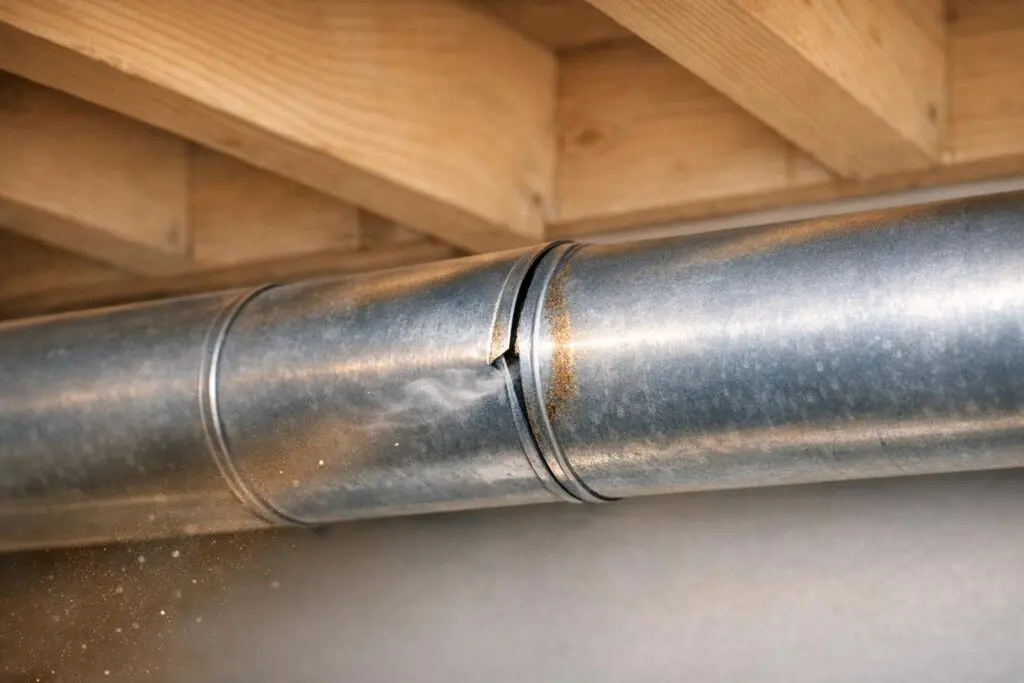
- Visible Damage: Cracks, holes, or disconnected sections in ductwork can cause significant air loss.
- Dust Buildup: Excess dust around vents might mean leaks are pulling in contaminants.
- Unusual Noises: Hissing, rattling, or popping sounds often point to leaks or loose joints.
- Poor Air Quality: Leaks can circulate dust, mold, and allergens throughout your home.
- Mold Growth: Musty odors or visible mold near vents suggest moisture issues in ducts.
- Weak Airflow: Faint airflow from vents could mean air is escaping before reaching your rooms.
- Bad Smells: Persistent odors from vents may signal mold, pests, or even gas leaks.
- Pest Signs: Droppings, nesting materials, or scratching noises indicate rodents or insects in your ducts.
Ignoring these warning signs can strain your HVAC system, increase costs, and harm your indoor air quality. Regular inspections and timely repairs can prevent further damage and save money. If you notice any of these issues, consider consulting a professional to assess and address the problem.
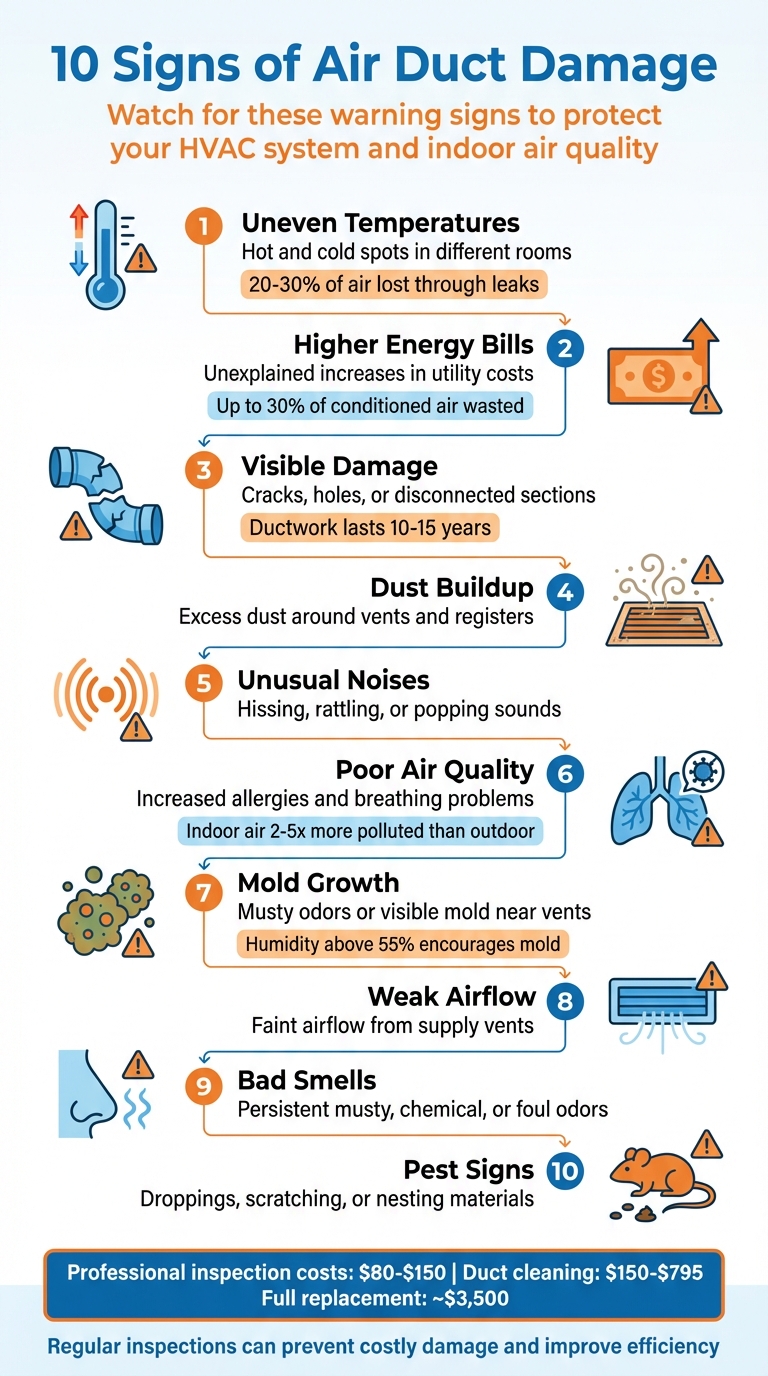
10 Warning Signs of Air Duct Damage Infographic
Signs It’s Time for Ductwork Replacement
1. Uneven Temperatures in Different Rooms
Ever notice one bedroom feels like a sauna while another feels like an icebox? Chances are, your ductwork is leaking conditioned air before it gets where it’s supposed to go. These hot and cold spots happen when air escapes through cracks, holes, or disconnected sections in the ducts. Instead of circulating through your rooms, the air leaks out into unconditioned spaces, leaving some areas uncomfortable.
This kind of leakage doesn’t just mess with room temperatures – it also reduces air pressure in the system. When leaks form, your HVAC unit struggles to push air evenly throughout your home. On top of that, physical damage like kinks or crushed duct sections can restrict airflow to certain rooms. If just one room is affected, the issue is probably in that specific duct branch. But if you’re noticing uneven temperatures all over the house, it could mean there’s a large leak or significant damage near the main plenum.
Start by checking if vents are blocked by furniture or curtains. Then, take a look at any exposed ductwork in your attic or basement. Watch for disconnected sections, visible holes, or peeling sealant tape. You can even try a simple incense stick test near duct joints – if the smoke moves erratically, you’ve likely got a leak.
"In a typical house, about 20–30% of the air moving through ductwork is lost due to leaks, holes, and poor connections – leading to higher utility bills and rooms that are hard to keep comfortable." – ENERGY STAR
Ignoring these uneven temperatures can lead to more wear and tear on your HVAC system, especially the blower motor, and will also drive up your energy costs. If repairs are needed, professional duct sealing usually runs between $300 and $1,500. For more severe damage, a full duct replacement could cost around $3,500.
2. Higher Energy Bills
If your energy bills have been climbing unexpectedly, damaged ductwork might be to blame. Leaky ducts can waste as much as 30% of your conditioned air before it even reaches your living spaces. This lost air escapes into areas like attics or crawlspaces, making your HVAC system work overtime to maintain comfortable temperatures. The result? Higher monthly bills and unnecessary wear and tear on your system.
The problem gets worse when return ducts are involved. Instead of circulating conditioned air, leaks in return ducts pull in unconditioned air, further straining your system. Additionally, crushed ducts or a heavy buildup of dust can increase resistance, forcing the blower motor to work harder than it should.
"Ducts that leak heated air into unheated spaces can add hundreds of dollars a year to your heating and cooling bills." – U.S. Department of Energy
To address this, start by inspecting any accessible ductwork in unconditioned spaces for gaps, disconnects, or damage. Replace old, peeling duct tape with UL-181 rated mastic sealer or metal-backed foil tape for a more durable fix. Insulating ducts located in attics or crawlspaces can also help reduce thermal loss.
If your energy bills continue to rise or your system seems to be running non-stop, it might be time to call in the pros. Professional duct testing, often using infrared cameras, can identify hidden leaks behind walls or in hard-to-reach areas. Sealing and repairing these leaks not only improves your system’s efficiency but can also lead to noticeable savings on your monthly energy costs.
3. Visible Cracks, Holes, or Disconnected Sections
Sometimes, the most obvious signs of duct problems are right in front of you. Cracks, holes, or sections that have come apart are clear indicators of damage. These issues are especially common in exposed ductwork located in attics, basements, crawl spaces, or garages. And don’t underestimate the impact of small gaps – around 20% of the air in a typical duct system escapes through leaks and poorly connected sections.
One major culprit? Poor installation. In fact, over half of new duct systems fail to perform as expected due to installation errors. On top of that, age takes its toll. Ductwork is generally reliable for 10 to 15 years, but over time, joints and seals naturally weaken. Other factors, like heavy storage placed on ducts, pests, or even vibrations from the system itself, can make matters worse. Ignoring these problems can lead to significant efficiency losses, so timely repairs are essential.
"More than half of new ductwork systems don’t perform to their rated efficiency because of improper installation." – Energy Star
If you suspect a leak, a simple test is to run your hand along the visible ductwork, especially at connection points, to feel for escaping air.
For small, easy-to-reach cracks, you can use professional-grade mastic sealer or metal foil tape to seal them up. Just skip the standard duct tape – it doesn’t handle temperature changes well and will fail over time. However, if your ductwork is older than 15 years or has extensive damage, replacing it might be the smarter move. On average, professional replacement costs about $3,500, which could save you from ongoing repair expenses.
4. Dust Buildup Around Vents
Noticing dust piling up on your vent covers? That’s often a sign of duct leakage. When vents collect dust, it usually means contaminants from spaces like attics, basements, or crawl spaces are sneaking into your ductwork through leaks or gaps . This isn’t just a cleaning issue – it points to potential damage in your duct system.
Here’s another clue: if your main HVAC filter looks clean but your vent covers are dusty, it means contaminants are bypassing the filter entirely and entering your home post-filtration.
"If you have significant amounts of dust on your air vents, it’s a sign that something’s wrong with the filter in your ductworks. This is especially true if the air filter on your vent looks clean but the vent itself is dirty." – HVAC Gnome
To tackle this, start by replacing your air filter every 90 days – or sooner if it’s visibly dirty. Next, remove a vent cover and take a look inside with a flashlight. If you see grime coating the interior metal, it’s likely time for a professional cleaning. Expect professional duct cleaning to cost anywhere from $150 to $800.
If the problem persists or the buildup is extensive, it’s a good idea to call in a certified technician. They can clean and seal your ductwork to prevent further issues.
5. Unusual Noises from Ductwork
Your ductwork should run quietly, so when strange noises start echoing through your system, it’s often a sign something’s wrong. For instance, hissing or whistling sounds usually mean air is leaking through cracks, holes, or poorly sealed joints. If you notice these sounds, grab a flashlight and inspect exposed ductwork for visible gaps, especially around areas where old duct tape might have failed.
Hearing rattling or clanking? This often points to loose or failing joints. If the rattling persists, it could be due to static pressure causing the joints to weaken over time. Loud banging or clanking sounds while the blower is running? Shut the system off immediately – this could signal a more serious structural issue that might lead to a complete disconnection.
Popping or booming noises also deserve attention. A quick pop when the system starts up is normal, but ongoing popping or booming could indicate problems with the ductwork’s size or how it was installed.
If you hear a metallic grinding noise, that’s a red flag. It usually means metal components are rubbing together and may need immediate replacement. And let’s not forget the unsettling sound of scurrying or scratching – this often means pests have made their way into your ducts, chewing through seals and insulation.
For professional help, duct cleaning typically costs between $150 and $795. If repairs aren’t enough, a full duct replacement averages around $3,500. In cases where the ductwork design is flawed and rerouting is necessary, expect to pay approximately $4,500.
6. Poor Air Quality and Breathing Problems
When air ducts crack or separate, they can create negative pressure that pulls contaminants from areas like attics, crawl spaces, and basements. These contaminants often include dust, fibers, waste, and mold spores. In fact, the Environmental Protection Agency notes that indoor air can be 2–5 times more polluted than outdoor air, with damaged ductwork being a major contributor. This can lead to noticeable health issues.
If you’re experiencing increased sneezing, coughing, or wheezing, it might be a sign that your ducts are spreading harmful particles. For instance, leaky return ducts in attics can draw in fine fiberglass particles from loose-fill insulation, irritating your eyes, nose, and throat. Additionally, holes or tears in the ducts can allow rodents and insects to enter, bringing droppings and bacteria into your home.
The risks don’t stop at allergies. Poor insulation in ductwork can lead to condensation, which creates a breeding ground for mold. Mold exposure may cause sinus problems, headaches, and skin irritation, while indoor allergens can worsen respiratory issues. In more severe cases, leaks in return ducts might pull in harmful soil gases like radon from crawl spaces or even combustible fumes from furnaces and water heaters.
Wondering if your ducts are leaking? A simple smoke test can help. Hold a smoke source near duct joints – if the smoke gets pulled in, there’s a leak. If your system uses fiberglass ductboard or duct boots, consider switching to metal alternatives to prevent aging materials from releasing raw fibers into the air.
Addressing these issues isn’t cheap, but it’s crucial for your health. Professional duct cleaning typically costs between $150 and $795, while mold removal can add $200–$650 to the bill. If your ductwork is over 15 years old and causing ongoing air quality problems, replacing it entirely might be more cost-effective. A full replacement averages around $3,500, which could save you from repeated repairs in the long run.
sbb-itb-b5c10b1
7. Mold or Mildew Growth
Mold is more than just an eyesore – it’s a warning sign of potential duct damage. If you spot black, green, or gray fuzzy patches near your vents or notice a musty smell that worsens when your HVAC system runs, you might be dealing with mold. These signs often point to underlying issues with your ductwork.
Mold thrives in environments where moisture, dust, and time collide. Damaged ducts with cracks or broken seals can allow warm, humid air to mix with cooler air, creating condensation – a perfect breeding ground for mold. Poor insulation can make the problem worse by contributing to moisture buildup along the ducts. If you notice a musty odor when your system kicks on, it’s a strong indicator of active mold growth.
Indoor humidity levels above 55% can encourage the growth of toxic black mold. Considering that Americans spend about 90% of their time indoors, where pollutant levels can be 2 to 5 times higher than outdoors, this is no small concern. Mold spores circulating through your HVAC system can lead to health issues like asthma attacks, persistent coughing, headaches, and even neurological symptoms like brain fog. If you feel better when you’re away from home but your symptoms return shortly after coming back, this "home effect" should raise alarms.
To investigate, use a flashlight to inspect accessible ducts for any fuzzy or discolored patches. If dark spots are temporarily removed but reappear, it’s a sign of an established mold colony. Keeping your indoor humidity between 30% and 50% with a hygrometer and changing HVAC filters every 1 to 3 months can help prevent further mold issues. However, if mold is growing on porous materials like fiberglass insulation, those materials should be replaced rather than cleaned.
Professional mold remediation, often performed during duct cleaning, can cost an additional $200 to $650 on top of the standard cleaning fee of $300 to $500.
"Mold’s root structures (hyphae) can penetrate porous materials, and unless removed, mold will return." – IICRC S520 Standard for Professional Mold Remediation
In the Chicagoland area, addressing mold promptly is essential. For safe and effective duct cleaning and air quality improvements, schedule an inspection with Eco Temp HVAC (https://ecotemphvac.com).
8. Weak Airflow from Vents
Noticing only a faint breeze coming from your supply vents instead of a strong flow? This could be a red flag for duct leaks. Holes, cracks, or disconnected joints in your ductwork allow conditioned air to escape into unconditioned areas like attics or crawlspaces. This not only reduces the airflow at your vents but also forces your HVAC system to work harder than it should. Weak airflow, much like uneven temperatures or excess dust buildup, is a sign that your duct system may need attention.
Energy costs climbing alongside weak airflow? That’s another telltale sign. When air escapes through damaged ducts, your HVAC system has to overcompensate, which often leads to higher utility bills.
"In a typical house about 20–30% of the air moving through ductwork is lost due to leaks, holes, and poor connections – leading to higher utility bills and rooms that are hard to keep comfortable." – ENERGY STAR
Poor installation or aging sealant can cause joints to disconnect, further reducing airflow. Flexible ductwork is especially prone to issues like kinks or crushing, particularly in places like attics or crawlspaces where heavy items might be stored on top of the ducts.
Before jumping to conclusions, check your air filter and make sure nothing is blocking your vents. If airflow is still weak, try a simple smoke test near the duct joints. Light an incense stick or use a smoke pencil while your HVAC system is running. If the smoke gets pulled in or blown away around a joint, it’s a clear sign of a leak. For leaks that are harder to spot, professionals like Eco Temp HVAC in Chicagoland use advanced tools such as infrared cameras and duct pressure testing to pinpoint the problem.
9. Bad Smells from Vents
Strange smells coming from your vents can often point to problems with your ductwork or even contamination. For instance, a musty or mildew-like odor is usually a sign of mold growth, which can happen when moisture seeps through cracks or when insulation isn’t doing its job properly.
If you detect a sulfur or rotten egg smell, it’s critical to act fast – turn off your system, leave the building, and contact a professional immediately. This could indicate a natural gas leak.
A dusty, burning smell when you first turn on your system is typically harmless, as it’s just dust burning off. However, if that smell lingers, it might mean something more serious, like an overheated blower motor, faulty wiring, or a worn-out fan belt. A sweet, chemical-like odor, on the other hand, could be a red flag for a refrigerant leak coming from the evaporator coils.
Foul or decaying smells may signal pest problems. Rodents or insects can find their way into damaged ductwork, leaving behind droppings, urine, or even decomposing remains. Meanwhile, sewage odors often point to plumbing issues, such as a backed-up sewer line or a dry P-trap near your HVAC system.
Considering that Americans spend about 90% of their time indoors, where pollutant levels are 2–5 times higher than outside, it’s essential to address any strange smells promptly. Start by checking your air filter – if it’s clogged, replace it. Filters should generally be swapped out every 30 to 90 days to prevent stale odors and overheating. If the smell doesn’t go away after replacing the filter, the issue might be deeper in the ductwork, requiring a professional inspection.
To tackle musty odors, try managing indoor humidity. Using a dehumidifier to maintain levels between 30% and 50% can make a big difference. If professional duct cleaning is necessary, expect to pay anywhere from $150 to $795. If mold removal is involved, that could add an extra $200 to $650. For ductwork older than 15 years that continues to produce odors, replacing it – at an average cost of about $3,500 – might be a smarter long-term solution than repeated cleanings.
Eco Temp HVAC in Chicagoland offers thorough duct inspections and cleaning services to pinpoint the cause of these odors and improve your home’s air quality. Stay tuned for more signs of duct damage in the next section.
10. Signs of Pests or Rodents
Spotting signs of pests in your ductwork can spell trouble – not just for your air quality but also for your HVAC system’s efficiency.
If you’ve heard scratching, scurrying, or squeaking noises coming from your walls or ceilings – especially at night – it might mean rodents or other pests have made themselves at home in your ducts. Mice, for instance, can squeeze through openings no larger than a shirt button. Once inside, they leave behind droppings, urine, and nesting materials that can circulate through your home every time your system runs.
Take a close look at your air registers. You might notice tiny, rice-shaped droppings, coffee-ground-like cockroach waste, or dark, greasy smudges left by rodent fur. A strong ammonia-like smell could also signal the presence of urine.
"A rodent infestation in ductwork isn’t just gross; it can affect indoor air quality, trigger allergies, and even damage your HVAC system." – EnviroPest
Beyond the mess, pests can chew through ductwork, insulation, and even wiring. This kind of damage can lead to air leaks, overwork your HVAC system, spike your energy bills, and, in some cases, create fire hazards due to nesting materials.
If you suspect pests, it’s crucial to act quickly. Call a pest control specialist to handle the infestation and then bring in an HVAC professional to clean, inspect, and repair your ductwork. Don’t attempt to vacuum droppings yourself, as this can release harmful pathogens like Hantavirus into the air.
The cost of professional cleaning or duct replacement will depend on the extent of the damage. Companies like Eco Temp HVAC offer inspections and cleaning services for pest-related duct issues in the Chicagoland area.
When to Call a Professional
If you’re noticing persistent temperature fluctuations in your home, weak airflow from vents, or an HVAC system that’s working overtime, it might be time to call in a professional. A sudden spike in your energy bills – anything over 15% – can also be a red flag that your ductwork is damaged. Health concerns are another clue. If family members are dealing with worsening allergies, asthma, or other respiratory issues that seem to improve when they leave the house, contaminated ductwork could be the culprit. Musty odors, odd rattling or whistling sounds, and excessive dust buildup are additional signs that your ducts might need expert attention.
Professionals have tools to get to the root of these problems. They use video inspections to uncover hidden damage and pressure tests to measure air loss. If your ductwork is more than 10 to 15 years old, these inspections can help determine whether repairs or a full replacement is the best course of action. Addressing these issues promptly can restore your HVAC system’s efficiency and improve your home’s air quality.
For residents in the Chicagoland area, Eco Temp HVAC offers a range of services to tackle ductwork problems. Their certified technicians use advanced methods like video inspections, pressure testing, and thorough cleaning to identify and address hidden issues. Instead of relying on temporary fixes, they use durable materials like mastic sealant to ensure long-lasting repairs.
The cost of these services varies depending on the level of inspection or repair needed. A basic inspection typically costs between $80 and $150, while a more comprehensive evaluation can range from $230 to $380. A dedicated duct leakage test may cost between $250 and $400. Professional air duct cleaning services are priced between $150 and $795, depending on the size of your system. Considering that leaky ducts can reduce HVAC efficiency by as much as 30%, these services are a smart investment to prevent further damage, lower energy bills, and improve the air you and your family breathe.
Conclusion
Your air ducts play a vital role in keeping your home comfortable and energy-efficient. Ignoring signs like uneven room temperatures, weak airflow, strange noises, or musty odors can strain your HVAC system. This not only shortens its lifespan but also drives up your energy costs.
Keeping an eye on your utility bills and scheduling regular inspections can help you catch problems early.
The ten signs mentioned earlier serve as a helpful guide for spotting ductwork issues. If you notice dust gathering around vents, unpleasant smells, or reduced airflow, don’t wait. Addressing these problems quickly can prevent larger issues like system breakdowns, structural damage, or the spread of pollutants. Tackling small repairs now could save you from facing a costly ductwork replacement down the road.
FAQs
How can I check for air leaks in my ductwork at home?
To find air leaks in your ductwork, begin by switching on your HVAC system and visually inspecting the accessible sections of the ducts. Focus on spotting any visible damage, such as holes, tears, or loose connections, particularly around joints and seams – these areas are common culprits for leaks.
Another method is to feel for escaping air by running your hand along the duct joints and connections while the system is running. If you detect drafts or sudden temperature shifts, it could point to a leak. For a more accurate approach, try using a smoke pencil or an incense stick near the suspected areas. If the smoke wavers or moves unpredictably, it’s a sign that air is escaping.
Also, keep an eye out for warning signs like uneven airflow, higher-than-usual energy bills, or an unusual buildup of dust around vents. These issues often indicate ductwork problems. If you’re uncertain or need professional help, contacting experts like Eco Temp HVAC can ensure a detailed inspection and dependable solutions.
What health problems can mold in air ducts cause?
Mold lurking in air ducts can cause a host of health concerns by dispersing mold spores and allergens into the air you breathe at home or work. Inhaling these spores can lead to respiratory issues such as coughing, wheezing, nasal congestion, and throat irritation. For individuals with asthma, allergies, or other respiratory conditions, exposure can intensify symptoms and even trigger severe reactions.
Beyond health effects, mold in ducts often brings a persistent musty smell and reduces indoor air quality. This can be especially problematic for people with sensitivities or weakened immune systems. Since mold thrives in damp conditions, its presence might also point to underlying problems like excessive moisture or inadequate ventilation – issues that need to be addressed promptly to avoid further damage and health risks.
How do I know when it’s time to replace my air ducts?
If you’re dealing with poor airflow, uneven temperatures between rooms, or unexpectedly high energy bills, it might be time to replace your air ducts. Physical signs like cracks, holes, rust, or even mold growth are clear warnings that your ductwork may need attention.
Duct systems typically last anywhere from 10 to 25 years. However, as they age, wear and tear can reduce their efficiency and harm the quality of your indoor air. If your ducts are outdated, damaged, or causing recurring issues, replacing the entire system often proves to be a smarter and healthier choice compared to patching up individual sections.
For a thorough inspection or a complete replacement, reach out to Eco Temp HVAC. Their certified technicians specialize in creating energy-efficient and dependable duct systems that enhance both your comfort and the air you breathe.