
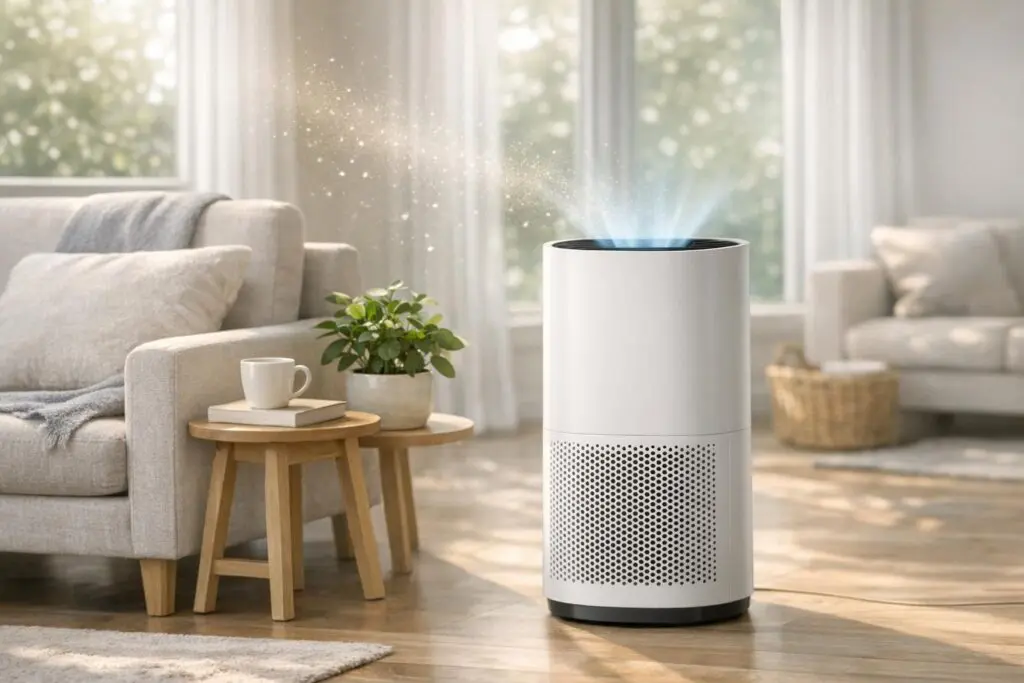
Yes, air cleaners can help reduce allergy symptoms by filtering airborne allergens like dust mites, mold spores, and pet dander. However, they’re most effective when combined with other methods like cleaning allergen sources and improving ventilation. Here’s what you need to know:
- HEPA filters are highly effective at trapping particles as small as 0.3 microns.
- Air cleaners work best for airborne allergens but are less effective for larger particles like pollen that settle on surfaces.
- Proper sizing is critical – match the air cleaner’s CADR (Clean Air Delivery Rate) to your room size for optimal performance.
- Regular maintenance, like replacing filters every 60–90 days, ensures efficiency.
- Placement matters – position the unit centrally with clearance for airflow.
While air cleaners improve air quality, they’re not a standalone solution. Pair them with regular cleaning, allergen-proof covers, and proper ventilation for better results.
How to Choose the Best Air Purifier for Allergies
How Air Cleaners Remove Allergens
Air cleaners are designed to improve indoor air by capturing and removing airborne particles, including allergens. At the heart of many effective air cleaners are HEPA filters, which serve as the primary defense against allergens. Other technologies often work alongside HEPA filters to create a more comprehensive air purification system. Let’s break down how these components work together to tackle allergens in your home.
HEPA Filters and Allergen Removal
HEPA (High-Efficiency Particulate Air) filters are considered the gold standard for trapping airborne allergens. These filters are capable of capturing particles as small as 0.3 microns, which includes common allergens like dust mite debris, mold spores, and fine pet dander.
The performance of HEPA filters is measured by the Clean Air Delivery Rate (CADR), which indicates how much clean air the unit produces each minute. CADR testing evaluates three particle sizes: tobacco smoke (small), dust (medium), and pollen (large). For example, if you’re cleaning the air in a 300-square-foot room with 8-foot ceilings, you’ll need a CADR of at least 195 cubic feet per minute (cfm) to ensure effective filtration. Matching the CADR to your room size is key to optimizing allergy relief.
It’s worth noting that larger allergens, like pollen and heavy pet dander, often settle on surfaces rather than staying airborne. Regular vacuuming and dusting are still essential for managing these allergens effectively.
Other Filtration Technologies
While HEPA filters excel at capturing solid particles, they aren’t designed to handle every type of pollutant. This is where other filtration technologies come into play. For instance, activated carbon filters are specifically engineered to absorb gaseous pollutants and volatile organic compounds (VOCs), which are responsible for odors. The thicker the activated carbon layer, the better it performs at removing these gases and odors.
Some air cleaners also feature UV-C light or electronic ionizers to target additional contaminants. However, these technologies may produce ozone, which can be harmful if emitted in significant amounts. To ensure safety, check for low ozone emissions by consulting resources like the California Air Resources Board or the Association of Home Appliance Manufacturers (AHAM) certified lists. When combined with HEPA filters, these additional technologies can enhance air quality, making your environment more comfortable for allergy sufferers.
"Air cleaners that do not contain special media, such as activated carbon or alumina, will not remove gaseous pollutants, including radon, or reduce their associated health effects." – U.S. Environmental Protection Agency
Factors That Affect Air Cleaner Performance
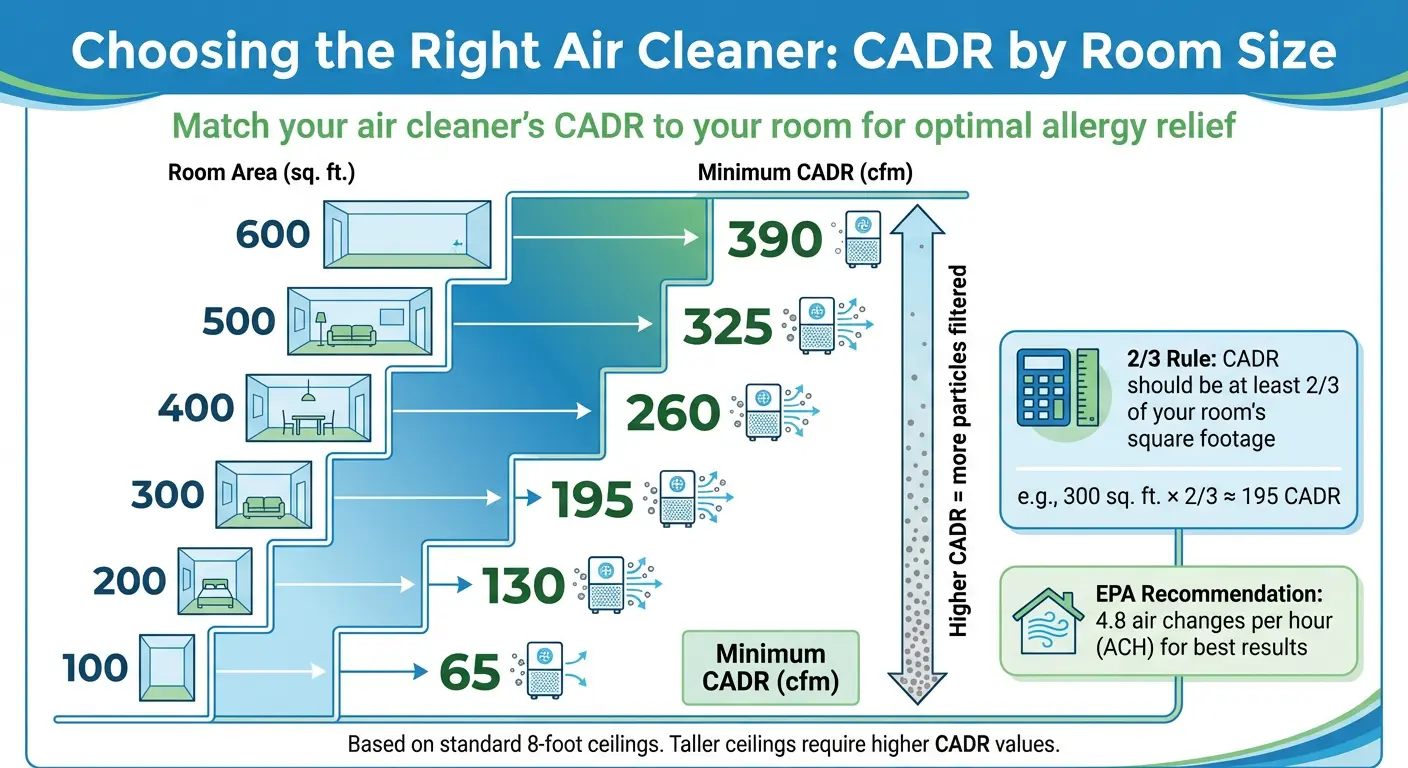
Air Cleaner CADR Requirements by Room Size for Allergy Relief
The efficiency of an air cleaner hinges on two critical aspects: proper sizing and regular maintenance.
Room Size and Air Changes Per Hour (ACH)
The size of your room plays a major role in determining how well an air cleaner can tackle allergens. To get the best results, choose a unit with a Clean Air Delivery Rate (CADR) that’s at least two-thirds of your room’s square footage. Here’s a quick reference guide:
| Room Area (sq. ft.) | Minimum CADR (cfm) |
|---|---|
| 100 | 65 |
| 200 | 130 |
| 300 | 195 |
| 400 | 260 |
| 500 | 325 |
| 600 | 390 |
Note: These calculations are based on standard 8-foot ceilings. Taller ceilings require higher CADR values to handle the increased air volume.
The U.S. Environmental Protection Agency (EPA) recommends air cleaners capable of delivering at least 4.8 air changes per hour (ACH). This means the air in the room gets filtered nearly five times every hour. To achieve this, running the air cleaner at its highest fan speed is essential, though it may result in more noise.
"The higher the CADR, the more particles the air cleaner can filter and the larger the area it can serve." – U.S. Environmental Protection Agency
If you have an open floor plan, sizing becomes trickier. In such cases, you’ll need to factor in the total area of the interconnected space rather than focusing on just one section. Undersized units won’t filter effectively, while oversized ones may waste energy unnecessarily.
Getting these details right ensures your air cleaner operates efficiently and sets the stage for proper placement and upkeep.
Placement and Maintenance
Once you’ve chosen the right size, where you place the air cleaner can make a big difference. Position it centrally in the room, leaving 3–5 feet of clearance on all sides to allow for unrestricted airflow. Avoid placing it behind furniture or curtains, as these can block the intake vents. In bedrooms, aim to position the unit 6–10 feet from the bed to create a cleaner breathing zone. For smaller units, elevating them on a table or shelf can improve their ability to filter air closer to where you breathe.
Maintenance is equally important. Filters should be replaced every 60 to 90 days to ensure optimal performance. As James L. Sublett, MD, points out:
"Dirty filters themselves can become a source for air contamination by allergens, particularly fungal spores, and can then be trapped, colonized, and released downstream as the overloaded filter fails." – James L. Sublett, MD
A well-maintained air cleaner, combined with thoughtful placement and correct sizing, can make a noticeable difference in air quality.
Using Air Cleaners with Other Allergy Management Methods
Air cleaners work best when they’re part of a broader strategy to manage allergens. While they’re effective at filtering airborne particles, they should be used alongside methods like source control and proper ventilation. Keep in mind, air cleaners only tackle particles in the air – larger allergens that settle quickly require different approaches.
Reducing Allergens at the Source
Addressing allergens at their source is crucial. For example, while an air cleaner can capture mold spores, it won’t fix the moisture issue that allows mold to thrive. Steps like repairing leaks, thoroughly drying affected areas, and cleaning up any existing mold are essential. On top of that, regular vacuuming with a HEPA-filter vacuum, washing bedding in hot water weekly, and using allergen-proof covers on mattresses and pillows can significantly cut down indoor allergens.
"The most effective ways to improve your indoor air are to reduce or remove the sources of pollutants and to ventilate with clean outdoor air." – EPA
Ventilation also plays a key role. Bringing in fresh outdoor air by opening windows can naturally dilute indoor pollutants. However, this might not always be practical – poor outdoor air quality or extreme weather can make it challenging. In such cases, air cleaners become a valuable backup, helping to maintain cleaner air indoors.
The Role of HVAC Systems
Your home’s central HVAC system can also contribute to better air quality. These systems filter air as it circulates throughout the house. However, since HVAC systems typically run less than 25% of the time during heating and cooling seasons, they only clean the air when they’re operating.
Upgrading to a MERV 13 or higher filter can make a noticeable difference, as these filters are designed to remove at least 50% of the smallest particles tested. For even greater filtration, HEPA bypass systems can be added to your HVAC setup to provide high-efficiency filtration without straining the system. Professional HVAC services, like those from Eco Temp HVAC, can evaluate your system, recommend the best filter it can handle, and ensure proper installation to avoid air leaks around the filter. Additionally, scheduling duct cleaning every three to five years can prevent accumulated allergens from being recirculated throughout your home.
Choosing the Right Air Cleaner
Finding the perfect air cleaner means understanding a few key details and aligning them with your specific needs. A unit that’s too small won’t effectively clean the air, while one that’s too large can waste energy and money.
Key Features to Look For
Start by checking the Clean Air Delivery Rate (CADR), which measures how quickly the unit can filter air. Use the "2/3 Rule": choose a unit with a CADR that equals at least two-thirds of your room’s square footage. Keep in mind, spaces with high ceilings or open layouts may require adjustments.
Look for a unit with HEPA filtration combined with a thick activated carbon filter. This combination effectively traps allergens and neutralizes odors. According to the EPA, air cleaners should provide at least 4.8 air changes per hour (ACH) for the room size to significantly improve air quality.
Opt for ENERGY STAR certified models. These units are energy-efficient and typically operate at about 50 decibels, which is as quiet as a modern refrigerator.
"ENERGY STAR certified room air cleaners measure energy efficiency by using a CADR-to-watt ratio, which means they deliver the same amount of filtered air as a standard model while using less energy."
– ENERGY STAR
It’s also wise to avoid ozone generators or any devices that intentionally produce ozone, as ozone can irritate the lungs and worsen respiratory conditions.
If you’re unsure about specifications or have a more complex setup, consulting a professional can simplify the process.
When to Seek Professional Help
Once you’ve narrowed down your options, consider consulting a professional to ensure the air cleaner integrates seamlessly with your home’s HVAC system. If you’re thinking about upgrading your entire HVAC filtration system, professional advice is even more critical. For instance, installing a high-efficiency MERV 13 (or higher) filter in your central system requires an HVAC technician to confirm that your system’s fan can handle the added resistance.
"To be certain a filter will work with your system, consult a professional HVAC technician. The technician can determine the most efficient filter that your system can use."
– EPA
For personalized air quality assessments, companies like Eco Temp HVAC can evaluate your home’s layout and recommend solutions. Whether it’s a whole-home filtration upgrade, portable air cleaners, or a mix of both, their certified technicians can guide you toward the best option for managing allergies and improving indoor air quality.
Conclusion
Air cleaners play a helpful role in reducing airborne allergens, but they’re just one piece of the puzzle. The Environmental Protection Agency (EPA) emphasizes that the best way to improve indoor air quality is to tackle the sources of pollutants directly and ensure proper ventilation with clean outdoor air. As the EPA puts it: "The most effective ways to improve your indoor air are to reduce or remove the sources of pollutants and to ventilate with clean outdoor air." Combining air cleaners with strategies like addressing moisture problems (to prevent mold) and improving ventilation creates a more effective approach.
It’s important to note that no air cleaner can remove every pollutant from your home. Many allergens settle quickly on surfaces, meaning air cleaners only capture those that stay airborne. This is why regular cleaning, managing humidity levels, and eliminating allergen sources are critical steps in maintaining better indoor air quality. Together, these methods complement air cleaning to provide a more complete solution for allergy management.
For the best results, consider using portable air cleaners in frequently used areas and enhancing your HVAC system with whole-house filtration. This layered approach can make a noticeable difference in managing allergies and creating a healthier living environment.
If you’re looking for personalized indoor air quality solutions, Eco Temp HVAC offers professional assessments and services throughout the Chicagoland area. Their certified technicians can evaluate your home, recommend the right filtration systems, and optimize your HVAC setup for cleaner air and greater comfort. Whether it’s whole-house filtration upgrades, air duct cleaning, or advice on portable air cleaners, Eco Temp HVAC can create a plan tailored to your specific needs.
FAQs
How can I choose the best air cleaner for my room size?
Selecting the right air purifier for your space doesn’t have to be complicated. Start by figuring out your room’s square footage – just multiply the length by the width (in feet). Once you have that number, match it with the unit’s clean air delivery rate (CADR). To ensure the purifier works effectively, pick one with a CADR that meets or exceeds your room size.
Want to save on energy costs? Look for ENERGY STAR-certified models. These units are designed to be more energy-efficient, which can help lower your electricity bill. If you’re dealing with specific allergens like pollen, pet dander, or smoke, go for a purifier equipped with a HEPA filter or one tailored to capture those particles. For tackling odors or gases, a model with activated carbon filters is your best bet.
Not sure which purifier to choose? Eco Temp HVAC can make it easier. Their team can help you select the right size, recommend the best placement, and even assist with installation or maintenance to keep your air cleaner running smoothly.
What kind of maintenance do air cleaners need to work effectively?
To keep your air cleaner running efficiently, regular maintenance is a must. One of the most common tasks is replacing the filters. Over time, filters can become clogged or dirty, which reduces the device’s ability to do its job. Make sure to check the manufacturer’s guidelines for how often to replace them – this can vary based on the type of air cleaner and how often you use it. Additionally, some models might require occasional cleaning of internal parts to maintain top performance.
If you live in areas with higher allergen levels, like Chicagoland, staying on top of your air cleaner’s maintenance becomes even more crucial. Unsure about what your system needs? Experts such as Eco Temp HVAC offer air quality solutions and maintenance services designed to keep your air cleaner working efficiently all year long.
Can air cleaners get rid of all allergens and pollutants?
Air cleaners can help reduce many common allergens like pollen, pet dander, and dust mites, along with some airborne pollutants. That said, they aren’t a magic fix – they can’t completely remove all allergens or pollutants, particularly if these are constantly being generated in your home, such as smoke or strong odors.
To get the most out of an air cleaner, it’s crucial to select the right model and keep up with regular maintenance. While air cleaners can improve air quality, they’re most effective when paired with other steps like proper ventilation and regular cleaning of your living space. If you’re aiming to improve your indoor air quality, Eco Temp HVAC provides expert services customized to meet your needs in the Chicagoland area.